“Say one thing for Logen Ninefingers, say he's a survivor.”
— A recurring thought of Logen's, often after or before a bloody encounter.

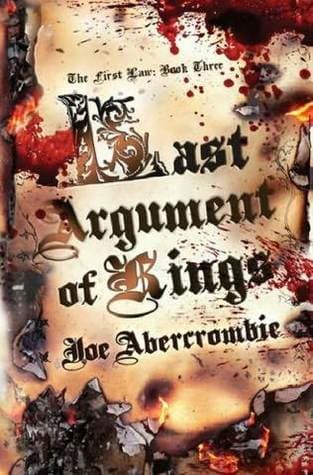
Joe Abercrombie (2008)
Genre
Fantasy
Reading Time
12-15 hours
Key Themes
See below
Sign in to track this book
As the Union nears collapse, a crippled torturer, a reluctant hero, and a bloody barbarian meet in a brutal story of war, betrayal, and dark magic, where only one thing is certain: the world will burn.
Logen Ninefingers, after traveling with Bayaz, Ferro, and Jezal, returns to the North. Bayaz sends him to kill Bethod, Logen's old friend and now King of the Northmen. Logen, unwilling but bound by Bayaz, gets caught in the growing conflict. Meanwhile, Prince Ladisla, the Union's chosen general, struggles to lead his forces, showing his lack of skill. Dogman, Logen's former companion, leads a group of Free Northmen fighting Bethod. He is wary of Logen's return, remembering his violent past as the Bloody-Nine. The Union forces, led by Lord Marshal Burr, march north to defeat Bethod's rebellion and secure the Union's borders, setting the stage for a large battle.
In Adua, Superior Glokta is deeply involved in the politics around the dying King Guslav the Fifth. Bayaz tasks him with making sure Archlector Sult, the manipulative head of the Inquisition, does not gain too much power, while also watching the ambitious Grand Duke Orso. Glokta uncovers plots and counter-plots, using his network of informers, torture, and blackmail to keep a balance. He manipulates figures like Practical Vitari and his own torturers, Frost and Severard, to get information and carry out his orders. The city is tense, with the King's death near, and various groups competing for control of the Union, each with their own secret plans.
Jezal dan Luthar, now a general in the Union army, finds war very different from the glory he once imagined. He is disappointed by Prince Ladisla's incompetence and the harshness of combat. His heart remains with Ardee West, whom he left in Adua, and he often dreams of leaving his military duties for a simple life with her. Despite his personal desires, Jezal must take part in the campaign against Bethod, seeing the horrors of war and the sacrifices of common soldiers. His inner struggle between duty and personal happiness grows, leaving him increasingly sad and questioning his path.
The Union army, led by Lord Marshal Burr, fights Bethod's Northmen in a series of harsh battles called the Battle of the High Places. The fighting is fierce, with many deaths on both sides. Jezal, despite his unwillingness, finds himself on the front lines, experiencing the chaos and fear of battle. Logen, fighting with the Free Northmen and sometimes the Union forces, unleashes the Bloody-Nine to try to change the outcome. The battle ends in a large fight, with both sides suffering huge losses. The Union eventually wins, but at a great cost, leaving the land scarred and many lives lost.
After the Union's victory, Logen Ninefingers finally faces Bethod in a duel. After a brutal fight, Logen, as the Bloody-Nine, kills Bethod, fulfilling Bayaz's order. However, Bayaz then shows his true, darker plan: he never meant for the Union to just defeat Bethod, but to crush the Northmen and take their lands, securing the valuable mines in the mountains. He uses a destructive force on the remaining Northmen, ensuring their control. Logen is horrified by Bayaz's ruthless ambition and how much he was manipulated, realizing he was just a tool in a larger, more sinister game. Ferro also sees Bayaz's power and cruelty, making her distrust the First of the Magi even more.
With King Guslav the Fifth dead, the succession crisis in Adua reaches its peak. Bayaz, back from the North, arranges a takeover. He uses Glokta's information and his own great influence to sideline Grand Duke Orso and Archlector Sult. To everyone's surprise, especially Jezal's, Bayaz declares Jezal dan Luthar the new King of the Union. Jezal, who only wanted a quiet life with Ardee West, is forced onto the throne against his will. His coronation is grand but empty, as he realizes he is merely a puppet king, controlled by Bayaz. His dreams of freedom and love are broken by this unexpected and unwanted burden of power.
Just as the Union believes it has secured its borders and crowned a new king, the Gurkish Empire launches a sudden, devastating attack on Adua. Their large fleet and army surround the capital, catching the Union off guard. The city falls into chaos, with widespread destruction and panic. Glokta, despite his cynicism, works with the remaining Union command to organize a defense, using his knowledge of the city's defenses and his harsh practicality. The Gurkish, led by their Emperor, seem unstoppable, and the Union's existence is threatened by this new, powerful enemy, set in motion by Khalul, Bayaz's old enemy.
As Adua faces collapse, Bayaz reveals the full extent of his ancient power and knowledge. He gets the Seed, a powerful artifact from the Old Time, from a hidden vault under the city. Using the Seed, he unleashes a devastating magical attack against the Gurkish forces, destroying their fleet and much of their army. The sheer destructive power is terrifying, showing Bayaz's command of forbidden magic and his willingness to use it. This act saves Adua and the Union from destruction, but it also reveals the dark, dangerous nature of the First of the Magi, solidifying his control over the new King Jezal and the entire Union.
After the Gurkish invasion, the characters deal with their futures. Logen, disgusted by Bayaz's methods and the Bloody-Nine's constant call, decides to leave the Union and return to the wilds, embracing his nature as a survivor, but forever troubled by his past. Ferro, having seen Bayaz's power, also leaves, determined to find Khalul and get her revenge, now with a better understanding of the world's ancient conflicts. Glokta, having secured his position as Bayaz's main enforcer, finds himself caught in a life of endless manipulation and cruelty. His cynical view is confirmed, and his dreams of peace are forever out of reach. He is now married to Ardee West, a marriage Bayaz arranged.
Jezal dan Luthar, now King of the Union, is completely broken by the events. He is married to Terez, a woman Bayaz chose for him, further showing his lack of control. He understands that his crown is a gilded cage, and he is just a figurehead, with Bayaz holding the real power. His dreams of a simple life with Ardee West are shattered, and he must play the part of a kind ruler while Bayaz pulls the strings. The final scene shows Jezal, a shadow of his former self, accepting his fate, forever under the First of the Magi's control, a king without real power or freedom.
The Protagonist
Logen begins seeking peace but is forced to embrace his violent nature, ultimately choosing to return to the wild, accepting his fate as a survivor.
The Protagonist
Glokta starts as a cynical tool of the Inquisition and ends as Bayaz's chief enforcer, further cementing his role in the machinery of power, forever trapped by his choices and his physical limitations.
The Protagonist
Jezal evolves from a vain fop to a disillusioned general, ultimately forced into kingship, becoming a puppet ruler stripped of his agency and personal dreams.
The Antagonist/Mastermind
Bayaz reveals the full extent of his manipulative power, solidifying his control over the Union and its new king, establishing himself as the true power behind the throne.
The Supporting
Ferro begins as a vengeful warrior following Bayaz, but ultimately rejects his methods and decides to pursue her revenge against Khalul independently, forging her own path.
The Supporting
Dogman leads his people through the war in the North, showcasing his loyalty and leadership, and ultimately survives the conflict, still wary of Logen's dark side.
The Supporting
Ardee starts as a cynical but hopeful woman, falls in love with Jezal, but is ultimately forced into a loveless marriage with Glokta, becoming a pawn in Bayaz's schemes.
The Antagonist
Bethod rises as a powerful king but is ultimately defeated and killed by Logen, a pawn in Bayaz's larger plan to subjugate the North.
The Supporting
Sult attempts to seize power during the succession crisis but is ultimately outmaneuvered and sidelined by Bayaz and Glokta, losing his bid for ultimate control.
The Mentioned/Antagonist
Khalul's influence is revealed as the driving force behind the Gurkish invasion, solidifying his role as the primary antagonist to Bayaz, setting up a future confrontation.
The novel explores how power, especially absolute power, corrupts. Bayaz, the First of the Magi, is the main example, using his ancient knowledge and magic not for good but for manipulation and control. This is clear when he arranges Jezal's kingship and destroys the Gurkish with the Seed. Glokta, though crippled, uses great power through torture and blackmail, becoming more morally compromised. Even Logen, despite wanting peace, is repeatedly pulled back into the 'Bloody-Nine' persona, a sign of his own destructive power. The theme suggests that power changes people, often for the worse, turning them into tools of control and violence.
“Once you've got a task to do, it's better to do it than live with the fear of it.”
Throughout the story, characters think they are making their own choices, only to find they are pieces in a larger game set up by Bayaz. Jezal dreams of a simple life but is forced onto the throne. Logen seeks peace but must kill Bethod. Glokta, despite his cleverness, is ultimately Bayaz's tool. The climax, with Bayaz showing his control over Jezal's rise to power and his ancient abilities, clearly shows that individual choice is often an illusion against strong, hidden forces. This theme makes characters, and readers, question how much anyone truly controls their own life.
“There are no easy choices. Only hard choices.”
The novel shows the brutal, pointless reality of war, removing any romantic ideas of glory. Jezal, initially looking for glory, is horrified by the death and incompetence he sees in the North. The Battle of the High Places is shown as a bloody, costly event with much suffering and little true heroism. Logen's experiences highlight the repeating nature of violence and its effect on people. The 'victories' often come at a terrible price, leaving behind death, destruction, and moral compromise, rather than real triumph. The story suggests that war is a tool for the powerful, not a path to honor.
“Why do we fight? For money? For power? For glory? We fight because we're told to. We fight because we're good at it. We fight because we have no choice.”
Many characters are driven by cycles of violence and revenge, continuing conflict instead of ending it. Ferro is consumed by her desire for revenge against the Gurkish. Logen's past is a continuous cycle of fighting, killing, and running. The conflict between Bayaz and Khalul is an ancient, endless vendetta that causes much of the world's suffering. The novel suggests that while revenge can be a strong motivator, it rarely brings true satisfaction or peace. Instead, it traps individuals and societies in an endless loop of retribution and bloodshed.
“Say one thing for Logen Ninefingers, say he's a survivor.”
The book blurs the lines between good and evil, showing characters with complex moral questions. Bayaz, while saving the Union, does so through manipulation and destruction, making him an antagonist despite his 'heroic' act. Logen, the 'Bloody-Nine,' is capable of both monstrous violence and surprising kindness. Glokta, a torturer, often acts to prevent greater evils, but his methods are cruel. The story avoids clear heroes and villains, instead presenting a world where motivations are mixed, and even the most 'noble' actions can have dark sides, challenging traditional fantasy ideas.
“You can never have too many knives.”
An ancient, powerful artifact of immense destructive potential.
The Seed is a relic from the Old Time, a source of immense magical power capable of devastating entire armies and cities. It functions as a classic MacGuffin throughout the trilogy, driving Bayaz's quest. In 'Last Argument of Kings,' it is ultimately revealed and used by Bayaz to repel the Gurkish invasion of Adua. Its use highlights Bayaz's ruthless nature and the forbidden, destructive capabilities of the Old Ways, serving as a powerful demonstration of his ultimate control and willingness to employ any means necessary.
Logen's berserker alter-ego, a manifestation of his violent past.
The Bloody-Nine is Logen's uncontrollable, savage persona that emerges in moments of extreme danger or rage. It acts as a metaphor for Logen's internal struggle with his violent nature and the legacy of his past. This device allows Logen to perform incredible feats of brutality, but at the cost of his own humanity and self-control. It represents the inherent darkness within him, a force he constantly tries to suppress but ultimately cannot escape, demonstrating the lasting impact of violence on an individual's psyche.
The First of the Magi's overarching control of events and characters.
Bayaz's manipulation is a central plot device that underpins nearly every major event and character arc. He orchestrates the Northman war, Jezal's ascension to the throne, and Glokta's political machinations. This device highlights the theme of the illusion of free will, as characters believe they are making their own choices, only to discover they are pawns in Bayaz's grand, millennia-long game. His subtle and overt control reveals him as the ultimate puppet master, shaping the destiny of the Union and its inhabitants to suit his own ends.
Extensive use of characters' inner thoughts to reveal their true nature.
Abercrombie heavily utilizes internal monologues, particularly for Glokta, Jezal, and Logen. This device provides deep insight into their motivations, fears, and moral struggles, often contrasting sharply with their outward actions or words. Glokta's cynical and self-deprecating thoughts, Jezal's vain and later disillusioned reflections, and Logen's battle with the Bloody-Nine are all explored through this technique. It allows the reader to understand the characters' complex inner lives, making them more relatable and morally ambiguous, and often providing dark humor or tragic irony.
“Say one thing for Logen Ninefingers, say he's a survivor.”
— A recurring thought of Logen's, often after or before a bloody encounter.
“You can never have too many knives.”
— Practical advice from Logen Ninefingers.
“Once you've got a task to do, it's better to do it than to live with the fear of it.”
— Jezal reflects on his duty and the inevitability of his path.
“The problem with being a hero is that it's a lot like being a princess: one day you're going to have to kiss a lot of frogs.”
— Bayaz offers a cynical perspective on heroism to Jezal.
“The world is what it is. It's a hard place, and the only way to survive is to be harder.”
— Logen's grim philosophy on life.
“It is not the man who has too little, but the man who craves more, that is poor.”
— Bayaz, the First of the Magi, speaking on ambition and wealth.
“The only thing a man can ever truly change is himself.”
— A rare moment of introspection from Logen.
“Power is a game. And in a game, you play to win. You don't play to be fair. You play to win.”
— Bayaz explaining the nature of power to Jezal.
“It's all right to be afraid. You just don't let it stop you.”
— Practical wisdom offered by Logen.
“Some men are born to rule, some are born to serve. The trick is to know which one you are.”
— Bayaz's view on the natural order of society.
“The past is just a story we tell ourselves.”
— Logen musing on the nature of memory and regret.
“No one ever really changes. Not fundamentally. They just get better at hiding it.”
— Bayaz's cynical take on human nature.
“A man must have a code.”
— Logen's simple but firm belief in personal principles.
“It is always the way of things, is it not? The great men of the world are seldom those who do the greatest good.”
— Ardee West reflecting on the nature of leadership and heroism.
“The difference between a hero and a villain is all in who is telling the story.”
— A meta-commentary on narrative and perception within the world.
Ready to see how well you understood this book? Take our interactive quiz with 10 questions.

Biography coming soon.







