“For the future, the future is what we must all think of now. The past is done. The present is fleeting. Only the future endures.”
— Shardlake reflects on the aftermath of Henry VIII's death and Catherine Parr's precarious position.

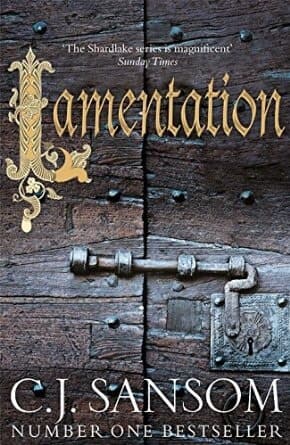
C.J. Sansom (2014)
Genre
Historical Fiction / Mystery
Reading Time
1270 min
Key Themes
See below
Sign in to track this book
As King Henry VIII lies dying, his court is on the verge of religious war. Hunchbacked lawyer Matthew Shardlake must find Queen Catherine Parr's secret manuscript before it destroys her and her allies.
In autumn 1546, King Henry VIII is dying, and England's political mood is tense, split between Protestant and Catholic groups. Matthew Shardlake, a hunchbacked lawyer, is called to Hampton Court Palace by Queen Catherine Parr. The Queen reveals she wrote a radical religious book, 'Lamentation of a Sinner,' which argues for salvation by faith alone. This view could be seen as heresy by many, especially the Catholic group at court. She gave the manuscript to a printer named Stephen Appleby, but he has been murdered, and the book is gone. Catherine fears the manuscript could be used to destroy her and her Protestant allies, so she asks Shardlake to find it quietly before it falls into the wrong hands.
Shardlake, with his assistant Jack Barak, starts investigating Appleby's death and the missing manuscript. They visit Appleby's print shop in London, where they learn he was a troubled man who drank and gambled. The shop is messy, and there are no immediate clues about the manuscript. They talk to Appleby's apprentice, who reveals little but points them to Appleby's friends and the taverns he visited. Shardlake quickly realizes that Appleby's death was not a simple robbery but likely connected to the dangerous nature of the Queen's book, drawing them into London's risky printing underworld.
Shardlake and Barak continue their search, looking deeper into London's printing world. They learn that Appleby, before he died, had given the manuscript to another printer named John Cornwell, a known Protestant supporter. Cornwell, in turn, grew afraid of the book's contents and its possible effects, passing it to yet another printer, Master Holbein, a more established and careful man. This chain of custody shows how sensitive and dangerous the manuscript was, as each printer understood the serious risks of having such a text, especially with the current political unrest and the King's failing health.
As Shardlake searches for the manuscript, the Catholic group at court, led by Bishop Stephen Gardiner and Lord Wriothesley, works harder to weaken Queen Catherine Parr. They know about the Queen's Protestant leanings and are actively looking for proof to accuse her of heresy. Gardiner uses a network of spies, including people in Catherine's own household, to gather information. Shardlake becomes very aware that time is short, as Gardiner's men are closing in. If they find 'Lamentation of a Sinner,' it would give them the perfect tool to destroy the Queen and her Protestant supporters, completely changing the balance of power.
Shardlake and Barak find Master Holbein, the last known person to have the manuscript. However, Holbein, a clever and careful man, denies ever getting the book. He claims ignorance and fear of what might happen. Shardlake suspects Holbein is either lying or passed the manuscript to someone else, but he cannot prove it. This dead end makes Shardlake think the manuscript might have gone beyond the immediate printing circle, perhaps even into the hands of someone who wants to use it for political advantage, rather than just for publishing. The stakes rise as the search widens.
The pressure on Queen Catherine Parr grows quickly. Bishop Gardiner and his allies, having gathered enough indirect evidence of her Protestant sympathies, prepare to act against her. Some of the King's privy councillors directly accuse Catherine of heresy, citing her talks on religion and her connections with known reformers. Shardlake realizes how urgent his mission is; if he does not find the manuscript soon, Catherine will be arrested and likely executed. The court becomes a dangerous battlefield, where every word and action is watched, and trust is rare, even among supposed allies.
With careful investigation and some luck, Shardlake finally finds 'Lamentation of a Sinner.' It is not with any of the printers, but with a minor courtier, Master Halse, who Holbein had secretly approached. Halse, an ambitious man with changing loyalties, saw a chance to use the manuscript for his own gain, either by selling it or by giving it to the Catholic group to earn favor. This discovery adds another layer of complexity, showing how deeply the court's political schemes are tied to the search for the Queen's book.
Shardlake confronts Master Halse, trying to arrange the manuscript's return. Halse, however, is clever and knows the immense power he holds. He demands a large sum of money and promises of protection, trying to play both sides. The exchange is tense and dangerous, as Shardlake knows Halse cannot be trusted and could easily betray him and the Queen. The meeting almost turns violent, showing the desperation of everyone involved and how far people will go for power and influence in Henry VIII's dying court.
Just as the Catholic group prepares to arrest Queen Catherine Parr, King Henry VIII, despite his severe illness, steps in. Catherine, with Shardlake's quiet help and her own cleverness, manages to calm the King. She expresses regret and humility, stressing her role as a loving wife and nurse. Henry, perhaps convinced by her plea, or perhaps not wanting more trouble in his final days, pardons her. This unexpected turn saves Catherine for now, but the underlying tensions and power struggles at court remain, only delayed until the King's certain death.
Shardlake successfully gets 'Lamentation of a Sinner' from Halse, ensuring it does not fall into the hands of the Queen's enemies. However, the book's very existence remains a dangerous secret. Catherine Parr, cautious after her near-arrest, understands the risks of making it public. The book is carefully hidden away, its radical Protestant message silenced for now. Shardlake thinks about how fragile life and freedom are in a kingdom where religious arguments can lead to execution, and where power is used by those who twist truth and fear. The case is closed, but its effects remain.
With Catherine Parr's immediate danger gone, Shardlake returns to his usual legal work, though the experience has deeply affected him. The political situation remains very unstable, with Henry VIII's death close and the succession a matter of intense debate between the Protestant Seymour group and the Catholic conservatives. Shardlake knows that while Catherine is safe for now, the forces that tried to destroy her have not been defeated, only delayed. He understands that his involvement in the Queen's matters has made him a target in the eyes of powerful figures like Bishop Gardiner, and he must stay alert.
The Protagonist
Shardlake's arc involves confronting the extreme dangers of royal politics and reaffirming his commitment to justice, even when it puts his own life at risk.
The Supporting
Catherine's arc sees her face near-ruin due to her religious convictions but ultimately survive through a combination of wit, humility, and timely intervention.
The Supporting
Barak's arc continues his development as a reliable, if sometimes impulsive, partner to Shardlake, showcasing his growing maturity and loyalty.
The Antagonist
Gardiner's arc demonstrates his relentless pursuit of political and religious power, ultimately facing a temporary setback but remaining a potent threat.
The Mentioned
Henry VIII's arc is one of physical decline and diminishing control, yet his unpredictable nature still holds immense sway over the plot's outcome.
The Supporting
Halse's arc sees him briefly gain significant leverage through the manuscript, only to be outmaneuvered by Shardlake, highlighting the risks of playing both sides.
The Mentioned
Appleby's arc is cut short by his murder, serving as a cautionary tale about the perils of handling sensitive political documents.
The Supporting
Holbein's arc shows him attempting to distance himself from the dangerous manuscript, highlighting the pervasive fear among those involved in its circulation.
The novel clearly shows the extreme dangers of holding or expressing religious views that differ from the official beliefs, especially during a time of intense religious change. Queen Catherine Parr's 'Lamentation of a Sinner' directly challenges Catholic teaching, making her vulnerable to charges of heresy, which meant death. The search for the manuscript is driven by the fear that finding it would not only condemn the Queen but also start a wider persecution of Protestants at court. Shardlake constantly moves through a world where a simple comment or a hidden book can lead to execution.
“In these times, Master Shardlake, a man's soul and his very life are often one and the same, and both may be forfeit for a single errant word.”
The last days of Henry VIII's reign are a time of political scheming, ambition, and betrayal. The fight between Protestant and Catholic groups is not just about religion but about who will control the succession and England's future. Figures like Bishop Gardiner ruthlessly use any weakness or chance to gain an advantage, while others, like Master Halse, try to profit from the instability. Shardlake's investigation often pulls him into the complex world of court politics, where alliances change quickly, and personal loyalty is less important than the pursuit of power.
“The court, Master Shardlake, is a serpent's nest, and the King's decline merely stirs the viper's venom.”
A main theme is the constant tension between seeking truth and staying safe in a dangerous world. Shardlake, guided by his morals, tries to find the truth behind the manuscript's disappearance and protect the Queen. However, many characters, including the printers and even Catherine Parr herself, must make compromises, hide information, or even lie to avoid persecution. The novel suggests that in extreme political situations, absolute truth can be deadly, and survival often requires strategic deception and humility, as seen in Catherine's carefully planned plea to the King.
“Sometimes, Master Shardlake, to speak the truth is to invite the axe. Prudence, not courage, often saves lives.”
Shardlake, as a lawyer, believes in justice, but the story consistently shows how fragile justice is and how easily it can be swayed by politics. In a system where the King's word is law and powerful figures can twist legal processes for their own goals, true justice is often hard to find. The threat of Catherine Parr's arrest, based on weak evidence and religious interpretation, shows how easily justice can be corrupted. Shardlake's efforts are not just about finding a book but about trying to prevent a serious injustice, highlighting the ongoing fight against unfair power and corruption.
“Justice, in this kingdom, is often a whisper, easily drowned out by the shouts of power.”
The Queen's lost manuscript, 'Lamentation of a Sinner,' drives the entire plot.
The manuscript 'Lamentation of a Sinner' serves as the central MacGuffin of the novel. Its contents, while critical to the plot's thematic concerns, primarily function as the object that motivates Shardlake's investigation and the frantic search by both the Queen's allies and her enemies. The book's radical theological stance makes it a dangerous weapon, capable of destroying Queen Catherine Parr and shifting the balance of power at court. The urgency of finding it before it falls into the wrong hands propels the narrative forward, creating suspense and revealing the intricate web of political and religious intrigue.
King Henry VIII's rapidly declining health creates immense narrative urgency.
The impending death of King Henry VIII acts as a powerful ticking clock throughout the narrative. His severe illness and the constant threat of his demise heighten the stakes for all characters. The Catholic and Protestant factions are in a desperate race against time to consolidate power before the King's death, knowing that whoever controls the government at that moment will determine the future of England. For Shardlake, this translates into a frantic search for the manuscript, as every passing day brings Catherine Parr closer to potential arrest and execution if the book is discovered by her enemies.
Characters provide partial truths, lies, or evasions, complicating Shardlake's investigation.
Throughout his investigation, Shardlake encounters numerous individuals who are either unwilling or unable to provide the full truth. Printers like Master Holbein deny possession of the manuscript out of fear, while others like Master Halse attempt to manipulate information for personal gain. This device creates layers of mystery and forces Shardlake to piece together the truth from fragmented and often contradictory accounts. It highlights the pervasive fear and self-preservation instincts prevalent in the period, making Shardlake's task more challenging and emphasizing the difficulty of uncovering truth in a climate of suspicion and political danger.
The reader is aware of dangers or information that certain characters are not.
Dramatic irony is employed to heighten suspense, particularly regarding the imminent threats to Queen Catherine Parr. The reader is often privy to the machinations of Bishop Gardiner and his faction, knowing their plans to ensnare the Queen, even as Catherine or Shardlake are still operating with incomplete information. This creates a sense of dread and urgency, as the reader anticipates the danger closing in. It also underscores the precariousness of the characters' situations, highlighting how close they are to disaster without fully realizing it.
“For the future, the future is what we must all think of now. The past is done. The present is fleeting. Only the future endures.”
— Shardlake reflects on the aftermath of Henry VIII's death and Catherine Parr's precarious position.
“The law, Master Shardlake, is a net. And a net, however finely woven, always has holes.”
— Guildford, a lawyer, discusses the limitations and manipulability of the law with Shardlake.
“Fear, Master Shardlake, is a great persuader. A greater persuader than truth, I often think.”
— A character comments on the power of fear in shaping opinions and actions during a time of political instability.
“It is a strange thing, is it not, that we fear death, and yet we live lives that are often little more than a slow dying?”
— Shardlake ponders mortality and the human condition.
“The world, Master Shardlake, is not as we would wish it to be, but as it is. And we must live in it.”
— A pragmatic observation offered to Shardlake about the harsh realities of their time.
“Truth, like a river, can be diverted, but never entirely stopped.”
— Shardlake considers the enduring nature of truth, despite attempts to suppress it.
“There are some wounds, Master Shardlake, that time does not heal, but merely covers over.”
— A character reflects on lingering emotional pain and trauma.
“To be a man of conscience in these times, Master Shardlake, is to be a man forever treading on thin ice.”
— A warning given to Shardlake about the dangers of adhering to one's principles in a treacherous political landscape.
“The greatest prison, Master Shardlake, is not one of stone and iron, but one of the mind.”
— Shardlake contemplates self-imposed limitations and psychological burdens.
“History, Master Shardlake, is written by the victors. And often, it is rewritten by them too.”
— A cynical observation on the manipulation of historical narratives.
“Hope, Master Shardlake, is a fragile thing. But without it, we are truly lost.”
— Shardlake considers the importance of hope amidst despair.
“It is a bitter thing, Master Shardlake, to see justice denied, especially when one has fought so hard for it.”
— Shardlake experiences frustration and disappointment with the legal system.
“The world moves on, Master Shardlake, whether we wish it to or not. And we must move with it, or be left behind.”
— A reflection on the inevitability of change and the need for adaptation.
“Even in the darkest times, Master Shardlake, there can be found a flicker of light, if one only knows where to look.”
— An optimistic outlook offered amidst the prevailing gloom.
Ready to see how well you understood this book? Take our interactive quiz with 10 questions.

C.J. Sansom is a celebrated author of historical fiction, best known for his Shardlake series. His meticulously researched novels, including "Revelation" and "Lamentation," vividly bring Tudor England to life. Sansom holds a PhD in history, lending an authentic depth to his compelling narratives.







