“I have made him very much in love with me, and that is all I can do at present.”
— Lady Susan discussing her strategy for charming Reginald De Courcy.

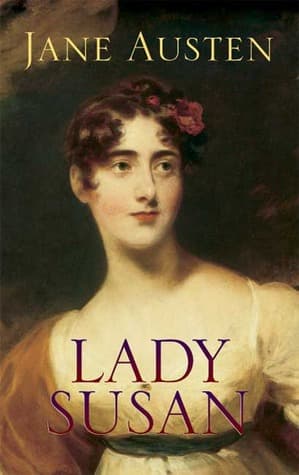
Jane Austen (1925)
Genre
Historical Fiction / Romance
Reading Time
180 min
Key Themes
See below
Sign in to track this book
Lady Susan Vernon, a clever and charming widow, skillfully navigates Regency society to arrange a good second marriage for herself and an undesirable match for her reluctant daughter.
Lady Susan Vernon, a widowed and flirtatious woman, writes to her brother-in-law, Charles Vernon, asking to stay at his country estate, Churchill. She has overstayed her welcome with the Manwaring family, where rumors of an affair with Mr. Manwaring circulated, so she seeks a temporary refuge. Mrs. Catherine Vernon, Charles's wife, worries about Lady Susan's visit, knowing her reputation for charming men and causing trouble. She tells her brother, Reginald De Courcy, who at first dismisses her concerns, believing Lady Susan cannot be as bad as described. Lady Susan arrives at Churchill, immediately charming Charles and beginning to subtly manipulate the household.
Reginald De Courcy, initially doubtful of his sister Catherine's warnings, meets Lady Susan. To Catherine's dismay and Reginald's surprise, he is quickly charmed by Lady Susan's beauty, wit, and apparent vulnerability. Lady Susan uses all her charm, presenting herself as a wronged woman, a devoted mother, and a person of good taste. She skillfully downplays her past scandals and speaks with such honesty that Reginald finds himself defending her against Catherine's accusations. Catherine is frustrated by Reginald's naivety, recognizing Lady Susan's act and lamenting her brother's weakness for such pretense. Reginald, despite his initial doubts, spends more and more time with Lady Susan, alarming his family.
Lady Susan's shy and unhappy fifteen-year-old daughter, Frederica Vernon, runs away from school and arrives unexpectedly at Churchill. Frederica is very different from her mother: shy, gentle, and without social pretense. She fears her mother and is deeply upset by Lady Susan's plan to force her into marriage with Sir James Martin, a wealthy but foolish baronet whom Frederica dislikes. Frederica's arrival creates a problem for Lady Susan, as it reveals her daughter's unhappiness and makes it harder to maintain her image of a devoted mother. Catherine Vernon and Reginald De Courcy immediately sympathize with Frederica, seeing her distress and the unfairness of her situation. Frederica confides in Catherine, further confirming Catherine's belief in Lady Susan's cruelty.
Lady Susan skillfully keeps Reginald De Courcy under her spell, despite Frederica's presence and the growing evidence of her manipulative nature. She describes Frederica's distress as childish stubbornness and her refusal of Sir James Martin as ingratitude. While appearing concerned for Frederica, Lady Susan secretly continues to push for the marriage to Sir James, seeing it as a way to get rid of her daughter and secure Frederica's fortune. Reginald, still largely swayed by Lady Susan's charm, struggles to reconcile her seemingly kind manner with Frederica's obvious unhappiness. He becomes more involved in the family drama, often acting as an unwitting pawn in Lady Susan's plans, to Catherine's ongoing frustration.
Sir James Martin, Lady Susan's chosen suitor for Frederica, arrives at Churchill. He is an unintelligent, easily manipulated man, whose only appeal is his wealth. His presence causes Frederica great distress, making her even more withdrawn and fearful. Lady Susan, however, is pleased by his arrival, seeing it as a step closer to securing Frederica's future (and her own financial security). She continues to present the match as good and suitable, ignoring Frederica's feelings. Catherine Vernon and Reginald De Courcy see Frederica's misery and Sir James's foolishness, which strengthens their belief that Lady Susan is acting cruelly. Reginald is increasingly conflicted, torn between his admiration for Lady Susan and his growing pity for Frederica.
Reginald De Courcy's attraction to Lady Susan begins to lessen as he sees her coldness towards Frederica and Sir James Martin's foolishness. Frederica, encouraged by Catherine's kindness, directly asks Reginald not to let her be forced into marriage with Sir James. Her genuine distress and honesty deeply affect Reginald, leading him to confront Lady Susan more directly about her treatment of her daughter. Lady Susan tries to dismiss Frederica's plea as childish whim, but Reginald's trust in her is now significantly shaken. He starts to remember Catherine's earlier warnings and the rumors about Lady Susan's past, leading to a growing disappointment with the woman he had admired so much.
Just as Reginald's doubts about Lady Susan are strongest, scandalous letters arrive at Churchill from Lady Manwaring, detailing Lady Susan's affair with Mr. Manwaring. These letters, meant for Catherine and Reginald, expose Lady Susan's true character and confirm all the rumors about her. The news is a devastating blow to Lady Susan's carefully built image and shatters Reginald's remaining illusions. He is shocked and disgusted by her deception and confronts her with the evidence. Lady Susan, though initially flustered, tries to deny or downplay the accusations, but her efforts fail. This revelation is a turning point, as Reginald finally sees Lady Susan for the manipulative and immoral woman she is.
After the Manwaring scandal, Reginald De Courcy is completely disillusioned with Lady Susan. He confronts her, expressing his disgust and withdrawing his affection and any implied offer of marriage. He states that he can no longer tolerate her deceit and manipulation. Lady Susan tries to regain her influence, using tears and feigned remorse, but her efforts are useless. Reginald is now immune to her charms and sees through her act. He makes it clear that their connection is over and that he will no longer be part of her schemes. With his eyes fully opened to her true character, Reginald leaves Churchill, vowing never to be swayed by her again. This marks a significant defeat for Lady Susan's immediate romantic ambitions.
After Reginald's departure and her plans at Churchill failing, Lady Susan Vernon leaves the estate. Despite her setbacks, Lady Susan remains undeterred and quickly plans her next moves. She is determined to secure a comfortable future for herself, even if it means further manipulation. Her immediate goal remains a financially good marriage for herself and a suitable (and convenient) match for Frederica. She reflects on her recent failures but sees them as temporary problems rather than permanent defeats. Her letters show her continued self-interest and her belief in her ability to charm and control others, demonstrating her resilience and lack of true remorse.
Frederica Vernon, now free from the threat of marriage to Sir James Martin, finds a more suitable and loving partner in Reginald De Courcy's younger brother, Charles De Courcy. Charles, a man of good character and fortune, truly admires Frederica's gentle nature and kindness. Their connection grows, leading to an engagement that promises Frederica happiness and stability, far from her mother's influence. This match is supported by Catherine and Reginald Vernon, who are relieved to see Frederica finally find peace. Frederica's story ends well, showing that genuine goodness and sincerity can overcome deceit and manipulation, at least for her.
In the end, Lady Susan Vernon, always an opportunist, successfully marries the wealthy but foolish Sir James Martin. This ironic twist sees her marry the very man she had intended for her daughter, securing her own financial future and social standing. Her marriage to Sir James ensures she maintains a comfortable lifestyle, but it also highlights her willingness to compromise her principles for money. The story implies that Lady Susan will continue her manipulative and flirtatious behavior, even in marriage. She remains unrepentant and true to her self-serving nature, always seeking advantage and amusement, confirming her status as a cunning and unchangeable character.
The Protagonist/Antagonist
Lady Susan's arc is less about transformation and more about revelation; her true character is gradually exposed, but she remains unrepentant and unchanged in her manipulative nature.
The Supporting
Frederica evolves from a terrified and passive victim to someone who, with support, finds the courage to appeal for her own happiness and ultimately secures a loving match.
The Supporting
Catherine's character remains steadfast, serving as an unchanging moral anchor and a voice of reason against Lady Susan's machinations.
The Supporting
Reginald undergoes a significant arc, moving from initial infatuation and naivety to disillusionment and a clear understanding of Lady Susan's manipulative character.
The Supporting
Charles remains largely unchanged, serving as a foil to Catherine's perception and illustrating the ease with which Lady Susan can deceive.
The Supporting
Sir James remains consistently foolish and serves as a plot device for Lady Susan's machinations.
The Supporting
Mrs. Johnson's character is static, serving as a narrative device to expose Lady Susan's inner thoughts.
The Mentioned
Lady Manwaring's role is purely instrumental in revealing Lady Susan's past and precipitating a crisis.
Lady Susan's every action shows her skill at manipulation. She uses flattery, false vulnerability, and calculated charm to get what she wants. She lies easily, presenting different personalities to different people—a devoted mother to Reginald, a wronged woman to her brother-in-law, and a cynical schemer in her letters to Mrs. Johnson. Her ability to manipulate is so great that she almost convinces Reginald of her innocence, despite much evidence. The novel explores the power of social performance and how easily appearances can deceive, showing how a charming exterior can hide a ruthless interior, as when she tries to force Frederica into a bad marriage while pretending to be a caring mother.
“"I have made him my friend, and that, you know, is a great step. He is a charming young man, and I have no doubt of being able to attach him to me, if I think it worth while."”
The novel constantly contrasts Lady Susan's public image with her true, immoral character, which her private letters reveal. Her reputation as a flirt and a schemer precedes her, yet she is remarkably good at using her charm to temporarily change these perceptions, especially with men like Charles Vernon and Reginald De Courcy. Catherine Vernon, however, sees past the facade. The story explores how easily society can be swayed by appearances and how difficult it is for truth to emerge when faced with strong social performance. The arrival of Lady Manwaring's letters finally breaks Lady Susan's carefully kept public image, showing the stark reality behind her polished persona.
““I have always found a little spirit of rivalry a very good thing. It adds to the ardour of men, and the triumph of women.””
While Lady Susan is a villain, the novel subtly shows the limited choices available to women, especially widows, in Regency society. Lady Susan's constant pursuit of good marriages for herself and Frederica comes from a society where women's financial security and status depend mainly on marriage. Frederica's vulnerability to being forced into an unwanted match highlights the lack of power young women had. Lady Susan, in her own way, navigates these limits with cunning, using her only available 'tools'—her beauty, wit, and manipulative skills—to gain power and security in a system that offers few other ways for women to succeed independently. Her desperate actions reflect the pressures of a patriarchal society.
““I confess I am not a great advocate for the tender mercies of a mother, who, when she is tired of her child, packs her off to a boarding-school, and takes no further trouble about her.””
The novel shows a very troubled mother-daughter relationship between Lady Susan and Frederica. Lady Susan sees Frederica not as a child to care for, but as an obstacle to her own freedom and a pawn in her social games. She is cold, unfeeling, and actively tries to force Frederica into a marriage she hates, showing complete disregard for her daughter's happiness. This relationship contrasts sharply with the affectionate bonds one might expect. Frederica's fear of her mother and her desperate pleas for help highlight the emotional abuse she suffers, serving as a strong indictment of Lady Susan's selfishness and lack of maternal instinct.
““Frederica is a mere child, and I have no notion of letting a child make me uneasy.””
The novel is told entirely through letters exchanged between characters.
This format is crucial to the narrative, providing direct insight into the characters' thoughts, motives, and private schemes. It allows Lady Susan to reveal her true, manipulative nature in her letters to Mrs. Johnson, a stark contrast to the charming persona she presents in person. Conversely, the letters from Catherine Vernon and Reginald De Courcy offer a more objective and critical perspective on Lady Susan's actions, creating dramatic irony and allowing the reader to piece together the truth. This device builds suspense as information is gradually revealed through different viewpoints, making the reader an active participant in uncovering the plot.
The audience is privy to information that certain characters in the story are not.
Dramatic irony is prevalent, primarily through the epistolary format. The reader is aware of Lady Susan's manipulative intentions and cynical thoughts (through her letters to Mrs. Johnson) while characters like Charles Vernon and, for a significant portion, Reginald De Courcy, remain charmed and deceived by her public persona. This creates tension and anticipation, as the reader waits for the truth to be revealed to the unsuspecting characters. For example, when Lady Susan praises Frederica's supposed gratitude in a letter to Reginald, the reader knows from her private letters that she actually despises her daughter's defiance, highlighting her duplicity.
Lady Susan's letters present a biased, self-serving, and often untruthful account of events.
While the entire novel is epistolary, Lady Susan herself acts as an unreliable narrator within her own correspondence. Her letters to Mrs. Johnson, while revealing her true intentions, are still filtered through her self-aggrandizing and manipulative perspective. Her letters to other characters are outright deceptive, designed to present a false image of herself. The reader must constantly compare her accounts with those of more trustworthy characters like Catherine Vernon and Frederica to discern the truth. This device forces the reader to critically evaluate the information presented and to understand the depth of Lady Susan's deceit.
Catherine Vernon acts as a moral and perceptive contrast to Lady Susan.
Catherine Vernon serves as a direct foil to Lady Susan. Where Lady Susan is deceptive, immoral, and self-serving, Catherine is honest, principled, and genuinely concerned for others. Catherine's clear-sightedness and unwavering moral compass highlight Lady Susan's depravity and manipulation. Her warnings about Lady Susan's character, initially dismissed, are consistently proven true, establishing her as the voice of reason and integrity. This contrast amplifies the thematic exploration of truth versus deception and virtue versus vice, making Lady Susan's manipulative nature even more pronounced against Catherine's forthrightness.
“I have made him very much in love with me, and that is all I can do at present.”
— Lady Susan discussing her strategy for charming Reginald De Courcy.
“Facts are such horrid things!”
— Lady Susan dismissing an inconvenient truth about her past behavior.
“A woman, especially if she have the misfortune of knowing anything, should conceal it as well as she can.”
— Lady Susan advising Frederica on how to behave in society.
“I am not fond of your sex, and I have good reason to be very much otherwise.”
— Catherine Vernon expressing her distrust of other women, particularly Lady Susan.
“She has more beauty than good nature, and more good nature than sense.”
— Lady Susan's assessment of her daughter, Frederica.
“There are few people whom I really love, and still fewer of whom I think quite as well as I do of myself.”
— Lady Susan revealing her self-centered view of the world.
“I confess myself to be a great advocate for the advantages of early marriages, and I am convinced that, with proper management, they are generally very happy.”
— Lady Susan on the topic of marriage and its benefits for young women.
“What a pity that you are not a woman, to be more sensible of the delights of a flirtation!”
— Lady Susan teasing Reginald about his perceived lack of understanding.
“To be the object of every man's admiration is a pleasure which no woman can deny herself, if she can obtain it.”
— Lady Susan reflecting on the allure of male attention.
“I would rather have a man of sense for my husband, than a man of fortune.”
— Frederica expressing her preference in a potential spouse, contrasting with her mother's views.
“She is a creature of art and affectation, and has not a genuine feeling in her composition.”
— Catherine Vernon's harsh judgment of Lady Susan.
“It is not every man who has such an understanding as Reginald.”
— Lady Susan praising Reginald's intellect while subtly manipulating him.
“My dearest girl, you must not expect to be without enemies.”
— Lady Susan giving cynical advice to Frederica about navigating the world.
“I have no taste for matrimony.”
— Sir James Martin expressing his disinterest in marriage, despite Lady Susan's plans.
“One cannot be always in the right.”
— Lady Susan making a rare, almost self-deprecating, observation.
Ready to see how well you understood this book? Take our interactive quiz with 10 questions.

Jane Austen was an English novelist known primarily for her six major novels, which implicitly interpret, critique, and comment upon the British landed gentry at the end of the 18th century. Austen's plots often explore the dependence of women on marriage for the pursuit of favourable social standing and economic security. Her works are an implicit critique of the novels of sensibility of the second half of the 18th century and are part of the transition to 19th-century literary realism. Her deft use of social commentary, realism and biting irony have earned her acclaim among critics and scholars.







