“I planned my death carefully; unlike my life, which meandered along from one thing to another, despite my feeble attempts at control.”
— Joan Foster reflects on her attempts to control her life and death.

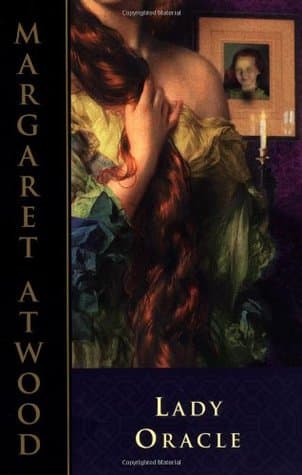
Margaret Atwood (1976)
Genre
Literary Fiction
Reading Time
360 min
Key Themes
See below
Sign in to track this book
A bored housewife escapes her mundane life by secretly becoming a celebrated poet and a writer of lurid gothics, only to find herself entangled in a web of blackmail, illicit affairs, and mysterious plots that lead to her faked death in Italy.
Joan Foster, a Canadian writer living in London, Ontario, fakes her own death by drowning in Lake Ontario. She leaves behind her husband, Arthur, and a chaotic life entangled with various lovers, political activists, and a career as a 'costume gothic' novelist and a serious poet. Her plan is to disappear to Terremoto, Italy, and start anew, free from the pressures and secrets that have accumulated over the years. However, even in her isolated refuge, Joan finds herself haunted by her past, particularly her childhood and the events leading up to her escape. The narrative frequently shifts between her present hiding place and flashbacks to her earlier life, revealing the layers of her constructed identities.
Joan's earliest memories are dominated by her tyrannical mother's relentless efforts to make her thin. As a child, Joan was significantly overweight, a source of constant shame and a battleground between her and her mother. Her mother, a former beauty pageant contestant, saw Joan's weight as a personal failure and subjected her to strict diets, humiliating public weigh-ins, and emotional abuse. This early trauma deeply impacts Joan's self-perception and her relationship with food, her body, and ultimately, her own identity. Her father, a distant and passive figure, offers little protection, further isolating young Joan and pushing her towards secret indulgences and a rich inner fantasy life.
A person in Joan's childhood is her eccentric Aunt Lou, who introduces her to the world of spiritualism, seances, and the occult. Aunt Lou, a medium herself, encourages Joan's imaginative tendencies and offers a stark contrast to her mother's rigid pragmatism. Through Aunt Lou, Joan learns about the thin veil between worlds, the power of unseen forces, and the allure of the mysterious. This exposure influences Joan's later writing career, particularly her 'costume gothic' novels, which are filled with haunted houses, ancestral curses, and damsels in distress. Aunt Lou's influence provides Joan with an escape from her immediate reality and a foundation for her later fascination with hidden narratives and alternative realities.
As a teenager, Joan has her first significant romantic encounter with a much older, married man named Mr. Sturgess, whom she meets through her father's Masonic lodge. This illicit affair, initiated by Mr. Sturgess, involves secret meetings and a sense of forbidden excitement for Joan. A key detail is a pair of red shoes that Mr. Sturgess buys for her, which become a symbol of her sexuality and her entry into a more adult, albeit complicated, world. The relationship ends abruptly and traumatically when Mr. Sturgess dies, leaving Joan with a sense of guilt and a lasting impression of the unpredictable and dangerous nature of desire. This early experience contributes to her later patterns of seeking out complex and often problematic relationships.
Following her mother's death, Joan inherits a significant sum of money, which she uses to escape her past and move to London. There, she deliberately sheds her previous identity and cultivates a new persona as 'Joan Delacourt,' a successful writer of 'costume gothic' romances. These novels, featuring heroines trapped in menacing mansions and pursued by sinister figures, become incredibly popular. This period marks a deliberate attempt by Joan to control her narrative and create a life distinct from her childhood trauma. However, even as she achieves literary success, she finds herself drawn to eccentric characters and complicated relationships, mirroring the dramatic plots of her own fiction.
In London, Joan meets and marries Arthur, a dedicated left-wing activist who is deeply involved in various political causes. Arthur is earnest, intellectual, and somewhat oblivious to Joan's inner complexities and her secret life as a gothic novelist. Their relationship is characterized by Arthur's political fervor and Joan's more detached, observational role. She often finds herself caught up in his activist circles, attending meetings and protests, but never fully immersing herself. Arthur represents a stable, albeit somewhat naive, anchor in Joan's life, a stark contrast to the more volatile figures she often attracts. Their marriage is a blend of genuine affection and a quiet misunderstanding of each other's true selves.
While married to Arthur, Joan secretly writes her popular gothic novels under a pseudonym, and also embarks on a separate career as a serious poet, gaining critical acclaim as 'Lady Oracle.' This double life becomes increasingly difficult to manage. She also begins an affair with a performance artist known as 'The Royal Porcupine,' a man who embodies the flamboyant and chaotic aspects of her own hidden desires. Her various identities and illicit relationships begin to intertwine and unravel when she receives a blackmail letter from a mysterious individual who knows about her secret gothic writing. This threat forces Joan to confront the fragility of her constructed personas and the potential for her secrets to be exposed.
Adding to the mounting chaos, Joan finds herself involved with a local suicide cult, led by the charismatic and manipulative Leda Sprott. Leda, who is also Arthur's ex-girlfriend, embodies a dangerous blend of idealism and fanaticism. Joan's involvement with the cult is tangential, often driven by her curiosity and her inability to extricate herself from complex situations. This episode further highlights Joan's passivity and her tendency to be swept along by events, rather than actively controlling them. Her various relationships and secret lives converge, making it increasingly difficult for her to distinguish between her true self and the multiple roles she plays.
Amidst her other entanglements, Joan begins an affair with a journalist she nicknames 'The Graceful Colonial.' This relationship is another example of Joan seeking excitement and validation outside her marriage to Arthur. The journalist, initially drawn to her public persona as 'Lady Oracle,' becomes privy to some of her secrets, including her gothic writing. This affair adds another layer of deceit to Joan's already complicated life and contributes to the escalating pressure she feels. The journalist's presence not only threatens to expose her various identities but also highlights her ongoing struggle with fidelity and her desire for passionate, if problematic, connections.
The blackmail attempts intensify, her affair with the Royal Porcupine becomes public knowledge, and the police begin to suspect her involvement with the suicide cult. Joan's carefully constructed life starts to crumble under the weight of her multiple identities and secrets. The pressure from the blackmailer, the Royal Porcupine's increasingly erratic behavior, and the threat of exposure from the 'Graceful Colonial' drive her to a desperate act. Feeling cornered and unable to reconcile her various personas, Joan decides the only way out is to stage her own death by drowning in Lake Ontario, hoping to finally achieve a clean break and a fresh start in Italy, away from the chaos she has created.
In Terremoto, Italy, Joan attempts to live a quiet life, but her past continues to intrude. She tries to write a new 'costume gothic' novel, but the plot becomes increasingly convoluted, mirroring the unresolved complexities of her own life. The heroine, the villain, and the various plot twists in her fictional world seem to merge with her own experiences. She finds herself unable to bring the story to a satisfactory conclusion, as if her own narrative is still open-ended and unresolved. The isolation of Terremoto, rather than providing peace, forces her to confront the psychological baggage she carried with her, demonstrating that a change of scenery doesn't necessarily erase personal demons.
Her supposed anonymity in Terremoto is shattered when the 'Graceful Colonial,' the journalist she had an affair with, tracks her down. He has been searching for her, having pieced together clues about her faked death and her whereabouts. His arrival forces Joan to confront her past head-on, particularly her relationships and the reasons for her elaborate escape. The confrontation is chaotic and ends with Joan accidentally injuring the journalist with a wine bottle, mistaking him for an assassin from her gothic novel. This incident highlights Joan's blurring of reality and fiction, and her inability to escape the dramatic scenarios she herself constructs.
Shortly after the incident with the journalist, Arthur, Joan's husband, also arrives in Terremoto. He reveals that he knew about her gothic writing, her affair, and her faked death all along. He had been quietly investigating her disappearance and piecing together the truth. Arthur's calm and understanding demeanor, despite everything, offers Joan a glimmer of hope for a genuine connection and a chance to finally stop running. His arrival forces Joan to shed her last remaining pretenses and confront the reality of her actions and the impact they had on those she left behind. It suggests a potential path towards honesty and a more integrated self, though the ending remains ambiguous.
The Protagonist
Joan's arc is one of attempted escape and eventual, if reluctant, confrontation with her fragmented self, moving from passive self-deception to a glimmer of potential self-integration.
The Supporting
Arthur's arc moves from being a seemingly oblivious husband to a quietly knowing and forgiving figure, offering Joan a path to honesty.
The Supporting
Her arc is largely static, representing the oppressive forces of Joan's past that she continually tries to escape.
The Supporting
Aunt Lou serves as a catalyst for Joan's imaginative development, a static character whose influence is long-lasting.
The Supporting
He serves as a catalyst for chaos in Joan's life, a vibrant but ultimately destructive force.
The Supporting
He moves from a casual lover to a persistent pursuer, forcing Joan to face her deceptions.
The Supporting
His arc is brief but impactful, serving as a catalyst for Joan's early sexual and emotional awakening.
The Mentioned
She serves as a minor antagonist and a source of complication for Joan and Arthur.
The Symbolic
The Fat Lady's arc is internal, representing Joan's struggle to integrate or reconcile with her past self.
The novel explores identity, particularly how it is constructed, fragmented, and concealed. Joan Foster invents multiple personas — the gothic writer Joan Delacourt, the poet Lady Oracle, the political wife, the secret lover — in an attempt to escape her past and define herself. Her struggle to reconcile these conflicting identities, and her constant desire for reinvention, highlights the fluidity and performative nature of selfhood. The blurring of her fictional plots with her real life shows how much of her identity is a narrative she tells herself and others, rather than an authentic, cohesive core.
“I was not myself, I was a lurker, a watcher, a listener, a reader.”
Joan's life is a continuous cycle of attempted escapes from perceived confinement, only to find herself entrapped again. She escapes her childhood home and her mother's tyranny, then her marriage to Arthur, and finally her entire life through a faked death. However, each escape leads to a new form of confinement, whether it's the strictures of her various literary careers, the demands of her lovers, or the psychological prison of her own secrets. The gothic elements of her novels, with heroines trapped in menacing houses, directly mirror Joan's own feeling of being trapped by her circumstances and her past.
“I was a costume gothic heroine, trapped in the castle of my own flesh.”
A central theme is the boundary between the stories Joan writes and the life she lives. Her 'costume gothic' novels, with their melodramatic plots, menacing villains, and damsels in distress, increasingly begin to reflect and even dictate her real-world experiences. Characters from her books seem to materialize in her life, and she often perceives real events through a gothic lens. This blurring suggests that fiction is not merely an escape for Joan, but a way for her to process, understand, and sometimes even create her own reality, making it difficult for her to distinguish between the two.
“The plots of my novels had a way of leaking into my life.”
Joan's childhood trauma surrounding her weight and her mother's relentless criticism shapes her relationship with her body and her sense of female agency. Her body becomes a site of battle, shame, and concealment. The 'Fat Lady' persona represents the suppressed, authentic self that Joan tries to shed, while her various romantic entanglements often involve men who dictate or react to her physical presence. This theme explores how societal and familial pressures around female appearance can impact a woman's self-worth, her ability to act freely, and her perception of her own power.
“My body was a dangerous object, a weapon pointed at myself.”
The novel examines the relationship between an artist and her public, particularly when the artist maintains multiple, contradictory public personas. Joan's success as both a serious poet ('Lady Oracle') and a popular gothic novelist ('Joan Delacourt') forces her to navigate different expectations and critiques. She struggles with the authenticity of each persona and the demands placed upon her by her readers and critics. This theme looks at the pressures of fame, the compromises artists make, and the way an artist's public image can become separate from, and even overshadow, their private self.
“I had become a national institution, a kind of Lady Oracle, a talking head.”
The story constantly shifts between Joan's present in Italy and her past experiences.
The narrative structure of 'Lady Oracle' is predominantly non-linear, interweaving Joan's present hiding in Terremoto, Italy, with extensive flashbacks to her childhood, adolescence, and adult life in London and Canada. This device allows Atwood to gradually reveal the layers of Joan's past and the complex motivations behind her decision to fake her death. It mirrors Joan's own fragmented memory and her ongoing struggle to piece together her identity, creating a sense of psychological depth and suspense as the reader slowly understands the origins of her chaotic existence.
Joan's 'costume gothic' novels reflect and comment on her own life and the novel's structure.
Atwood uses gothic tropes – haunted houses, secret passages, menacing villains, trapped heroines – both within Joan's fictional 'costume gothic' novels and as a meta-commentary on Joan's own life. The plots of Joan's novels often parallel her real-life predicaments, blurring the line between the fiction she writes and the reality she inhabits. This metafictional element allows the novel to explore themes of female agency, confinement, and the construction of narrative, while also satirizing the conventions of the gothic genre itself. Joan frequently sees her own life through the lens of her gothic imagination.
Joan adopts various names and personas to escape her past and define herself.
Joan's use of multiple identities – her birth name Joan Delacourt, her married name Joan Foster, her gothic pseudonym, and her poetic moniker 'Lady Oracle' – is a central plot device. Each name represents a different facet of her life and a deliberate attempt to shed or create a new self. These pseudonyms are not merely practical; they embody her psychological fragmentation and her deep-seated desire to escape her past. The constant juggling of these personas ultimately leads to her downfall and her desperate act of faking her death, as she struggles to maintain the façade of each separate identity.
Joan's relationship with food and her body symbolizes control, shame, and hidden desires.
Food and Joan's body image are potent symbols throughout the novel, stemming from her childhood trauma of being overweight and her mother's relentless efforts to control her eating. Food becomes a source of secret pleasure and defiance, while her body represents a battleground for control and a visible manifestation of her perceived failures. The 'Fat Lady' persona is a direct embodiment of this symbolism. This device highlights themes of female agency, societal pressures on women's bodies, and the psychological impact of childhood experiences on adult identity and self-worth.
Joan's inability to finish her new gothic novel reflects her unresolved personal life.
In Terremoto, Joan attempts to write a new gothic novel, but the plot becomes increasingly complex and she is unable to bring it to a satisfactory conclusion. The heroine, the villain, and the various plot twists in her fictional world seem to merge with her own experiences, making it impossible to separate her narrative from her life. This unfinished novel serves as a powerful symbol of Joan's own unresolved psychological issues and her fragmented identity. Her inability to conclude the story reflects her inability to conclude or make sense of her own life's narrative, leaving her future ambiguous.
“I planned my death carefully; unlike my life, which meandered along from one thing to another, despite my feeble attempts at control.”
— Joan Foster reflects on her attempts to control her life and death.
“I was a fake. A forgery. I was a woman who had invented herself.”
— Joan admits to creating multiple personas to escape her past.
“The trouble with being a woman is that you are expected to be everything to everyone.”
— Joan discusses the societal pressures on women.
“I had learned to make myself invisible. People saw only what they wanted to see.”
— Joan describes her ability to hide her true self from others.
“Memory is not a recording device; it's a story we tell ourselves.”
— Joan reflects on the unreliable nature of memory.
“I was always running away from something, but I never knew what it was.”
— Joan contemplates her constant need to escape.
“Love is a form of selective perception. You see only what you want to see.”
— Joan muses on the illusions of romantic love.
“I had become an expert at living a double life, but I was tired of the performance.”
— Joan expresses exhaustion from maintaining her facades.
“The past is a ghost that haunts us, no matter how far we run.”
— Joan acknowledges the inescapability of her history.
“I wanted to be a work of art, not an artist.”
— Joan reveals her desire to be objectified rather than active.
“There is no such thing as a true self; we are all just layers of disguise.”
— Joan questions the concept of an authentic identity.
“I had to kill off my old selves to survive, but sometimes I missed them.”
— Joan reflects on shedding her past personas.
“The world is full of people who want to save you, but no one wants to understand you.”
— Joan critiques superficial relationships and societal norms.
“I was a collector of masks, but I had forgotten what my own face looked like.”
— Joan describes losing herself in her various roles.
“Freedom is just another word for nothing left to lose.”
— Joan paraphrases a famous line to express her existential state.
Ready to see how well you understood this book? Take our interactive quiz with 10 questions.
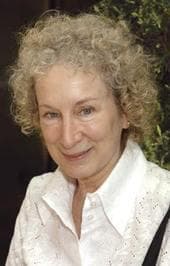
Margaret Eleanor Atwood is a Canadian poet, novelist, literary critic, essayist, teacher, environmental activist, and inventor. Since 1961, she has published eighteen books of poetry, eighteen novels, eleven books of non-fiction, nine collections of short fiction, eight children's books, two graphic novels, and a number of small press editions of both poetry and fiction. Atwood has won numerous awards and honors for her writing, including two Booker Prizes, the Arthur C. Clarke Award, the Governor General's Award, the Franz Kafka Prize, Princess of Asturias Awards, and the National Book Critics and PEN Center USA Lifetime Achievement Awards. A number of her works have been adapted for film and television.







