
Biography coming soon.

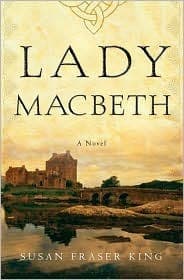
Susan Fraser King (2008)
Genre
Historical Fiction / Romance
Reading Time
12 Minutes
Key Themes
See below
Sign in to track this book
A Celtic queen, descended from kings and toughened by war, must navigate treacherous politics and a passionate, dangerous love to secure her son's legacy and unite Scotland.
Gruadh, or Rue, grows up in Atholl, in the household of her grandfather, the King of Scots. She is the last female descendant of Kenneth mac Alpin, a significant royal line, which makes her a valuable part of the political landscape. Her childhood includes her strong mother and the early loss of her father. Rue learns about her heritage and her people's warrior ways, including archery, from a young age. She understands the constant feuds and power struggles among Scottish lords and the threats from Vikings and Saxons; these experiences shape her view of survival and leadership.
Rue marries Gillacomgain, the powerful Mormaer of Moray. This is a strategic alliance meant to solidify power and prevent more feuds. Despite the political nature of their union, Rue and Gillacomgain grow to like and respect each other. They have a son, Lulach. However, their happiness is brief. Gillacomgain is a strong warrior but also a target for rivals. The constant threat of betrayal and violence is a backdrop to their lives, and Rue, though a wife and mother, knows how uncertain their position and her son's future are.
Tragedy happens when Gillacomgain is ambushed and killed by his cousin, Macbeth. Rue is left a widow, pregnant with her second child, and vulnerable. To secure her position and her son's safety, she makes a swift and difficult decision. To consolidate power and prevent more bloodshed, Rue is forced to marry Macbeth, the man who killed her husband. This union starts with resentment and a deep sense of injustice for Rue, but also a practical understanding of survival in a harsh world. She must navigate her new role as wife to her enemy, all while protecting her unborn child and Lulach.
Living in Macbeth's stronghold in Moray, Rue initially sees him with suspicion and hatred. However, as she observes him, she begins to see a complex man: a skilled warrior, a shrewd leader, and surprisingly, a man capable of kindness and justice. Macbeth, for his part, respects Rue's intelligence, strength, and royal lineage. They face external threats together, including Viking raids and Scottish feuds. Through shared challenges and the demands of governance, a grudging respect slowly develops between them, gradually becoming a deeper, more complicated bond. Rue gives birth to her second child, a stillborn daughter, deepening her sorrow but also strengthening her resolve.
Macbeth's ambitions extend beyond Moray; he wants a united Scotland, free from internal strife and outside threats. He recognizes that Rue's royal bloodline is important to making his claim to the throne legitimate. Together, they navigate the dangerous political landscape, forming alliances and confronting rivals. Macbeth's strategic mind and military skill, combined with Rue's lineage and influence, make them a strong force. Rue, initially resistant, comes to understand Macbeth's vision for Scotland's stability and her son Lulach's future, who is still a potential heir. The idea of kingship for Macbeth, and queen-ship for her, becomes a real goal.
The path to the throne is dangerous. King Duncan, Macbeth's cousin, is seen as a weak ruler by many. After a battle where Macbeth is victorious, an opportunity arises. Duncan, wounded, seeks refuge. In a controversial act, Macbeth decides to kill King Duncan, either directly or through his men, to take the crown. Rue knows about the political plans and the grim need for such an act in their world, though the exact details of her involvement or knowledge are not clear. This event marks their definite turn towards the throne, solidifying their reputation and setting them on a dangerous new course.
Macbeth is crowned King of Scots, and Rue becomes his Queen. Their reign is a time of relative stability and prosperity for Scotland. Macbeth is a capable and just ruler, and Rue, as Queen, actively participates in governance, using her influence and intelligence to advise her husband. They work to unite Scotland's different groups and protect its borders from invaders. However, their position is never truly secure. Duncan's death, the lingering resentments of rival lords, and the constant threat of betrayal mean they must always be watchful, fighting to keep their hard-won power and legacy.
Duncan's son, Malcolm Canmore, has fled to England and is gathering support from the English king, Edward the Confessor. He is a significant and growing threat to Macbeth's reign, a direct challenge to their legitimacy. Rue and Macbeth know how determined Malcolm is to reclaim his father's throne and the powerful forces he is gathering. This outside pressure forces them to strengthen their defenses and alliances, but the threat is constant. The story moves towards a confrontation, showing how uncertain their rule is and the inevitable results of their rise to power.
Malcolm Canmore, supported by English forces and unhappy Scottish lords, invades Scotland. The decisive confrontation happens at Dunsinane, where Macbeth and his loyalists make their stand. Rue, though not on the battlefield, is deeply involved in the preparations and feels the emotional toll of the war. The battle is fierce, and despite Macbeth's initial strength and the loyalty of some, the superior numbers and the betrayal of others begin to turn the tide against them. This battle is the culmination of all the political and military struggles they have faced, a desperate fight for their kingdom and their lives.
Macbeth is defeated and killed in battle, traditionally by Macduff. His reign, and with it, the last of Celtic kingship, ends. Rue is left a widow once more, but her story does not end with Macbeth's death. She must now navigate the aftermath, ensuring the safety of her son, Lulach, who briefly succeeds Macbeth, and trying to preserve what she can of their legacy. Rue's resilience and determination are tested as she faces the new political order. Her life continues, showing her strength and her lasting connection to Scotland's ancient royal lines.
The Protagonist
From a politically valuable royal pawn, Rue transforms into a powerful queen who, alongside Macbeth, strives to unite Scotland, ultimately facing the tragic downfall of her reign.
The Protagonist/Supporting
Macbeth rises from a powerful regional lord to King of Scots, driven by ambition and a desire for a united Scotland, only to be overthrown by his rivals.
The Supporting
Gillacomgain's brief but impactful life establishes Rue's initial family and the violent political landscape before his untimely death propels the plot forward.
The Supporting
Lulach serves as a constant reminder of Rue's lineage and motivation, briefly succeeding Macbeth but ultimately unable to secure a lasting reign.
The Antagonist/Supporting
Duncan's reign and subsequent assassination by Macbeth serve as the catalyst for Macbeth and Rue's ascent to the throne, defining their conflict with his son.
The Antagonist
Malcolm Canmore transforms from a dispossessed prince into the avenging force that ultimately overthrows Macbeth and claims the Scottish throne.
The Supporting
Donalbane's presence primarily reinforces the continued threat to Macbeth's reign from Duncan's surviving sons.
The Supporting
Though mostly a figure from the past, his influence as Rue's grandfather establishes her royal legitimacy and early understanding of power.
The novel explores the harsh realities of gaining and keeping power in eleventh-century Scotland. It shows the constant struggle between competing lords, the need for strategic marriages, and the violence often required to seize the throne. It compares different forms of leadership, from Duncan's perceived weakness to Macbeth's ambition and vision for a united Scotland. The theme also examines the legitimacy of power, whether through bloodline, conquest, or good governance, and the sacrifices the crown demands from both the ruler and their family.
“In this land, a crown is not given, it is taken. And once taken, it must be held with iron and blood.”
Rue's story is about human resilience in the face of constant danger, loss, and political upheaval. From losing her first husband and being forced to marry his killer, to navigating the difficult court and facing the downfall of her reign, Rue consistently adapts and fights for her survival and her son's future. The theme highlights the mental and emotional strength needed to survive in a society defined by warfare, betrayal, and life's uncertainties, especially for women in positions of influence.
“I had learned early that grief was a luxury I could ill afford. Survival demanded all of me.”
The complex interaction between personal feelings and political need is a central theme. Rue's marriages, first to Gillacomgain and then to Macbeth, are initially driven by duty and strategy, yet they grow to include affection and respect. The novel explores how love can grow in unexpected circumstances, even between former enemies, but also how it can be overshadowed by ambition and the demands of power. Betrayal, both personal and political, is a constant threat, shaping relationships and leading to devastating consequences, from Gillacomgain's murder to Macbeth's eventual downfall.
“Our marriage was forged in blood and necessity, yet from those harsh beginnings, something unexpected grew.”
The novel challenges common ideas of women in eleventh-century Scotland by showing Rue as a powerful and influential figure. Despite living in a male-dominated warrior society, Rue uses her intelligence, lineage, and understanding of ancient traditions to have significant influence. She is not just a pawn but an active participant in political strategy, an advisor, and a protector of her family and legacy. The theme highlights the strength and agency of women who, though they may not fight on the battlefield, shape history through their cunning, resilience, and connection to cultural heritage.
“A queen's power lies not in the sword she carries, but in the wisdom she holds and the blood that flows in her veins.”
Rue's lineage as a key to legitimacy
Rue's direct descent from Kenneth mac Alpin, the first King of Scots, is a crucial plot device. It provides her with immense political value and legitimacy, making her a desirable wife for powerful lords and ultimately essential for Macbeth's claim to the throne. This lineage underpins many of the political alliances and conflicts in the story, driving characters' actions and motivations as they seek to either control or leverage this powerful heritage. It is the very reason Rue finds herself in the center of the dynastic struggles.
Unions dictated by power and survival
The forced marriage between Rue and Macbeth, following the murder of her first husband, is a central plot device. It immediately creates high stakes, personal conflict, and a complex dynamic between the protagonists. This device highlights the brutal realities of political alliances in the era, where personal feelings were secondary to consolidating power and preventing further feuds. It forces Rue to confront her enemy daily, leading to the gradual development of their complex relationship and setting the stage for their shared destiny as king and queen.
Foreshadowing and the influence of the supernatural
While not as overtly supernatural as Shakespeare's version, the novel incorporates elements of prophecy and omens, often through Rue's connection to ancient Celtic traditions and her 'sight.' These subtle hints and premonitions foreshadow significant events, such as Macbeth's rise to power or impending dangers, adding a layer of mysticism and inevitability to the narrative. They serve to deepen the Celtic atmosphere and suggest that destiny, or at least powerful unseen forces, play a role in the characters' lives and the unfolding of history.
A unifying external enemy
The constant presence of external threats from Viking raiders and Anglo-Saxon forces serves as a significant plot device. It not only provides recurring action and danger but also acts as a catalyst for Scottish lords to consider unity. Macbeth's vision of a strong, united Scotland is often framed in response to these external pressures. This device underscores the need for effective leadership and a centralized kingdom, justifying Macbeth's ambitions and providing a common enemy against which Scottish factions can (or should) unite.
Ready to see how well you understood this book? Take our interactive quiz with 10 questions.
Biography coming soon.







