“Ours is essentially a tragic age, so we refuse to take it tragically.”
— Opening lines of the novel, setting the tone.

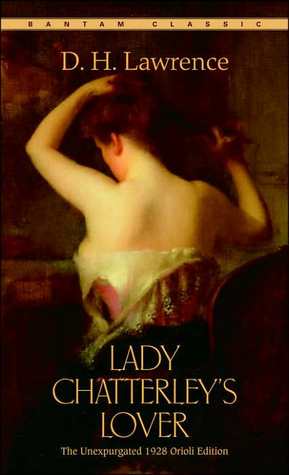
D.H. Lawrence (1928)
Genre
Historical Fiction / Romance
Reading Time
630 min
Key Themes
See below
Sign in to track this book
A lonely aristocratic wife finds freedom and passion in a forbidden affair with her estate's gamekeeper, breaking society's rules and finding her own desires.
Constance Reid, an intellectual and artistic woman, marries Sir Clifford Chatterley, a wealthy baronet. Their early marriage is short, as Clifford leaves for World War I. He returns severely wounded, paralyzed from the waist down, and impotent. They settle at Wragby Hall, the Chatterley estate, where Clifford, in a wheelchair, writes popular, cynical short stories and manages his coal mines. Connie, at first devoted, feels increasingly isolated and unfulfilled by their sexless marriage and Clifford's growing self-absorption and intellectual distance. She longs for physical connection and a more lively life outside Wragby and Clifford's intellectual world.
Life at Wragby Hall becomes stifling for Connie. Clifford focuses entirely on his writing and managing his industrial estate, seeing his workers as mere parts of a machine. He becomes more dependent on Connie for physical care, yet emotionally distant. Connie feels her youth and energy fading. Her sister, Hilda, and other friends visit, but their conversations are largely intellectual and empty, not addressing Connie's deep emotional and physical needs. In a desperate attempt for physical release, Connie has a brief, passionless affair with Michaelis, an Irish playwright and one of Clifford's literary friends. This encounter leaves her feeling even more empty and disappointed, highlighting the lack of true intimacy in her life.
While walking in the woods on the Wragby estate, Connie often passes the gamekeeper's cottage. She first properly meets Oliver Mellors, the estate's reclusive and surly gamekeeper, when she visits his lodge to ask about pheasants for Clifford. Mellors is a working-class man, but also intelligent and articulate, having served as an officer in India and endured a difficult marriage. His directness, natural connection to the land, and lack of pretense contrast sharply with the artificiality and intellectualism of Clifford and his friends. Connie is initially wary of him, but finds herself increasingly interested in his raw masculinity and honesty, sensing an energy missing from her own life. She watches him with growing, unacknowledged fascination.
Connie starts making regular visits to Mellors's cottage, at first pretending to collect eggs or seeking solitude away from Wragby. During these visits, they have hesitant conversations, slowly breaking down social barriers. Mellors, though reserved at first, senses Connie's unhappiness and her longing for something more. One day, she sees him washing himself, and the sight of his naked body deeply affects her, awakening a hidden sensuality. Their interactions become charged with unspoken desire. Eventually, in a moment of shared vulnerability and understanding, they have their first sexual encounter in the gamekeeper's hut, a tentative but important step towards physical and emotional awakening for Connie.
As their affair continues, Connie and Mellors meet regularly in the secluded woods and at his cottage. Their lovemaking becomes more passionate and uninhibited, freeing Connie from the emotional and physical repression she has experienced. Mellors teaches her to embrace her body and sexuality, moving beyond physical release to a deeper, more spiritual connection with herself and with nature. Connie experiences a deep reawakening of her senses, feeling truly alive for the first time in years. She finds comfort and joy in the natural world around them, a sharp contrast to Wragby's sterile environment. Mellors, too, finds a renewed sense of purpose and connection through their relationship, overcoming his own cynicism and disappointment.
While Connie's affair with Mellors flourishes, Clifford becomes more absorbed in his industrial ventures and writing, growing more dependent on Connie for daily care and companionship. He remains unaware of her true feelings and her secret life. Meanwhile, Mellors's estranged wife, Bertha Coutts, a coarse and volatile woman, reappears, creating tension and threatening to expose their affair. Bertha's presence highlights Mellors's difficult past and the social challenges he faces. Connie becomes pregnant, though she initially attributes it to Michaelis to avoid suspicion. The joy of her newfound love is lessened by the coming crisis and the social implications of their forbidden relationship.
Bertha Coutts, driven by jealousy and resentment, tells Clifford about the affair. The news shatters Clifford's carefully built world and his sense of control. He confronts Connie with the accusation, reacting with outrage and a wounded sense of ownership. He cannot understand her desire for a physical relationship, seeing it as a betrayal of his intellectual and social standing. Connie, no longer willing to live a lie, openly admits her love for Mellors and her pregnancy. The confrontation is bitter, showing the vast difference between their values and desires. Clifford, wounded in his pride, refuses to grant Connie a divorce, trapping her in a legal and social dilemma.
Following the explosive confrontation, Connie realizes she cannot continue living at Wragby or with Clifford. She makes the difficult decision to leave, choosing a life with Mellors and their unborn child over her aristocratic comforts and social standing. Her sister, Hilda, at first disapproving, eventually offers her support. Connie leaves Wragby, leaving behind a life of luxury and intellectual emptiness for an uncertain future. She understands the social ostracism and hardship she will likely face, but her love for Mellors and her desire for a life of honest connection and physical fulfillment outweigh these concerns. Mellors, too, faces dismissal from his job and the loss of his home.
Connie and Mellors must separate temporarily while they await their divorces. Connie travels to Venice with her sister, Hilda, to allow time for the scandal to die down and for legal proceedings to unfold. Mellors, dismissed from Wragby, finds work as a farmer, embracing a simpler, more natural life. During this separation, they exchange letters, confirming their love and commitment. The letters show their longing for reunion and their shared vision of a life together, free from social expectations and class divisions. They both endure the difficulties of their individual situations, holding onto hope for a future together.
As the legal processes slowly move forward, Connie and Mellors remain firm in their love and their determination to build a life together. Mellors, now working on a farm, expresses his desire for a life connected to the earth, a life of genuine labor and natural rhythms. Connie, despite the social condemnation she faces, is resolute in her choice. The novel ends with Connie and Mellors looking towards a future where they can be together, unburdened by the past. They imagine a life of simplicity, passion, and honesty, a life based on their deep physical and emotional connection, and a rejection of modern industrial society's artificiality. Their future is uncertain but full of hope for a new beginning.
The Protagonist
Connie transforms from a repressed, unfulfilled wife to a woman fully awakened to her sexuality and emotional needs, willing to defy social conventions for authentic love.
The Antagonist/Supporting
Clifford remains largely static, becoming more entrenched in his intellectual and industrial world, unable to understand or meet Connie's needs, leading to the dissolution of their marriage.
The Protagonist/Lover
Mellors moves from a cynical, reclusive existence to finding renewed purpose and love through his relationship with Connie, embracing a future of authentic connection.
The Supporting
Hilda evolves from a position of societal judgment to one of empathetic understanding and support for her sister's unconventional choices.
The Supporting/Antagonist
Bertha remains a static character, serving primarily as a catalyst for conflict and a representation of Mellors's past struggles.
The Mentioned
Michaelis serves as a temporary, unsatisfying diversion for Connie, highlighting her deeper needs.
The novel contrasts nature's vibrant, life-affirming power with the dehumanizing, sterile forces of industrialization and modern society. Wragby Hall, surrounded by beautiful, ancient woods, is also bordered by Clifford's ugly, polluting coal mines. Mellors, the gamekeeper, embodies a natural, earthy existence, while Clifford represents the intellectual, mechanical, and exploitative aspects of industrial capitalism. Connie's journey is one of moving away from Wragby's artificiality and into the natural world, finding spiritual and physical renewal in the woods and through her connection with Mellors.
“For the human soul is by nature a wild thing, and cannot be caged.”
At its heart, the novel explores the human need for genuine sexual and emotional intimacy. Connie's marriage to Clifford is physically and emotionally barren, leaving her deeply unfulfilled. Her affair with Mellors is not just about sex but about a complete awakening of her body, spirit, and senses. Lawrence argues that true intimacy is essential for human vitality and happiness, and that society's repression of sexuality leads to a diminished existence. The clear descriptions of their lovemaking are central to this theme, showing the transformative power of uninhibited physical and emotional connection.
“Sex is the point of contact between body and spirit.”
The novel critically examines the rigid class structure of early 20th-century England and the barriers it creates. Connie is an aristocrat, while Mellors is a working-class man, and their affair crosses a significant social divide. Lawrence challenges the idea that class dictates worth or capacity for love, suggesting that true vitality and honesty can be found outside the upper echelons of society. The social fallout of their affair, especially the scandal and loss of status, highlights these oppressive class distinctions. Their eventual decision to build a life together represents a rejection of these artificial boundaries.
“The great mass of humanity is still in the dark ages, in the lower working class, and they are the people who will save us.”
Lawrence portrays the English aristocracy, especially through Clifford Chatterley, as sterile, decadent, and detached from real life. Clifford's paralysis symbolizes the impotence and decay of his class, while his intellectualism and focus on industrial wealth are presented as a retreat from true human experience. The novel suggests that the upper classes have lost their vitality and connection to the natural world, becoming emotionally and physically barren. Connie's rejection of Wragby and her aristocratic life for a simpler, more honest existence with Mellors signifies a hope for renewal outside of this decaying social structure.
“The world of the upper classes was a world of words, words, words.”
A central theme is the contrast between living an honest life, true to one's natural instincts and desires, and living an artificial life dictated by social rules, intellectualism, and materialism. Connie's life with Clifford is artificial, marked by intellectual discussions and social obligations that hide a deep emptiness. Mellors, with his earthy sensuality and connection to nature, represents honesty. Connie's journey is a quest for this honesty, shedding the artificial layers imposed by her upbringing and marriage to embrace her true self and desires, even if it means defying social norms.
“To be oneself, and not a copy of any other being, is to be true to oneself.”
The Wragby woods and the changing seasons symbolize fertility, renewal, and primal life.
The Wragby woods, particularly the gamekeeper's cottage and its surroundings, are a powerful symbol throughout the novel. They represent a sanctuary of natural life, fertility, and primal instincts, contrasting sharply with the sterile, mechanized world of Wragby Hall and the coal mines. The changing seasons, especially spring and summer, mirror Connie's awakening sexuality and emotional renewal. The animals, flowers, and the act of gardening or tending to nature are all symbolic of life, growth, and the 'phallic' energy that Lawrence champions as essential for human vitality. It's in nature that Connie finds her true self and connection.
Clifford Chatterley and Oliver Mellors serve as foils, representing opposing worldviews.
Clifford Chatterley and Oliver Mellors are expertly crafted as foil characters, highlighting the novel's central conflicts. Clifford embodies the intellectual, industrial, and sterile aspects of modern society, incapacitated physically and emotionally, focused on mind and possessions. Mellors, in contrast, represents the natural, sensual, and vital aspects of humanity, connected to the earth and capable of profound physical and emotional intimacy. Their contrasting characteristics and values serve to illuminate Connie's journey from repression to liberation, and underscore Lawrence's critique of modern society versus his vision of an authentic existence.
Letters exchanged between Connie and Mellors during their separation convey their enduring bond.
Towards the end of the novel, as Connie and Mellors are separated while awaiting their divorces, their communication primarily occurs through letters. This epistolary device serves several functions. It allows the characters to express their deepest thoughts, feelings, and hopes for the future more explicitly and intimately than they might in face-to-face dialogue, particularly given the social constraints. The letters maintain the emotional connection between them during their physical separation, reinforcing their commitment and illustrating the enduring nature of their love despite external obstacles. They also offer insights into their individual reflections and growth during this period of transition.
The narrator provides deep insight into characters' thoughts and societal commentary.
The novel employs a third-person omniscient narrator, allowing Lawrence to delve deeply into the inner thoughts and feelings of Connie, Mellors, and even Clifford. This narrative perspective is crucial for understanding the characters' motivations, their struggles, and their transformations. Beyond character psychology, the omniscient narrator also provides extensive philosophical and social commentary, directly articulating Lawrence's critiques of industrialization, class structures, and sexual repression. This allows the author to guide the reader's interpretation of events and themes, making the novel as much a philosophical treatise as a love story.
“Ours is essentially a tragic age, so we refuse to take it tragically.”
— Opening lines of the novel, setting the tone.
“The human soul needs beauty more than bread.”
— Connie reflecting on her life and the lack of beauty in it.
“If only I could touch him, if only I could feel the man, instead of the mere sensation of his presence.”
— Connie's longing for genuine connection with Clifford, which is absent.
“The great mass of the people has been taught to prefer money to life.”
— Mellors's cynical view of modern society and its priorities.
“We've got to live, no matter how many skies have fallen.”
— Connie's determination to find life and meaning despite societal collapse.
“It was the only way to come to her senses, to give herself to the man, to feel the man, to know the man.”
— Connie's realization about the necessity of physical intimacy for self-discovery.
“He knew her, and she knew him. This was the greatest thing that could happen to any pair of human beings.”
— Describing the profound connection between Connie and Mellors.
“What the world wants is a good, sound, satisfying philosophy of life, and that's what I'm trying to work out.”
— Clifford's intellectual pursuit, contrasting with Connie's emotional needs.
“To be able to be your own self, and to feel your own feelings, and to express them, that is the great thing.”
— Mellors advocating for authenticity and emotional honesty.
“For the human soul is a vast and dark forest, and all you can do is to grope your way through it, and try to make sense of it.”
— A reflection on the complexity and mystery of human nature.
“The only thing for a man to do is to be a man, and for a woman to be a woman.”
— Mellors's view on gender roles and naturalness, albeit controversial.
“The world is supposed to be peopled with human beings, but it's really peopled with human minds.”
— Connie's observation about the disconnect between intellectualism and lived experience.
“I stand for the touch of life, against the dead mechanized world.”
— Mellors's declaration of his personal philosophy and resistance to industrialization.
“We should be alive, we should be flowing with the stream of life, not stuck in the mud of convention.”
— Connie's desire for a vibrant, unconventional life.
“What can you do with people when they are so afraid of their own feelings?”
— Mellors's frustration with the emotional repression of society.
Ready to see how well you understood this book? Take our interactive quiz with 10 questions.

D.H. Lawrence was a prominent English novelist, poet, playwright, and essayist whose works explored themes of sexuality, industrialization, and the human condition. His most controversial and famous novel, "Lady Chatterley's Lover," challenged societal norms and censorship. Other notable works include "The Rainbow," "Women in Love," and "Sons and Lovers," solidifying his place as a significant figure in modernist literature.







