“The wind was a living thing, a malevolent spirit determined to strip the flesh from his bones.”
— Describing the harsh Siberian weather as Johnny arrives.

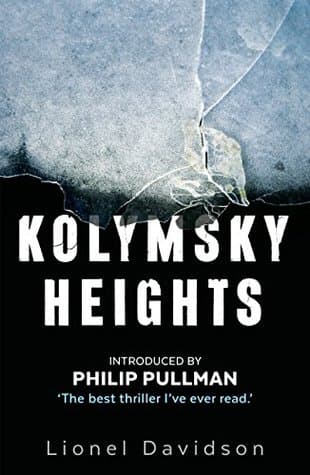
Lionel Davidson (1994)
Genre
Thriller / Mystery
Reading Time
10-12 hours
Key Themes
See below
Sign in to track this book
A desperate message from a Siberian research station, buried beneath permafrost and state secrets, calls an outsider to unravel a conspiracy that could shatter the world.
The story begins with a coded message, seemingly from a Soviet research station known as 'Kolymsky Heights,' reaching Western intelligence agencies. This station is officially non-existent, a deep secret in the remote Siberian permafrost. The message, written in an obscure Native American language (Kwakiutl), requests a specific individual to come to Kolymsky Heights: Johnny Porter. Western intelligence is baffled by the message's origin and its specific demand, as Porter is a highly unusual choice – a linguistics and survival expert, not a spy. The message hints at a dire situation and a need for external help, indicating something extraordinary and dangerous is happening within the isolated complex.
Johnny Porter, a Canadian academic fluent in Kwakiutl and an expert in wilderness survival, is approached by Western intelligence. Initially reluctant to engage in espionage, he is coerced into accepting the mission after they threaten to expose his past involvement in minor illegal activities, which could jeopardize his academic career and freedom. Porter is given minimal information about the facility or the true nature of the message, only that a scientist named Professor Boris Fedorov needs his help. He is tasked with infiltrating Kolymsky Heights, contacting Fedorov, and extracting whatever information the professor wishes to convey, with no clear exit strategy.
Porter's journey to Kolymsky Heights is meticulously planned and fraught with peril. He is dropped by submarine off the coast of Siberia, then must navigate hundreds of miles of unforgiving, frozen wilderness. Relying on his exceptional survival skills, he endures blizzards, sub-zero temperatures, and the constant threat of discovery by Soviet patrols. He travels disguised as an indigenous trapper, using his knowledge of local customs and languages to avoid suspicion. This initial phase of the mission highlights the extreme isolation and hostile environment surrounding Kolymsky Heights, emphasizing the impossibility of the task ahead.
After weeks of grueling travel, Porter finally reaches Kolymsky Heights. He observes the formidable security measures: electrified fences, motion sensors, and armed guards. Using his ingenuity and understanding of military perimeters, he manages to bypass the outer defenses. His infiltration shows his resourcefulness, as he exploits blind spots and environmental factors to gain entry without triggering alarms. The scale and secrecy of the facility become apparent, reinforcing the high stakes of his mission and the danger he is in. He realizes that getting in was only the first, though monumental, hurdle.
Porter eventually contacts Professor Boris Fedorov within the complex, who immediately reveals a startling truth: he is not Boris Fedorov. Instead, he is a disguised Western agent named 'Fedorov' (his true identity is never fully revealed), who has been embedded within Kolymsky Heights for years. The real Boris Fedorov, the brilliant scientist, has been dead for some time, murdered by the Soviet authorities. The agent explains that he has been impersonating Fedorov to continue his work and uncover the station's true purpose, sending the Kwakiutl message as a desperate last resort when he feared his cover was about to be blown.
The imposter Fedorov explains that Kolymsky Heights is not merely a research station but a top-secret biological weapons laboratory. The scientists there are developing a highly virulent and incurable pathogen, intended for use as a devastating weapon. He reveals that the scientists, including the real Fedorov, were forced to work on this project, and dissent was met with lethal force. The agent has been meticulously gathering evidence of this horrific research, including samples of the pathogen and detailed reports, intending to expose it to the world. He emphasizes the urgent need to get this information out before the Soviets perfect the weapon or discover his deception.
With the true nature of Kolymsky Heights exposed, Porter and the false Fedorov work together to formulate an escape plan. The agent has already prepared a cache of vital intelligence, including scientific data, research notes, and biological samples. Their plan involves exploiting a temporary weakness in the facility's security and using Porter's survival skills to navigate the treacherous external environment. They understand that their chances are slim, as the entire Soviet military will be mobilized to prevent the information from reaching the West. The plan is intricate and relies heavily on precise timing and sheer luck, highlighting the extreme danger they face.
Their escape from Kolymsky Heights is immediately detected, triggering a massive Soviet manhunt. Porter and the false Fedorov are pursued across the frozen tundra by highly trained Spetsnaz units, helicopters, and even tanks. They engage in a series of harrowing chases and close calls, using their combined knowledge of survival, evasion, and the local terrain to stay one step ahead. The agent, despite his scientific background, displays remarkable resilience and tactical acumen, while Porter's wilderness expertise proves invaluable. The relentless pursuit highlights the Soviet Union's determination to keep the secrets of Kolymsky Heights buried.
During one of the most intense phases of the pursuit, the false Fedorov is gravely wounded. Recognizing that he cannot continue and that their mission is paramount, he makes a heroic sacrifice. He ensures that Porter has the critical evidence and urges him to continue alone, drawing the Soviet forces' attention away from Porter. His death is a poignant moment, emphasizing the human cost of the mission and the deep commitment of those fighting against such insidious threats. Porter is left to carry the burden of the mission and the weight of his companion's sacrifice, further fueling his determination.
Now alone, wounded, and suffering from exposure, Porter continues his desperate trek towards the designated extraction point. He battles not only the elements and the pursuing Soviets but also his own physical and mental exhaustion. His survival skills are pushed to their absolute limits as he navigates treacherous ice fields and dense forests. The pursuit remains relentless, but Porter's sheer willpower and ingenuity allow him to evade capture repeatedly. He knows that the fate of the world, or at least the prevention of a devastating biological weapon, rests solely on his ability to deliver the evidence.
Against all odds, Porter reaches the extraction point, where he is met by a Western submarine. He is barely alive but successfully delivers the biological samples and documents. The intelligence is immediately analyzed, confirming the horrifying nature of the biological weapons program at Kolymsky Heights. The information is subsequently leaked to the international community, causing a global outcry and forcing the Soviet Union to confront its clandestine activities. The revelation leads to significant diplomatic fallout and ultimately contributes to efforts to dismantle such dangerous research, validating the immense sacrifices made by Porter and the false Fedorov.
The Protagonist
Porter transforms from a cynical, self-preserving academic into a selfless hero who risks everything to expose a global threat.
The Supporting
Revealed as a long-term deep-cover agent, he guides Porter and ultimately sacrifices himself to ensure the mission's success.
The Antagonist (implied)
Remains an unseen, powerful antagonist, representing the oppressive Soviet regime.
The Mentioned
His death and the subsequent impersonation drive the central mystery and the urgency of the mission.
The Supporting
They set the mission in motion and are the recipients of the intelligence, remaining largely static figures.
The Antagonist
A relentless and highly effective pursuer, representing the immediate threat to the protagonists.
The novel explores the immense cost associated with both the pursuit of dangerous knowledge and the efforts to keep it secret. Kolymsky Heights itself is a monument to this theme: a secret facility dedicated to creating horrific biological weapons, where scientists are prisoners and dissenters are murdered. The false Fedorov's years of sacrifice and ultimate death highlight the personal toll of exposing such secrets. The Soviet regime's brutal measures to maintain secrecy, including the relentless pursuit of Porter, demonstrate the lengths power will go to protect its hidden truths, regardless of the human cost.
“Kolymsky Heights was a place built on secrets, fueled by fear, and guarded by death.”
A central theme is the extraordinary resilience of the human spirit when faced with overwhelming challenges. Johnny Porter, an academic with no formal espionage training, relies solely on his unique skills in linguistics, wilderness survival, and sheer ingenuity to navigate the brutal Siberian landscape and penetrate a top-secret facility. His ability to endure extreme cold, evade highly trained soldiers, and overcome physical and mental exhaustion against a technologically superior adversary shows the power of individual determination. The repeated escapes and near-death experiences exemplify the constant struggle against seemingly insurmountable obstacles.
“He knew the tundra, he knew the cold, and he knew how to live when everything else wanted him dead.”
The book explores the conflict between the moral obligation to expose horrific truths and the perceived national interest that drives clandestine operations. The biological weapons program at Kolymsky Heights represents a grave moral failing, yet it is justified by the Soviet state as a matter of national security. The false Fedorov embodies the individual who chooses moral responsibility over loyalty to a system, risking everything to prevent a global catastrophe. Porter, initially coerced, ultimately embraces this moral stance, understanding that some secrets are too dangerous to remain hidden, regardless of geopolitical consequences.
“Some truths are too terrible to be kept hidden, no matter the cost to those who bring them to light.”
The theme of identity, both assumed and true, is central. The twist of the false Fedorov's identity highlights the pervasive nature of deception in espionage. He lives a lie for years, sacrificing his true self for a mission. Porter himself adopts multiple disguises and personas to infiltrate the region. This theme explores how individuals can be transformed or hidden by the roles they play, and the psychological toll of maintaining such elaborate deceptions. It also questions the nature of truth when everyone operates under a veil of secrecy and misdirection.
“In that frozen hell, names were interchangeable, and truth was a luxury no one could afford.”
The critical information and samples of the biological weapon that drive the entire plot.
The biological weapon data and samples from Kolymsky Heights serve as the primary MacGuffin. It is the object that everyone in the story is either trying to acquire (Porter and the false Fedorov) or prevent from being acquired (Soviet forces). Its specific nature – a devastating pathogen – provides the high stakes and moral urgency for the mission, but the details of its composition are less important than its function in motivating the characters and advancing the plot. The entire perilous journey and all the sacrifices are undertaken to secure and deliver this crucial information to the outside world.
The initial premise of Boris Fedorov's plea is misleading, creating a narrative twist.
While not a full unreliable narrator in the traditional sense, the initial premise of the story functions similarly. The audience, along with Porter, believes the mission is to rescue a brilliant scientist named Boris Fedorov who sent the message. The reveal that the 'Fedorov' Porter meets is actually a Western agent who has been impersonating the real, deceased Fedorov creates a significant narrative twist. This deception misleads the reader about the true nature of the mission and the identity of the key players, heightening suspense and making the subsequent revelations more impactful. It challenges the reader's assumptions and adds a layer of complexity to the espionage narrative.
The remote, harsh Siberian environment functions as a character and a formidable obstacle.
Kolymsky Heights, both the facility and its surrounding Siberian wilderness, acts as a powerful plot device. Its extreme isolation and brutal climate are not just a backdrop but an active antagonist, constantly threatening the characters' survival. The permafrost, blizzards, and vast distances create immense logistical challenges for infiltration and escape, making every step a struggle for life. The remote setting also enhances the sense of secrecy and claustrophobia within the hidden facility, emphasizing how truly cut off it is from the outside world and making the mission seem almost impossible. It amplifies the stakes and the heroism required.
Porter's unique and seemingly irrelevant skills are crucial to the mission's success.
Johnny Porter's highly specific and unusual skillset – expertise in the obscure Kwakiutl language and unparalleled wilderness survival abilities – serves as a critical plot device. The Kwakiutl language is the key to understanding the initial message, making Porter the only person who can interpret the plea. His survival skills are then indispensable for the physical infiltration and, more importantly, the desperate escape through the Siberian wilderness. This device grounds the extraordinary mission in Porter's unique capabilities, making him uniquely suited for an otherwise impossible task and providing a logical, albeit highly improbable, reason for his involvement.
“The wind was a living thing, a malevolent spirit determined to strip the flesh from his bones.”
— Describing the harsh Siberian weather as Johnny arrives.
“In this place, truth was not what you knew, but what you could prove.”
— Johnny reflecting on the nature of evidence and authority in the Soviet system.
“He had come to a land where the past was a minefield and the future a mirage.”
— Johnny contemplating the historical and political landscape of Siberia.
“Fear, he realized, was not a single emotion but a spectrum, ranging from a cold dread to a frantic, clawing terror.”
— Johnny experiencing various levels of fear during his escape.
“The greatest prison was not made of walls, but of the mind.”
— A philosophical observation on psychological confinement versus physical.
“Every man has a price, but some men pay it with their lives.”
— A character's cynical remark about human nature and sacrifice.
“He was a ghost in a land of shadows, trying to find a solid truth in a world of lies.”
— Johnny's feeling of being an outsider and his quest for information.
“The silence of the taiga was not empty, but full of unseen eyes and unheard intentions.”
— Describing the oppressive atmosphere of the Siberian wilderness.
“Hope was a dangerous thing in Kolymsky Heights, a fragile flame easily extinguished.”
— Johnny's internal struggle with optimism in a bleak situation.
“To survive here, you had to become as hard as the ice and as cunning as the wolf.”
— A character's advice or Johnny's realization about adapting to the environment.
“He was learning that the shortest distance between two points was rarely a straight line in the Soviet Union.”
— Johnny's frustration with bureaucracy and indirectness.
“The past was a weight that crushed the present, and the future was merely its echo.”
— Reflecting on the enduring legacy of historical events and their impact.
“Sometimes, the most important weapon was not a gun, but a story.”
— Highlighting the power of narrative and information in espionage.
“Every step was a gamble, every breath a defiance.”
— Johnny's experience during his perilous escape.
Ready to see how well you understood this book? Take our interactive quiz with 10 questions.

Biography coming soon.







