“The secret ingredient is always butter. And sometimes bacon.”
— Chef mudge's advice to his protégé, setting a culinary tone.

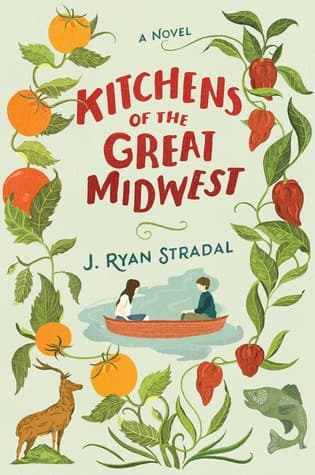
J. Ryan Stradal (2015)
Genre
Literary Fiction / Lifestyle
Reading Time
420 min
Key Themes
See below
Sign in to track this book
From puréed pork shoulder to secretive supper clubs, a Midwestern chef's culinary journey through love, loss, and lutefisk transforms her into a culinary legend, one dish at a time.
The story begins with Lars Thorvald, a humble but passionate chef, whose wife, Cynthia, leaves him and their infant daughter, Eva, for a sommelier. Devastated but determined, Lars raises Eva by teaching her his love for food. He starts her culinary journey early, preparing carefully made baby food, beginning with a puréed pork shoulder that he seasons perfectly. This early experience with complex flavors and the act of cooking sets the stage for Eva's future. Lars's dedication to food becomes his main way of connecting with and caring for Eva, shaping her taste and her understanding of the world through flavor. His efforts are a direct response to his heartbreak, putting his energy into creating a rich sensory environment for his daughter.
As a young child, Eva's taste develops in an unusual way, far beyond her peers. She prefers sophisticated flavors and textures over typical children's food, often surprising others. This is clear during a church bake sale where Eva, with her grandmother's help, makes an unusual dessert: a lemon bar with a hint of spice, instead of a standard chocolate chip cookie. Her creation, at first met with doubt, surprisingly wins first prize. This event confirms Eva's unique connection to food and hints at her future success, showing her natural ability to create new things and impress with her cooking skills, even at a young age, and often against common expectations.
The story moves to Braxton Utter, a young man who becomes very interested in craft beer. His story shows his dedication to brewing and his eventual opening of a successful brewery. Braxton's careful approach to ingredients and fermentation is like Eva's own cooking precision. While not directly interacting with Eva at this stage, his story shows the wider cultural move towards artisanal food and drink in the Midwest, a movement Eva will eventually lead. Braxton's search for the perfect pint shows the dedication and sometimes obsessive nature of those deeply involved in the food and drink industry, creating a background for Eva's own rise.
We learn about Pat Prager, Lars's mother and Eva's grandmother, a woman deeply connected to her Scandinavian heritage. Her chapter focuses on preparing and the cultural meaning of lutefisk, a traditional, often disliked, dish. Pat thinks about her life, her relationship with Lars, and her quiet influence on Eva's upbringing, especially her appreciation for traditional, if sometimes unusual, Midwestern foods. She shows the strength and down-to-earth nature of the region, and her stories provide a link to the food traditions that Eva, in her own modern way, will continue to respect and change. Pat’s kitchen is a place of comfort and tradition, shaping Eva’s early understanding of food as memory and heritage.
As Eva becomes a teenager, she experiences typical struggles and a desire for independence. Despite her unique taste, she briefly tries to fit in by rejecting her father's elaborate cooking and eating more common, processed foods. However, her deep connection to quality ingredients and complex flavors eventually returns. She begins to experiment with cooking on her own, exploring different cuisines and methods, often using food to express herself and deal with feeling like an outsider. This time marks a key change where Eva starts to take control of her culinary identity, moving past simply inheriting her father's passion to making her own way.
Eva Thorvald, now an adult, is a very sought-after and somewhat mysterious chef. She avoids traditional restaurant settings, choosing instead a secretive, pop-up supper club model. Her events are exclusive, with tickets selling out instantly, and the locations are often announced at the last minute. This creates an air of mystery around her and her food, making each meal a highly anticipated experience. Her cooking style uses local, often unusual, Midwestern ingredients in new ways, combined with sophisticated methods. Her fame grows through word-of-mouth and online talk, confirming her reputation as a culinary prodigy and an enigma in the food world.
The story introduces a character called the 'Chili King,' a chili fan whose life revolves around growing and eating the spiciest peppers. He becomes determined to get a specific, rare, hydroponically grown chocolate habanero pepper that Eva uses in her dishes. His tireless search for these peppers, and his eventual success in getting them, shows Eva's status as a culinary innovator and trendsetter. This chapter illustrates how Eva's influence goes beyond her immediate diners, inspiring and challenging others in the broader food community to find and appreciate unique ingredients, further solidifying her legendary status.
Cynthia, Eva's estranged mother, reappears in the story, now regretting leaving her daughter and Lars. Having followed Eva's growing cooking career from afar, she wants to reconnect. She attends one of Eva's exclusive supper club events, hoping for a chance encounter or an opportunity to speak with her. Her presence creates a clear tension, as Eva knows her mother is there but remains emotionally guarded. This chapter looks at forgiveness, longing, and the lasting effect of parental choices, as Cynthia deals with the results of her past actions and hopes for reconciliation with the now-famous chef.
Jerome, a childhood friend of Eva's, is her loyal assistant and business partner. He understands Eva's quiet nature and her desire for privacy, carefully managing the details and promotion of her secretive supper club. Their relationship is built on deep trust and mutual respect, with Jerome acting as the link between Eva's artistic vision and the practical side of running her cooking business. He protects her from the demands of fame, letting her focus only on her craft. Jerome's steady support allows Eva to keep her unique approach to cooking and her mysterious public image, showing the importance of chosen family and partnership.
The novel ends with a highly anticipated supper club event, carefully planned and carried out by Eva and Jerome. This feast is a culinary masterpiece and a very symbolic gathering where many of the story's parts come together. Cynthia is present, as are other characters whose lives have crossed with Eva's. The food served reflects Eva's journey, using elements from her past and her unique vision. During or after the event, there is a subtle but deep moment of understanding or reconciliation between Eva and Cynthia, not necessarily through words, but through shared experience and the unspoken language of food. This final supper club shows Eva's full acceptance of her identity and her ability to connect with others through her art.
The Protagonist
Eva evolves from a child with an unusual palate to a reclusive master chef, ultimately finding a form of reconciliation and self-acceptance through her culinary art.
The Supporting
Lars transforms from a heartbroken husband to a singularly devoted father, finding purpose in nurturing his daughter's unique gifts.
The Supporting
Cynthia moves from a woman seeking personal fulfillment outside her family to one filled with regret, ultimately seeking reconciliation with her daughter.
The Supporting
Pat remains a constant, grounding figure, witnessing Eva's development and reflecting on the continuity of family and culinary heritage.
The Supporting
Jerome develops from a supportive childhood friend into Eva's essential and trusted professional partner, instrumental in her success.
The Supporting
Braxton grows from a passionate amateur brewer to a successful craft brewery owner, establishing his own culinary legacy.
Food is the main way characters, especially Eva, understand themselves and their place in the world. Eva's unique taste and cooking journey are central to who she is, allowing her to express emotions and connect with others when words fail. Her quiet nature is balanced by the public display of her food. The book also explores how food traditions (like Pat's lutefisk) shape cultural and personal identity, and how making food (Lars's baby food, Braxton's beer) becomes a form of self-expression and purpose.
“She was learning that the best way to connect with people was not through words, but through what she put on their plates.”
The novel deeply explores how parents shape their children's lives, both by being there and by being absent. Lars's dedicated and passionate way of feeding Eva directly makes her the chef she becomes, making his culinary legacy her foundation. On the other hand, Cynthia's leaving creates an emotional emptiness that Eva deals with through her cooking. The book shows how parental choices, whether caring or neglectful, leave lasting marks, and how children often carry forward parts of their parents' passions or unresolved issues.
“Lars had poured his entire heartbroken self into those purees, and Eva had consumed it all, every ounce of his love and grief.”
Despite Eva's quiet nature, her pop-up supper club creates intense, close communities around her food. Each chapter, though focusing on individual characters, shows how food brings people together — from church bake sales to family meals, and the shared experience of a rare dish. The act of eating, enjoying, and talking about food creates bonds, bridges differences, and even helps with reconciliation, such as the subtle connection between Eva and Cynthia at the final feast. Food acts as a universal language for human connection.
“Food wasn't just sustenance; it was a conversation, a memory, a bridge between people.”
A constant theme throughout the book is the mix of joy and regret, success and loss in life. Cynthia's regret over leaving Eva, Lars's initial heartbreak, and Eva's own emotional caution highlight missed opportunities and paths not taken. Yet, among these sorrows, characters find comfort and satisfaction in their passions — Lars in Eva, Eva in her cooking, Braxton in his brewing. The novel suggests that even with missed chances, life offers unexpected joys and the chance to find purpose and connection.
“Sometimes the greatest love stories were the ones that never quite found their ending, but simply continued, in the flavor of a memory.”
The book carefully details the changing food scene of the Midwest, moving past traditional, often criticized, dishes like lutefisk to embrace modern culinary creativity. It shows the rise of artisanal craft foods, from Braxton's beer to Eva's hydroponic peppers and sophisticated supper clubs. This theme highlights how the Midwest, often seen as having simple food, is an evolving culinary region, mixing heritage with new approaches, and how local ingredients and traditions can be reimagined in new and exciting ways.
“The Midwest wasn't just casseroles and hot dish anymore. It was a canvas, waiting for someone to paint with flavor.”
Each chapter focuses on a different character and a specific dish, loosely connected to Eva.
The novel is structured as a series of interconnected short stories, with each chapter centered around a different character (or Eva at a different age) and a specific food or dish. While Eva Thorvald is the central figure, her story is told indirectly through the perspectives of those whose lives she touches, or through her own experiences at different stages. This allows for a panoramic view of the Midwestern food landscape and diverse character motivations, gradually building a complete picture of Eva's life and impact without directly following a linear, single-protagonist narrative. The dishes often serve as symbolic markers for each character's journey.
Food represents love, grief, identity, connection, and cultural heritage.
Food is not merely a setting or plot point but a profound metaphor throughout the book. It symbolizes love (Lars's baby food for Eva), grief (the meticulousness with which dishes are prepared), identity (Eva's unique palate, Pat's lutefisk), and connection (the shared experience of supper clubs). Each dish discussed, from pork shoulder to lemon bars to chocolate habaneros, carries symbolic weight, reflecting the emotional state, cultural background, or personal journey of the character associated with it, making food the central language of the novel's themes.
Eva's reclusive nature creates an aura of mystery and allows for diverse perspectives.
Eva Thorvald is portrayed as a somewhat reclusive and enigmatic figure, particularly in her adult life. Her pop-up supper club model and her preference for letting her food speak for itself contribute to her mysterious public persona. This narrative choice allows the author to explore Eva's impact through the eyes of others, rather than relying solely on her internal monologue. It builds anticipation for her appearances and makes her eventual moments of connection more impactful, reinforcing the idea that her art is her primary form of communication and self-expression.
The Midwest is a character itself, shaping the culinary and cultural landscape.
The Great Midwest is more than just a backdrop; it functions almost as a character in the novel. The regional identity, climate, local ingredients, and cultural traditions (like church bake sales and lutefisk) heavily influence the characters' lives and culinary choices. The book challenges stereotypes about Midwestern food, showcasing its evolving, vibrant, and innovative culinary scene. The setting grounds the story in a specific sense of place, highlighting the unique flavors and community spirit that define this part of America and how it shapes the characters' relationships with food and each other.
“The secret ingredient is always butter. And sometimes bacon.”
— Chef mudge's advice to his protégé, setting a culinary tone.
“Food isn't just fuel. It's memory. It's love. It's everything.”
— Evie's reflection on the deeper meaning of food and cooking.
“You can't rush perfection, especially when it comes to a good roux.”
— A culinary lesson about patience and fundamental techniques.
“The best dishes are often the simplest, if you let the ingredients speak for themselves.”
— Evie's philosophy on ingredient-driven cuisine.
“Every kitchen has its ghosts, and every dish tells a story.”
— A metaphorical observation about the history and personal touch in cooking spaces.
“Sometimes the greatest risk is not taking one, especially in the kitchen.”
— Encouraging experimentation and culinary bravery.
“A good meal can mend more than just hunger.”
— Highlighting the healing and comforting power of food.
“The Midwest isn't just cornfields and casseroles. It's a culinary heartland, if you know where to look.”
— Defending and celebrating the diverse food culture of the Midwest.
“You learn more from your mistakes than your successes, especially when your soufflé collapses.”
— A humorous but insightful take on learning from culinary failures.
“The aroma of baking bread is the closest thing to magic I know.”
— Evie's appreciation for the simple, comforting sensory experiences of food.
“Flavor is a journey, not a destination.”
— Describing the evolving nature of taste and culinary exploration.
“Never underestimate the power of a perfectly ripe tomato.”
— Emphasizing the importance of quality ingredients.
“Every bite tells a story of where it came from, and who prepared it.”
— A reflection on the provenance and personal touch in every dish.
Ready to see how well you understood this book? Take our interactive quiz with 10 questions.







