“The past is a stubborn thing. It clings to you, no matter how hard you try to shake it off.”
— Reflecting on the enduring impact of ancestral curses and historical events on present lives.

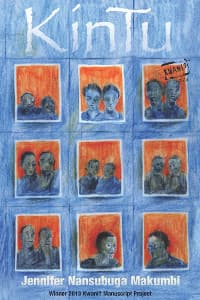
Jennifer Nansubuga Makumbi (2014)
Genre
Literary Fiction / Historical Fiction
Reading Time
12-15 hours
Key Themes
See below
Sign in to track this book
A multi-generational story of a Ugandan clan's struggle to outrun a 1750 curse, making them face tradition against modern life.
In 1750, Kintu Kidda, a Musoga man from Buddu, travels to Buganda to pay respect to the Kabaka, bringing his adopted son, Mpanga. During playful wrestling, Kintu accidentally kills Mpanga by breaking his neck. Overwhelmed by sadness and fear, Kintu buries Mpanga quickly and flees to Buddu. Mpanga's biological father, a forest spirit, sees this and curses Kintu and all his male descendants: they will die early, and their lives will be marked by bad luck and separation from their families. This event begins the story's central conflict, the lasting Kintu curse.
Generations later, in the early 20th century, Ntwire is a Kintu Kidda descendant living through colonial changes. He is a sensitive and somewhat sad man, burdened by his family's unspoken history and the expectations placed on him as a Kintu. He struggles with his identity, feeling caught between old customs and the modern world. Ntwire's life includes personal tragedies and a feeling of not being good enough, which he blames on himself but which the story subtly links to the underlying curse affecting the male line. His story shows how the curse works, not always in dramatic death, but in a constant sense of unease and unfulfillment.
Isaac Newton Kintu, Ntwire's son, belongs to a generation trying to escape the rural, traditional past. He seeks Western education and moves to Kampala, wanting a modern life and a professional career. Despite trying to distance himself from his ancestral village, the curse subtly follows him. He faces professional setbacks, personal disappointments, and a recurring feeling of being an outsider, even in the city. His story shows how hard it is to escape one's heritage and the curse's constant influence, even for those who reject old ways.
Livingstone Kintu, Isaac Newton's son, grows up in Kampala, mostly unaware of his family's cursed history. He is a bright and curious young man, but his childhood has family fragmentation and his parents' unspoken worries. He experiences personal tragedies, including losing loved ones, which, though seemingly coincidental, match the pattern of misfortune set by the curse. Livingstone's early life is marked by a desire for connection and understanding of his family's past, preparing him for his later efforts to find the truth and possibly break the cycle of suffering.
Miisi Kintu, a contemporary descendant, is a self-proclaimed prophet and healer with a deep understanding of the Kintu curse. He is burdened by this knowledge and his responsibility to his suffering family, yet he struggles to effectively help. Miisi's attempts to guide and protect his relatives often lead to frustration and helplessness. His character shows the struggle between spiritual insight and practical action, highlighting how difficult it is to confront a deeply rooted ancestral curse. He connects the curse's ancient origins and its modern appearances.
Abel Kintu, a young man from another family branch, is lost in modern Kampala, dealing with poverty, unemployment, and feeling alienated. He joins a charismatic cult leader, Mama Tendo, seeking purpose and community. Abel's vulnerability and desperation make him easy to manipulate. His story reflects the social challenges faced by young Ugandans and how the Kintu curse appears in feelings of displacement and a desperate search for belonging. His journey shows the dangers of seeking easy answers and the lasting effects of the curse on individuals without a strong family connection.
Kanani Kintu is an elder statesman of one Kintu branch, working to maintain traditional values and the clan's integrity in a fast-changing world. He protects family history, though his version of events is partial and sometimes self-serving. Kanani deals with the Kintu family's fragmentation and the challenges of uniting his estranged relatives. His efforts to gather the Kintu descendants for a significant family event form an important plot point, bringing together characters from different branches and making them confront their shared past. Kanani represents the lasting power of tradition and the difficulty of combining it with modern life.
The novel brings together many Kintu descendants in Kampala, prompted by a family crisis or a desire to reconnect. Characters like Miisi, Isaac Newton, Livingstone, Abel, and Kanani, along with others, meet, often for the first time. This gathering connects the different timelines and individual stories, showing how their experiences are linked. The gathering allows characters to share their personal struggles and begin to piece together the fragmented history of the Kintu curse. It emphasizes collective identity and the weight of shared heritage.
Through oral histories, dreams, and the family's collective memory, the full and accurate account of Kintu Kidda's accidental killing of Mpanga and the subsequent curse from Mpanga's spirit-father is slowly put together. This revelation is a key moment, clarifying the root cause of the family's misfortunes, which had been hidden by myth, misunderstanding, and broken stories. The curse's true origin, emphasizing the accidental nature of the death and the spirit's grief rather than bad intent, provides a new way for the Kintu descendants to understand their suffering. This understanding is essential for any hope of breaking the curse.
With knowledge of the curse's origin, the Kintu descendants, guided by elders and spiritual figures like Miisi, attempt a complex ritual to appease Mpanga's spirit and break the generational curse. This involves a journey back to the ancestral lands and a collective act of remembrance and reconciliation. The ritual is full of tension and uncertainty, as the family deals with their individual beliefs and the weight of tradition. The ritual's success is not guaranteed, and its effectiveness lies not just in performing the rites but in the Kintu clan's collective understanding, acceptance, and solidarity in acknowledging their shared past and seeking forgiveness.
After the ritual, the Kintu family faces an uncertain future. While there is a sense of release and a new understanding of their shared history, the novel suggests that the effects of generations of trauma and misfortune cannot simply disappear. The characters must now live their lives with this new knowledge, working to build better futures for themselves and their children. The ending implies that breaking a curse is not a single event but an ongoing process of healing, reconciliation, and conscious effort to live differently. The family's fragmentation begins to mend, but the past's scars remain a part of their collective identity, hinting at history's lasting power.
The Ancestral Protagonist/Originator of the Curse
From a respected patriarch to the unwitting architect of his family's suffering, Kintu's legacy is defined by a single, tragic accident.
The Catalyst/Victim
From a beloved son, Mpanga becomes the spectral origin point of a curse, his memory a constant shadow.
The Descendant/Victim of the Curse
Ntwire embodies the subtle, internal suffering of the curse, living a life of quiet longing and unfulfillment.
The Descendant/Modernist
Isaac Newton's arc is a journey of attempting to shed tradition for modernity, only to find the past's influence inescapable.
The Descendant/Seeker of Truth
Livingstone evolves from an unknowingly cursed individual to an active participant in uncovering and confronting his family's inherited trauma.
The Descendant/Prophet/Spiritual Guide
Miisi's arc is defined by his struggle to translate his prophetic knowledge into tangible action to help his cursed family.
The Descendant/Vulnerable Youth
Abel moves from desperate alienation to a misguided search for belonging, eventually finding a partial connection to his true heritage.
The Descendant/Patriarchal Elder
Kanani strives to maintain his family's unity and tradition, evolving from a keeper of partial history to a facilitator of collective truth.
The main theme is the lasting impact of an ancestral curse on a family over generations. The Kintu curse, starting from an accidental death in 1750, appears in various forms—early deaths, separation, misfortune, and a constant feeling of unease—affecting the male descendants. The story carefully traces how this historical event shapes the lives, choices, and identities of characters like Ntwire, Isaac Newton, and Livingstone, even when they do not know its origins. It explores how the past is not forgotten but lives in the present, influencing individual destinies and collective identity, showing that understanding and facing history is necessary for freedom. The curse stands for inherited trauma and the lingering effects of past wrongs.
“A curse, like a river, flows from its source, gathering strength and sorrow along its winding path, shaping every landscape it touches.”
The novel clearly explores the tension between traditional Ugandan customs and modern influences. Characters like Isaac Newton Kintu reject their rural heritage for Western education and city life, only to find that the past and its curses cannot be easily left behind. Conversely, figures like Kanani Kintu try to maintain traditional values and rituals to keep the family together. The story highlights the challenges of combining these two worlds, showing how individuals and families are often caught between respecting ancestral ways and adapting to contemporary societal changes. Breaking the curse often means reconnecting with traditional spiritual practices and re-evaluating what tradition truly means.
“You can go to the city, you can learn all their ways, but the blood that runs in your veins remembers the soil it came from.”
Kintu explores family—its divisions, its strong bonds, and the complex relationships that define it. The novel shows how the Kintu clan, despite being spread across time and geography, remains connected by their shared lineage and the curse. It looks into patriarchy, women's roles, and the importance of collective memory. The story emphasizes that family is not just about blood, but about shared stories, responsibilities, and the collective effort to face a common past. The eventual gathering of the Kintus, despite their differences, highlights the basic human need for connection and belonging within a larger family unit.
“A clan is not just a name; it is a tapestry woven with the threads of many lives, each knot a story, each tear a shared sorrow.”
The novel uses multiple perspectives and fragmented stories, showing how subjective memory is and how powerful storytelling can be. The 'truth' of the Kintu curse is not immediately clear but is slowly put together through different characters' accounts, dreams, and oral histories. Each character holds a piece of the puzzle, and the full picture appears only when these separate stories are combined. This theme emphasizes that history is often a debated space, and understanding the past requires listening to multiple voices and reconciling conflicting versions of events. Collective storytelling becomes a necessary step toward healing and breaking the curse.
“The truth is not a single stone, but a mosaic, each shard held by a different hand.”
At its heart, Kintu explores guilt, the desire for forgiveness, and the possibility of reconciliation. Kintu Kidda's initial act, though accidental, releases a deep sense of inherited guilt and suffering. The descendants deal with the consequences of an ancestor's mistake, and the story questions whether collective forgiveness can be achieved, not just between humans but also with the spiritual world. The eventual ritual to appease Mpanga's spirit represents an attempt at reconciliation, suggesting that true healing comes from acknowledging past wrongs, seeking understanding, and working towards collective absolution. It looks into the idea that forgiveness is not just for the person who caused harm, but for the victims and their descendants.
“To forgive is not to forget, but to understand that the past, however painful, does not have to define the future.”
The story jumps between different timelines and perspectives of Kintu descendants.
The novel employs a non-linear narrative, presenting the stories of various Kintu descendants across different centuries (from 1750 to the present day) in a fragmented, interwoven manner. This structure mimics the fragmented nature of memory and the way a curse's effects ripple through time. By jumping between eras and characters, the author gradually reveals pieces of the overall Kintu family history and the origins of the curse. This approach builds suspense, emphasizes the enduring nature of the curse, and allows the reader to piece together the complex tapestry of the family's experiences alongside the characters themselves, rather than through a straightforward chronology. It highlights the idea that the past is always present.
A generational curse afflicting the male line of the Kintu family.
The ancestral curse is the central plot device, originating from Kintu Kidda's accidental killing of Mpanga. It dictates the misfortunes, untimely deaths, and separations experienced by the male Kintu descendants. The curse acts as both a narrative engine, driving the characters' struggles, and a symbolic representation of inherited trauma and the weight of history. Its gradual revelation and the characters' efforts to understand and break it form the core conflict of the novel. The curse isn't merely a magical element but a profound metaphor for the psychological, social, and cultural burdens passed down through generations, shaping identity and destiny.
The story is told through the viewpoints of various Kintu descendants and their collected narratives.
The narrative is constructed from the varying perspectives of numerous Kintu descendants, each offering their unique understanding, memories, and interpretations of their family's history and the curse. This includes their personal stories, dreams, and the oral traditions passed down through the generations. This device highlights the subjective nature of truth and memory, as no single character possesses the full story. The reader, like the characters, must piece together the fragmented accounts to form a complete picture of the curse's origin and impact, emphasizing the importance of collective storytelling and the reconciliation of different viewpoints to uncover a deeper truth.
The forest and its spirits represent ancient power, nature, and the source of the curse.
The forest, particularly where Mpanga is buried, and the spirits associated with it (especially Mpanga's biological father, the forest spirit) serve as powerful symbolic elements. The forest represents ancient, untamed power, the realm of the spiritual that predates human civilization and colonial influence. It is the source and enforcer of the Kintu curse, symbolizing the deep connection between humanity and nature, and the severe consequences of violating that balance. The spirits are not just supernatural beings but embody a profound sense of justice and the enduring power of the ancestral realm, reminding the characters that some forces transcend human understanding and control.
“The past is a stubborn thing. It clings to you, no matter how hard you try to shake it off.”
— Reflecting on the enduring impact of ancestral curses and historical events on present lives.
“Every family has its secrets, its own private graveyard where the skeletons dance.”
— A contemplation of the hidden histories and unspoken truths within the Kintu clan.
“When you carry a curse, it's not just yours. It's everyone's who comes into contact with you.”
— Exploring the communal burden and ripple effect of the Kintu curse across generations.
“The land remembers. It holds the echoes of every joy and every sorrow, every drop of blood spilled.”
— Describing the spiritual connection to the land and its role as a silent witness to history.
“There are wounds that time cannot heal, only cover with a thin scab.”
— Commenting on the deep-seated trauma and unresolved grief that persists through generations.
“To forget is to die twice. Once in the flesh, and again in the minds of those who loved you.”
— Emphasizing the importance of remembering ancestors and preserving family history.
“Sometimes the greatest acts of love are the ones we never speak of.”
— Hinting at unspoken sacrifices and hidden affections within the complex family dynamics.
“The dead don't just disappear. They linger, in the air, in the soil, in the very fabric of our lives.”
— A reflection on the persistent presence of ancestors and their influence on the living.
“Truth is a stubborn weed. You can cut it down, but it will always grow back.”
— Referring to the eventual surfacing of historical truths and hidden family secrets.
“We are all tied to the past, like a child to its mother's apron strings.”
— Metaphorically illustrating the inescapable connection between current lives and ancestral heritage.
“Fear is a powerful potion. It can make you do things you never thought yourself capable of.”
— Exploring the motivations behind characters' actions driven by fear of the curse or other consequences.
“A story is never truly finished. It just waits for the next person to pick it up.”
— Reflecting on the ongoing nature of family sagas and the cyclical return of themes.
“To be truly free, one must first confront the ghosts that haunt their own history.”
— Suggesting that liberation comes from acknowledging and addressing past traumas and injustices.
“The weight of a name can be heavier than any physical burden.”
— Referring to the responsibility and expectations that come with carrying the Kintu name and its associated curse.
Ready to see how well you understood this book? Take our interactive quiz with 10 questions.

Biography coming soon.







