“The greatest joy of all is to be a stranger in a strange land, and to find yourself at home.”
— Reflecting on Neil's feeling of belonging to the black community.

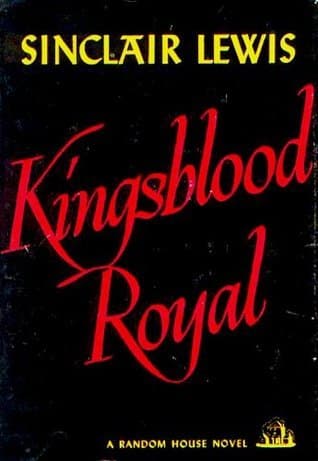
Sinclair Lewis (1947)
Genre
Literary Fiction / Historical Fiction
Reading Time
9-10 hours
Key Themes
See below
Sign in to track this book
A white banker's comfortable world breaks apart when he finds out about his African ancestry, sending him on a funny and moving journey that reveals the racial tensions of 1940s America.
Neil Kingsblood, a white banker in Grand Republic, Minnesota, with his wife Vestal and daughter Peg, starts researching his family tree. What begins as a hobby to trace his Scotch-Irish roots changes when he finds a surprising entry: a Black ancestor, Xavier Pic, from the early 19th century. This discovery, confirmed by historical records, breaks apart Neil's comfortable identity. He struggles with what this means, at first keeping it secret from Vestal and his friends, feeling a shift in how he sees himself. The discovery is not just a historical fact but a deep personal crisis.
Overwhelmed by his discovery, Neil tells his wife, Vestal. He explains the lineage, the historical documents, and the fact of his small amount of Black ancestry. Vestal at first disbelieves and is confused, then wants to dismiss it as a mere historical detail, irrelevant to their lives. She struggles to understand Neil's deep internal struggle, seeing it as an academic problem rather than a fundamental change in their identity. Her practical nature keeps her from fully grasping the deep implications for Neil, causing an initial disconnect between them about the revelation's importance.
Driven by a growing need to understand his newly found heritage, Neil quietly explores the Black community in Grand Republic. He visits Black-owned businesses, attends a Black church service, and looks for chances to interact with people he now considers his relatives. These first steps are often awkward, as he is an outsider, yet he feels a strong pull. He is drawn to intellectual and activist figures in the community, such as Dr. Ashworth, a respected Black physician, and Reverend Boone, a minister, hoping to find guidance and acceptance. This exploration marks his first moves away from his previously segregated white life.
After thinking it over and feeling more certain, Neil decides to publicly acknowledge his Black ancestry. He starts to openly join the Black community, attending social events and speaking up for their rights. This public statement shocks his former white social and professional groups. His friends and colleagues, who knew him as a white man, react with confusion, discomfort, and hostility. His boss at the bank, Mr. Kimbro, disapproves of his actions, fearing the effect on the bank's reputation. This period marks Neil's conscious move away from the white race and his active acceptance of his new identity.
As Neil commits more to his Black identity, white society's reactions grow stronger. He and Vestal are increasingly avoided by their former friends; invitations stop, and polite greetings turn cold. Vestal, who struggles to adjust to their new social isolation, resents Neil's choices. At work, Neil is targeted. His boss, Mr. Kimbro, pressured by conservative clients and the community, arranges Neil's dismissal from the bank, giving vague reasons but clearly influenced by Neil's racial identification. This loss of income and social standing strains the Kingsblood family, making them face the harsh realities of racial prejudice and the results of Neil's beliefs.
Vestal Kingsblood finds it harder to cope with their changed situation. She misses their comfortable white social life, the ease of their former existence, and resents the sacrifices Neil's choices have forced on her. Her love for Neil is tested by her inability to fully accept his new identity or the challenges it brings. Their daughter, Peg, however, remains mostly unaware of the racial tensions. She interacts with her parents' Black friends with innocent curiosity and openness, untouched by adult prejudices. Peg's lack of understanding highlights how racial bias is learned and contrasts with the adults' struggles.
Despite the difficulties, Neil finds new purpose and belonging in the Black community. He becomes deeply involved in local Black organizations, advocating for civil rights, economic opportunities, and social justice. He learns firsthand about the systemic discrimination, poverty, and resilience Black Americans face. He forms strong bonds with figures like Dr. Ashworth, who becomes a mentor, and various community leaders. Neil's experiences within this community strengthen his resolve and solidify his commitment to his chosen identity, even as it separates him further from his past. He finds a sense of authenticity and moral clarity he never had before.
Wanting a better home for his family and to challenge racial segregation, Neil buys a house in a mostly white neighborhood. This act is a deliberate challenge, meant to assert his right to live wherever he chooses, regardless of his racial identity. The white residents of the neighborhood react with anger and hostility, organizing to stop the Kingsbloods from moving in. They use various tactics, from petitions and threats to vandalism and intimidation, determined to keep their community segregated. This conflict grows into a major battle, drawing public attention and bringing the issue of housing discrimination into the open.
The situation around the Kingsblood's new home reaches a peak. An angry white mob gathers outside, protesting their presence and demanding they leave. The family, along with a few supportive Black friends and allies, finds themselves under attack. The mob's actions escalate from verbal threats to throwing objects and trying to force their way into the house. Neil, Vestal, and their friends prepare for a violent confrontation, defending their property and their right to live there. The standoff represents the larger racial conflict in America, with the Kingsbloods' house becoming a symbol for the deep prejudices and tensions of the era.
The attack eventually ends, but the Kingsbloods' future in Grand Republic is still uncertain. They have made a strong statement and endured significant hardship, but the immediate outcome is not a clear win. Neil has lost his job, alienated most of his former white friends, and put his family through immense stress. Vestal has been forced to confront the harsh realities of racial prejudice, and her relationship with Neil is permanently changed. The novel ends with Neil and his family having paid a high price for his beliefs, yet they have also created a new, authentic identity. Their fight against racial injustice is far from over, but Neil has found his place in the struggle.
The Protagonist
Neil transforms from an unassuming white man into a self-aware, committed black man, sacrificing comfort for authenticity and fighting for racial justice.
The Supporting
Vestal moves from denial and resentment of Neil's choices to a reluctant, though often pained, acceptance of their new reality and a deeper understanding of racial prejudice.
The Supporting
Peg remains largely unchanged by the racial conflict, symbolizing the potential for a future without prejudice.
The Supporting
Dr. Ashworth remains a steadfast figure, offering wisdom and support, symbolizing the strength and leadership within the black community.
The Antagonist
Mr. Kimbro remains a symbol of entrenched prejudice, actively working against Neil to maintain racial segregation and social order.
The Supporting
Reverend Boone consistently provides spiritual and communal leadership, serving as a pillar of strength for the black community.
The Mentioned
Professor Gottschalk's role is primarily to provide the initial, crucial plot catalyst; he does not have a significant personal arc.
The novel explores how racial identity is not just genetic but a complex social construct, shaped by self-perception, societal recognition, and personal experience. Neil's journey from a 'white' man to a 'black' man, despite his minimal African ancestry, shows that race is a fluid concept enforced by social norms. His decision to 'resign from the white race' is a deliberate act of choosing an identity based on a fractional truth, showing how deeply ingrained societal definitions of race are, and how hard it is to defy them. This theme is central to Neil's internal struggle and external conflict, especially when he explains his heritage to Vestal or faces exclusion from his former white friends.
“He was no longer a white man. He was a black man. Not by the drop of blood, but by the will to be.”
Lewis clearly shows the deep hypocrisy and brutal nature of racial prejudice in mid-20th century America. Through Neil's experiences, the novel illustrates how easily seemingly 'liberal' white individuals become hostile when their social order is challenged. The speed with which Neil is shunned, fired, and eventually besieged by a mob reveals the violent currents beneath polite society. The contrast between stated ideals of equality and the lived reality of segregation and discrimination is stark. This theme is especially clear in the hostile reactions of Mr. Kimbro and the white neighborhood during the housing conflict, ending in the violent attack on the Kingsblood home.
“It was not a matter of a man having a drop of Negro blood; it was a matter of a man daring to say he had it.”
Neil's quest is a search for authenticity. His comfortable white life, though outwardly successful, lacks deeper meaning for him. Discovering his Black ancestry, though shocking at first, becomes a chance for him to live a more truthful and principled life. He actively seeks belonging within the Black community, finding a sense of purpose and genuine connection that was absent before. This theme explores the human need to align one's identity with one's values, even if it means sacrificing social acceptance. His growing involvement with Dr. Ashworth and the Black community, and his willingness to fight for their rights, shows his newfound sense of belonging and authentic self.
“He had never known how much he had longed for a people of his own, for a loyalty that demanded something more than convenience.”
The novel criticizes the immense pressure of social conformity and its damaging effect on individual freedom and justice. Vestal's struggle to accept Neil's choices, and her distress over their lost social standing, show how powerful societal expectations can be. The white community's collective anger and coordinated efforts to exclude and punish Neil demonstrate the severe consequences for those who defy established norms, especially racial ones. This theme highlights how conformity perpetuates injustice by stifling disagreement and enforcing segregation, making it difficult for individuals to act on their conscience. The unanimous rejection by Neil's former friends and his dismissal from the bank are clear examples of this conformity.
“To be white, in Grand Republic, was not merely a color; it was a caste, a creed, a way of life that had to be defended at all costs.”
The revelation of Neil's black ancestry serves as the primary inciting incident.
The discovery of Xavier Pic, Neil's black ancestor, is the pivotal plot device that sets the entire narrative in motion. It acts as a catalyst, shattering Neil's preconceived notions of himself and his place in society. This single piece of information transforms an ordinary man's life into an extraordinary journey of self-discovery and social conflict. Without this genealogical revelation, Neil would have continued living his unexamined white life, and the novel's exploration of racial identity and prejudice would not have occurred. It's the engine of his transformation.
Neil's purchase of a house in a white neighborhood as a deliberate act of defiance.
The act of Neil purchasing a house in a white neighborhood is a highly symbolic plot device. It is not merely a practical decision for better living conditions but a deliberate challenge to the deeply entrenched racial segregation of the era. The house becomes a physical manifestation of Neil's assertion of his rights and his defiance of racial barriers. The subsequent siege by the white mob elevates the conflict from personal to communal, transforming the house into a battleground for civil rights and exposing the raw prejudice within the community. It forces the abstract issue of race into a concrete, violent confrontation.
The novel actively engages with and subverts the traditional 'one-drop rule'.
The 'one-drop rule' historically dictated that even a single drop of African blood made a person black, irrespective of appearance. Lewis inverts this by having Neil, who is physically white-passing, *choose* to identify as black based on a distant ancestor. This device challenges the biological determinism of race and highlights its social construction. Neil's decision to embrace his 'one-thirty-second' black heritage, despite the severe consequences, underscores that identity can be a conscious choice and a moral stance, rather than solely an imposed biological fact, thus complicating and critiquing the traditional application of the rule.
“The greatest joy of all is to be a stranger in a strange land, and to find yourself at home.”
— Reflecting on Neil's feeling of belonging to the black community.
“It was not a matter of color, but of the soul. Of the soul that could be free only when it had broken the chains of the past.”
— Neil's internal struggle with his heritage and societal expectations.
“He knew now that he had always been a Negro, even when he had not known it.”
— Neil's realization of his true identity after discovering his ancestry.
“The world was full of men who were proud of their ancestors, but he was proud of his future.”
— Neil's forward-looking perspective despite the challenges of his heritage.
“There are no races, only the human race.”
— A philosophical statement on racial equality.
“He had sought for freedom and found a prison, but a prison with a door that led to the stars.”
— Neil's complex feelings about embracing his black identity and the societal limitations that came with it.
“To deny one's blood is to deny one's self.”
— A crucial theme of self-acceptance related to heritage.
“The only way to fight a prejudice is to live it down.”
— A strategy for overcoming racial bias through personal example.
“He was not merely a man who had discovered he was a Negro; he was a man who had discovered he was a human being.”
— Emphasizing the broader human experience beyond racial categorization.
“The real tragedy is not in being different, but in pretending to be the same.”
— Highlighting the importance of embracing one's unique identity.
“Love is not color-blind; it sees all colors and loves them all.”
— A more nuanced view of love and race, acknowledging diversity.
“The world had always been divided, but he had never seen the lines so clearly drawn.”
— Neil's heightened awareness of racial segregation and societal divisions.
“It was not enough to tolerate; one must understand.”
— A call for deeper empathy and understanding beyond mere tolerance.
“He was a king, not by birth, but by the royalty of his spirit.”
— A metaphorical statement about Neil's inner strength and character.
Ready to see how well you understood this book? Take our interactive quiz with 10 questions.
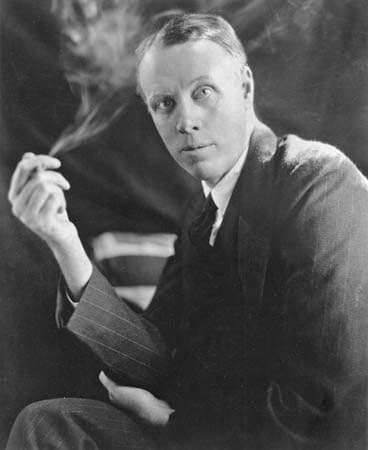
Harry Sinclair Lewis was an American writer and playwright. In 1930, he became the first author from the United States to receive the Nobel Prize in Literature, which was awarded "for his vigorous and graphic art of description and his ability to create, with wit and humor, new types of characters." Lewis wrote six popular novels: Main Street (1920), Babbitt (1922), Arrowsmith (1925), Elmer Gantry (1927), Dodsworth (1929), and It Can't Happen Here (1935).







