“I can only say that if ever you are in search of a wife, you could not do better than take a Kuku woman. They are strong, and they are faithful.”
— Umbopa (Ignosi) speaking about the Kuku women's qualities.

H. Rider Haggard (2008)
Genre
Fantasy / Historical Fiction
Reading Time
300 min
Key Themes
See below
Sign in to track this book
Led by a grizzled adventurer, a perilous trek into the uncharted heart of Africa unearths ancient kingdoms, deadly kings, and the legendary diamond hoard of King Solomon.
Allan Quatermain, a seasoned white hunter in Natal, South Africa, is approached by two Englishmen: Sir Henry Curtis and Captain John Good. They show him a map, supposedly of King Solomon's Mines, found among the belongings of Sir Henry's missing younger brother, George Neville. Neville had disappeared in Africa two years earlier, last known to be seeking the legendary mines. Quatermain, initially doubtful about the map and the dangerous journey, is persuaded by the promise of a share of any treasure and a large sum for his son if he dies. He agrees to lead the expedition into the unexplored Zululand.
The expedition, made up of Quatermain, Sir Henry, Captain Good, and their new, mysterious Zulu servant named Umbopa, sets off. They face huge challenges crossing vast, dry deserts and dangerous mountains in Africa. Supplies run low, and the heat is constant. During their tough journey, Umbopa proves to be exceptionally strong, brave, and smart, often acting with a royal manner that contradicts his servant status. He frequently offers good advice and shows remarkable tracking and survival skills, earning the Englishmen's respect and growing suspicion, as they sense he is more than he appears.
After weeks of travel, following the ancient map, the group finds a hidden cave high in the mountains. Inside, they discover the perfectly preserved, frozen body of José Silvestre, a Portuguese explorer who, according to the map's writing, was one of the original discoverers of the mines centuries ago. Silvestre's body sits at a table, holding a last message and pointing towards the 'Road of Death' on another inscription. This discovery confirms the map's accuracy but also gives a more precise, though ominous, direction to the mines, highlighting the dangers ahead.
Following the 'Road of Death' through a dangerous mountain pass, the group descends into a fertile, isolated valley, revealing Kukuanaland. This land is home to a fierce, warlike tribe, cut off from the rest of the world. Kukuana warriors soon capture them and bring them before the ruler, the ruthless, one-eyed King Twala, and his sinister witch-doctor, Gagool. The Englishmen, especially Captain Good with his artificial teeth and monocle, are seen as supernatural beings by the superstitious Kukuanas. Umbopa then reveals his true identity as Ignosi, the rightful heir to the Kukuana throne, exiled in his youth.
Ignosi boldly states his claim to the throne, accusing King Twala of taking power unjustly and being a tyrant. Twala, furious, prepares to execute the foreigners and Ignosi. However, Captain Good, checking an almanac, remembers a lunar eclipse is coming. Quatermain quickly uses this. They announce they will 'darken the moon' as a sign of Ignosi's divine right. When the eclipse happens as predicted, the superstitious Kukuanas are terrified, believing the white men have great magical power. This event causes many Kukuana regiments to side with Ignosi, splitting the kingdom and leading to civil war.
A civil war breaks out in Kukuanaland between Ignosi's loyal forces and King Twala's army. The Englishmen, using their firearms, tactical knowledge, and courage, play a role in supporting Ignosi's rebellion. Sir Henry Curtis, a strong warrior, distinguishes himself in battle, leading charges and inspiring the Kukuana warriors. The battle is fierce and bloody, with many casualties on both sides. Eventually, Twala's forces begin to falter under the combined attack and the growing belief in Ignosi's legitimacy, fueled by the mysterious white 'wizards'.
The civil war ends with a dramatic single combat between Sir Henry Curtis and the tyrannical King Twala. Sir Henry, driven by justice and the need to secure Ignosi's rule, accepts Twala's challenge. The duel is brutal and intense, with both men fighting fiercely. Ultimately, Sir Henry, showing superior skill and strength, defeats and kills Twala. With Twala dead, the remaining Kukuana forces surrender, and Ignosi is hailed as the new, rightful King of Kukuanaland. His first act as king is to offer the Englishmen safe passage and any help they need.
With Ignosi now on the throne, the Englishmen demand that Gagool, the ancient witch-doctor, lead them to King Solomon's Mines. Gagool, afraid of Ignosi but still clever, reluctantly leads them to the entrance of the legendary mines, hidden within caves. She takes them to a large chamber, filled with the preserved bodies of ancient kings and, most importantly, a vast hoard of diamonds and other jewels. The wealth is beyond their wildest dreams, and the adventurers are momentarily overwhelmed by the sheer amount of treasure.
As the Englishmen marvel at the treasure, the treacherous Gagool, in a final act of malice, triggers a hidden mechanism, sealing the mine chamber and trapping them inside with the mummified kings. The ground shakes, and rocks fall, burying Gagool. Desperate, the trapped explorers search for another way out. During their frantic search, they find a hidden passage where they discover the skeletal remains of George Neville, Sir Henry's lost brother. He had found the mines but died there, leaving a message indicating a secret exit, which they manage to open, escaping with a small but significant portion of the diamonds.
Having escaped the collapsing mines with their lives and a large fortune in diamonds, the adventurers begin their long journey back to civilization. They carry George Neville's body, completing Sir Henry's original quest. Ignosi, now a strong and just king, provides them with escorts and supplies for their return. The journey is still dangerous, but the men are encouraged by their success and their immense wealth. Upon reaching Natal, they arrange for George Neville's proper burial and divide their diamond hoard, making each of them incredibly rich, though forever changed by their adventure.
The Protagonist
Quatermain begins as a weary adventurer but rediscovers purpose and excitement through the perilous journey, ultimately finding immense wealth and a renewed sense of camaraderie.
The Protagonist
Sir Henry's initial quest for his brother evolves into a fight for justice in Kukuanaland, culminating in him becoming a hero and finding closure regarding his brother's fate.
The Protagonist
Good maintains his fastidious nature throughout the journey, but his resourcefulness and courage are tested and proven, making him an indispensable part of the team.
The Supporting / Protagonist
Ignosi transitions from a disguised servant to a powerful, rightful king, reclaiming his throne and leading his people.
The Antagonist
Twala begins as an unchallenged tyrant but is ultimately defeated and killed, losing his kingdom and his life.
The Antagonist
Gagool's ancient power and malevolence lead her to attempt to trap the heroes, resulting in her own demise.
The Mentioned / Supporting
Neville's arc is completed posthumously; his fate is discovered, providing closure for his brother and proving the existence of the mines.
The Mentioned
Silvestre's arc is entirely in the past, serving to validate the central mystery and provide a sense of historical depth to the legend.
The search for King Solomon's Mines is mainly driven by the promise of immense wealth, especially diamonds. While the heroes seek it for their futures, the vast treasure (seen in the mine chamber) almost overwhelms them, and it has corrupted others, like the ancient kings of Kukuanaland and possibly Gagool. The diamonds are a double-edged sword: they offer salvation but also bring great danger and the potential for greed. The ultimate prize is not just the diamonds, but the adventure itself and the bonds formed.
“For there before us, piled in white heaps, were what looked like hundreds of thousands of diamonds, some of them of the size of a pigeon's egg, and all of them of the purest water.”
The novel is set in the Victorian era's colonial mindset, showing white explorers entering 'uncharted' African territory. The Kukuanas are depicted as a 'lost tribe' untouched by modern civilization, and the Englishmen, despite their initial vulnerability, ultimately impose their will and influence, even helping to install a new king. The story reflects the imperial fascination with discovering and 'civilizing' unknown lands, often simplifying the complexities of local cultures. However, it also offers a nuanced view, showing the bravery and wisdom of figures like Ignosi.
“We were but three white men, yet we had become the arbiters of a nation's destiny.”
At its core, the story is about adventure and the strong bonds that form between men facing extreme danger. Allan Quatermain, Sir Henry Curtis, and Captain Good, along with Ignosi, show great courage, loyalty, and self-sacrifice throughout their journey. They rely on each other's strengths and support each other through battles, dangerous landscapes, and moral choices. Sir Henry's duel with Twala, Quatermain's leadership, and Good's quick thinking all show different forms of heroism, strengthened by their shared experiences and mutual respect.
“A man who has been through what we had been through together, be he black or white, is a brother forever.”
The story constantly contrasts the 'civilized' world of the protagonists with the wild, untamed African interior. The explorers bring symbols of their civilization (Good's monocle, firearms, almanac) into a brutal landscape where primal instincts and ancient customs prevail. The journey tests their 'civilized' ways, forcing them to adapt to the harsh realities of the wilderness, fight for survival, and confront less refined aspects of human nature. Kukuanaland itself represents a society preserved outside modern progress.
“Here we were, three men, whose lives had been passed in the midst of civilization, face to face with a state of society which in the nineteenth century of the Christian era was simply a survival of the Stone Age.”
A key part of the story involves Ignosi's quest to reclaim his rightful throne from the tyrannical King Twala. This theme explores legitimate authority, the results of taking power unjustly, and the need to overthrow an unfair ruler. The Englishmen's involvement in the Kukuana civil war is driven not only by their alliance with Ignosi but also by their sense of fairness and their dislike of Twala's cruelty. Ignosi becoming king represents the triumph of justice and the return of order to Kukuanaland.
“For years I have wandered in the wilderness, an outcast from my father's house, but my time has come at last.”
A tattered, blood-stained map guiding the expedition to King Solomon's Mines.
The map, drawn by José Silvestre and found in George Neville's possessions, serves as the primary catalyst and guide for the entire adventure. It's a classic MacGuffin, initially of dubious authenticity, but its cryptic clues and references (like 'Solomon's Road' and the 'Road of Death') drive the plot forward. The discovery of Silvestre's frozen body, pointing to the map's inscription, validates its truth and increases the stakes, transforming a speculative journey into a confirmed quest for a tangible, albeit dangerous, destination.
A natural celestial event used by the protagonists to appear as powerful sorcerers.
The lunar eclipse is a crucial plot device that allows the protagonists to turn the tide in their favor in Kukuanaland. Captain Good's almanac provides the knowledge of the impending eclipse, which Quatermain shrewdly uses to make the white men appear as powerful magicians capable of 'darkening the moon.' This manipulation of superstition instills fear in King Twala's forces and sways many Kukuana impis to Ignosi's side, directly leading to the civil war and Ignosi's eventual triumph. It highlights the power of perceived magic in an isolated, superstitious society.
An isolated, technologically primitive society cut off from the outside world.
Kukuanaland functions as the archetypal 'Lost World,' a device that allows for the exploration of ancient customs, tribal warfare, and the clash of cultures. Its isolation means the Kukuanas have not encountered firearms or other aspects of modern civilization, making the protagonists' tools and knowledge seem magical. This isolation also preserves the political conflict between Ignosi and Twala, creating the backdrop for the civil war. The kingdom's hidden nature also protects the legendary mines and their vast treasures, making their discovery all the more impactful.
A climactic duel between Sir Henry Curtis and King Twala to decide the fate of the kingdom.
The single combat between Sir Henry Curtis and King Twala is a classic literary device used to resolve a major conflict. It distills the larger civil war into a personal, high-stakes confrontation, emphasizing individual bravery and prowess. This duel not only determines the rightful ruler of Kukuanaland but also provides a moment of intense heroism for Sir Henry, solidifying his role as a noble warrior. Its outcome directly leads to Ignosi's ascension and the explorers' ability to finally access the mines.
Gagool, the witch-doctor, who leads the heroes to the treasure but then attempts to trap them.
Gagool embodies the archetype of the treacherous guide. She possesses the vital knowledge needed to reach the ultimate goal (King Solomon's Mines) but harbors malevolent intentions. Her initial guidance is grudgingly given, and her ultimate act of sealing the adventurers inside the treasure chamber is a classic betrayal. This device adds a final layer of danger and suspense to the climax, forcing the heroes to rely on their own ingenuity to escape, and directly leading to the discovery of George Neville's body and the secret exit.
“I can only say that if ever you are in search of a wife, you could not do better than take a Kuku woman. They are strong, and they are faithful.”
— Umbopa (Ignosi) speaking about the Kuku women's qualities.
“Ah, me, the world is a strange place, and man a stranger still!”
— Sir Henry Curtis reflecting on their journey and discoveries.
“There are some moments in a man's life when he is not afraid of anything.”
— Allan Quatermain describing a moment of courage amidst danger.
“He who seeks to do good may find evil in his path, and he who seeks for evil may stumble upon good.”
— A philosophical observation made by Allan Quatermain.
“We were in Africa, and in Africa, anything may happen, and generally does.”
— Allan Quatermain's general outlook on their adventures.
“Money is a good servant but a bad master.”
— Allan Quatermain reflecting on the dangers of greed.
“Man proposes, God disposes.”
— A common proverb quoted by one of the characters, reflecting on their plans.
“It is not always the strong who win, nor the swift who conquer, but to the brave belong the spoils.”
— Allan Quatermain encouraging his companions before a challenge.
“The past is gone, the future is not yet, but the present is ours.”
— A reflection on time and seizing the moment.
“There is no end to the follies of men, especially when there is gold at stake.”
— Allan Quatermain's cynical view on human nature and wealth.
“Death is the end of all things, yet it is also a beginning.”
— A somber reflection on mortality and what lies beyond.
“The greatest treasures are not always those that glitter.”
— A realization after their quest for material wealth.
“Courage, my friends, and we shall see this thing through!”
— Captain Good rallying the group during a difficult moment.
Ready to see how well you understood this book? Take our interactive quiz with 10 questions.
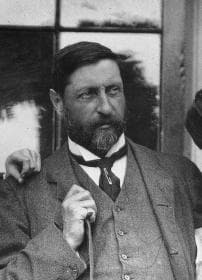
Sir Henry Rider Haggard was an English writer of adventure fiction romances set in exotic locations, predominantly Africa, and a pioneer of the lost world literary genre. He was also involved in land reform throughout the British Empire. His stories, situated at the lighter end of Victorian literature, continue to be popular and influential.







