“It’s a long road, and it’s no use to look back.”
— Jorg's pragmatic view on his journey and past.

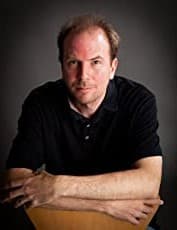
Mark Lawrence (2012)
Genre
Fantasy / Science Fiction
Reading Time
10-12 hours
Key Themes
See below
Sign in to track this book
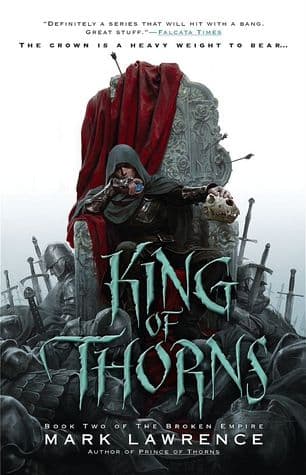
Haunted by past cruelties and driven by vengeance, young King Jorg must defend his stolen throne against an overwhelming army, using forbidden ancient artifacts and a cunning mind.
King Jorg Ancrath, eighteen and ruling Renar, faces the Grand Army, led by the Prince of Arrow. The army, twenty thousand strong, aims to remove him and unite the Broken Empire. Jorg, despite his small forces, will not give up. He is haunted by the ghost of a young boy, a sign of his past cruelties, and by memories of his traumatic childhood. He seeks advice from his advisors, including the necromancer Chella, and explores old tunnels beneath his castle for a way to fight his enemy's numbers. He also struggles with his feelings for Miana, the Prince of Arrow's fiancée, who travels with the invaders.
Mixed with the present story, Jorg's memories show his time trapped in a thorn bush after the ambush that killed his mother and brother. He remembers the cruel experiments by the Dead King's Builders, especially a device that put a 'seed' in his mind. This past trauma shaped his ruthless personality. He often interacts with a strange copper box, a relic from his youth, which seems to have a consciousness and offers cryptic advice. Jorg believes the box holds a key to understanding his own condition and the nature of the world, where ancient technology is mistaken for magic.
As the Grand Army nears, Jorg plans a clever ambush. He leads a small group of his men, including Gorgoth and Makin, to a narrow pass. Using knowledge from the copper box and the old tunnels, he sets a trap with collapsed bridges and hidden explosives. This allows his outnumbered forces to cause heavy losses to the Prince of Arrow's leading troops, creating confusion and fear in the larger army. The Prince of Arrow is surprised by Jorg's fierce and smart defense, realizing the young king is more dangerous than he expected. This first win boosts his men's morale.
Miana, with the Prince of Arrow, feels increasingly drawn to Jorg despite his reputation and their opposing sides. She is a pawn in a political marriage, but Jorg's raw power and intelligence interest her. The Prince of Arrow, though shaken by Jorg's ambush, reaffirms his goal to unite the Empire and get revenge for Jorg's wrongs. He sees Jorg as a destructive force that must be stopped for the realm's good, and plans his next move, aiming for a direct attack on Jorg's castle, Renar.
Beneath Renar, Jorg finds a secret chamber, a relic of the Builders, an ancient civilization with advanced technology. Here, he finds devices that appear magical to his contemporaries but are sophisticated machines. These include a 'fire-lance' capable of great destruction and other tools that manipulate energy and matter. Chella, with her necromantic knowledge, helps him understand some of their properties, though their true nature remains mostly a mystery. Jorg sees these artifacts as his only chance to defend Renar against the Grand Army's numbers, recognizing their destructive power.
The Grand Army starts a full siege on Renar. Jorg, using the ancient 'fire-lance' and other devices, launches devastating attacks on the attackers. The advanced weapons, far beyond anything the Prince of Arrow's forces have seen, cause widespread panic and destruction. Jorg's actions are brutal and effective, but they come at a cost to his dwindling forces and his own mind. The ghost of the boy becomes more persistent, a constant reminder of his inner turmoil. The battle becomes a desperate fight for survival, with Jorg pushing his limits and those of his men.
Through his memories and talks with the copper box, Jorg starts to piece together the history of the Builders and the Dead King. He realizes the Dead King is not just a necromancer, but a powerful entity trying to bring back a past technological age. The 'seed' in Jorg is part of a larger plan. The Builders were a technologically advanced society that destroyed itself, and the Dead King aims to use their remaining technology for his own ends. Jorg understands he is a pawn in a much larger game, connected to a vast network of ancient machines and consciousnesses.
Despite Jorg's advanced weapons, the Grand Army's sheer numbers and constant attacks begin to wear him down. The Prince of Arrow, adapting to Jorg's tactics, eventually breaks Renar's outer defenses. Miana, caught between the two sides, must face her feelings and make a choice. She sees Jorg's ruthless efficiency and the terror he inspires, but also his strange vulnerability. As the battle rages inside the castle, a direct fight between Jorg and the Prince of Arrow becomes certain, with Renar's fate at stake.
Jorg and the Prince of Arrow finally meet in battle among Renar's ruins. The fight is brutal, showing Jorg's ferocity and the Prince's firm belief. During the climax, the copper box reveals more secrets, clarifying the Dead King's true identity as a super-intelligence or AI from the Builder era. The 'seed' in Jorg is a fragment of this ancient consciousness, manipulating him. Jorg realizes he has been a tool, not just for his own revenge, but for the Dead King's plan to reclaim the world through advanced technology and control over humanity.
Jorg, using cunning, ruthlessness, and the final deployment of ancient technology, manages to push back the Grand Army, though at great cost to Renar and his own forces. The Prince of Arrow is defeated, but his fate is unclear. Miana's loyalties are clear, though her relationship with Jorg remains complex. Jorg has kept his throne, but the battle was a costly victory. He now understands the full scope of the Dead King's plans and his own role as a 'seed' in that design. This understanding gives him a new, terrifying purpose: to confront the Dead King directly and reclaim his own destiny, free from manipulation.
The Protagonist
Jorg evolves from a purely vengeful and self-serving king to one who understands he is a pawn in a larger game, gaining a new, terrifying purpose to confront the Dead King and reclaim his agency.
The Supporting
Makin's loyalty is tested by Jorg's increasing brutality and the escalating stakes, yet he remains a constant, stoic presence.
The Supporting
Chella's understanding of the world expands as she encounters the true nature of the Builders' technology, solidifying her role as a guide to Jorg in these matters.
The Supporting
Miana is forced to confront her pre-conceived notions and make a difficult choice regarding her loyalties and feelings, ultimately aligning with a more nuanced understanding of the world.
The Antagonist
The Prince of Arrow's initial confidence is shaken by Jorg's tactics, forcing him to adapt his strategies and confront the true nature of his enemy.
The Supporting
Gorgoth remains steadfastly loyal to Jorg, his character serving as a constant depiction of the brutal side of Jorg's rule.
The Antagonist
The Dead King's influence and true identity are slowly unveiled, transitioning from a mysterious, almost mythical figure to a tangible, technological threat.
The Mentioned
The Ghost Boy's presence intensifies with Jorg's increasing brutality, reflecting his internal struggle and the mounting weight of his actions.
The novel explores power through Jorg's ruthless rule and the Prince of Arrow's more traditional goal of unity. Jorg uses fear, cunning, and brutality, like using ancient weapons to destroy a much larger army. He believes power is taken, not given, and held by force. In contrast, the Prince of Arrow seeks power for the 'greater good' of uniting the Broken Empire. The book asks if a 'good' leader can exist in such a fractured, violent world, and if Jorg's terrifying efficiency, despite its moral cost, is necessary for survival.
“A king doesn’t ask. A king takes. Or he is no king at all.”
Jorg's character is shaped by the trauma of his childhood: his family's murder, being trapped in the thorn bush, and the Builders' experiments. These events created his ruthless personality, his inability to trust, and his constant need for revenge. The ghost of the young boy shows this unresolved trauma and guilt. The book looks at how deep psychological wounds shape a person's destiny and actions, showing that even a king is not immune to his past, which drives him to commit more cruelties.
“The past is a road that twists and turns, but always leads back to the same place. To the thorn bush.”
A central theme is the blurring of lines between forgotten, advanced technology and what people in the Broken Empire see as magic. The 'magic' of necromancers like Chella often hints at a deeper, scientific understanding. Jorg's discovery of the Builders' ancient devices, such as the 'fire-lance,' highlights this difference. What his enemies see as dark sorcery, Jorg eventually understands as highly sophisticated, destructive engineering from a past civilization. This theme explores the idea that sufficiently advanced technology is indistinguishable from magic, and challenges the characters' understanding of their world.
“Magic, they called it. The Builders would have laughed. It was just a different kind of working.”
The revelation of the Dead King's influence brings up the question of free will. Jorg learns that the 'seed' within him is a fragment of an ancient AI, guiding his choices toward reactivating the Builders' network. This challenges his entire motivation for revenge and his sense of self. The book explores the unsettling idea that characters, even powerful ones, might be pawns in a larger, unseen game, forcing Jorg to question how much of his destiny is his own versus how much is dictated by ancient, technological forces. His struggle becomes one of reclaiming his agency.
“I was a puppet. A tool. All my grand plans, all my revenge... it was just a string pulled by a dead hand.”
A mysterious, sentient artifact that guides and influences Jorg.
The copper box is an ancient piece of Builder technology, possibly containing a fragmented AI or data core. It communicates cryptically with Jorg, providing him with strategic advice, information about the Builders, and insights into his own condition. It acts as a catalyst for Jorg's discoveries, leading him to the hidden chambers and helping him understand the true nature of the 'magic' he encounters. The box is a physical manifestation of the Dead King's influence, subtly guiding Jorg towards its own ends, making it both a tool and a manipulator.
A technological implant from the Builders, linking Jorg to the Dead King.
The 'seed' is a technological implant placed in Jorg's mind during his childhood captivity, a remnant of the Builders' experiments. It serves as a direct link between Jorg and the Dead King's consciousness, allowing for subtle manipulation and guidance. This device explains Jorg's unique connection to ancient technology and his precocious intelligence in understanding it. It is the ultimate plot twist, revealing that Jorg's actions, even his revenge, have been partly orchestrated by an unseen, ancient force, turning him into a pawn in a much larger, technological game.
Interspersed recollections of Jorg's traumatic past, revealing his motivations.
The narrative frequently shifts between Jorg's present-day struggle to defend Renar and vivid flashbacks to his childhood. These memory sequences detail the ambush that killed his family, his time trapped in the thorn bush, and the torture and experimentation he endured. This device is crucial for character development, providing context for Jorg's ruthless personality, his deep-seated trauma, and his unyielding desire for revenge. It also slowly reveals the origins of the 'seed' in his mind and the true nature of the Dead King, gradually unraveling the overarching mystery of the Builders.
Advanced scientific devices mistaken for magic, crucial for Jorg's defense.
The remnants of Builder technology, such as the 'fire-lance' and other energy weapons, are discovered by Jorg beneath Renar. These devices are so advanced that the people of the Broken Empire perceive them as powerful magic. They serve as a crucial plot device by providing Jorg with the means to defend his castle against overwhelming odds, fundamentally altering the balance of power. They also act as a key to understanding the true, post-apocalyptic nature of the world, revealing a past civilization far more technologically capable than the current one, and challenging the prevailing belief in magic.
“It’s a long road, and it’s no use to look back.”
— Jorg's pragmatic view on his journey and past.
“The dead don't care about the living. The living don't care about the dead. It's just a cycle.”
— Jorg reflecting on life, death, and human indifference.
“I will not be a pawn. I will be the hand that moves the pieces.”
— Jorg's determination to control his own destiny and others.
“You can't outrun your past, boy. It always catches up.”
— A warning about the inescapable nature of one's past actions.
“Love is a weakness. It makes you do stupid things.”
— Jorg's cynical view on love, born from his experiences.
“There are no gods, boy. Only men with power.”
— Jorg dismissing divine influence in favor of human agency and power.
“Sometimes the only way to win is to break all the rules.”
— Jorg's philosophy on achieving victory through unconventional and ruthless means.
“A man's worth is measured by his enemies.”
— Jorg's belief that the caliber of one's adversaries reflects their own strength.
“The world is a harsh place, and it doesn't care if you're fair.”
— Jorg's realistic assessment of the world's indifference to justice.
“Memories are thorns in the heart.”
— Jorg reflecting on the painful nature of his past memories.
“It's not about what's right. It's about what you can get away with.”
— Jorg's amoral approach to actions and consequences.
“Fear is a tool. Use it or be used by it.”
— Jorg's perspective on fear as a weapon or a vulnerability.
“Some men are born to lead, others to follow. And some, like me, are born to burn it all down.”
— Jorg's self-identification as a destructive force.
Ready to see how well you understood this book? Take our interactive quiz with 10 questions.
Biography coming soon.







