“I wish that everything I touch would turn to gold!”
— King Midas makes his fateful wish to the god Dionysus.

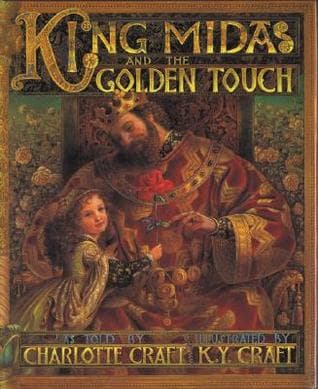
M. Charlotte Craft (1999)
Genre
Fantasy / Children's
Reading Time
15 min
Key Themes
See below
Sign in to track this book
A greedy king's wish to turn all he touches into gold backfires spectacularly when his beloved daughter becomes a shimmering, lifeless statue, revealing the true cost of his golden obsession.
King Midas is a monarch whose greatest joy and obsession is gold. He spends his days counting his vast treasures, believing nothing is more precious. He often visits his beautiful rose garden, where one day he finds a mysterious stranger asleep among his flowers. Instead of being angry, Midas is kind and invites the stranger, who is Silenus, a friend of the god Dionysus, into his palace for food and rest. After ten days of hospitality, Dionysus himself appears to Midas to get Silenus and offers Midas any wish as a reward for his generosity.
When Dionysus offers Midas a wish, the king, without thinking, asks for the power to turn everything he touches into gold. Dionysus, with a look Midas misunderstands as approval, grants the wish, warning him only to 'consider carefully' what he has asked for. Midas is very happy and eager to test his new power. As Dionysus and Silenus leave, Midas steps into his garden, excited for his golden future. He does not see any potential problems, consumed by the thought of endless riches.
Midas immediately begins to try his new gift. He touches a rose, and it instantly turns into a solid gold flower, losing its scent and softness but gaining immense value to Midas. He then touches a stone, a tree branch, and even the palace walls, all turning to gleaming gold. He is thrilled, imagining a world made entirely of the precious metal. His palace begins to shine with great brightness, and he feels like the richest man, sure that his wish was the best choice.
As the day goes on, Midas gets hungry and thirsty. He sits down to a feast, eager to eat. However, the moment his fingers touch a piece of bread, it hardens into a golden loaf. When he tries to drink wine, the cup and its contents turn into liquid gold, then solidify. Panic starts as Midas sees the terrible meaning of his gift: he cannot eat or drink. The things needed for life are now unavailable to him, turning his blessing into a torment.
Overwhelmed by hunger and sadness, Midas hears his daughter, Marigold, approaching. She rushes to comfort him, seeing his distress. In a moment of fatherly love, Midas reaches out to hug her. The instant his arms go around her, Marigold's warm, living body turns into a cold, hard golden statue. Her happy laughter is gone forever, replaced by the lifeless shine of metal. This is the worst horror for Midas, as his most loved possession, his daughter, is now lost to him because of his greed.
With Marigold turned to gold, Midas is completely heartbroken. He cries without stopping, holding the golden statue of his daughter, realizing his terrible mistake. All his gold, which he once loved most, now seems worthless compared to the life and love he has lost. He understands that his wish, born of greed, has brought him only misery and loneliness. He longs for simple things: food, water, and most importantly, his daughter's living presence. He finally recognizes that gold cannot buy happiness or life.
In his deepest sadness, Midas looks to the sky and cries out to Dionysus, begging for the golden touch to be taken away. He admits his foolishness and expresses his deep regret. Miraculously, Dionysus reappears, this time with a look of understanding. He tells Midas that he has learned his lesson and offers him a way to reverse the curse. Midas, humbled and desperate, quickly accepts any instruction that might bring back his daughter and his normal life.
Dionysus tells Midas to go to the River Pactolus, wash himself in its waters, and then bring some of the river water back to sprinkle on all the things he has turned to gold. Midas immediately leaves, traveling to the river. As he puts his hands into the cool water, he feels a strange tingling, and the golden touch leaves him and goes into the river, which is said to have contained gold dust ever since. He then fills a pitcher with the water and rushes back to his palace, filled with hope.
Back in his palace, Midas carefully sprinkles the magical river water over the golden statue of Marigold. To his great relief and joy, his daughter slowly comes back to life, her warm skin and bright color restored. He hugs her tightly, tears of happiness streaming down his face. He then sprinkles the water over the golden food, the golden roses, and all the other objects he had changed, returning them to their original state. Midas is a changed man; he now understands that true wealth is not gold, but life, love, and simple pleasures.
The Protagonist
Midas transforms from a greedy, gold-obsessed ruler to a humbled, compassionate father who values life and love above all material wealth.
The Supporting
Marigold is a static character whose transformation and restoration drive Midas's arc.
The Supporting
Dionysus's role is to facilitate Midas's lesson, remaining consistent in his divine power and wisdom.
The Mentioned
Silenus has no discernible character arc within the story.
The main theme is King Midas's great desire for gold and the terrible results it brings. His belief that gold is the most precious thing leads him to make a wish that turns his life into a nightmare. The story clearly shows how focusing too much on material wealth can lead to losing much more valuable things, such as food, water, and the life of his daughter, Marigold. Midas's suffering shows the emptiness of riches when basic human needs and emotional connections are gone.
“He believed that nothing was more precious than gold.”
Initially, Midas defines wealth only by how much gold he has. But through his painful experience with the Golden Touch, he learns that real wealth is life, love, and the simple joys of living. The ability to eat, drink, enjoy a fragrant rose, and hug his living daughter become far more valuable than any gold. The story teaches that human connection, natural beauty, and the necessities of life are the real treasures, much greater than any material possession.
“What good was all his gold if he could not eat or drink, or hold his own dear daughter?”
This theme is a warning about the unexpected bad results of desires that are not controlled. Midas's wish, granted without full thought, quickly turns his greatest desire into his greatest problem. The story shows that what seems like a good thing can quickly become a burden if not wished for wisely. Dionysus's first warning to 'consider carefully' hints at the tragic irony of Midas's golden touch, which gives him everything he thought he wanted but takes away everything he truly needed.
“Consider carefully what you have asked for, King Midas.”
Despite his initial greed, Midas gets a chance to make things right. His deep sorrow and regret for his actions make him seek help and change personally. Washing in the River Pactolus stands for cleaning not just the golden touch, but his greedy nature. He becomes a changed man, having learned a lesson about humility and what is truly important, leading to his daughter and his world being restored, which means he has a new spirit.
“He had learned his lesson well.”
A supernatural ability that transforms everything Midas touches into gold.
The Golden Touch is the central magical device that drives the entire plot. Initially presented as a miraculous gift from Dionysus, it quickly transforms into a devastating curse. It serves to highlight Midas's misguided values and forces him to confront the consequences of his greed. The device is both literal and symbolic, representing the allure and destructive power of unchecked material desire. Its reversal through the River Pactolus signifies Midas's redemption and the restoration of natural order.
Represents both ultimate wealth and ultimate emptiness.
Gold in the story is a powerful symbol. Initially, it represents Midas's perceived ultimate wealth, power, and beauty. However, as the story progresses, it transforms into a symbol of isolation, lifelessness, and despair. A golden rose loses its scent, golden food cannot nourish, and a golden daughter is no longer alive. The shift in its symbolic meaning reflects Midas's journey from valuing material possessions to understanding the true worth of life and love.
A mythical river with the power to remove and reverse the Golden Touch.
The River Pactolus functions as a divine solution and a symbol of purification and renewal. It is the means by which Midas is able to rid himself of the curse and restore everything he had transformed. The river's waters literally wash away the golden touch, and in doing so, they also cleanse Midas of his greed. The legend of gold dust being found in its waters afterward serves as a lasting mythological explanation and a reminder of Midas's folly.
The audience understands the negative consequences of the wish before Midas does.
Dramatic irony is present from the moment Midas makes his wish. Dionysus's subtle warning and the reader's common knowledge of the myth create an immediate sense of foreboding that Midas, in his greed, completely misses. This device heightens the tension and tragedy as the reader anticipates the inevitable suffering Midas will experience, particularly regarding his inability to eat and drink, and most poignantly, the transformation of his daughter.
“I wish that everything I touch would turn to gold!”
— King Midas makes his fateful wish to the god Dionysus.
“Gold is the greatest thing in the world!”
— King Midas expresses his love for gold before his wish.
“What have I done? My food, my drink—all turned to gold!”
— King Midas realizes the terrible consequences of his wish when he tries to eat.
“Even my beloved daughter has become a golden statue!”
— King Midas touches his daughter, turning her to gold, and experiences ultimate despair.
“Gold is not the greatest blessing.”
— King Midas learns the lesson after his daughter is turned to gold.
“A simple meal and a loving touch are worth more than all the gold in the world.”
— King Midas reflects on what truly matters after his ordeal.
“The river's waters washed away the golden curse.”
— King Midas follows Dionysus's instructions to reverse the golden touch.
“Do not let greed blind you to what is truly precious.”
— The moral of the story as imparted by the narrator.
“His heart turned as cold as the gold he loved.”
— Describing King Midas's emotional state as his greed grows.
“The garden, once alive with color, now glittered lifelessly.”
— Describing the effects of the golden touch on nature.
“With this gift, you shall learn the value of all things.”
— Dionysus grants Midas's wish, warning him of the lesson to come.
“He wept golden tears, but they brought no comfort.”
— King Midas cries after turning his daughter to gold.
“Riches cannot buy happiness, nor can they restore what is lost.”
— Narrator's reflection on the story's theme.
Ready to see how well you understood this book? Take our interactive quiz with 10 questions.







