“There are some things you can't come back from. Some things that just break you, and you stay broken.”
— Walt reflects on the lasting impact of trauma and violence.

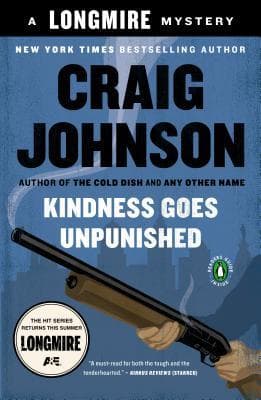
Craig Johnson (2007)
Genre
Thriller / Mystery
Reading Time
360 min
Key Themes
See below
Sign in to track this book
When his daughter is brutally attacked in Philadelphia, Wyoming Sheriff Walt Longmire unleashes his own brand of frontier justice on the city's corrupt elite, backed by a colorful posse of allies.
Sheriff Walt Longmire travels from Absaroka County, Wyoming, to Philadelphia with his best friend, Henry Standing Bear, to visit Walt's daughter, Cady. Cady, a lawyer, recently moved to the city and works for a law firm. The first meeting is warm, though Cady seems a bit distant. While Walt and Henry are out, Cady is attacked and left for dead on the steps of the Franklin Institute, with bad head injuries. Walt immediately wants revenge and justice. He believes the attack is not a random mugging but something more serious, given Cady's work.
After Cady's attack, Walt contacts his deputy, Victoria 'Vic' Moretti, who is from Philadelphia. Vic, with her many family members who are police officers, quickly arrives to help Walt. Vic's uncle, a high-ranking detective, leads the official investigation, but Walt, Henry, and Vic do their own. They learn Cady was working on a pro bono case for a young woman named Sarah, who wanted justice for her sister's death, which was called a suicide. Cady had been following a lead about a powerful political family, the Nicodemos, and a specific drug.
Walt and Henry visit Cady's law office, where they meet her colleague and friend, Claire. Claire tells them more about Cady's pro bono case: she was helping Sarah, whose sister, Maria, supposedly killed herself after taking an antidepressant called 'Serenity.' Cady thought Maria's death was a cover-up, possibly involving the drug's maker and the powerful Nicodemo family, who have strong connections to Philadelphia politics and the drug industry. Cady had been looking into the drug's side effects, thinking Maria's death was a murder disguised as a suicide to protect powerful people.
Walt and Henry begin asking about the Nicodemo family. They visit Nicodemo Pharmaceuticals and meet its head, Joseph Nicodemo, and his sons, who are dismissive and subtly threatening. Walt's direct Wyoming style clashes with the subtle power games of the Philadelphia elite. He learns the Nicodemo family has a reputation for being ruthless and often getting away with bad dealings. Walt's belief that Cady's attack is directly linked to her investigation into the Nicodemos and the 'Serenity' drug becomes stronger. He thinks they are dealing with a large conspiracy.
Walt, Henry, and Vic focus on finding Sarah, Cady's client, believing she has important information. They find her, and she confirms Cady's suspicions about the 'Serenity' drug and its dangerous side effects, especially with alcohol. Sarah says Maria had been depressed and was prescribed Serenity, but her death seemed too easy. She also mentions that Cady had found a former employee of Nicodemo Pharmaceuticals who would talk about the drug's problems. This ex-employee becomes a new lead for Walt, suggesting a cover-up within the company.
Following Sarah's lead, Walt and Henry find the former Nicodemo Pharmaceuticals employee, Dr. Miles. Dr. Miles is at first afraid to speak, but Walt's persistence and Cady's serious situation convince him to help. Dr. Miles reveals that 'Serenity' had known, severe side effects, like more aggression and thoughts of suicide, which the Nicodemo family purposely hid to rush the drug to market. He gives Cady's original evidence, including internal documents and emails, proving the company's carelessness and the deliberate cover-up of Maria's death and others.
With Dr. Miles's evidence, Walt, with Henry and Vic, directly confronts Joseph Nicodemo. Walt presents the evidence of the cover-up and the dangerous nature of 'Serenity,' accusing the family of being responsible for Maria's death and Cady's attack. The Nicodemos, feeling trapped, fight back. Walt, Henry, and Vic become targets of more aggressive threats and violence, including threats against Vic's family. A particularly tense event involves Walt and Henry being ambushed, forcing them to use their Western justice to defend themselves.
Realizing that normal legal methods might be too slow or influenced by the Nicodemos, Walt, Vic, and Henry, with help from Vic's police family, plan to make the truth public. They decide to use media exposure and direct confrontation, using the evidence Cady and Dr. Miles gathered. Their goal is to bring the Nicodemos to justice for Cady's attack and Maria's death, and to stop more harm from the 'Serenity' drug and its cover-up. The plan involves showing the evidence to authorities and the press at the same time.
The story reaches its peak as Walt, Henry, and Vic carry out their plan. They corner the person directly responsible for Cady's attack, who is an enforcer for the Nicodemo family, acting on orders to silence Cady. A tense fight happens, ending in a struggle where Walt's tracking skills and Henry's strength are key. The evidence of the 'Serenity' cover-up and the Nicodemos' crimes comes out, leading to arrests and the end of the family's power. Walt ensures the man who attacked Cady faces justice, bringing some peace.
With the Nicodemo family broken and the truth out, Cady slowly starts to get better from her serious injuries. Walt stays with her, seeing her first steps toward healing. The experience deeply affects both Walt and Cady, making their bond stronger. Though justice has been done, the emotional wounds remain. Walt, having brought his Western justice to Philadelphia, eventually prepares to go back to Absaroka County, leaving Cady with Vic and her family. He leaves knowing Cady is safe and that her fight for justice was not for nothing, but also with a new understanding of city crime's difficulties.
The Protagonist
Walt transforms from a grieving father into a relentless force for justice in an unfamiliar urban environment, ultimately finding a new appreciation for his daughter's resilience.
The Supporting
Henry provides unwavering support and wisdom, grounding Walt and assisting him in navigating the foreign urban landscape and its challenges.
The Supporting
Cady starts as an independent lawyer whose pursuit of justice leads to her near-fatal attack, but her resilience in recovery symbolizes the triumph of truth.
The Supporting
Vic leverages her Philadelphia roots and police connections to help Walt navigate the urban environment and secure justice for Cady.
The Antagonist
Nicodemo's calculated ruthlessness is exposed and ultimately leads to the downfall of his empire.
The Supporting
Sarah's initial grief and helplessness transform into a crucial role in exposing the truth, finding a measure of closure for her sister.
The Supporting
Dr. Miles overcomes his fear to become a key whistleblower, providing the evidence needed to expose the Nicodemo family.
The Supporting
Dog remains a constant, comforting, and loyal presence throughout Walt's ordeal.
The novel looks at the tension between official legal ways and Walt's personal, often outside-the-law, sense of justice. In Philadelphia, Walt finds the legal system affected by politics and corporate power. He often skips official channels, using his intuition, tracking skills, and direct force to get what he believes is true justice for Cady and the Nicodemo family's victims. This idea is shown by Vic's family, who, despite being police, understand and sometimes help Walt's 'Western-style' approach.
““I’m not here for the law, I’m here for justice.””
The strong loyalty of family and friends is a main idea. Walt's strong dedication to Cady drives his whole search for revenge and justice. Henry Standing Bear's steady friendship and Vic Moretti's quick help, bringing her whole family to support Walt, show how strong these connections are. The Moretti family's wide network of police officers shows how family loyalty can be a force for good, or, with the Nicodemos, for corruption and protecting crimes.
““A man’s family is his blood, and there’s nothing he won’t do to protect it.””
The clear difference between Walt's rural Wyoming values and Philadelphia's sophisticated, often corrupt, city environment is a main idea. Walt, a man of the open land, feels lost in the city, but his directness and practical skills cut through the city's surface. His 'Western-style' justice, with direct confrontation and personal responsibility, contrasts with the city's complex political and legal actions. This shows the different ways justice is seen and sought in various places.
““Philadelphia was a maze of concrete and shadows, a long way from the wide-open spaces of Absaroka.””
The novel directly talks about corporate greed and its bad results. The Nicodemo family's drug company purposely hides the dangerous side effects of their drug, 'Serenity,' leading to deaths and Cady's attack. The story shows how powerful companies can control the legal system and silence people to protect their profits, and how hard it is to hold them responsible. Cady's pro bono work and Dr. Miles's whistleblowing are central to this idea, showing the bravery needed to fight against such power.
““They poisoned people for profit, and then tried to bury the truth along with the bodies.””
Walt Longmire's rural sensibilities in an urban setting.
This device places the protagonist, Walt Longmire, a Wyoming sheriff, into the unfamiliar and complex urban environment of Philadelphia. His 'Western-style' approach to justice, characterized by directness, intuition, and physical confrontation, clashes with the city's political machinations and subtle power plays. This contrast highlights his unique strengths while also creating moments of humor and tension, emphasizing the cultural differences and making his eventual success more impactful against the odds.
A character providing crucial internal information to expose corruption.
Dr. Miles, the former employee of Nicodemo Pharmaceuticals, serves as the classic whistleblower. His existence and eventual cooperation are pivotal to the plot, as he possesses the internal documents and knowledge necessary to prove the company's deliberate cover-up of the 'Serenity' drug's dangerous side effects. This device allows the author to reveal the antagonists' intricate scheme and provides the concrete evidence needed for Walt to pursue justice, moving beyond mere suspicion to irrefutable proof.
A father's relentless pursuit of justice for harm done to his child.
Walt's entire motivation throughout the novel is driven by the brutal attack on his daughter, Cady. This trope establishes a powerful emotional core, making Walt's actions, even those outside the law, understandable and sympathetic. His primal need for vengeance and justice for Cady fuels his determination, allowing him to overcome obstacles and challenge powerful adversaries. It provides a clear, relatable objective that resonates deeply with readers.
Vic Moretti's family providing critical local support and resources.
Vic Moretti's large and influential family of Philadelphia police officers acts as a crucial plot device. This network provides Walt and Henry with local knowledge, official and unofficial resources, and protection within the complex urban landscape. It allows Walt to navigate police bureaucracy and political corruption more effectively than he could alone, bridging the gap between his outsider status and the inner workings of the city's power structures. It also reinforces the theme of loyalty and community.
“There are some things you can't come back from. Some things that just break you, and you stay broken.”
— Walt reflects on the lasting impact of trauma and violence.
“The problem with being a good guy is that you're always expected to be one. Even when it hurts.”
— Walt grapples with the burden of his moral compass in difficult situations.
“Sometimes the only way to get through something is to go through it. No shortcuts, no detours.”
— Walt faces a direct confrontation, understanding the necessity of facing challenges head-on.
“You can't save everyone, Walt. But you can try.”
— A poignant reminder to Walt about the limits of his power, yet the importance of his efforts.
“The past ain't ever really past. It just waits for you to catch up.”
— Reflecting on how past events and decisions inevitably resurface.
“Kindness goes unpunished, they say. Sometimes, though, it just gets you into more trouble.”
— The central theme of the book, as Walt's good intentions lead to unforeseen complications.
“There's a fine line between stubborn and stupid. I walk it every day.”
— Walt's self-deprecating humor about his unwavering determination.
“A man's worth isn't in what he has, but in what he does for others.”
— A reflection on true value and altruism, often challenged in his line of work.
“Justice is a funny thing. Sometimes it's swift, sometimes it's slow, and sometimes it's just plain messy.”
— Walt's pragmatic view on the often imperfect nature of the justice system.
“Fear is a powerful motivator. But so is love.”
— Contrasting two fundamental human emotions and their driving forces.
“You can't outrun your demons. Eventually, you have to turn around and face them.”
— Walt's understanding of the necessity of confronting internal and external struggles.
“Sometimes the answers you're looking for are hidden in plain sight, if you just know where to look.”
— Walt's detective instincts at play, emphasizing observation and attention to detail.
“The wind out here, it'll strip you down to who you really are. No place to hide.”
— A vivid description of the Wyoming landscape mirroring the raw honesty required of its inhabitants.
Ready to see how well you understood this book? Take our interactive quiz with 10 questions.

Craig Johnson is the author of the widely acclaimed Walt Longmire mystery series, which inspired the Netflix television show 'Longmire.' Books like 'The Cold Dish' and 'Kindness Goes Unpunished' have established him as a prominent voice in contemporary crime fiction. His work is celebrated for its vivid portrayal of the American West and its complex characters.







