“We be all Children of the Camp.”
— Spoken by Mahbub Ali to Kim, emphasizing their shared nomadic and adventurous lifestyle.

Rudyard Kipling (1901)
Genre
Historical Fiction
Reading Time
12-15 hours
Key Themes
See below
Sign in to track this book
An Irish orphan in British India navigates the 'Great Game' of espionage while devoted to a Tibetan lama on a quest for enlightenment.
Kimball O'Hara, known as Kim, is a street-smart Irish orphan living by begging and petty theft in Lahore. He speaks local languages fluently and is deeply part of Indian society, despite his white skin. One day, he meets an elderly Tibetan Buddhist lama, Teshoo Lama, who has come from the Himalayas looking for the mythical River of the Arrow, believed to cleanse one from the Wheel of Life. Kim, interested by the lama's calm manner and his quest, offers to be his disciple and guide. The lama, in turn, sees a prophecy in Kim's arrival, believing the boy will help him find his river. This begins their journey together, mixing spiritual quest with the boy's worldly cleverness.
As Kim and the lama travel, Kim's sharp observation skills get the attention of Mahbub Ali, a clever Pashtun horse-dealer who is secretly a British intelligence agent. Recognizing Kim's ability to blend in, Mahbub Ali gives Kim a coded message—a cryptic note for Colonel Creighton in Umballa. Kim, seeing this as an exciting game, agrees to deliver it, unaware of the 'Great Game' of espionage he is entering. He uses his street smarts to make the journey, successfully delivering the message and proving his skills to Mahbub Ali, who now sees him as a valuable asset for future work in the British intelligence network.
While traveling with the lama, Kim meets the Chaplain of the Mavericks, a British regiment. By chance, Kim's identity is revealed when the Chaplain recognizes the Masonic amulet and his father's regiment papers, which Kim has carried since childhood. It turns out Kim is the son of Kimball O'Hara, a deceased Irish Colour-Sergeant of the Mavericks. The regiment, after confirming his identity, decides to take responsibility for him. This moment is a major turning point as Kim is pulled between his adopted Indian life and his European heritage, facing the possibility of a formal English education and a path away from the open road with the lama.
Thanks to the lama's generosity, who insists on paying for Kim's education with money he received as alms, Kim is enrolled in St. Xavier's, an English school in Lucknow. Initially resistant to school life, Kim struggles with the discipline and academic demands, longing for the freedom of the road and the lama's company. However, he gradually adjusts, proving to be a quick learner, especially in subjects like geography and history, which he sees as tools for understanding the 'Great Game.' His holidays are spent with Mahbub Ali or Colonel Creighton, receiving informal training in espionage, further solidifying his dual existence.
During his school breaks, Kim is not idle. He returns to the world of espionage, receiving informal but strict training from Colonel Creighton, Mahbub Ali, and other British agents in the 'Great Game.' He learns observation, disguise, memory, and the details of covert communication. These experiences sharpen his natural talents, turning him from a street urchin into a potential spy. He is taught to keep his ability to blend into various Indian identities, a skill vital for his future role. These times away from school are essential for his development as an agent, contrasting sharply with his formal education.
While traveling, Kim and the lama meet an influential old woman from Shamlegh, a hill village. She is wealthy and respected, and her practical wisdom and knowledge of local customs are very helpful. She takes a liking to Kim, recognizing his intelligence. She offers them hospitality and a safe place, showing the network of relationships and loyalties that exist outside the formal structures of the British Raj. Her presence highlights India's diverse spiritual and cultural background, contrasting with the political dealings of the 'Great Game.'
Having finished his formal education and now a young man, Kim begins a mission with Hurree Chunder Mookerjee, an effective Bengali agent. Their task is to observe and counter two foreign spies—a Russian and a Frenchman—who are surveying strategic passes in the Himalayas and trying to cause unrest among local rulers. Kim, disguised as a native, uses his language skills and understanding of local customs to gather information. He skillfully arranges the recovery of their incriminating maps and documents, stopping their plans and proving his worth as a full agent in the 'Great Game.'
Throughout Kim's involvement in the 'Great Game,' the lama continues his spiritual quest for the River of the Arrow. As they journey through the mountains, the lama, exhausted and near death, has a deep spiritual revelation. He believes he has found his river, not a physical stream, but a spiritual one within himself, leading to enlightenment and release from the Wheel of Life. This insight, though personal, affects Kim, who sees the lama's transcendent experience. It highlights the novel's dual themes, showing how their quests for spiritual liberation and worldly purpose meet and diverge.
After the difficult and dangerous mission in the Himalayas, Kim becomes very ill, suffering from fever and exhaustion. The stress of his dual life—the mental demands of espionage and the physical demands of travel—takes its toll. He is nursed back to health by the woman of Shamlegh and the lama, who care for him with deep affection. During his recovery, Kim thinks about his identity, torn between his loyalty to the lama and his commitment to the 'Great Game.' This period of recuperation allows him to reconcile these conflicting parts of his life, solidifying his unique position as a bridge between two worlds.
As Kim recovers, he finds a new sense of balance. He realizes that his path involves both the spiritual guidance of the lama and his role in the 'Great Game.' He accepts his unique identity as a 'friend of all the world'—able to navigate both the spiritual and political landscapes of India. The novel ends with Kim fully embracing his dual existence, ready to serve the British Raj while keeping his deep spiritual connection to the lama. He has reconciled the opposing parts of his heritage and upbringing, ready to continue his adventures as a skilled operative and a compassionate companion.
The Protagonist
Kim transforms from a mischievous street urchin into a skilled British intelligence agent, while simultaneously deepening his spiritual connection with the lama and reconciling his dual identity.
The Supporting
The lama progresses from a literal search for a physical river to an internal spiritual realization of enlightenment.
The Supporting
His role remains consistent as a steadfast and effective agent and mentor to Kim.
The Supporting
Remains a consistent, strategic leader in the intelligence network, guiding Kim's development.
The Supporting
His character maintains a consistent blend of apparent timidity and actual effectiveness, serving as a foil and partner for Kim.
The Supporting
Her role is consistent as a source of wisdom, aid, and comfort to Kim and the lama.
The Supporting
He plays a pivotal role in Kim's identification and then recedes as Kim's path diverges.
The Antagonist
They are introduced as a direct threat and are ultimately foiled by Kim's actions.
The novel explores Kim's struggle with his dual identity as a white Irish boy raised as an Indian. He moves between both cultures, adopting disguises and speaking languages easily, yet constantly wondering where he belongs. His journey with the lama connects him to Indian spirituality, while his involvement in the 'Great Game' pulls him towards his European heritage. The theme appears in scenes where Kim is identified by his father's regiment, forcing him into English schooling, contrasted with his comfort and skill in Indian society. Ultimately, Kim finds belonging not in one world, but in his unique position bridging both.
“''I am Kim. I am Kim. And what is Kim?' His soul repeated the chant, crying to him to make him understand. He was Kim—Kim—Kim—and what was Kim?''”
This theme refers to the political espionage and rivalry between the British Empire and Russia for control over Central Asia, with India as a key strategic prize. The novel shows the secret operations, the network of spies, coded messages, and the constant maneuvering between agents. Kim's involvement, from delivering his first message for Mahbub Ali to stopping the Russian and French spies, illustrates the complex and dangerous nature of this geopolitical struggle. It highlights British efforts to maintain their power through intelligence and subtle manipulation rather than open warfare, often using local agents like Kim.
“''When everyone is dead the Great Game is finished. Not before.'”
The contrast between the lama's spiritual quest for enlightenment and Kim's worldly involvement in the 'Great Game' creates a central tension. The lama seeks release from the cycle of rebirth through the River of the Arrow, representing a path of detachment and inner peace. Kim, conversely, is drawn to the excitement and purpose of espionage, deeply engaged with the material world. Their friendship shows how these seemingly opposing paths can coexist and even enrich each other. The lama's eventual spiritual revelation contrasts with Kim's successful worldly mission, suggesting different forms of fulfillment.
“''For, look you, it is not in the Way to pile up gains. That is not the end of the Way.''”
The novel is set during the British Raj, exploring the dynamics of imperialism. While not overtly critical, it presents a complex view of colonial rule through the eyes of various characters. The British presence is shown through the military, the intelligence network, and the education system, highlighting their efforts to maintain control. However, the story also shows the resilience and complexity of Indian society, often operating independently of British authority, as seen in the networks of local people, traditions, and spiritual beliefs. Kim's ability to blend into both worlds shows the permeable boundaries of colonial power.
“''It is the custom of the English to send their children to be taught, and since thou art a Sahib and the son of a Sahib, it is right that thou shouldst be taught.''”
The lasting friendship between Kim and the lama is a core part of the novel. Despite their differences in age, race, and purpose, their bond is marked by deep affection, mutual respect, and loyalty. Kim acts as the lama's guide and protector in the physical world, while the lama offers Kim spiritual guidance and unconditional love. This relationship crosses cultural and political divides, serving as a powerful humanizing force amidst the complexities of espionage and the vastness of India. Their loyalty is tested but never broken, forming the emotional heart of the story.
“''My chela, you have been my son. Now I am free, and thou art free also. But I will not forget thee.''”
A metaphor for the political espionage between the British and Russian empires.
The 'Great Game' serves as both a plot device and a central theme. It provides the overarching conflict and purpose for Kim's worldly actions, driving much of the narrative's tension and adventure. It allows for the introduction of various agents, coded messages, disguises, and clandestine missions, shaping Kim's development as a spy. The 'Game' acts as a framework through which Kim can utilize his unique skills and navigate the complex political landscape of British India, providing him with a sense of belonging and a specific role in the imperial structure.
The mythical river sought by the lama for spiritual purification.
The River of the Arrow is a symbolic plot device that drives the lama's entire journey and, by extension, Kim's initial companionship. It provides a spiritual counterpoint to the worldly 'Great Game' and highlights the lama's unwavering faith. While its literal existence is questioned, its symbolic significance as a path to enlightenment and release from suffering is paramount. The lama's eventual realization that the 'river' is an internal spiritual state, rather than a physical location, marks the culmination of his quest and offers a profound commentary on the nature of spiritual awakening.
Kim's ability to seamlessly blend into various cultures and roles.
Kim's chameleon-like ability to adopt multiple identities and languages is a crucial plot device. It allows him to move freely between British and Indian societies, gather intelligence, and avoid detection. This skill is central to his effectiveness as an agent in the 'Great Game' and also underscores his personal journey of identity. His disguises and linguistic prowess enable key plot points, such as delivering messages, observing foreign spies, and navigating diverse social strata, making him an invaluable asset to the British intelligence network and a bridge between worlds.
Physical objects confirming Kim's European heritage.
The Masonic amulet and the leather pouch containing his father's 'ne varietur' (identification papers) serve as vital plot devices that reveal Kim's European identity. These objects, which Kim carries from childhood, are the definitive proof of his parentage and ultimately lead to his discovery by his father's old regiment. This discovery propels a significant shift in Kim's life, forcing him into a formal English education and formalizing his involvement with the British establishment. They represent the inescapable pull of his heritage, contrasting with his adopted Indian life.
“We be all Children of the Camp.”
— Spoken by Mahbub Ali to Kim, emphasizing their shared nomadic and adventurous lifestyle.
“He who does not in the first place know the Great Game in all its points, he is no player.”
— Hurree Babu explaining the complexities and importance of understanding 'The Great Game' to Kim.
“All the world is a game, and there are many players.”
— A general observation about life's nature, often implied through Kim's experiences.
“What is the Law? What is the Law?”
— Kim's internal questioning and external query, reflecting his search for structure and meaning.
“For the most part, you can do anything with a man if you give him enough rope.”
— Mahbub Ali's pragmatic view on human nature and manipulation.
“My work is to wander, and to wait, and to hear, and to obey.”
— The Lama describing his spiritual quest and detachment from worldly affairs.
“When everyone is a liar, it is best to be a good one.”
— A cynical but practical observation about the world of espionage and deception.
“He sat down, a little dizzy, a little fordone, and gave himself up to the delicious sensation of having come home.”
— Kim's feeling of belonging and peace after a period of intense activity and travel.
“We be brothers, you and I, in the Service.”
— Colonel Creighton confirming Kim's official role in 'The Great Game'.
“A man must be a man, even if he is a boy.”
— A recurring theme emphasizing Kim's maturity and resourcefulness despite his youth.
“Who is Kim?”
— Kim's internal struggle with his identity, caught between different cultures and roles.
“It is better to be a Big Man's son than a Little Man's father.”
— A proverb reflecting the value placed on lineage and influence in certain contexts.
“Never did Kim forget that day, or the walk that followed.”
— Highlighting a significant and formative experience in Kim's journey.
“All roads lead to the same end, if one but follows them far enough.”
— The Lama's philosophical perspective on destiny and the ultimate goal of spiritual enlightenment.
Ready to see how well you understood this book? Take our interactive quiz with 10 questions.
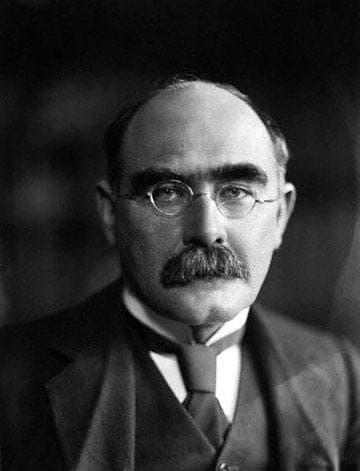
Joseph Rudyard Kipling was an English novelist, short-story writer, poet, and journalist. He was born in British India, which inspired much of his work.







