“I was arrested in Eno's Diner. At twelve o'clock. I was eating eggs and drinking coffee. A late breakfast, not lunch.”
— Opening line introducing Jack Reacher's character and situation.

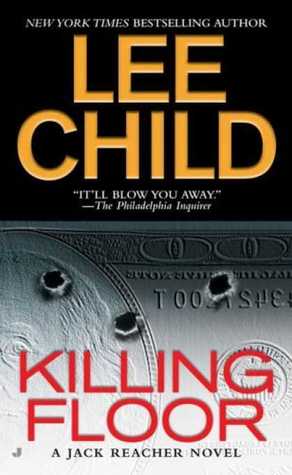
Lee Child (2002)
Genre
Thriller / Mystery
Reading Time
500 min
Key Themes
See below
Sign in to track this book
Framed for murder, ex-military policeman Jack Reacher must uncover a conspiracy in a Georgia town where everyone is a suspect.
Jack Reacher, a former military policeman, steps off a bus in Margrave, Georgia. He came to town because his brother, Joe, mentioned it once. Minutes after arriving, local police surround and arrest him for a murder he knows nothing about. At the police station, he meets Chief Morrison and Captain Finlay, a detective. Reacher is immediately the main suspect because he is a drifter and there are no witnesses. He says he is innocent, but the police think they have their man, especially after a witness says they saw someone matching Reacher's description near the crime scene.
Finlay and Morrison question Reacher intensely. He learns the victim was found shot in a remote area. While Reacher is held, another man, Paul Hubble, a wealthy Margrave banker, comes to the station and confesses to the murder. Hubble claims self-defense. Reacher, suspicious of the sudden confession, is put in the county jail. There, he meets Hubble, who is scared and clearly lying. Hubble says he was forced to confess under threats to his family, suggesting a larger criminal operation in Margrave. Reacher realizes he has found a situation more complex than a simple murder.
In jail, Reacher is allowed to see the victim's body. He is shocked and saddened to identify the dead man as his older brother, Joe Reacher, a high-ranking Treasury agent. Joe had been investigating a counterfeiting operation. This changes Reacher's involvement from just saving himself to wanting revenge and justice for his brother. Finlay, who doubted Reacher at first, starts to believe his story and think there is a deeper conspiracy. Roscoe, a local police officer who is kind to Reacher, also becomes an ally. The local police, especially Chief Morrison, seem more and more involved in the crime.
Reacher, Finlay, and Roscoe form a difficult alliance. They are released from jail due to a technicality with the confession. They begin to investigate Joe's murder and the counterfeiting. They find that all of Margrave, including its police, is deeply involved in illegal activities. The Kliner family, who run a trucking business as a cover, controls these activities. The Kliner family is making perfect fake money, flooding the market with bills that cannot be detected. Reacher realizes that Joe was close to exposing them, which led to his death. The three start to put together the network of corruption, facing threats and surveillance from Kliner's men.
As Reacher, Finlay, and Roscoe investigate, the Kliner family's attacks get worse. Chief Morrison and his wife are murdered, showing that anyone who opposes Kliner is disposable. Finlay reveals he was sent to Margrave by the FBI for a different matter but is now helping Reacher avenge Joe. They learn the Kliner family is making money of unmatched quality, making detection almost impossible. Paul Hubble's family is held hostage to ensure his cooperation, which explains his forced confession. The size of the operation and the extent of the corruption become clear, reaching far beyond Margrave.
Paul Hubble, following Reacher's plan, escapes Kliner's control and goes into hiding with his family. This makes the Kliner family even angrier, and they search harder for Reacher and his allies. Reacher, Finlay, and Roscoe realize that the Kliner operation has international connections and many corrupt officials and enforcers. They understand that stopping this operation will mean destroying a criminal empire, not just solving a murder. Reacher's methods become more brutal as he fights Kliner's thugs, determined to get justice for his brother and protect his new allies.
Reacher, Finlay, and Roscoe enter various Kliner properties, learning how the counterfeiting operation works. They find a complex printing press that makes perfect fake bills, hidden in a Kliner building that looks normal. They also find evidence of Kliner's large distribution network, which includes corrupt Secret Service agents and international crime groups. The fake money is so good it threatens the global economy. Reacher realizes Joe's investigation was about to expose this huge scheme, which is why he was killed. The risks are higher than ever, and Reacher knows he must act quickly.
Reacher, using his military training and strategy, plans attacks against the Kliner organization. He targets their assets, people, and buildings to stop their operation. This leads to several brutal fights and shootouts with Kliner's enforcers. Reacher, with Finlay and Roscoe's help, kills key Kliner family members and their hired killers. The violence is harsh, as Reacher uses his grief and anger to destroy the empire that murdered his brother. He leaves a path of destruction, making sure the Kliner family's power is permanently broken.
In a final fight, Reacher confronts the remaining Kliner family members and their top agents. He kills them, making sure no one is left to continue the counterfeiting. Reacher also deals with the corrupt Secret Service agents involved, cutting off the Kliner network's connections to federal agencies. He ensures that all evidence of the counterfeiting is either destroyed or saved for proper authorities. Margrave is left in ruins, its corrupt appearance gone, and its criminal underworld exposed. Reacher's mission of revenge is complete, and the threat of the perfect fake money is gone.
With the Kliner family gone and their operation stopped, Reacher gets ready to leave Margrave. He says goodbye to Finlay and Roscoe, who became his trusted allies. Finlay, having seen the corruption, decides to stay and help rebuild the town's police, ensuring justice. Roscoe, having survived, also commits to restoring order in Margrave. Reacher, always a drifter, feels no connection to the town he just saved. His mission is done, and he moves on, leaving behind the chaos, a lone man continuing his journey with his brother avenged.
The Protagonist
Reacher's journey begins with an accidental arrest, transforms into a personal quest for vengeance for his brother, and ends with him systematically dismantling a vast criminal enterprise.
The Supporting
Finlay evolves from a skeptical lawman to a trusted partner, fully dedicating himself to Reacher's mission after realizing the truth about Margrave's corruption.
The Supporting
Roscoe transforms from a local cop trying to do her job into a courageous fighter against entrenched corruption, finding strength and purpose alongside Reacher.
The Mentioned
Joe's arc is completed before the story begins, but his past actions and death drive the entire narrative of his brother's retribution.
The Antagonist
Kliner Sr. maintains his position as the untouchable crime boss until Reacher systematically dismantles his empire and eliminates him.
The Antagonist
Kliner Jr.'s arc is one of escalating villainy, culminating in his violent demise at Reacher's hands.
The Supporting
Hubble begins as a coerced accomplice, then becomes a reluctant source of information for Reacher, eventually escaping Kliner's grasp.
The Supporting
Morrison's arc is one of complicity and ultimate betrayal, as he is murdered by the Kliners he sought to protect.
The Supporting
Spivey serves as an early antagonist, demonstrating the pervasive corruption, and is ultimately dealt with by Reacher.
The main theme of 'Killing Floor' is the line between justice and vengeance. Reacher's initial involvement in Margrave is by chance, but after finding his brother Joe murdered, his quest becomes a personal mission of revenge. He works outside the law, using brutal methods to destroy the Kliner family's criminal group. While his actions aim to stop a corrupt organization, his main reason is avenging his brother. The story explores if Reacher's violent methods are right when facing such widespread corruption.
“''I was going to put Margrave back on the map, one way or another. I was going to carve my brother's name into it. I was going to make sure everyone remembered him.'”
The book shows how corruption can spread through an entire community. Margrave, Georgia, looks peaceful but is rotten inside, controlled by the Kliner family's counterfeiting. This corruption includes the local police chief, jail warden, and federal agents, showing how power can be used to twist justice and control a system. The theme highlights how unchecked power can lead to abuse, where wealth and influence let criminals act freely, making it almost impossible for real law enforcement to work. Reacher fights against this deep, widespread corruption.
“'This whole town is rotten. Every single one of them, from the mayor to the guy who sweeps the streets, they're all in on it.'”
Jack Reacher is the ultimate outsider, a drifter with no ties, who faces a deeply corrupt system. His lack of official connection lets him work without the rules that bind Finlay and Roscoe. This theme explores how effective an individual can be when working outside institutions to get justice when the system itself is broken. Reacher's isolation gives him a unique view and freedom, but it also shows the personal cost of challenging powerful forces alone. The story suggests that sometimes, only an outsider without rules can truly expose and stop a corrupt establishment.
“'I had nothing to lose. No home, no family, no job. Just a mission.'”
Despite Reacher's solitary nature, family and loyalty are very important themes. The whole plot starts with the murder of his brother, Joe, turning Reacher's casual visit into a personal quest. His loyalty to Joe drives his chase of the Kliners. Also, his growing bond with Finlay and Roscoe, who become like family in the fight against corruption, shows the importance of trust and support in a dangerous situation. This theme explores how family ties, whether by blood or shared goal, can create strong determination.
“'He was my brother. My only brother. And they killed him.'”
A wandering hero who arrives in a troubled town, free from institutional constraints.
Jack Reacher's character as a drifter is a core plot device. By having him arrive in Margrave with no connections, possessions, or official ties, the narrative immediately establishes him as an outsider. This allows him to be initially mistaken for the killer, creating the inciting incident. More importantly, his lack of institutional affiliation grants him the freedom to act outside the law, unimpeded by bureaucratic rules or corrupt superiors, making him the ideal agent to dismantle a deeply entrenched criminal network that has compromised local authorities. His transient nature also reinforces his lone wolf persona, allowing him to simply leave once his mission is complete.
A highly sophisticated counterfeiting operation that threatens the global economy.
The 'perfect counterfeit' is a crucial plot device that elevates the stakes beyond a simple murder mystery. The Kliner family's ability to produce undetectable currency not only explains Joe Reacher's investigation but also establishes the immense power and danger of their operation. This device justifies the ruthless methods employed by the Kliners to protect their secret and underscores the global implications of their crime. It provides a compelling, high-stakes motivation for Reacher to completely destroy the operation, as its continued existence would have far-reaching economic consequences, making his mission one of national and international importance, not just personal revenge.
An seemingly idyllic setting that hides a dark, criminal underbelly.
The setting of Margrave, Georgia, as a corrupt small town is a classic plot device. It presents a facade of quaint Americana that conceals a pervasive criminal enterprise, heightening the shock and betrayal when its true nature is revealed. This device allows for the complete infiltration of local institutions—police, judiciary, and even seemingly legitimate businesses—by the Kliner family. It creates an atmosphere of claustrophobia and paranoia, where trust is scarce and danger lurks everywhere. The small-town setting also makes it easier for the criminals to control information and eliminate threats, intensifying Reacher's challenge.
A false confession used to mislead the investigation and protect the true culprits.
Paul Hubble's forced confession is a critical plot device that serves multiple functions. Initially, it misdirects the police, making Reacher's situation more precarious and establishing the Kliner family's influence over the legal process. It also introduces the element of coercion, hinting at the larger criminal enterprise and the ruthlessness of the Kliners, who are willing to threaten families to maintain their secrecy. The confession forces Reacher and Hubble into proximity in jail, allowing Hubble to reveal crucial information under duress, thus providing Reacher with his first real lead into the true nature of the conspiracy. It's a key turning point that shifts the narrative from a simple murder to a complex criminal investigation.
“I was arrested in Eno's Diner. At twelve o'clock. I was eating eggs and drinking coffee. A late breakfast, not lunch.”
— Opening line introducing Jack Reacher's character and situation.
“I'm not a vagrant. I'm a hobo. There's a difference.”
— Reacher explaining his lifestyle and philosophy.
“The army taught me to be suspicious. And careful. And thorough. And patient.”
— Reacher reflecting on his military background and skills.
“I'm not a detective. I'm just a guy who asks questions.”
— Reacher downplaying his role in the investigation.
“The best defense is a good offense. But the best offense is a surprise.”
— Reacher discussing combat strategy during a confrontation.
“Money talks. But it doesn't always tell the truth.”
— Reacher commenting on the corrupt motives behind the crimes.
“I don't want to put down roots. I like to keep moving.”
— Reacher explaining his nomadic lifestyle to another character.
“Sometimes you have to be a wolf. Sometimes you have to be a sheepdog.”
— Reacher analogizing his protective role in the town.
“The dead can't speak. But they leave clues.”
— Reacher analyzing evidence at a crime scene.
“I don't do revenge. I do justice.”
— Reacher distinguishing his motives from mere vengeance.
“A small town can have big secrets.”
— Reacher observing the hidden corruption in Margrave.
“Trust your instincts. They're usually right.”
— Reacher advising another character during the investigation.
“I don't like bullies. Never have.”
— Reacher explaining his motivation to confront the antagonists.
“The truth is like a diamond. Hard to find, but worth it.”
— Reacher philosophizing about the investigation's challenges.
Ready to see how well you understood this book? Take our interactive quiz with 10 questions.

Biography coming soon.







