“I was a good lad, I did my best to be a good lad, but I had a good deal to learn.”
— David Balfour reflecting on his early experiences after his uncle's betrayal.

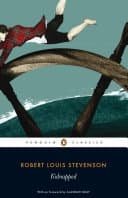
Robert Louis Stevenson (2009)
Genre
Historical Fiction / Young Adult
Reading Time
480 min
Key Themes
See below
Sign in to track this book
After being betrayed by his wicked uncle and kidnapped into a life of slavery, young David Balfour must escape and flee across the treacherous Scottish Highlands with a swashbuckling rebel to claim his rightful inheritance.
After his parents die, seventeen-year-old David Balfour has only a letter from his father telling him to find his Uncle Ebenezer, the Laird of Shaws. David travels to the House of Shaws, a run-down mansion, where his uncle greets him with suspicion. Ebenezer, a miserly and paranoid man, acknowledges David but immediately tries to get rid of him. During a dangerous tour of the house at night, Ebenezer tries to make David fall to his death from an unrailed tower staircase. David escapes, confirming his uncle's bad intentions. He learns from a local lawyer, Mr. Rankeillor, that he is the rightful heir to the estate, not Ebenezer, who has been holding it unlawfully.
Ebenezer, seeing his plan to disinherit David fail, lures David to the Queensferry pier by pretending to find him a legal representative. Here, Captain Hoseason of the brig 'Covenant' ambushes David and knocks him out. He wakes up a prisoner on the ship, on his way to the American colonies to be sold into servitude. The 'Covenant' is a disreputable ship involved in the illegal slave trade, and its crew is brutal. David endures harsh treatment and learns of his uncle's part in his abduction, strengthening his resolve to escape and reclaim his inheritance.
While sailing through the Inner Hebrides, the 'Covenant' hits a small boat in a dense fog. The only survivor, Alan Breck Stewart, a Scottish Highlander and Jacobite fugitive, is brought aboard. Captain Hoseason and his crew initially plan to murder Alan and steal his money, but David warns Alan after seeing their cruel intentions. Together, David and Alan barricade themselves in the fore-cabin, fighting off the crew. Alan, a skilled swordsman, defends himself easily, and David, though less experienced, shows his courage. They negotiate a truce with Captain Hoseason, who, fearing Alan's connections and a possible mutiny, agrees to land them safely.
The 'Covenant' tries to navigate through dangerous waters near the Torran Rocks. Drunk and with bad judgment, Captain Hoseason's crew runs the ship aground. The ship is damaged beyond repair, and the crew abandons it. David is thrown overboard and, through luck and determination, swims to the desolate Isle of Erraid, mistaking it for the mainland. He spends several days alone, hungry and exposed, before realizing he is on a tidal island and can cross to Mull at low tide. He eventually makes his way to the mainland, only to find Alan Breck is not with him.
After reaching the mainland, David journeys through the Highlands and eventually meets Alan Breck Stewart in a remote area. Soon after their reunion, they witness the assassination of Colin Roy Campbell, the 'Red Fox,' the King's factor of Appin. Alan is a known Jacobite and a rival of Campbell, making him an immediate suspect. Despite Alan's claims of innocence, the murder involves both of them, and they become fugitives. This event begins their difficult journey across the Scottish Highlands, hunted by government troops.
David and Alan begin a dangerous flight across the rugged Scottish Highlands. They face extreme hardship, including hunger, thirst, harsh weather, and constant watch against government soldiers. Alan, familiar with the terrain and the Highlanders' ways, guides David through bogs, mountains, and glens. Their journey includes close calls, narrow escapes, and meetings with both supportive and hostile locals. David, not used to such a life, struggles physically but gains resilience and a deeper understanding of Highland culture and the Jacobite cause.
During their flight, David and Alan often argue because of their different backgrounds and personalities. David, a Lowlander and a Whig, is practical and law-abiding, while Alan, a Highlander and a Jacobite, is proud, impulsive, and lives outside the law. Their arguments are often heated, especially about their political loyalties and Alan's gambling. However, their shared situation and reliance on each other build a strong bond of friendship and respect. David comes to admire Alan's courage and loyalty, and Alan, in turn, values David's prudence and honesty. Their friendship grows with each challenge they overcome together.
As they continue their flight, Alan decides they must seek help from Cluny Macpherson, the chief of the Clan Macpherson, who is also an outlawed Jacobite living in hiding. They travel to Cluny's Cage, a hidden dwelling on Ben Alder. Cluny provides them with food, shelter, and much-needed rest. During their stay, David observes the unique customs and loyalty within the Highland clans, including Cluny's almost regal manner despite his circumstances. While Cluny is hospitable, David finds the forced idleness and constant card games a strain, eager to continue their journey and resolve his own affairs.
After some time at Cluny's Cage, David and Alan decide to move on towards the Lowlands. They leave Cluny and continue their difficult journey. As they approach the more populated Lowland areas, they must be even more careful to avoid capture. David is determined to confront his Uncle Ebenezer and reclaim his inheritance. Alan, despite the danger to himself, insists on going with David to ensure his safety and help him with his claim, showing his loyalty to his young friend. Their journey has continued risks as they navigate a country still on high alert for Jacobite fugitives.
David, with Alan, returns to the House of Shaws. With the help of Mr. Rankeillor, the lawyer, they plan to expose Ebenezer's treachery. Alan positions himself outside the house while David confronts his uncle. David pretends to be a stranger sent by Alan, claiming that Alan has proof of Ebenezer's part in the kidnapping. Ebenezer, believing Alan is outside and can overhear, accidentally confesses his crimes, revealing his fear of Alan and confirming David's story. With Ebenezer's confession, David's claim to the estate is undeniable, and his uncle is forced to give it up.
After Ebenezer's confession, David takes possession of the House of Shaws and his inheritance. He arranges for his uncle to receive a small annuity, ensuring he is cared for but stripped of his power. With his affairs settled, David must say goodbye to Alan Breck Stewart. Alan, still a wanted man, cannot stay in the Lowlands and must flee to the Continent. They share a heartfelt parting; their deep friendship, formed through shared hardship and adventure, is now firm. David is left to manage his estate, forever changed by his experiences and the bond he formed with the daring Highlander.
The Protagonist
David transforms from an innocent, orphaned boy into a resilient and self-reliant young man, learning to navigate danger and make his own way in the world.
The Supporting Character / Deuteragonist
Alan remains true to his Jacobite nature but develops a deep, protective friendship with David, showing a softer side beneath his bravado.
The Antagonist
Ebenezer's attempts to maintain his ill-gotten gains lead to his ultimate exposure and loss of the estate.
The Supporting Antagonist
Hoseason's opportunistic nature leads him to participate in David's kidnapping, setting the stage for David's adventure.
The Supporting Character
Rankeillor remains a steadfast moral compass, providing legal assistance and counsel to David.
The Mentioned Character
His assassination serves as the catalyst for the main chase and solidifies David and Alan's bond as fugitives.
The Supporting Character
Cluny offers temporary refuge, embodying the resilience of the Jacobite spirit in hiding.
The Supporting Character
Ransome's tragic death underscores the brutality of the 'Covenant' and the dangers David faces.
David Balfour's journey is one of self-discovery. Initially a naive orphan, he must confront his lineage, claim his identity as the rightful Laird of Shaws, and grow through adversity. His travels expose him to different social classes, political ideas, and moral challenges, making him define his own principles and capabilities. The contrast between his Lowland upbringing and the Highland world he travels further shapes his understanding of who he is and where he belongs.
“I was now alone in the world; a lad of eighteen, with no one to advise me.”
The novel explores justice and injustice, both personal and political. David suffers a personal injustice from his Uncle Ebenezer, who tries to defraud and kidnap him. This personal quest for justice drives much of David's initial motivation. At the same time, the larger political situation of post-Jacobite Scotland is full of injustice: the oppression of the Highlanders, the 'Appin Murder' and its subsequent blaming, and the ongoing conflict between Whigs and Jacobites, each side believing their cause is right. The story examines the complexities of what justice means in a divided society.
“There was no justice for the likes of me, or for any man that had a drop of Stewart blood.”
Loyalty is a main theme, shown in different ways. Alan Breck's loyalty to his clan, his 'name,' and the Jacobite cause defines much of his character. More personally, the deep loyalty that grows between David and Alan, despite their political and cultural differences, is a key part of the story. This contrasts with the betrayal David experiences from his Uncle Ebenezer, showing the destructive power of greed and deceit. The novel also touches on loyalties within clans and among outlaws, showing how these bonds can be a source of strength and a potential weakness.
“I was to remember that when a man was in a close place, and did not like to say a thing, it was a good idea to get it said by another.”
Stevenson shows the strong contrast between Lowland and Highland Scottish cultures, a significant theme in the novel. David, a practical and law-abiding Lowlander, initially struggles to understand the customs, language, and fierce independence of the Highlanders, represented by Alan. The Highlands are depicted as wild, untamed, and full of tradition and clan loyalties, often at odds with the central government of the Lowlands. This cultural clash is a source of both conflict and interest, ultimately broadening David's perspective and showing the rich diversity within Scotland.
“I had been brought up to think of Highlanders as savages, and here was one of them, a gentleman, and a friend.”
The entire story is a classic coming-of-age narrative for David Balfour. At the start, he is an innocent, inexperienced boy, dependent on others and easily manipulated. Through his difficult experiences – from kidnapping and shipwreck to surviving the wilderness and evading capture – he is forced to grow up quickly. He learns practical skills, develops courage, gains self-reliance, and forms his own moral code. His friendship with Alan, despite its challenges, also contributes to his growth, as he learns to adapt, negotiate, and stand his ground.
“I was no longer the same boy that had left the manse of Essendean.”
The story is told entirely from David Balfour's perspective.
The novel is narrated in the first person by David Balfour, allowing readers direct access to his thoughts, fears, and evolving understanding of the world. This perspective emphasizes his growth from naive youth to a more mature and discerning individual. It also creates a sense of immediacy and personal investment, as readers experience the dangers and wonders of his adventure alongside him. The language is often reflective, looking back on the events from a later, wiser viewpoint, which adds depth to his observations of characters like Alan Breck and the Scottish landscape.
The assassination of Colin Roy Campbell as a catalyst for the main chase.
While a real historical event, in the context of the novel's plot, the Appin Murder serves as a MacGuffin. Its precise details and the true culprit are less important than its function in driving the narrative forward. The murder immediately implicates Alan Breck and, by association, David, forcing them into a desperate flight across the Highlands. It provides the external conflict and urgency that keeps the protagonists on the move, solidifying their bond as fugitives and exposing them to the raw realities of the Scottish landscape and its people, without necessarily needing a full resolution within David's personal story arc.
David's physical and metaphorical journey to reclaim his inheritance and identity.
The entire novel is structured around a classic journey or quest motif. David embarks on a physical journey from the Lowlands to the Highlands and back, traversing diverse landscapes and facing numerous obstacles. This physical journey mirrors his internal quest for identity, justice, and self-discovery. Each stage of his journey brings new challenges and encounters that contribute to his growth and the gradual unfolding of the plot, ultimately leading him to reclaim his rightful place and inheritance.
Alan Breck Stewart as a foil to David Balfour.
Alan Breck Stewart serves as a classic foil to David Balfour. David is a pragmatic, cautious Lowlander, a Whig, and initially naive. Alan is an impulsive, daring Highlander, a Jacobite, and worldly. Their contrasting personalities, political allegiances, and social backgrounds highlight each other's traits and provoke conflict, yet also foster mutual respect and a deep friendship. Alan's wildness and experience force David to adapt and grow, while David's prudence often tempers Alan's recklessness, creating a dynamic and engaging central relationship that drives much of the character development and dialogue.
“I was a good lad, I did my best to be a good lad, but I had a good deal to learn.”
— David Balfour reflecting on his early experiences after his uncle's betrayal.
“I have been as good as a father to you.”
— Ebenezer Balfour's deceptive words to David, trying to maintain control.
“I have a good deal to say, but I'll make it short. I'm a Whig, for one thing; but that's neither here nor there.”
— Alan Breck Stewart introducing himself and his political leanings to David.
“A man that has been in danger, and seen the death of others, has not the same way of looking at the world.”
— David's changing perspective after the shipwreck and subsequent dangers.
“I had been brought up a Presbyterian, and I had been taught to hate the very name of a Papist.”
— David's initial religious prejudices, reflecting the sectarian tensions of the time.
“It's a grand thing to be a gentleman, David.”
— Alan Breck often comments on social status and the aspirations associated with it.
“I'm a man of my word, and I'll keep it.”
— Alan Breck's frequent assertion of his honor and commitment.
“I had been told by my uncle that I was to be a great man, and I had believed him.”
— David's early, naive belief in his uncle's promises.
“I was to learn that a man may be a good man, and yet be a Jacobite.”
— David's evolving understanding of people beyond political labels, particularly regarding Alan.
“The great thing is to have a good conscience.”
— A moral reflection on the importance of inner peace despite external hardships.
“It was a wild night, and the rain blew in squalls, and the wind sang in the rigging like a fiend.”
— Description of the storm at sea, setting a perilous atmosphere.
“I was a prisoner, and I knew it.”
— David's realization of his helpless situation after being kidnapped.
“There are some things a man can't stand, and one of them is to be called a liar.”
— Alan Breck's passionate defense of his reputation and honor.
“I had come out of the house of my fathers, and I was going forth into the world, a stranger.”
— David's sense of displacement and uncertainty at the start of his journey.
Ready to see how well you understood this book? Take our interactive quiz with 10 questions.
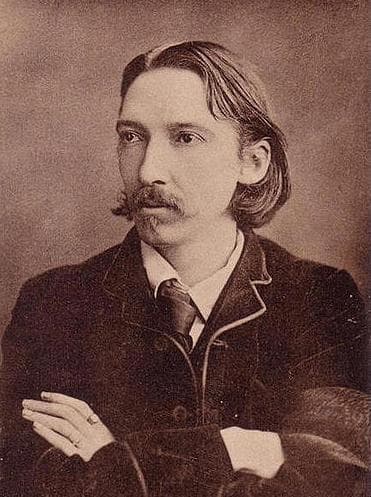
Robert Louis Stevenson was a Scottish novelist, essayist, poet and travel writer. He is best known for works such as Treasure Island, Strange Case of Dr Jekyll and Mr Hyde, Kidnapped and A Child's Garden of Verses.







