“Mam said I was a good girl, and I knew I was, but sometimes being good was the hardest thing in the world.”
— Reflecting on the challenges of obedience amidst difficult circumstances.

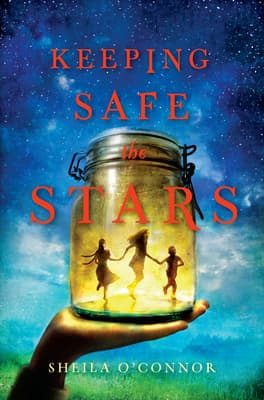
Sheila O'Connor (2012)
Genre
Children's / Historical Fiction / Young Adult
Reading Time
240 min
Key Themes
See below
Sign in to track this book
In 1930s rural Minnesota, three orphaned siblings must navigate their grandfather's sudden illness, fending for themselves and uncovering a hidden family past to stay together.
Pride, Nightingale, and Baby – known as the Stars – live a remote, independent life with their grandfather, Old Finn, on a rundown farm in rural Minnesota. Their days are filled with chores, learning survival skills from Old Finn, and avoiding the outside world, which their grandfather distrusts. Pride, the eldest, feels responsible for her younger siblings. Old Finn, a quiet but wise man, teaches them to be cautious of strangers and to rely only on themselves. They live a simple but independent life, mostly isolated, with the children homeschooled and interacting only with a few local people, like the postman.
One day, Old Finn has a stroke while working in the barn. Pride, Nightingale, and Baby find him unresponsive. Fearing social services and family separation, Pride decides to keep Old Finn's illness a secret. She tries to care for him herself, with Nightingale's help, but his condition quickly worsens. The children are overwhelmed by the sudden change and the reality of their grandfather's health, knowing their self-reliance is now pushed to its limit.
Realizing they cannot care for Old Finn alone, Pride decides to seek help. She approaches Mr. Gunderson, a local farmer who sometimes helps them, and tells him about Old Finn's condition. Mr. Gunderson arranges for Old Finn to go to a hospital in Duluth, a distant city the children have never seen. The separation is difficult for the Stars, who have never been away from their grandfather. This is their first big interaction with the outside world beyond their farm, forcing them to face the limits of their isolated life.
With Old Finn gone, Pride, Nightingale, and Baby are left alone on the farm. Pride, now fully responsible, works to keep them self-sufficient. They face daily challenges of food, warmth, and avoiding detection by social services. Pride plans to earn money by selling wild berries and other foraged goods in town, believing they need funds to eventually reach Old Finn. This time is marked by hardship, resourcefulness, and the constant fear of being discovered and separated. Nightingale helps a lot, and Baby's innocence provides moments of joy amidst their grim reality.
Pride and Nightingale begin selling foraged berries and herbs in the nearby town. This exposes them to the outside world, where they meet various reactions. Some townspeople are kind, offering small help, while others are suspicious of the unkempt children without an adult. Pride learns to handle these interactions, improving her negotiation skills and her ability to protect her siblings. The money they earn, though small, fuels their hope of reuniting with Old Finn, and the experience slowly lessens their distrust of strangers, though cautiously.
A social worker, alerted by Mr. Gunderson or other townspeople, visits the Stars' farm. Pride, always watchful, manages to hide Nightingale and Baby and pretends Old Finn is just resting, making up a story about his temporary absence. The close call increases Pride's fear of being separated from her siblings and strengthens her resolve to keep their situation a secret. This encounter shows the constant threat of the outside world breaking apart their family, reinforcing the children's belief that they must rely only on themselves.
After weeks of work and saving, Pride finally has enough money for bus tickets to Duluth. The children start their first major journey away from the farm, a challenging experience filled with anxiety about the unfamiliar city and hope of seeing Old Finn. The bus ride is a sensory overload for the sheltered children, a sharp contrast to their quiet rural life. Pride stays protective, making sure Nightingale and Baby stay close, as they navigate this new, overwhelming environment, driven by their desperate desire to reach their grandfather.
At the Duluth hospital, the children find Old Finn. Their reunion is difficult. Old Finn is severely affected by his stroke, unable to speak, walk, or recognize them. This devastating reality shatters Pride's hope that he would simply recover and they could return to their old life. She realizes that her self-reliance and the children's efforts cannot fix their grandfather. The hospital, with its sterile coldness, further shows their vulnerability and the grim future they face.
While at the hospital, Pride finds an old photograph and a hidden letter among Old Finn's few things. The photograph shows a younger Old Finn with a woman and a child, and the letter hints at a past connection to a wealthy family and a secret inheritance. This discovery sparks a new kind of hope in Pride, suggesting there might be a way for them to stay together, not through their own independence, but through a connection to their grandfather's forgotten past. This potential secret offers a lifeline in their desperate situation, shifting their focus from survival to uncovering truth.
Driven by the need to understand the letter, Pride, with a kind nurse's help, seeks out a lawyer mentioned in the letter. She bravely navigates the legal system, explaining their situation and showing the evidence. The lawyer, at first doubtful, eventually helps Pride uncover the truth: Old Finn had a hidden past and a claim to an inheritance from a wealthy family, which could secure the children's future. This revelation is a turning point, offering a way for the Stars to remain a family, even if it means embracing the outside world they once feared.
The inheritance from Old Finn's past is claimed, providing financial security for Pride, Nightingale, and Baby. This allows them to stay together, avoiding the feared separation by social services. While Old Finn remains in the hospital, the children now have resources for his care and their own. This newfound stability is a big change for the Stars, who must now learn to live a life not solely dependent on their own labor and isolation. It is a bittersweet victory, as they gain security but lose the only life they have known with their grandfather.
With their future secure, Pride, Nightingale, and Baby begin to integrate into a more conventional life. They enroll in school, learn about the world beyond their farm, and start to form connections with others. Pride, still protective, gradually learns to trust some outsiders and accept help. The memory of Old Finn and his lessons of self-reliance remain, but they are balanced by the understanding that true safety and family can also come from connection and community. The Stars start a new chapter, changed but still bound by their love and shared history.
The Protagonist
Pride transforms from a child burdened by secret responsibilities to a young woman who learns to balance self-reliance with the necessity of trusting others and accepting help.
The Supporting
Nightingale develops from a quiet helper to a more vocal and emotionally expressive individual, finding her own strength within the family unit.
The Supporting
Baby remains largely innocent throughout the ordeal, representing the childhood that Pride fights to protect.
The Supporting
Old Finn's physical arc is one of decline, but his legacy and hidden past ultimately provide a solution for his granddaughters, revealing a more complex character than initially perceived.
The Supporting
Mr. Gunderson's arc is minor; he moves from cautious observer to a catalyst for the Stars' journey to the city.
The Mentioned
The social worker's role is largely static, serving as an external force of conflict.
The Supporting
Nurse Helen's arc is one of a compassionate helper, guiding Pride through a complex situation.
The Supporting
Mr. Peterson's arc is one of a professional who, through his work, brings resolution to the Stars' plight.
The novel explores the tension between extreme self-reliance and the need for community. Old Finn teaches the Stars to distrust outsiders and to fend for themselves. This theme is clear in Pride's initial decision to hide Old Finn's illness and her efforts to earn money through foraging. However, the limits of this isolation become clear as the children face overwhelming challenges, forcing Pride to gradually accept help from Mr. Gunderson, Nurse Helen, and the lawyer. The story suggests that while self-reliance is valuable, a balanced life needs connection and support from others.
““We are the Stars,” Old Finn had said, “and we keep safe our own.””
The book examines what truly makes a family, especially without traditional structures. The Stars are an unconventional family, bound by shared hardship and deep love. Their strong loyalty to each other, especially Pride's commitment to keeping her siblings together, drives the story. The threat of separation by social services constantly challenges their idea of family, pushing them to extreme measures. The discovery of Old Finn's past and the inheritance provides a way for them to keep their unique family bond, even as their circumstances change. This reinforces that family is about connection, not just blood or location.
““Family was not just blood, but the people who chose to stay, who fought for you, who held you safe.””
The Stars' journey shows the loss of childhood innocence and accelerated growing up under pressure. Pride, especially, must leave her childhood behind, taking on adult responsibilities for survival and decisions. Nightingale also carries burdens, while Baby's innocence is protected by her sisters. The children's exposure to illness, poverty, and the adult world strips away their naiveté. Their experiences on the farm, selling berries, and navigating the city all contribute to their rapid maturity, showing the impact of crisis on childhood.
““Childhood was a luxury they couldn't afford, not with Old Finn gone and the world pressing in.””
Secrets, both personal and family, shape the Stars' present and future. Old Finn's isolation and his reluctance to share his past create the initial mystery around their family. The discovery of his hidden letter and photograph is the moment that shifts the children's desperate struggle for survival toward a potential solution. This theme explores how past events can affect future generations, and how uncovering long-held secrets can either break or save a family. It shows that understanding where you come from can be important for knowing where you are going.
““Old Finn had kept his past locked away, a treasure or a burden, Pride wasn't sure which.””
A crucial plot device that reveals Old Finn's secret past and provides a solution.
The discovery of the hidden letter and photograph is a classic example of a MacGuffin that drives the latter half of the plot. It serves as the tangible clue that unravels Old Finn's mysterious past, revealing his connection to a wealthy family and an inheritance. This device shifts the narrative from the children's desperate struggle for self-sufficiency to a quest for information and legal resolution. Without this discovery, the Stars would likely face separation by social services, making it the linchpin for their eventual salvation and a new beginning.
A setting that symbolizes the family's self-reliance and vulnerability.
The isolated farm functions as both a sanctuary and a prison for the Stars. It symbolizes their self-reliant lifestyle and Old Finn's philosophy of avoiding the outside world. Its remoteness initially protects them from societal interference but also leaves them incredibly vulnerable when Old Finn falls ill. The farm is a constant reminder of their independence and the values instilled in them, but also highlights the limitations of extreme isolation when facing a crisis that requires external help. It is the crucible in which Pride's leadership is forged.
A symbolic and literal journey into the unknown and the wider world.
The children's bus trip to Duluth is a significant journey, both literally and symbolically. It represents their first major foray into the outside world, a stark contrast to their sheltered rural life. This journey forces them to confront the complexities and overwhelming nature of society, challenging their ingrained distrust of strangers. Symbolically, it is a journey from innocence to experience, from isolation to potential integration, and from a life of pure self-reliance to one where external systems and people become necessary for survival and future security.
“Mam said I was a good girl, and I knew I was, but sometimes being good was the hardest thing in the world.”
— Reflecting on the challenges of obedience amidst difficult circumstances.
“The war was like a big dark cloud, always there, even when the sun shone.”
— Describing the pervasive impact of World War II on daily life.
“Secrets were like heavy stones, always pressing down, making it hard to breathe.”
— Contemplating the burden of keeping family secrets.
“You had to be brave, even when your knees were knocking and your heart was thumping like a drum.”
— Encouraging oneself to face a daunting situation.
“Home wasn't just a place, it was a feeling, and sometimes that feeling was lost.”
— Musing on the emotional essence of home during displacement.
“Stars were just pinpricks of light, but they made the darkness seem a little less scary.”
— Finding comfort and hope in the night sky.
“Grown-ups had their own worries, big ones that children couldn't always understand.”
— Observing the hidden anxieties of adults.
“Sometimes the quietest people had the loudest thoughts.”
— Reflecting on the inner world of a reserved character.
“A promise was like a thread, delicate but strong, and once broken, it was hard to mend.”
— Considering the importance and fragility of promises.
“Even in the darkest times, there was always a little bit of magic if you knew where to look.”
— Finding moments of wonder amidst hardship.
“History wasn't just in books; it was in the streets, in the houses, in the very air you breathed.”
— Perceiving history as a tangible presence in her surroundings.
“The wind carried whispers, stories from faraway places, if you listened carefully enough.”
— Imagining the untold narratives carried by nature.
“Love was a funny thing; it could make you sad, but it could also make you strong.”
— Contemplating the dual nature of love's impact.
“You couldn't change the past, but you could always choose what you did next.”
— Focusing on agency and future choices despite past events.
Ready to see how well you understood this book? Take our interactive quiz with 10 questions.
Dan Gemeinhart
4.5
Kate O'Hearn
4.4

Jeanne Birdsall
4.4

Jen Wang
4.4
Wendelin Van Draanen
4.3

John Marsden
4.3

Chris Van Allsburg
4.3
Jennifer A. Nielsen
4.2