“Each of us is a book, and a good book, too, though we may be a bit dog-eared and smudged from time to time.”
— Kalki reflecting on humanity's inherent worth.

Gore Vidal (1978)
Genre
Fantasy / Historical Fiction / Spirituality / Science Fiction
Reading Time
340 min
Key Themes
See below
Sign in to track this book
A cynical journalist becomes involved with a charismatic man who claims to be the Hindu god Kalki, planning a global apocalypse to restart humanity with a chosen few.
The story begins with Theodore 'Teddy' Ottinger, a former U.S. Marine and Vietnam veteran who now writes children's books, living in Los Angeles. A representative from 'The Kalki Foundation' offers him a large sum to travel to Kathmandu, Nepal, and interview a man believed to be Kalki, the tenth avatar of Vishnu. Teddy, curious about the offer and his own underlying cynicism, accepts. He learns about Kalki's teachings, which predict an end to the current world and the start of a new age, and begins to prepare for his trip, unaware of Kalki's full plans.
Teddy arrives in Kathmandu and meets Kalki's inner circle. He meets G.G., Kalki’s efficient and somewhat intimidating American chief of staff, who handles all logistics. He also meets Lakshmi, a beautiful and calm young woman, presented as Kalki's main partner and a spiritually important figure. Teddy is struck by the mix of ancient spiritualism and modern efficiency around Kalki. He finds himself drawn to Lakshmi, despite his initial skepticism about the whole project. The atmosphere is one of deep respect and an unsettling certainty in Kalki's divine mission.
Teddy starts his interviews with Kalki, a charismatic and articulate man who presents himself as a direct descendant of Vishnu. Kalki calmly explains his belief that humanity has become too corrupt and destructive, making current civilization beyond saving. He details his plan to cleanse the world with a global plague, after which a select group of survivors, chosen for their genetic purity and spiritual enlightenment, will repopulate the Earth. Kalki's logic, though horrifying, is presented with an almost hypnotic conviction that starts to break down Teddy's skepticism. He struggles to reconcile Kalki's kind demeanor with his genocidal intentions.
During one interview, Kalki explains the nature of the plague he plans to unleash. He says it will be a genetically engineered virus, very contagious and deadly, designed to target specific genetic markers in most of the human population. Only a carefully chosen group, including Kalki himself, his partners, and a few selected individuals, will have natural immunity. This news deeply disturbs Teddy, as it confirms Kalki's plans are not just philosophical but real and soon. The sheer scale and cold precision of the plan are chilling, further solidifying Kalki's image as a god of destruction.
As Teddy continues his work, he becomes more involved in Kalki's world. He develops an intimate relationship with Lakshmi, which complicates his journalistic objectivity and personal feelings. He also learns more about G.G.'s past as a former CIA agent, hinting at the sophisticated organization behind Kalki's spiritual appearance. Teddy begins to question his own morals and the ethics of documenting such a destructive plan without intervening. He struggles with the appeal of belonging to a chosen few, even as the implications of their survival weigh heavily on his conscience. His initial cynicism starts to give way to a complex mix of fear, fascination, and reluctant belief.
The moment of truth arrives when Kalki releases the plague. Through a carefully planned global operation, the genetically engineered virus spreads across the world. News reports begin to come in, detailing the rapid spread of a mysterious and deadly illness, confirming Kalki's prophecy. Panic erupts globally as governments and medical institutions are overwhelmed. Teddy, now an eyewitness to the unfolding apocalypse, must face the horrifying reality of Kalki's vision. He watches the initial stages of the world's end from the relative safety of Kalki's compound, a chilling sign of the avatar's power and resolve.
The plague sweeps across the globe with deadly efficiency. Billions die, and within a short time, human civilization as it was known collapses. Cities become empty, infrastructure fails, and the few remaining survivors struggle in a completely changed world. Teddy, Lakshmi, G.G., and Kalki, along with their small, immune group, are among the very few left. The silence of the world outside their protected sanctuary is deep, a stark contrast to the busy planet that once was. The full horror of Kalki's plan becomes undeniably real, as the Earth is cleared of its human inhabitants, except for the chosen few.
After the plague, Kalki's small group of survivors begins a new way of life. They strictly follow Kalki's teachings, focused on spiritual purity, genetic integrity, and the careful breeding of a new human race. Teddy observes the strict rules and rituals put in place, designed to prevent past mistakes and ensure the success of Kalki's vision. He grapples with being part of this new, incredibly small, and carefully controlled society, understanding that his freedom, and that of others, now depends entirely on Kalki's will. The new world is one of stark beauty and deep emptiness.
Teddy, still having doubts and curiosity, begins to investigate Kalki's background more thoroughly. Through subtle clues and conversations, he uncovers the shocking truth: Kalki is not a divine avatar but a highly intelligent, psychopathic human being who, along with G.G. (revealed to be his former lover and co-conspirator), carefully planned and carried out the global plague. The 'divine' inspiration was a carefully built facade to legitimize their genocidal ambitions. The plague was not a natural disaster but a man-made weapon. This revelation shatters Teddy's remaining illusions and forces him to confront the horrifying reality of his situation.
Armed with the truth, Teddy confronts Kalki. The confrontation is tense and violent, showing Kalki's complete lack of remorse and his cold, calculating nature. In the struggle, Kalki is killed, likely by G.G. or Teddy himself in self-defense. The small group of survivors, now without a leader, is left to deal with the devastating implications of Kalki's deception and the future of their new community. Teddy, Lakshmi, and G.G. are among the few remaining, facing the difficult task of rebuilding humanity without Kalki's guiding, though tyrannical, hand. The question remains: can humanity truly start anew, or are they doomed to repeat past mistakes, even in this desolate new world?
The Protagonist
Teddy evolves from a detached observer to an active participant, ultimately uncovering Kalki's deception and playing a role in his downfall, forcing him to confront his own complicity and the responsibility of survival.
The Antagonist
Kalki remains steadfast in his genocidal vision, from planning to execution, until his true human identity is exposed and he is killed, revealing the fragility of his divine persona.
The Supporting
Lakshmi transitions from Kalki's devoted consort to a survivor who must confront the painful truth of his deception, ultimately relying on her own resilience and relationship with Teddy.
The Supporting
G.G. remains a steadfast enforcer of Kalki's vision until his death, after which she becomes a pragmatic survivor, revealing her deep involvement in the plot and her capacity for ruthless pragmatism.
The main theme is that humanity is flawed and destined for self-destruction, requiring a complete reset. Kalki's entire philosophy rests on this idea, arguing that war, pollution, and moral decay have made the current species beyond saving. The plague is presented as a 'cleansing' mechanism, allowing for the rebirth of a 'purer' human race. This theme is explored through Kalki's clear justifications for genocide and Teddy's initial cynical agreement with humanity's failures, contrasting with the horror of witnessing the actual apocalypse. The question of whether the 'new' humanity can truly escape the flaws of the old is left unanswered.
“''The world is too much with us; late and soon, / Getting and spending, we lay waste our powers...''”
The novel strongly examines how charismatic leaders, even those with destructive plans, can attract and manipulate followers. Kalki's ability to present his genocidal plan as a divine mission, along with his calm demeanor and intellectual arguments, highlights the danger of unquestioning devotion. Teddy, despite his cynicism, finds himself partly swayed by Kalki's presence and logic. The theme explores how people can be drawn to figures who offer radical solutions to complex problems, even when those solutions are horrifying. It also questions the responsibility of those who witness such leadership, as seen in Teddy's struggle between documenting and intervening.
“'He had the gift of making the most monstrous proposition sound entirely reasonable, even inevitable.'”
This theme explores the fine line between true spiritual belief and deliberate deception, especially when used to gain power or justify terrible acts. Kalki carefully creates a persona as a divine avatar, using ancient prophecies and spiritual talk to hide his true identity as a human psychopath. The story constantly challenges the reader, and Teddy, to tell what is real from what is made up. The eventual revelation of Kalki's human origins forces a re-evaluation of all his statements, showing how easily faith can be exploited and how difficult it is to separate the message from the messenger when the stakes are so high.
“'Truth, like beauty, is in the eye of the beholder, particularly when the beholder is convinced he is a god.'”
Once the plague has wiped out humanity, the novel shifts its focus to the ethical problems faced by the few survivors. The question arises: what kind of world should be built, and at what cost? Kalki's vision for a new humanity is based on strict control, genetic purity, and the elimination of past 'mistakes.' This raises deep questions about free will, diversity, and what makes a 'better' society. Teddy's presence among the survivors highlights the moral complexities of being part of a chosen few, especially when that choice was based on the mass extinction of others. The theme explores the responsibility that comes with being the last remnants of a species.
“'We are the last, and therefore the first. What we do now will define all that comes after.'”
Teddy Ottinger's cynical and often detached perspective shapes the reader's understanding of events.
While not entirely unreliable, Teddy Ottinger's narrative voice is deeply colored by his personal cynicism, bisexuality, and past traumas (Vietnam). His initial openness to Kalki's apocalyptic theories, born from his disillusionment, influences how the reader processes Kalki's arguments. His internal monologues often question the nature of reality and human morality, leading the reader to doubt and speculate alongside him. This device allows Vidal to explore complex philosophical questions through a character who is both participant and observer, making the eventual revelation of Kalki's deception more impactful as Teddy's perspective shifts.
Kalki as a 'divine' figure who brings about destruction rather than salvation.
This device is used in an inverted sense. Instead of a benevolent 'god from the machine' intervening to resolve conflict, Kalki presents himself as a divine avatar (Kalki, the tenth avatar of Vishnu) whose purpose is to *cause* the ultimate conflict and destruction of the world. He is the 'god' who brings about the end, not the salvation, of humanity. This inversion subverts traditional expectations of divine intervention in storytelling, making Kalki a figure of cosmic judgment and engineered apocalypse rather than a savior, until his true human nature is revealed.
A genetically engineered plague serves as the primary mechanism for the world's destruction.
The global pandemic is the central plot device driving the apocalypse. It is not a natural disaster but a meticulously designed, genetically engineered virus created by Kalki and his team. This detail transforms the catastrophe from an act of God or nature into a deliberate act of human will, underscoring Kalki's calculated malevolence. The plague's swift and indiscriminate spread highlights humanity's vulnerability and the chilling effectiveness of Kalki's plan. It serves as a stark, visceral manifestation of the novel's themes of humanity's self-destruction and the control over life and death.
A small, genetically screened group destined to survive and repopulate the Earth.
The concept of 'the chosen few' is a critical plot device, representing Kalki's ultimate goal for a 'purified' humanity. This group, selected for their genetic immunity to the plague and adherence to Kalki's ideals, provides the framework for the post-apocalyptic narrative. It raises questions about eugenics, control, and the ethics of survival. The existence of this group creates a microcosm of a new society, allowing the novel to explore the challenges and potential pitfalls of starting over, free from the 'flaws' of the old world but under the strictures of a new, equally controlling ideology.
“Each of us is a book, and a good book, too, though we may be a bit dog-eared and smudged from time to time.”
— Kalki reflecting on humanity's inherent worth.
“The world is always ending, and always beginning. It's just a matter of scale.”
— Kalki discussing the cyclical nature of destruction and creation.
“Ignorance is not bliss. Ignorance is a virus, and it’s highly contagious.”
— Teddy discussing the dangers of willful ignorance in society.
“History is not what happened. History is what is told.”
— Teddy musing on the subjective nature of historical narratives.
“To be truly free, one must first be free of desire.”
— A spiritual lesson imparted by Kalki's teachings.
“The greatest illusion is the belief that we are separate.”
— Kalki explaining the interconnectedness of all beings.
“Every man creates his own heaven and hell within himself.”
— A reflection on personal responsibility for one's inner state.
“Love is not an emotion; it is a state of being.”
— Kalki's definition of true love, beyond mere feeling.
“The future is not fixed; it is a tapestry woven by our choices.”
— A discussion on free will and destiny.
“To conquer fear, one must embrace the unknown.”
— A lesson in overcoming personal limitations.
“Perfection is not the absence of flaws, but the acceptance of them.”
— Kalki's perspective on human imperfection.
“The only true revolution is the one that happens within the individual.”
— A philosophical statement on societal change stemming from personal transformation.
“We are all actors on a grand stage, playing roles we ourselves have chosen.”
— Kalki's metaphor for life and individual purpose.
“The ultimate reality is not something to be found, but something to be realized.”
— A profound statement on the nature of spiritual awakening.
Ready to see how well you understood this book? Take our interactive quiz with 10 questions.
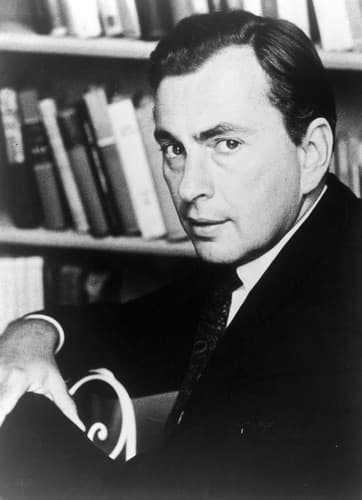
Eugene Luther Gore Vidal was an American writer and public intellectual known for his epigrammatic wit. His novels and essays interrogated the social and cultural sexual norms he perceived as driving American life. Beyond literature, Vidal was heavily involved in politics. He unsuccessfully sought office twice as a Democratic Party candidate, first in 1960 to the U.S. House of Representatives, and later in 1982 to the U.S. Senate.







