“We are the children of our landscape; it dictates behavior and even thought in the measure to which we are responsive to it.”
— Narrator reflects on Alexandria's influence on its inhabitants.

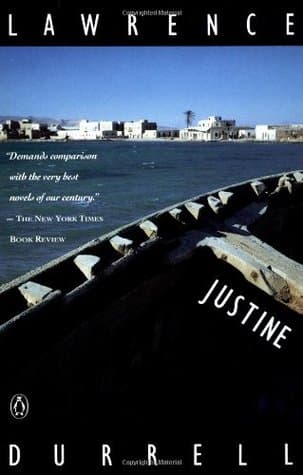
Lawrence Durrell (1957)
Genre
Literary Fiction / Historical Fiction
Reading Time
300 min
Key Themes
See below
Sign in to track this book
In pre-WWII Alexandria, where intellect and history meet, a group of expats goes into obsessive love and betrayal, mistaking physical pursuit for understanding.
The novel opens with the narrator, a poor English schoolteacher and writer, living alone on a remote Greek island with his daughter, Clea. He is trying to write a memoir of his time in Alexandria, Egypt, before World War II. His main focus is his intense, complicated, and destructive love affair with Justine Hosnani, a wealthy, puzzling, and beautiful Jewish woman. He thinks about the city itself, describing it as a character, a mix of cultures, religions, and sexualities. The narrator introduces other key figures from his past, including Justine's husband, Nessim, and his own lover, Melissa, setting the stage for the relationships he will examine.
The narrator recounts how he first met Justine through her husband, Nessim Hosnani, a Coptic Christian millionaire and financier. Justine is immediately presented as a captivating and elusive figure, known for her beauty, intelligence, and a certain sad intensity. The narrator describes the active, often decadent social scene of Alexandria, full of artists, intellectuals, diplomats, and a range of unusual characters. He details the long process of falling in love with Justine, at first resisting her charm but gradually becoming consumed by it. He also introduces Melissa, a poor, sick Greek dancer he lives with, showing the contrast between the two women and his conflicted feelings.
The affair between the narrator and Justine begins, marked by its secrecy, passion, and a sense of doom. Their meetings are secret, often happening in hidden apartments or during long drives through the desert. The narrator becomes more obsessed with Justine, trying to understand her complex past and reasons. He learns of her previous lovers, her difficult childhood, and the death of her child, which shaped her deeply. Their relationship is not just physical; it is a psychological entanglement, with Justine often appearing distant and troubled, leading the narrator to question her true feelings and the nature of their bond. He notes her interest in cabalistic mysticism and psychoanalysis.
Despite his overwhelming obsession with Justine, the narrator continues his relationship with Melissa. Melissa, a kind and gentle person, knows about his divided feelings but stays devoted to him. The narrator feels guilt about how he treats Melissa, recognizing her genuine love and vulnerability, especially given her declining health. He often returns to her after his encounters with Justine, seeking comfort and a sense of normalcy. This triangle shows the narrator's emotional complexity and his inability to fully commit to one woman, reflecting a broader theme of fragmented identity and desire within the novel. Melissa's quiet suffering provides a moral contrast to the passionate, often destructive, affair with Justine.
As the affair continues, the narrator explores Justine's past, putting together parts of her life through conversations, observations, and what others say. He learns about her difficult childhood, her early marriage, and the trauma of her infant daughter's death, which she believes was caused by syphilis inherited from a previous partner. More shockingly, he discovers her past involvement in prostitution, not for money, but seemingly as a form of self-punishment or a search for extreme experience. These revelations make his understanding of Justine more complex, making her both more vulnerable and more mysterious, feeding his obsession instead of lessening it.
Nessim Hosnani, Justine's husband, at first appears to be a passive, almost harmless figure, seemingly unaware or unconcerned by his wife's infidelity. However, the narrator begins to see a deeper, more calculating side to Nessim. He observes Nessim's great wealth and influence, and slowly uncovers hints of his involvement in complex political plans, possibly related to Egyptian nationalism or Zionist movements. Nessim's mystery and his quiet power become a source of fascination and unease for the narrator, suggesting that the personal dramas are tied to larger, more dangerous geopolitical currents beneath Alexandria's surface. His relationship with Justine is also shown to be more complex than a simple marriage of convenience.
The narrator, sometimes called Darley, often stops his own story to comment on writing and the subjectivity of memory. He acknowledges that his portrayal of Justine and the events in Alexandria is filtered through his own intense emotions, biases, and limited understanding. He questions whether he is truly capturing Justine or just projecting his own desires and interpretations onto her. This self-awareness is a plot device, reminding the reader that the 'truth' of Alexandria and its people is elusive and multifaceted, depending on the observer's perspective. He wonders if he is writing a novel or a memoir, blurring the lines of reality.
The narrator's affair with Justine reaches its most intense point, marked by both ecstatic moments and deep despair. Their love becomes a consuming force, but also one that seems self-destructive. Justine's erratic behavior grows, and she appears more troubled. Eventually, without much explanation, Justine leaves Alexandria, leaving the narrator heartbroken and confused. Her sudden absence leaves a void in his life and in the city itself. He is left to deal with the aftermath, putting together the parts of their relationship and trying to understand why she left and what their love meant.
After Justine leaves, the narrator's life continues its decline. Melissa's already fragile health quickly worsens, made worse by her emotional distress and poverty. The narrator stays by her side, watching her decline, and feels a renewed sense of guilt and tenderness towards her. Her death, though expected, is a blow to him. It marks the end of a chapter in his life and shows the destructive nature of his pursuit of Justine. Melissa's death leaves him with his young daughter, Clea, and a deeper sense of isolation and sorrow, leading to his eventual retreat to the Greek island.
From his isolated position on the Greek island, the narrator continues to write, trying to understand the past. He thinks about how impossible it is to truly know another person, especially someone as complex and contradictory as Justine. He recognizes that his memoir is as much about himself and his own projections as it is about her. The city of Alexandria itself becomes a symbol for this unknowability, a place of shifting realities and hidden depths. He ends the novel with a sense of lingering mystery, accepting that some truths about Justine, and about life itself, will remain out of reach, but that seeking is what matters.
The Protagonist
He begins as a man consumed by a destructive love, and through writing, attempts to understand his past, eventually accepting the subjective nature of truth and memory.
The Antagonist/Love Interest
Her arc is more of an enigma; she remains largely unchanged in her torment and mystery, eventually disappearing from the narrator's life.
The Supporting
He initially appears as a tolerant cuckold but is slowly revealed to be a powerful and calculating figure with significant political involvement.
The Supporting
She begins as the narrator's loyal, suffering lover and tragically succumbs to illness, highlighting the cost of his obsessions.
The Supporting
He serves as a consistent, cynical, and intellectually stimulating presence, offering alternative perspectives on the unfolding drama.
The Supporting
In this novel, she is primarily an observer, a budding artist who represents a different kind of Alexandrian sensibility.
The Supporting
He remains a static, eccentric figure, providing comic relief and embodying Alexandria's bohemian spirit.
The Supporting
She remains a largely static, tragic figure, symbolizing hidden suffering and the complexities within wealthy Alexandrian families.
The novel explores the elusive nature of identity, both individual and collective. The narrator's search to understand Justine is a journey into his own mind, revealing his desires, biases, and limits. Alexandria itself is presented as a city of shifting identities, a place where individuals constantly redefine themselves. Characters like Justine, with her many personas and hidden pasts, show that identity is fluid and often unknowable, even to oneself. The narrator's writing is an attempt to build an identity for himself and for those he remembers, acknowledging its subjectivity.
“We are the children of our landscape; it has moulded us in its own image.”
At its heart, 'Justine' is an exploration of love in its most obsessive and destructive forms. The narrator's consuming passion for Justine is less about mutual affection and more about a psychological entanglement, a relentless pursuit of an elusive ideal. Desire is shown as a powerful, often irrational force that can lead to both ecstasy and deep suffering. The various relationships—the narrator's with Justine, his with Melissa, and Justine's with others—show the many-sided and often contradictory nature of human affection, showing how love can blind, torment, and destroy.
“I was possessed by her, not as a lover but as a patient is possessed by a disease.”
A core theme is the subjectivity and unreliability of memory and storytelling. The narrator constantly questions his own perceptions, acknowledging that his account of Alexandria and its people is a personal construction, filtered through his emotions and biases. He thinks about how different perspectives can change the 'truth' of an event or a person. This metafictional aspect challenges the reader to engage with the narrative, emphasizing that there is no single, objective truth, only many interpretations. Writing becomes an attempt to impose order on a chaotic past, even if that order is artificial.
“We live our lives as if they were novels, until that moment when the author of the novel dies, and we are left to write our own endings.”
Alexandria is not just a setting but a living character, influencing the lives and fates of its people. Durrell gives the city a unique personality – a mix of ancient history, diverse cultures, sensual decadence, and underlying political intrigue. Its streets, hidden courtyards, and active atmosphere reflect the complex and often contradictory nature of the human mind. The city's 'spirit' seems to shape the characters' obsessions and their destinies, making it an active participant in the story. Its decaying beauty mirrors the moral decay and psychological torment of the characters.
“Five races, five languages, a dozen creeds: five sexes, counting the hermaphrodites, for all I know...”
The novel explores sexuality in its many forms, often with a sense of decadence and moral ambiguity. Infidelity, prostitution, and various unconventional relationships are shown directly, reflecting the liberal and often hedonistic atmosphere of pre-war Alexandria. Sexuality is tied to power, identity, and psychological torment. Justine's past involvement in prostitution, for example, is presented not just as a moral failing but as a complex manifestation of her trauma and search for meaning. The city itself is a center of sensual experience, where desires are openly pursued, often leading to tragic consequences.
“The sexual act is a form of inquiry, a way of knowing another.”
The narrator's subjective and self-aware recounting of events.
The unnamed narrator, often referred to as Darley, frequently comments on the limitations of his own memory and perspective. He acknowledges that his portrayal of Justine and Alexandria is filtered through his personal biases, emotions, and desires, making his account inherently subjective. This device forces the reader to question the 'truth' of the narrative and to consider the multiple, often conflicting, interpretations of events and characters. It emphasizes the theme of unknowability and the impossibility of capturing objective reality, blurring the lines between memoir and fiction.
Alexandria is personified as a complex and influential entity.
Alexandria is presented not merely as a setting but as a living, breathing entity that exerts a profound influence on its inhabitants. The city's unique atmosphere, its blend of cultures, its ancient history, and its sensual decadence are intricately woven into the fabric of the characters' lives and their psychological states. Its labyrinthine streets and hidden corners mirror the complex inner lives of the characters, and its vibrant, often morally ambiguous, spirit seems to shape their destinies. The city's 'genius loci' is a constant presence, a silent observer and participant in the unfolding drama.
The narrator's awareness of other viewpoints, foreshadowing the Quartet's structure.
While 'Justine' is told from a single first-person perspective, the narrator's constant questioning of his own truth and his references to other characters' interpretations (such as Pursewarden's letters or Arnauti's novel) subtly introduce the idea of multiple perspectives. This device foreshadows the overarching structure of 'The Alexandria Quartet,' where the same events are re-examined through different characters' eyes in subsequent novels. In 'Justine,' it serves to highlight the subjective nature of truth and the impossibility of a definitive account, suggesting that reality is fragmented and multifaceted.
The narrative is presented as the narrator's attempt to write a book about his past.
The entire novel is framed as the narrator's attempt to write a memoir or novel about his experiences in Alexandria. This meta-narrative device allows for introspection on the act of writing itself, the process of memory, and the challenges of capturing truth in words. The narrator frequently steps outside the story to comment on his writing process, his choices, and his doubts, blurring the lines between the author and the character. This framework enhances the theme of the unreliability of narrative and provides a self-reflexive quality to the text.
Mirrors and reflections symbolize identity, perception, and illusion.
Mirrors, reflections, and the idea of seeing oneself or others reflected are recurring symbolic motifs. These symbols underscore the themes of identity, self-perception, and the often illusory nature of understanding. Characters frequently gaze into mirrors, both literally and metaphorically, attempting to grasp their own fragmented selves or to understand the elusive nature of others. This device reinforces the idea that what we see is often a reflection of our own desires and projections, rather than an objective reality, especially in the context of the narrator's obsessive love for Justine.
“We are the children of our landscape; it dictates behavior and even thought in the measure to which we are responsive to it.”
— Narrator reflects on Alexandria's influence on its inhabitants.
“Love is a form of metaphysical inquiry, the only one available to natures which have refused the religious point of view.”
— Philosophical discussion about relationships and meaning.
“The city, half-imagined (yet wholly real), begins and ends in us, and is forever incomplete.”
— Description of Alexandria as a psychological construct.
“We live lives based upon selected fictions. Our view of reality is conditioned by our position in space and time.”
— Narrator muses on subjective experience and truth.
“The writer, like the lover, must establish a system of values in which the woman can be worshiped without absurdity.”
— Commentary on art and idealization in relationships.
“In the midst of death we are in life.”
— Observation during a scene of decay and vitality in Alexandria.
“The ego is a fiction, a collection of sensations and memories, and yet it is the only reality we know.”
— Philosophical reflection on self and consciousness.
“To know oneself is to disintegrate; the true self is multiple, contradictory, and elusive.”
— Discussion of personal identity in a fragmented world.
“The city's beauty is inseparable from its cruelty; they are two sides of the same coin.”
— Description of Alexandria's dual nature.
“Memory is a form of storytelling, and like all stories, it is both true and false.”
— Reflection on how past events are reconstructed.
“We are all exiles, even in our own country, because we carry within us the landscapes we have lost.”
— Meditation on displacement and inner worlds.
“To love is to be vulnerable to the point of annihilation; it is the ultimate risk.”
— Discussion of emotional exposure in relationships.
“The past is not dead; it is not even past. It lives in us, shaping every present moment.”
— Philosophical insight on time and influence.
“Art is the lie that tells the truth, and in Alexandria, truth is always multiple.”
— Comment on the role of art and perception in the city.
Ready to see how well you understood this book? Take our interactive quiz with 10 questions.

Lawrence George Durrell was an expatriate British novelist, poet, dramatist, and travel writer. He was the eldest brother of naturalist and writer Gerald Durrell.







