“William was a small boy and he was dressed in a very dirty suit, and his hair, which was usually a mass of tangled brown curls, was plastered flat to his head with some sticky substance.”
— Introducing William and his typical state of disarray.

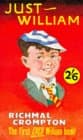
Richmal Crompton (1922)
Genre
Children's / Young Adult
Reading Time
240 min
Key Themes
See below
Sign in to track this book
William Brown, a mischievous boy, turns everyday situations into chaos, whether he's helping his sister's love life or running away from home.
The book introduces William Brown, a mischievous eleven-year-old, and his gang, the Outlaws (Ginger, Henry, and Douglas). William often disagrees with adults, especially his parents, older sister Ethel, and older brother Robert. In one early event, William decides to help his mother by cleaning a room, but he uses a garden hose indoors. This floods the house and makes his family angry. His intentions are usually good, or at least he thinks they are justified, but his actions always lead to funny results and more frustration from those around him.
William and the Outlaws often look for adventure, which usually means they misunderstand situations or try to 'help' in ways that cause problems. For example, they might try to 'capture' a supposed spy, who is an innocent villager, or try to 'rescue' someone who does not need rescuing. This leads to misunderstandings and comical chases. They are loyal to each other, but their lack of planning and active imaginations make them a strong force of accidental trouble in their quiet village. Their 'fort' in the woods is where they plan these doomed adventures.
William often gets involved in his older siblings' lives, Ethel and Robert, usually causing them trouble. In one instance, he decides Ethel should marry a rich local man, Mr. Bott, not because he cares about her happiness, but because he thinks Mr. Bott has a car and many sweets. William tries to make this happen by sending anonymous letters, spreading rumors, and even trying to push Ethel and Mr. Bott together. His interference, as expected, embarrasses Ethel and confuses the adults, failing to get what he wants.
Wanting pocket money or to fund a new plan, William often tries to start businesses. These ventures always fail. He might try to sell 'secret' formulas or 'valuable' items he found (which are usually worthless or taken from his own home). For example, he might try to sell his family's old furniture or his sister's discarded jewelry to unsuspecting villagers. Then, his parents discover the missing items and trace them back to William. He is not good at business, and his methods are often dishonest, though always with a childish reason behind them.
William's actions often put him against authority figures, including his parents, teachers, and the local vicar. His parents often punish him by sending him to bed early or taking away treats, but these rarely stop him for long. He is good at twisting adult logic to fit his own goals or finding loopholes in rules. For example, if told not to play with mud, he might argue that he is playing with 'earth' or 'soil.' These encounters show the age difference and William's strong spirit against adult attempts to control him.
When caught or facing consequences for one of his plans, William is good at avoiding and misdirecting. He might blame one of the Outlaws, pretend not to know, or invent long, unlikely stories to explain himself. For example, after breaking something valuable, he might try to hide the evidence and then claim a phantom burglar was responsible. While these tactics rarely fool his parents for long, they provide much of the book's humor, showing William's quick thinking and his desperate attempts to avoid punishment, even when his guilt is clear to everyone else.
Feeling misunderstood and unappreciated by his family after another punishment, William decides to run away from home. He thinks he can make his own way. His plan is to take a job as a boot boy at a large nearby house, seeing it as the first step towards an independent and adventurous life. He carefully plans his departure, leaving a dramatic note for his family. However, his experience as a boot boy is not the exciting adventure he imagined; it involves hard work and strict rules, making him quickly rethink the benefits of home life.
William's time as a boot boy is a surprise. He finds the work boring and the household rules much stricter than anything his parents imposed. The reality of taking care of himself quickly makes him dislike his romantic idea of running away. He misses his comfortable bed, his mother's cooking, and even the usual arguments with his siblings. After a short time, William, feeling homesick and disappointed, returns home, where his family greets him with relief and frustration. This experience, though brief, gives him a momentary appreciation for the comforts and safety of his home, though his mischievous nature does not change.
William often finds himself involved in community events, like village fairs, school plays, or charity drives. His involvement, however, never goes smoothly. If he is supposed to be a page in a play, he will make up lines or forget his cues, turning a serious performance into a joke. If he is helping at a fair, he will accidentally release animals, disrupt stalls, or cause a general rush. His presence guarantees that any organized event will become a delightful mess, much to the annoyance of adults trying to keep order, but often to the secret amusement of some onlookers and certainly to the delight of the Outlaws.
Throughout the stories, William's actions cause endless problems for his family and the community. Yet, despite the chaos he creates, there is affection and tolerance for him. His parents, though often frustrated, never truly give up on him. His siblings, while often victims of his plans, also sometimes rely on him or are impressed by his cleverness. The book always ends with William either avoiding serious punishment or being forgiven, ready for his next adventure. This pattern shows William's unchanging character as the lovable rogue, ensuring that the next chapter will bring more of William's mischief.
The Protagonist
William's character remains largely static; he is a force of nature who consistently finds himself in scrapes but rarely learns a lasting lesson, always ready for the next adventure.
The Supporting
Ginger remains a steadfast and loyal follower, his character largely defined by his supportive role to William.
The Supporting
Henry's character remains consistent as the slightly more sensible, yet still loyal, member of the Outlaws.
The Supporting
Douglas remains the impressionable and loyal youngest member of the Outlaws.
The Supporting
Her character consistently navigates the challenges of parenting a mischievous child, demonstrating endless patience and love.
The Supporting
His character consistently tries to impose order and discipline, often unsuccessfully, reflecting the ongoing struggle with William's nature.
The Supporting
Her character consistently aims to maintain social grace, often foiled by William's disruptive presence.
The Supporting
Robert's character consistently tries to maintain an air of adult sophistication, often challenged by William's disruptive nature.
The Supporting
Violet Elizabeth consistently uses her threats and spoiled nature to try and get her way, particularly with William.
A main theme is the constant conflict between William's wild childhood mischief and adults' attempts to create order and discipline. William often misunderstands or ignores adult rules, leading to funny situations where his childish logic goes against adult reasoning. This happens when he cleans a room with a hose or tries to 'help' his sister's romantic life, always resulting in adult frustration but rarely a lasting change in William's behavior. The adults, despite their efforts, cannot truly control William's spirit, showing how childhood innocence and rebellion endure.
“''But I was only playing!' William protested, as he always did, no matter the extent of the damage.”
Many funny situations come from William and the Outlaws misunderstanding adult conversations, social cues, or situations. They often misinterpret innocent events as big adventures or conspiracies, making them get involved in ways that cause problems. For example, a casual remark about a 'spy' might send them on a chase after an unsuspecting neighbor. This theme shows the difference between the complexities of the adult world and a child's simple, imaginative view, where every ordinary event can become an exciting adventure, often with bad but funny results for everyone.
“'They were talking about a secret, so I knew it must be important,' William explained, after having disrupted a quiet tea party.”
William's imagination drives his adventures. He turns ordinary situations into extraordinary ones, seeing spies, treasure, or grand plans where adults see only everyday life. This imagination, while causing trouble, also makes his world exciting. His ability to create detailed reasons for his actions, even when clearly wrong, shows his creative mind. The Outlaws' games, their fort, and their 'missions' all come from this strong imagination, creating a distinct, often chaotic, reality for them within the ordinary adult world.
“'It wasn't just a pond, it was a dangerous swamp, and we were explorers finding a new land!'”
Despite their occasional disagreements and William's clear leadership, the loyalty among the Outlaws (William, Ginger, Henry, and Douglas) is a consistent theme. They stay together through everything, sharing in the planning, doing, and often the results of their plans. This bond is central to their identity as a gang, giving William his necessary support system and Ginger, Henry, and Douglas a sense of belonging and adventure. Even when one of them doubts, the group's desire for adventure and their loyalty to William's leadership keeps them united against the adult world.
“'An Outlaw never deserts another Outlaw,' William declared, even as they fled from an angry farmer.”
Each chapter functions as a self-contained short story.
The book employs an episodic structure, where each chapter presents a new, largely independent adventure or misadventure of William and the Outlaws. While William's character and the core relationships remain consistent, there isn't a single overarching plot arc that spans the entire book. Each episode begins with a new problem or idea that William conceives, escalates through his attempts to 'solve' it, and concludes with the humorous fallout, often returning William to his starting point ready for the next escapade. This structure allows for a variety of scenarios and keeps the focus firmly on William's unchanging, mischievous nature.
William's good intentions lead to disastrous outcomes.
Situational irony is a frequent device, where William's attempts to help or improve a situation invariably lead to the opposite effect. For example, his sincere desire to clean a room results in a flood, or his attempt to facilitate his sister's marriage causes social embarrassment. The humor often stems from the contrast between William's self-assured belief in his own cleverness and the inevitable, comical failure of his plans. This irony highlights the gap between his perception and reality, and the unpredictable nature of his interventions in the adult world.
William's antics and dialogue provide consistent humor.
William's character and his interactions with the adult world are the primary source of comic relief. His innocent yet often destructive schemes, his convoluted logic, and his unique way of speaking provide constant humor. The reactions of the exasperated adults, particularly his parents and siblings, also contribute to the comedy, as they are repeatedly outwitted or mortified by William's behavior. The book relies heavily on this consistent stream of light-hearted humor to entertain its young audience, making even serious moments of punishment feel ultimately jovial.
Familiar character types are given unique, humorous personalities.
The book utilizes several stock character types common in children's literature, such as the mischievous boy, the long-suffering parents, the vain older sister, and the loyal gang of friends. However, Crompton imbues these archetypes with distinct, humorous personalities. William himself is the quintessential mischievous boy, but his level of ingenious chaos and his persuasive, if flawed, logic elevate him beyond a simple stereotype. Ethel's vanity and Robert's attempts at sophistication are exaggerated for comedic effect, making them relatable yet uniquely funny foils for William.
“William was a small boy and he was dressed in a very dirty suit, and his hair, which was usually a mass of tangled brown curls, was plastered flat to his head with some sticky substance.”
— Introducing William and his typical state of disarray.
“William was not a bad boy. He was just a boy.”
— A defining statement about William's character and intentions.
“It was one of William's most cherished theories that anything could be made into anything else if you only tried hard enough.”
— William's inventive and often destructive approach to problem-solving.
“He knew he was going to be famous, and he had a feeling it would be quite soon.”
— William's unwavering self-belief and ambition.
“William's brain was a seething mass of plots, plans, and schemes.”
— Describing the constant activity within William's mind.
“He always knew exactly what he wanted and usually got it, by hook or by crook.”
— Highlighting William's determination and resourcefulness.
“William had a perfect genius for getting into scrapes, and an even more perfect genius for getting out of them.”
— A succinct summary of William's talent for both trouble and escape.
“The Outlaws were always ready for an adventure, and William was always ready to lead them.”
— Describing the dynamic of William's gang, the Outlaws.
“Grown-ups were, in William's opinion, a race apart, mysterious, unfathomable, and frequently annoying.”
— William's typical view of adults.
“He had a way of making everything seem perfectly reasonable to himself, even when it was utterly preposterous to everyone else.”
— Illustrating William's unique logic and self-justification.
“William had never been one to let the truth stand in the way of a good story.”
— Referencing William's tendency to embellish or invent narratives.
“He was quite sure that the world was created for his own especial benefit.”
— William's egocentric view of his place in the world.
“Life, to William, was a glorious series of experiments, some of which turned out rather better than others.”
— A philosophical take on William's approach to existence.
Ready to see how well you understood this book? Take our interactive quiz with 10 questions.

Biography coming soon.
Dan Gemeinhart
4.5
Kate O'Hearn
4.4

Jeanne Birdsall
4.4

Jen Wang
4.4

Wendelin Van Draanen
4.3

John Marsden
4.3

Chris Van Allsburg
4.3
Jennifer A. Nielsen
4.2