BookBrief
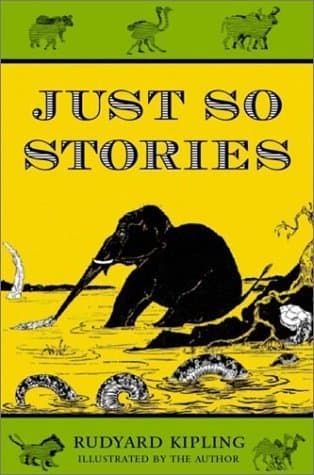
Just So Stories cover
Archivist's Choice

Just So Stories

Rudyard Kipling (2022)

Genre

Fantasy / Children's / Young Adult

Reading Time

210 min

Key Themes

See below

Track Your Reading

Sign in to track this book

Enter a world where camels got humps, butterflies learned to stamp, and the alphabet was born from Rudyard Kipling's inventive tales.

Synopsis

Rudyard Kipling's "Just So Stories" is a collection of twelve origin myths, explaining how various animals and natural features came to be. Each story has unique characters and settings. For example, the greedy Whale learns a lesson from a 'Stute Fish, and the lazy Camel gets his hump from doing nothing. We follow the Elephant's Child on his journey to the Limpopo River, where he gets his trunk from a 'Bi-Coloured-Python-Rock-Snake.' The Leopard and the Ethiopian change their appearances to blend into the 'sclusively speckly-spickly trees,' while Old Man Kangaroo is chased across the plains by the 'Yellow-Dog Dingo' until his legs grow strong. Other tales explain how the Armadillo came from a hedgehog and a tortoise, how the first letter was written, and how the alphabet itself began. The collection includes stories like 'The Cat That Walked by Himself,' showing the independent nature of cats, and 'The Butterfly That Stamped,' where a Djinn's power is used comically. Through these narratives, Kipling offers humorous explanations for the world's quirks, often with a lesson about behavior.
Reading time
210 min
Difficulty
Easy
Pacing
Moderate
Mood
Whimsical, Humorous, Imaginative, Playful
✓ Read this if...
You enjoy classic children's literature, fables, or origin stories with a unique, whimsical voice.
✗ Skip this if...
You prefer modern storytelling styles or find older language and colonial-era perspectives off-putting.

Plot Summary

How the Whale Got His Throat

At the beginning, the Whale ate everything in the sea, including all the fish, until only one 'Stute Fish was left. The 'Stute Fish, clever and quick, told the Whale about a 'man' who would be a 'very tasty-bargain.' The Whale, wanting more, asked the 'Stute Fish to lead him to this man. The 'Stute Fish directed him to a raft where a shipwrecked Mariner floated. The Whale, without thinking, opened his huge mouth and swallowed the Mariner, his raft, and his suspenders. Inside, the Mariner was not scared; instead, he made himself comfortable, jumping and dancing, which bothered the Whale.

How the Camel Got His Hump

At the start of the world, when animals began working for humans, a Camel lived in the middle of the Howling Desert. He was very lazy and refused to work, only saying 'Humph!' when spoken to. The Horse, Dog, and Ox each tried to get him to work, asking him to trot, fetch, or plough. Each time, the Camel just said 'Humph!' and did nothing. Frustrated, the three animals complained to the Man, who told them they would have to work extra to cover the Camel's laziness. This unfairness angered the animals, so they complained to the Djinn of All Deserts.

How the Rhinoceros Got His Skin

Long ago, the Rhinoceros had smooth, tight skin that fit him perfectly. He lived on an empty island with a Parsee man who wore a hat 'the colour of the sunrise' and made delicious cakes. One hot day, the Parsee made a special cake with currants and plums and left it on the beach to cool. The Rhinoceros, a 'rude, unmannered beast,' came and ate the whole cake without asking. The Parsee, annoyed by this theft, decided to get revenge. He waited for the Rhinoceros to swim, then filled his smooth skin, which he had taken off, with cake-crumbs, prickles, and bits of dried palm-tree bark.

How the Leopard Got His Spots

In the 'High and Far-Off Times,' the Leopard lived in the High Veldt, which was then yellowish-grey, like his coat. He hunted with the Ethiopian, who was then plain, dusty brown. All animals and hunters were the same color as their surroundings. However, as time passed, the climate changed, and the Veldt became a 'great forest, 'sclusively trees and shadows and patches and stains.' The Giraffe and Zebra, who were also plain, changed their coats to blend in with the new environment. The Leopard and Ethiopian, still plain, found hunting harder. The Ethiopian, seeking a solution, suggested they also change their look to match the new, darker, dappled surroundings.

The Elephant's Child

In ancient times, the Elephant's Child had no trunk; he only had a 'blackish, bulgy nose, no bigger than a boot.' He was very curious and constantly asked questions of his Aunts and Uncles, who often spanked him for it. His biggest question was, 'What does the Crocodile eat for dinner?' No one would tell him, so he set off to the 'great grey-green, greasy Limpopo River' to find out. Along the way, he met a Kolokolo Bird, who warned him of danger. Finally, he met a Bi-Coloured Python-Rock-Snake, who, after several tries, told him to go to the river.

The Sing-Song of Old Man Kangaroo

Long ago, in the 'High and Far-Off Times,' Old Man Kangaroo was a plain creature with short legs, living in the Australian Bush. He was tired of being ordinary and wished to be 'different from all other animals.' He prayed to the 'Big God Nqong' for this. Nqong, hearing his prayer, told him to run, promising that if he ran 'hard and fast' for a thousand years, his wish would be granted. To help him, Nqong enlisted a Dingo, a 'Yellow-Dog Dingo,' who was a tireless hunter. The Dingo's job was to chase Old Man Kangaroo constantly, making him run faster and faster, day after day, across Australia's plains.

The Beginning of the Armadillos

In the 'High and Far-Off Times,' the Jaguar, a 'great, big, 'normous, all-conquering Jaguar,' hunted all other animals. Among his prey were a slow, wise Turtle named Slow-and-Solid and a prickly, shy Hedgehog named Prickly-and-Pearly. The Jaguar loved to eat them, but they were hard to catch – the Turtle could hide in his shell, and the Hedgehog could roll into a ball of spines. One day, the Jaguar decided to learn their tricks. He asked a 'Painted Jaguar' how to catch them. The Painted Jaguar advised him to ask the 'Wily-Old-Malay-Tiger' for advice. Meanwhile, the Turtle and Hedgehog, tired of being hunted, decided to combine their defenses.

How the First Letter Was Made

In the 'High and Far-Off Times,' before writing existed, a little girl named Taffimai Metallumai, or Taffy, lived with her father, Tegumai Bopsulai, a caveman. One day, Tegumai accidentally broke his spear while fishing. He asked Taffy to go to their mother, Teshumai Tewindrow, and ask for a new spear. Taffy, being very literal, wanted to send a 'picture-letter' instead of just telling her mother. Using birch-bark and a shark's tooth, she drew pictures. She drew her father with a broken spear, then herself pointing to the broken spear, and finally a new spear. She then took this 'picture-letter' to a stranger she met.

How the Alphabet Was Made

After Taffy's picture-letter worked in 'How the First Letter Was Made,' Tegumai Bopsulai saw the potential of written communication but also its limits. He and Taffy decided to simplify their picture-writing. Instead of drawing a whole picture for an object, they drew only its most important part. For example, for a 'fish,' they drew the fish's head. Then, they realized the fish's head picture could represent the sound 'F' (for Fish). They continued this for many other objects and sounds, slowly creating a system where each drawing represented a specific sound, not an entire object or idea. This led to the first alphabet, a major invention for their tribe's communication.

The Crab That Played With the Sea

In the 'High and Far-Off Times,' the 'Eldest Magician' created all animals and gave them their roles. Among them was a 'Playful-Paddler-of-the-Shallows' Crab who was lonely and wanted to play with the sea. The Eldest Magician, kindly, gave the Crab control over the tides. The Crab, however, became selfish. Instead of letting the sea flow naturally, he pulled it too far out or pushed it too far in, bothering other animals, especially those who relied on the tides for food and homes. The other animals complained to the Eldest Magician. To fix this, the Magician took away the Crab's full control, but also gave him a new, permanent home.

The Cat That Walked by Himself

In the 'High and Far-Off Times,' when all animals were wild, the Woman, being the 'wisest of all the wise things,' domesticated the Dog, Horse, and Cow. She built a comfortable cave-house and made a fire, attracting these animals with food and shelter, bringing them into human companionship. The Cat, however, stayed independent. He watched from a distance, walking 'by himself' in the 'wet wild woods.' The Woman wanted to domesticate the Cat too, but the Cat was too clever. He made a deal with the Woman: if she could say 'three words' that would make him come into the cave, he would stay. The Woman, thinking she had tricked him, eventually said the right words.

The Butterfly That Stamped

King Solomon, the wisest of all kings, ruled a vast empire, including all animals and Djinns. He had a beautiful and beloved wife, Balkis, the Queen of Sheba. However, Solomon also had a small, insignificant butterfly, a 'Jealous-One,' who was always jealous of Balkis's beauty and influence. One day, the Butterfly, driven by jealousy, decided to cause trouble. He went to King Solomon and whispered a lie, suggesting Balkis was secretly plotting against him. Solomon, usually wise, was briefly swayed by the Butterfly's words. He decided to test Balkis and, in doing so, unknowingly started a series of events involving a powerful Djinn that would lead to unexpected results.

Principal Figures

The Eldest Magician

The Supporting

Remains a constant, unchanging force of creation and order, representing divine authority.

The Camel

The Protagonist

Goes from being a lazy, unburdened animal to one forever marked by his 'humph' and forced to carry a hump.

The Elephant's Child

The Protagonist

Transforms from a curious but short-nosed child into the first elephant with a long, useful trunk.

Taffimai Metallumai (Taffy)

The Protagonist

Initiates and collaborates on the invention of written language, evolving from pictograms to a phonetic alphabet.

Tegumai Bopsulai

The Supporting

Moves from a speaker to a co-inventor of written language, helping to formalize the alphabet.

The Cat

The Protagonist

Maintains his wild, independent nature despite the Woman's attempts to domesticate him, securing a unique place in human society.

The Mariner

The Protagonist

From being a swallowed victim, he becomes the clever architect of the Whale's permanent anatomical change.

The Djinn of All Deserts

The Supporting

Serves as the instrument of justice, permanently altering the Camel.

The Rhinoceros

The Antagonist

Transforms from a smooth-skinned, rude animal to a wrinkled-skinned beast as a result of his actions.

The Leopard

The Protagonist

Adapts from a plain-coated hunter to a spotted one, evolving to thrive in a new environment.

Themes & Insights

Consequences of Actions

A main theme in many stories is that every action, especially negative ones, has lasting effects. The Camel's laziness gives him a permanent hump. The Rhinoceros's rude eating leads to his wrinkled skin. The Whale's endless eating results in a sieve-like throat. These physical changes are permanent signs of past behavior, showing that choices have irreversible impacts. This theme is clear in 'How the Camel Got His Hump' and 'How the Rhinoceros Got His Skin,' where characters are permanently changed because of their flaws.

And the Humph that he had got on his back from the Djinn, that was his very own Humph, and not anybody else’s.

Narrator, 'How the Camel Got His Hump'

Curiosity and Discovery

The stories explore the power of curiosity, for both good and bad. The Elephant's Child's 'insatiable curiosity' leads him to the dangerous Limpopo River, where he eventually gets his trunk. Taffy's practical curiosity about sending a message leads to the invention of writing. While curiosity can cause danger, as with the Elephant's Child, it is shown as a strong force for learning and innovation, pushing characters to discover new truths or create new things. It highlights the drive for knowledge as a basic part of development.

He was full of 'satiable curiosity, and that means he asked ever so many questions.

Narrator, 'The Elephant's Child'

Adaptation and Evolution

Many stories show how animals adapt to their changing surroundings or to specific challenges. The Leopard and the Ethiopian change their looks to blend into the newly forested Veldt. The Kangaroo's long legs and hopping are an adaptation to escape the Dingo and get his wish to be unique. The Turtle and Hedgehog combine their defenses to form the Armadillo, a new species better suited for survival against the Jaguar. This theme highlights the dynamic nature of the natural world and the need for creatures to change physically or behaviorally to thrive, or simply survive, in new conditions.

He ran and he ran, and he ran and he ran, till his legs grew long and his back grew strong, and he was the Old Man Kangaroo.

Narrator, 'The Sing-Song of Old Man Kangaroo'

The Origin of Things

The core idea of the 'Just So Stories' is to give imaginative, often funny, explanations for various natural events and animal traits. The book explains how the whale got its throat, how the camel got its hump, how the alphabet was made, and why the cat walks by himself. These origin stories are not scientific; they are whimsical fables that satisfy a child's natural curiosity about 'how' and 'why' things are the way they are. They create a mythology for the animal kingdom and human inventions, rooting them in specific, often comical, events.

This is the story of how the Whale got his tiny throat, and why he never eats anything but small 'Stute Fish, and little, tiny, wee-wee shrimpy-shrimp.

Narrator, 'How the Whale Got His Throat'

Independence vs. Community

This theme looks at the conflict between an individual's desire for freedom and the benefits or demands of living in a community. The Cat shows ultimate independence, choosing to 'walk by himself' rather than be fully domesticated, yet still enjoying human comforts. The Camel's initial refusal to contribute to the community leads to his isolation and a unique burden. The Crab's selfish manipulation of the tides disrupts the balance for all other creatures. These stories highlight the trade-offs between complete freedom and the responsibilities and advantages of living in a group.

But the Cat, he walked by himself, and all places were alike to him.

Narrator, 'The Cat That Walked by Himself'

Plot Devices & Literary Techniques

Anthropomorphism

Giving human characteristics and motivations to animals.

Kipling extensively uses anthropomorphism to make his animal characters relatable and to convey moral lessons. Animals like the Camel, Whale, and Elephant's Child think, speak, and act with human-like emotions, desires, and flaws (laziness, greed, curiosity). This device allows for allegorical storytelling, where animal behaviors reflect human virtues and vices, making the fables accessible and entertaining for a young audience while subtly teaching about consequences and social dynamics.

Cumulative Tale / Repetition

Repeating phrases or actions that build upon each other.

Repetition is a key stylistic element, especially in 'How the Camel Got His Hump' with the repeated 'Humph!' and in 'The Elephant's Child' with the repeated questions and spankings. This cumulative effect not only adds to the rhythmic, sing-song quality of the prose, making it memorable for children, but also emphasizes the persistence of a character's trait or action, building anticipation for the eventual resolution or consequence. It reinforces the idea that repeated behavior leads to an inevitable outcome.

Trickster Figure

A character who uses cunning and deception to achieve their goals.

Characters like the 'Stute Fish in 'How the Whale Got His Throat' and the Mariner himself embody the trickster archetype. The 'Stute Fish cleverly leads the Whale to the Mariner, and the Mariner then outwits the Whale from within its stomach. The Parsee in 'How the Rhinoceros Got His Skin' also acts as a trickster, devising a clever, if slightly cruel, punishment. These figures often use their intellect and resourcefulness to overcome more powerful adversaries, highlighting the power of wit over brute force or size.

Explanatory Fable

A story that explains the origin of a natural phenomenon or characteristic.

This is the overarching device for the entire collection. Each story is a 'just so' explanation for why an animal has a particular feature or why a certain natural event occurs. These fables are not meant to be scientifically accurate but rather imaginative, whimsical, and often humorous narratives that provide a fictional genesis for the world's peculiarities. They satisfy a child's innate desire to understand the 'why' behind things, creating a charming, mythical backstory for reality.

The 'High and Far-Off Times'

A recurring phrase establishing a mythical, primordial setting.

This phrase, or variations of it, consistently sets the stage for many of the stories, immediately transporting the reader to a fantastical, undefined past before the world took its current form. It signals that these are origin stories, detached from historical accuracy, and invites the reader into a realm where magic and transformation are commonplace. This device creates a consistent tone and atmosphere across the collection, reinforcing the idea of a world in its nascent, mutable stages of development.

Critical analysis

Notable Quotes

Best Beloved, in the High and Far-Off Times, O my Best Beloved, there was no such thing as a camel. He was an Idle One, and he lived in the middle of a Howling Desert because he did not want to work.

Opening of 'How the Camel Got His Hump', setting the scene for the camel's original nature.

This is the Way of the World. Take the good with the bad, and be very careful not to let the bad get mixed up with the good.

A general life lesson offered in 'The Crab That Played With the Sea'.

He was a small, furry, sleeky, woodsy-nosed, all-together-delicious bear, and his name was the Cat that Walked by Himself.

A playful description of the Cat, who is the independent protagonist of his own story.

And the Elephant's Child went home across Africa, waving his trunk to and fro and saying to all his dear relations, 'Scratch me that itch!'

The Elephant's Child returns after getting his trunk, demonstrating its new utility.

And from that day to this, O Best Beloved, the Leopard has had spots, and the Ethiopian has been a black man.

Concluding 'How the Leopard Got His Spots', explaining the permanent changes.

The great grey-green, greasy Limpopo River, all set about with fever-trees, stood up on its banks and watched him.

Describing the setting where the Elephant's Child meets the Crocodile.

He took a clean, shiny, smooth piece of bark and he took a clean, sharp, pointed tooth of a shark and he wrote letters.

Explaining how the First Man invented writing in 'How the First Letter Was Written'.

Now, at that time, O Best Beloved, the world was quite new and all in a muddle, and the animals did not know what they ought to do.

Opening of 'The Crab That Played With the Sea', setting up the primordial chaos.

He was a good, kind, obedient, clever, and useful Dog of the House.

Describing the Dog's role and characteristics in 'The Cat that Walked by Himself'.

And when the Man and the Woman and the Dog and the Horse and the Cow came into the Cave, there was the Cat, walking by himself, exactly as if he had never been there before.

The Cat's independent nature is highlighted even after making an agreement with the Woman.

And the Whale swallowed the Mariner, and his raft, and his braces, and his jack-knife, and his three-legged stool, and his two-legged table, and his one-legged bed, and the cabin-furniture, and his bath-towel, and his boots, and his button-box, and the everything else.

The Whale devours the Mariner and all his possessions in 'How the Whale Got His Throat'.

And the Hedgehog knew that the world was round, and so he rolled himself up into a ball and went to sleep.

A whimsical detail about the Hedgehog in 'The Beginning of the Armadillos'.

He was the Bushman, and he was the only man in all Africa who knew how to make things.

Introducing the skilled Bushman in 'How the Rhinoceros Got His Skin'.

And that is why, O Best Beloved, the Kangaroo has to hop all the time.

Concluding 'The Sing-Song of Old Man Kangaroo', explaining the origin of its gait.

Quiz

Test Your Knowledge

Ready to see how well you understood this book? Take our interactive quiz with 10 questions.

10
Questions
~5
Minutes
?
Best Score

Key Questions (FAQ)

The 'Just So Stories' offer whimsical, fantastical origin tales for various animal characteristics, natural phenomena, and human inventions. They are framed as explanations given by the 'Eldest Magician' or simply derived from a time 'When the world was so new-and-all.' Each story provides an imaginative, often humorous, 'just so' reason for how things came to be the way they are.

About the author

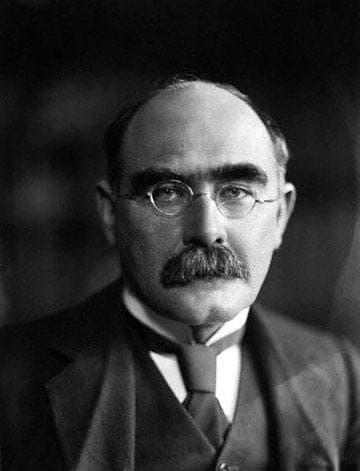
Rudyard Kipling

Joseph Rudyard Kipling was an English novelist, short-story writer, poet, and journalist. He was born in British India, which inspired much of his work.