“It is a truth universally acknowledged, that a single man in possession of a good fortune, must be in want of a wife.”
— The very first line of 'Pride and Prejudice', a book Jane Austen is writing within the novel.

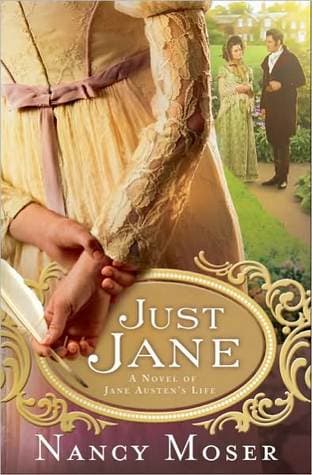
Nancy Moser (2006)
Genre
Historical Fiction / Romance
Reading Time
Varies by reader, but expect a substantial commitment due to the depth and detail.
Key Themes
See below
Sign in to track this book
Step into the drawing-rooms and ballrooms of 18th-century England to see the loves, losses, and observations that made Jane Austen's timeless tales of wit and romance.
Jane Austen grew up in Steventon Rectory, Hampshire, a busy home with her parents, Reverend George and Cassandra Austen, and seven siblings. She was especially close to her older sister, Cassandra, sharing secrets and dreams. From an early age, Jane showed a sharp wit and a love for storytelling, often entertaining her family with plays and humorous observations of neighbors. Her father encouraged her intellectual interests, letting her use his large library. This time in her life was marked by strong family unity, intellectual stimulation, and the start of Jane's unique view of human nature and society, which would later become the foundation of her writing. She observed the social pressures on women, especially concerning marriage and money.
During a visit to Steventon, Jane met Tom Lefroy, a charming and intelligent Irishman from a respectable but not wealthy family. They were attracted to each other, engaging in witty conversations. Jane was deeply smitten, imagining a future with him. However, their romance was quickly stopped by their families due to financial and social reasons. Tom's family, in particular, could not afford for him to marry a clergyman's daughter without a large inheritance. Despite their affection, they were forced to part ways, leaving Jane with heartbreak and a deeper understanding of how society and money limited love. This experience influenced her later writings on love and marriage.
Despite her personal disappointments, Jane used her observations and experiences in her writing. She began to draft early versions of what would become her most famous novels, often working in secret, or sharing her progress only with Cassandra. Her first significant work, 'Elinor and and Marianne,' later *Sense and Sensibility*, began to form, exploring themes of love, duty, and social pressures. She also worked on 'First Impressions' (*Pride and Prejudice*) and 'Susan' (*Northanger Abbey*). Her writing was often interrupted by household duties and social events, but her dedication remained strong. Her family, while supporting her intellectual interests, did not fully understand the extent of her literary talent at this stage.
When Reverend George Austen decided to retire, the family moved from their Steventon Rectory to the city of Bath. This change was difficult for Jane. The busy social scene and small living quarters in Bath, along with no dedicated writing space, stopped her creative work. She found the constant social calls and gossip less inspiring than the quiet observations she made in the countryside. Her writing largely stopped during this period, causing her frustration and a sense of loss. The move was a time of stagnation in her literary career, though she continued to observe the city's social dynamics.
While visiting her friends the Bigg family, Jane received an unexpected marriage proposal from Harris Bigg-Wither, a wealthy landowner and family friend. Though he was a kind man and the match would offer her financial security and a stable home, Jane felt no romantic affection for him. Initially, she accepted, swayed by the practical advantages and the pressure to marry. However, after a sleepless night, she realized she could not marry without love and withdrew her acceptance the next morning. This decision showed her integrity and her commitment to her ideals, even at the cost of social and financial comfort, solidifying her belief in love as a requirement for marriage.
After her father's death, Jane, Cassandra, and their mother faced financial hardship and moved often between lodgings. Eventually, they settled in Chawton Cottage, a property provided by Jane's brother, Edward. This return to the familiar quiet of the countryside, with a more stable home, reignited Jane's literary inspiration. She found a new sense of purpose and began to revise her earlier manuscripts with energy. The move to Chawton was a turning point, allowing her to fully dedicate herself to her writing once more and starting her most productive period, where her greatest works would finally be polished and published.
With her family's help, especially her brother Henry, Jane arranged for the publication of *Sense and Sensibility* in 1811. It was published anonymously, attributed only to 'A Lady,' a common practice for women authors at the time. The publication brought Jane satisfaction and a modest income, but also some worry about public reception. She carefully corrected proofs and eagerly awaited reviews, finding joy in seeing her work finally in print. This event marked the beginning of her public literary career, though her identity as the author remained largely a secret to the wider world.
Following the success of *Sense and Sensibility*, Jane continued her writing, publishing *Pride and Prejudice* (1813), *Mansfield Park* (1814), and *Emma* (1815). Each novel further built her reputation, still as 'A Lady.' Her works were well-received by critics and readers, earning her quiet but growing recognition in literary circles. She received positive feedback and even a request from the Prince Regent's librarian to dedicate a novel to him, which she reluctantly did for *Emma*. Despite her anonymity, Jane took pride in her achievements, knowing her stories resonated with readers and contributed to literature.
In her later years, Jane's health began to decline, likely due to Addison's disease. Despite increasing weakness and pain, her commitment to her craft remained strong. She began working on *Persuasion* and *Sanditon*, showing resilience and determination. Her sister Cassandra provided constant care during this difficult time. Jane continued to write and revise, putting her remaining energy into her narratives, even as her physical strength lessened. This period shows her dedication to her art, pushing through suffering to complete her final literary contributions.
In 1817, Jane Austen's health worsened, and she moved to Winchester for better medical care. Despite efforts, she died at age 41, with Cassandra by her side. Her death left a void in her family and the literary world, though her true identity as the author of her novels was not widely known until after her passing. Her brothers, Henry and Cassandra, ensured the posthumous publication of *Northanger Abbey* and *Persuasion*. Jane Austen left an unparalleled legacy, her novels continuing to charm and enlighten readers for centuries, making her one of the most celebrated authors in English literature.
The Protagonist
Jane evolves from a keen observer into a published author who, despite personal sacrifices, remains true to her artistic and personal convictions.
The Supporting
Cassandra remains a steadfast source of support, her commitment to Jane deepening through shared experiences.
The Supporting
His early encouragement sets Jane on her literary path, and his presence provides a foundation for her development.
The Supporting
She remains a figure of domestic concern, representative of the societal pressures Jane critiques.
The Supporting
His brief relationship with Jane serves as a catalyst for her understanding of societal limitations on love and marriage.
The Supporting
He transitions from a supportive brother to a crucial facilitator of Jane's literary career.
The Supporting
His generosity provides the stable environment Jane needs to fully realize her literary potential.
The Mentioned
His proposal marks a turning point for Jane, solidifying her commitment to marrying for love, not convenience.
The novel shows how 19th-century English society limited women's choices, especially regarding marriage and financial independence. Jane, despite her intelligence and talent, faced these limitations directly. Her heartbreak over Tom Lefroy was a direct result of financial incompatibility, and her rejection of Harris Bigg-Wither shows her refusal to marry without love for convenience. The move to Bath, with its focus on social calls rather than intellectual pursuits, further highlights how women's lives were often confined to domestic and social roles. This theme is central to understanding Jane's personal struggles and the social critiques in her novels.
“A single woman with a very small income is a ridiculous figure, and a figure which I do not wish to be.”
A main theme is the tension between marrying for love and marrying for financial security or social standing. Jane's own experiences, especially her romance with Tom Lefroy and her rejection of Harris Bigg-Wither, directly reflect the dilemmas her fictional heroines faced. She struggled with the social expectation that women must marry well to secure their future, even as her heart desired genuine affection and intellectual companionship. Her decision to remain unmarried rather than compromise her ideals highlights her belief in love as the foundation of a lasting union, a conviction that appears throughout her literary works.
“I will not marry without affection.”
The novel emphasizes Jane's ability to observe human nature, social interactions, and the details of daily life, turning these observations into literary art. From her early days in Steventon, entertaining her family with plays, to her later years writing her novels, her keen eye for detail and sharp wit are consistently shown. Her writing became her voice, allowing her to critique society, explore complex emotions, and create timeless characters. This theme celebrates the power of art and the lasting legacy of a writer who found inspiration in the ordinary.
“Three or four families in a country village is the very thing to work on.”
Jane's family played a dual role throughout her life, being both her greatest support and, at times, a source of constraint. Her close bond with Cassandra and her father's intellectual encouragement were vital to her development. Her brothers, particularly Henry and Edward, provided crucial practical help and financial stability (Chawton Cottage) that allowed her writing career. However, the financial realities of her large family often dictated their living situations, like the move to Bath, which stopped her creativity. The family dynamic reflects the interdependence and complexities of kinship in the Georgian era.
“What does not satisfy when we are young, can hardly be expected to satisfy when we are old.”
Incorporation of letters to reveal inner thoughts and advance the narrative.
While not exclusively an epistolary novel, the story frequently references and incorporates elements of letter-writing, reflecting Jane Austen's own prolific correspondence. These letters, both real and imagined, serve as a direct window into Jane's inner thoughts, emotions, and observations, giving the reader intimate access to her developing perspective on life, love, and society. They also facilitate plot advancement by conveying news, opinions, and character interactions that might otherwise be difficult to portray, echoing the importance of letters in communication during the historical period.
Early life events and observations subtly hint at themes and characters in Jane's future novels.
The narrative cleverly employs foreshadowing by drawing subtle parallels between Jane's personal experiences and the themes, character types, and plot points that would later appear in her novels. For instance, her heartbreak with Tom Lefroy foreshadows the romantic obstacles in *Pride and Prejudice*, and her rejection of Harris Bigg-Wither reflects the dilemmas of characters like Elizabeth Bennet. These parallels highlight the autobiographical underpinnings of her fiction and demonstrate how her life directly informed her art, enriching the reader's understanding of both the author and her works.
Jane's keen observations of society serve as a narrative tool to critique societal norms.
The novel uses Jane's sharp observational skills not just as a character trait but as a narrative device for social commentary. Through her eyes, the reader is exposed to the intricate, often absurd, rules of Georgian society, the limited roles for women, and the pervasive influence of wealth and status. Her internal monologues and conversations with Cassandra often articulate these critiques, allowing the author to subtly question and satirize the conventions of the era, much as Jane Austen herself did in her published works. This device allows for an exploration of historical context while also revealing the protagonist's intellectual depth.
The presence of Jane's developing novels as a constant, underlying narrative thread.
Throughout Jane's life, the existence of her evolving manuscripts (e.g., 'First Impressions,' 'Elinor and Marianne') acts as a significant plot device. Even when she faces personal setbacks or creative blocks, the reader is aware of these works waiting to be completed or published. This device creates a sense of anticipation and highlights Jane's enduring commitment to her craft. It underscores the idea that her true purpose lies in her writing, providing a continuous, albeit often unseen, narrative thread that propels her towards her literary destiny, even when her personal life seems to falter.
“It is a truth universally acknowledged, that a single man in possession of a good fortune, must be in want of a wife.”
— The very first line of 'Pride and Prejudice', a book Jane Austen is writing within the novel.
“For what do we live, but to make sport for our neighbours, and laugh at them in our turn?”
— A thought attributed to Mr. Bennet in 'Pride and Prejudice', reflecting Jane's own observations on human nature.
“I may have lost my heart, but not my self-possession.”
— A reflection from Jane's own life, echoing sentiments found in her heroines, particularly when considering her feelings for Tom Lefroy.
“A lady’s imagination is very rapid; it jumps from admiration to love, from love to matrimony, in a moment.”
— Mr. Darcy's observation in 'Pride and Prejudice', which Jane likely considered and perhaps experienced herself.
“Happiness in marriage is entirely a matter of chance.”
— Charlotte Lucas's cynical but pragmatic view in 'Pride and Prejudice', a sentiment Jane explores through various characters.
“There is nothing I would not do for those who are really my friends. I have no notion of loving people by halves, it is not my nature.”
— Elizabeth Bennet's declaration in 'Northanger Abbey', reflecting Jane's own deep loyalty to her family and closest friends.
“To be fond of dancing was a certain step towards falling in love.”
— A line from 'Pride and Prejudice', highlighting the social rituals and romantic opportunities of the era, which Jane experienced.
“The person, be it gentleman or lady, who has not pleasure in a good novel, must be intolerably stupid.”
— A strong opinion from 'Northanger Abbey', undoubtedly reflecting Jane's own passion for literature and storytelling.
“Run mad as often as you choose, but do not faint.”
— A witty and practical piece of advice from 'Mansfield Park', perhaps a motto Jane herself lived by in her more spirited moments.
“If a woman is single, she is supposed to be unhappy.”
— A reflection on societal expectations for women in Jane's time, a pressure she keenly felt as an unmarried woman.
“It is not what we say or think that defines us, but what we do.”
— A guiding principle that Jane explores through her characters, emphasizing action over mere words or intentions.
“A mind lively and at ease, can do with a great deal of company; but a mind much harassed and much distressed, can find pleasure in none.”
— A poignant observation from 'Emma', reflecting Jane's understanding of the human psyche and the need for peace to enjoy society.
“I must learn to be content with being Jane.”
— A personal realization for Jane, accepting her life's path as an unmarried writer, despite societal pressures.
“One half of the world cannot understand the pleasures of the other.”
— A line from 'Emma', illustrating the class divides and differing perspectives that Jane frequently explored in her novels.
Ready to see how well you understood this book? Take our interactive quiz with 10 questions.







