““I’m not a hero. I’m just a kid who got in the way.””
— Corey's initial reaction to being lauded for his actions.

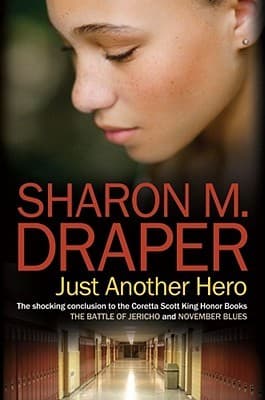
Sharon M. Draper (2009)
Genre
Young Adult / Romance
Reading Time
280 min
Key Themes
See below
Sign in to track this book
When chaos threatens their school, a group of unlikely friends, led by the ostracized Arielle, must face their own problems and shattered views to stop a troubled classmate from a deadly act.
Arielle Gresham is an outcast student at Frederick Douglass High. She carries a secret past involving her mother's jail time and her own bad choices. She lives with her strict aunt, uncle, and cousin Joy, which creates a constant inner conflict between wanting to fit in and her defensive, often sharp, personality. Her reputation and inability to trust others hinder her attempts to belong. She finds comfort only in her journal, a private place for her worries and observations. Meanwhile, the school experiences a series of false fire alarms, adding to the general tension and showing unrest among students, though the culprits are unknown.
Jericho Prescott and November Nelson are navigating their new relationship, trying to balance their individual lives with their feelings for each other. November focuses on her studies and art, while Jericho remains a quiet observer, often thinking about the social dynamics around him. The false fire alarms continue, increasing frustration among students and staff. At the same time, a wave of small thefts begins at school, with items disappearing from lockers and classrooms. These incidents create suspicion and distrust, making it harder for students to connect and for the school to maintain order. Arielle, always watching, notices these underlying issues.
Despite her solitary nature, Arielle is very observant. She starts to notice concerning behaviors in Rashawn, a seemingly ordinary classmate. Through subtle clues and overheard talks, she figures out that Rashawn is struggling with a prescription drug addiction. This discovery weighs heavily on her, reminding her of her own family's problems and reinforcing her belief that everyone carries hidden burdens. She feels a reluctant sympathy for Rashawn but is too guarded and unsure of her own ability to help, or if others will listen, to speak up. This secret adds to her already heavy load, further isolating her.
The school's social environment is further complicated by cyberbullying. Arielle observes Josh, a quiet and sensitive student, becoming more withdrawn and sad. She notices the cruel comments and images circulating online, targeting Josh constantly. The bullying intensifies, making Josh an outcast and causing visible emotional pain. Arielle, having faced her own share of judgment and ostracism, recognizes the destructive power of these attacks. She feels a growing unease about the general indifference to Josh's suffering, but her own social standing and past experiences make her hesitant to intervene directly, fearing further alienation or becoming a target herself.
The false fire alarms, thefts, Rashawn's addiction, and Josh's bullying create a clear atmosphere of tension and anxiety at Frederick Douglass High. Teachers and administrators struggle to find the culprits and address the underlying causes of the unrest. Meetings are held, warnings are given, but the problems continue, creating a sense of helplessness and frustration. Students become more wary of each other, and the sense of community breaks down. Arielle, observing these events, starts to piece together information, feeling a growing urgency that something significant and potentially dangerous is brewing, though she can't yet connect all the dots.
Despite Arielle's defensive nature, Jericho and November, with their kindness and observation skills, begin to notice her struggles. They see past her tough exterior to her vulnerability. Jericho, with his thoughtful manner, tries to engage her in small ways, offering a tentative friendship. November, initially cautious, also starts to soften, sensing Arielle's hidden pain. These small gestures, though met with initial resistance from Arielle, begin to break down her wall of isolation. She finds herself, for the first time in a while, considering the possibility of trust, even if just a little.
The constant cyberbullying and social ostracism deeply affect Josh. He becomes more withdrawn, his grades drop, and his gentle manner is replaced by simmering anger and despair. The other students, including those who bullied him, seem unaware of the depth of his suffering. Josh's isolation becomes complete, and he starts to show signs of a severe emotional breakdown. He begins making cryptic comments and acting erratically, alarming Arielle, who recognizes the increasing danger. The school's failure to properly address the bullying has allowed Josh's pain to worsen, leading him to a critical and dangerous mental state.
As Josh's behavior becomes more alarming, Arielle's sharp observations and her own past experiences with despair allow her to make a terrifying connection. She pieces together Josh's cryptic remarks, his increasing isolation, and the escalating school incidents, realizing he is planning something catastrophic. She finds evidence of his intent to harm himself and others at school. Overcoming her deep-seated mistrust and fear of exposure, Arielle understands she cannot stay silent. She must choose between her own safety and the lives of everyone in the school. This realization forces her to confront her deepest fears and act decisively.
With the horrifying realization of Josh's plan, Arielle, for the first time, asks for help. She confides in Jericho and November, who, despite their shock, immediately understand how serious the situation is. Together, they form an unlikely team, driven by a shared sense of urgency and responsibility. They must act quickly, navigating the chaotic school environment, trying to find Josh and prevent him from carrying out his destructive intentions. Time is running out, and every moment counts as they try to alert authorities while also attempting to reason with or stop a student pushed to the brink.
Arielle, Jericho, and November manage to track Josh to a secluded part of the school, where he is about to enact his plan. A tense and emotional confrontation follows. Arielle, drawing on her own painful experiences and new courage, tries to reach Josh, speaking to his pain and desperation. Jericho uses his calm demeanor to ease the situation, while November provides crucial support. They risk their own safety, putting themselves in harm's way to prevent Josh from making an irreversible decision. Their combined efforts, born from empathy and quick thinking, are the only thing stopping Josh from a devastating tragedy.
Thanks to the brave intervention of Arielle, Jericho, and November, Josh's plan is stopped, and no one is physically hurt. However, the emotional impact on the school community is deep. Josh is taken for help, and the school is left to process the near-tragedy. The incident forces everyone to confront the ignored issues of bullying, mental health, and the silent struggles many students face. There is a collective sense of relief mixed with guilt and regret for not having seen the signs sooner. The event is a stark wake-up call, leading to a reevaluation of school policies and a greater focus on student well-being.
Afterward, Arielle finds a tentative sense of belonging and acceptance. Her heroic actions, born from her own struggles, finally break down the walls she had built around herself. Jericho and November strengthen their friendship with her, recognizing her strength and resilience. The school, shaken by the near-tragedy, starts programs to address bullying, mental health awareness, and open communication. While healing will be a long process, the incident starts positive change, creating a more supportive and watchful community. Arielle, once an outcast, emerges not just as a hero, but as someone finally on the path to healing and connection.
The Protagonist
Arielle transforms from an isolated, defensive outcast into a courageous hero, learning to trust others and herself, ultimately finding acceptance and a path to healing.
The Supporting
Jericho continues to develop his empathy and leadership, becoming a crucial support for Arielle and an active participant in preventing tragedy.
The Supporting
November deepens her understanding of empathy and the complexities of human behavior, becoming a crucial part of the intervention that saves Josh.
The Supporting/Victim
Josh's arc is one of descent into despair due to bullying, culminating in a near-tragedy, which then sets him on a path to receive much-needed help.
The Supporting
Rashawn's arc is largely implied, as his struggle is observed rather than fully explored, serving as a catalyst for Arielle's growing awareness of hidden pain.
The Supporting
Joy's arc is secondary, but she experiences a shift in understanding and acceptance towards Arielle after the crisis.
The Supporting
Mr. D, like other faculty, is prompted to a greater awareness of student struggles after the near-tragedy, potentially leading to a more proactive approach.
The Supporting
Ms. B's arc involves a forced reevaluation of school policies and a deeper commitment to student mental health in the wake of the averted tragedy.
The novel challenges common ideas of heroism, suggesting that true bravery often comes from unexpected places and quiet acts of empathy. Arielle, an outcast burdened by her past, shows this theme as she steps up to prevent a tragedy, not for fame, but out of a deep sense of responsibility and growing empathy. Her 'heroism' is not in grand public gestures, but in overcoming her own fears and isolation to connect with others and act when no one else will. Jericho and November's willingness to believe and support Arielle further illustrates that heroism can be a group effort, driven by compassion and courage in the face of fear.
“A hero is needed. But what makes a hero?”
The book carefully shows how hidden pain, whether from addiction, bullying, or a troubled past, can lead to terrible consequences if not addressed. Josh's constant cyberbullying and Rashawn's secret drug use highlight the silent battles many students fight. Arielle's own isolation, fueled by her past and defensive nature, initially prevents her from connecting, but it also makes her keenly aware of others' hidden suffering. The story argues that a lack of empathy and communication within a community can create an environment where individuals feel completely alone, pushing them to extreme measures. The false fire alarms and thefts are signs of this underlying problem.
“Outward appearances are seldom what they seem to be—everyone is dealing with something, it’s all a matter of how you deal with it, Arielle is figuring out.”
Conversely, the novel emphasizes the power of empathy and real human connection. Arielle's journey from isolation to connection is central to this theme. Jericho and November's tentative kindness and willingness to see past her facade begin to break down her walls. Ultimately, Arielle's ability to empathize with Josh's despair, stemming from her own experiences with pain and judgment, compels her to act. The intervention itself is a group act of empathy, where the friends put aside their differences to help someone in desperate need, showing that understanding and connection are vital antidotes to alienation and despair.
“She had always been on the outside looking in, but now, for the first time, she felt a flicker of belonging.”
The story powerfully illustrates how a person's reputation, whether earned or unfairly given, can shape their experiences and interactions. Arielle's past mistakes and the public knowledge of her mother's incarceration precede her, leading to widespread mistrust and dislike among her peers. This prejudgment isolates her and makes it difficult for her to form real connections or for others to believe her. Similarly, Josh's reputation as 'different' makes him an easy target for bullies. The novel challenges readers to look beyond first impressions and reputations, suggesting that judging others based on their past or superficial traits can prevent understanding and continue cycles of loneliness and pain.
“No one knows or cares because she has managed to alienate anyone who could help her.”
The book explores the shared responsibility a school community has toward its members, especially those struggling. The escalating problems—false alarms, thefts, bullying, addiction—are signs of a larger failure within the school to properly address underlying issues. The adults, though well-meaning, often miss the deeper signs of distress. The near-tragedy is a harsh awakening, forcing the school to confront its complacency and implement more proactive measures. The theme emphasizes that a healthy community requires vigilance, open communication, and a willingness to support its most vulnerable members, rather than dismissing or ignoring their struggles.
“The school was like a cracked foundation, and if one kid started to crumble, it could all come tumbling down.”
The story is primarily told through Arielle's eyes, revealing her internal struggles and observations.
The narrative is primarily delivered from Arielle Gresham's first-person limited perspective. This device allows readers deep access into her complex inner world, her insecurities, her keen observations of others, and her struggle with her past. It fosters empathy for a character who is initially difficult to like, as we understand her motivations and fears. By seeing the school's problems through her eyes, the device emphasizes her isolation and her unique perspective on the hidden struggles of her peers, making her eventual heroic action more impactful as it comes from a place of profound understanding rather than external pressure.
A series of minor school disruptions hint at a larger, impending crisis.
The novel employs foreshadowing through a series of escalating incidents within the school: false fire alarms, petty thefts, and the increasing severity of Josh's bullying. These seemingly separate events create a growing sense of unease and tension, hinting that something more significant and dangerous is brewing beneath the surface. This device keeps the reader engaged, building anticipation and a feeling of impending doom. It subtly prepares the audience for the climax, making the eventual revelation of Josh's plan feel both shocking and inevitable, as all the pieces fall into place.
Arielle's social isolation grants her a unique, detached perspective on school dynamics.
Arielle's status as an outcast, disliked and mistrusted by most, paradoxically grants her a heightened ability to observe the true dynamics of the school without being fully immersed or biased by social groups. She is an 'invisible' witness, allowing her to notice subtle shifts in behavior, the hidden struggles of Rashawn, and the escalating despair of Josh, which others, caught in their own social circles, miss. This device makes her the ideal character to piece together the clues leading to the climax, as her detachment allows for a clarity of vision that others lack, positioning her as the only one capable of seeing the full picture.
Arielle's journal serves as a private outlet and a symbol of her hidden self.
Arielle's journaling is a significant symbolic device. It represents her inner world, her true thoughts, feelings, and keen observations that she cannot express externally due to her guarded nature and fear of judgment. The journal is her safe space, a repository for her pain, her anger, and her nascent empathy. It symbolizes her hidden depth and intelligence, contrasting with the abrasive persona she presents to the world. The act of writing is her way of processing and coping with her complicated life, and its existence underscores the theme of unseen struggles and the importance of having an outlet for one's true self.
““I’m not a hero. I’m just a kid who got in the way.””
— Corey's initial reaction to being lauded for his actions.
““Sometimes the bravest thing you can do is admit you’re scared.””
— Mariah offering encouragement to Corey.
““The truth is never as simple as a headline.””
— Reflecting on media portrayals of the incident.
““You can’t run from who you are, no matter how fast you go.””
— Corey grappling with his new identity and expectations.
““Love isn't about grand gestures; it's about the small, everyday kindnesses.””
— Mariah's perspective on genuine affection.
““Sometimes you have to break a few rules to do the right thing.””
— Justifying a risky decision made to help someone.
““A real hero isn't the one who never falls, but the one who always gets back up.””
— A message of resilience and perseverance.
““The hardest battles are often fought within yourself.””
— Corey struggling with his internal conflicts.
““You can’t save everyone, but you can make a difference to someone.””
— A pragmatic view on helping others.
““Even ordinary people can do extraordinary things.””
— A recurring theme emphasizing the potential in everyone.
““Sometimes silence speaks louder than any words.””
— Corey and Mariah sharing a quiet, understanding moment.
““Forgiveness isn't for the other person; it's for you.””
— Corey contemplating moving past a past grievance.
““The future isn't written; we write it every single day.””
— A message of agency and hope.
Ready to see how well you understood this book? Take our interactive quiz with 10 questions.

Biography coming soon.