“The very idea of a Negro senator was a source of profound discomfort, a violation of the natural order of things.”
— Reflecting on the societal norms and prejudices of the time.

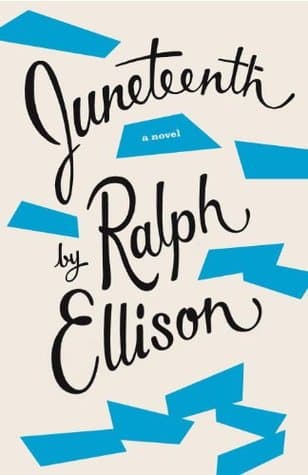
Ralph Ellison (1999)
Genre
Literary Fiction / Historical Fiction
Reading Time
1200 min
Key Themes
See below
Sign in to track this book
A dying, racist senator confronts the Black preacher who raised him, forcing a reckoning with a past that spans an idyllic Southern boyhood, filmmaking, and the mysterious denial of his origins.
The novel opens with the dying Senator Adam Sunraider, a prominent but controversial white politician, requesting the presence of Reverend A.Z. Hickman, an elderly Black minister. Sunraider, gravely wounded after an assassination attempt during a speech, is in a hospital, surrounded by his staff and concerned onlookers. He is wracked with guilt and a desperate need to confess his life story to Hickman, whom he calls 'Daddy' and recognizes from his childhood. The senator's request puzzles many, as his public persona is that of a race-baiting demagogue. Hickman, a man of spiritual authority, arrives, prepared to listen to the senator's sprawling, often disjointed narrative, which begins to reveal a shared, hidden past.
Sunraider's confession transports the narrative back to his childhood as Bliss, a fair-skinned, ambiguously racial orphan. Reverend Hickman, then a charismatic and influential preacher, discovers Bliss as an infant after a devastating fire and takes him in. Bliss is raised within Hickman's all-Black religious community in a small Southern town, learning gospel music, the art of preaching, and the values of the church. He is a curious and intelligent child, deeply loved by Hickman and the women of the congregation. His upbringing is steeped in the cultural traditions of the African American South, and he shows talent for mimicry and performance, often imitating Hickman's sermons with uncanny accuracy.
As Bliss grows, he becomes a prodigy in the church. Under Hickman's guidance, he masters the cadences of preaching, the power of storytelling, and the ability to move a congregation. He is seen as the natural heir to Hickman's spiritual leadership, a 'chosen child' destined to carry on the ministry. His sermons, even as a youth, are powerful and captivating, blending the sacred with a nascent understanding of human experience. This period marks a deep bond between Bliss and Hickman, a father-son relationship built on mutual respect and affection, and a shared passion for the transformative power of the spoken word and music.
Despite his success and acceptance within Hickman's community, Bliss begins to feel an underlying tension about his racial identity and his future. He is aware of his light skin and the ambiguities it presents in the segregated South. He also yearns for a different kind of knowledge and experience beyond the church. This internal conflict, coupled with a growing restlessness and a desire to explore the wider world, eventually leads him to decide to leave Hickman and the only home he has ever known. His departure is a profound break, leaving Hickman and the community with a sense of loss and unanswered questions.
After leaving Hickman, Bliss embarks on a journey of self-discovery and reinvention. He sheds his past identity, including his name, and ventures into the burgeoning world of filmmaking. His ambiguous racial appearance allows him to move between different social spheres, adopting new personas. He finds success in creating propaganda films, often exploiting racial stereotypes, and becomes adept at manipulating perceptions. This period marks a moral shift, as he increasingly embraces a cynical view of identity and truth, using his early training in performance and rhetoric for secular, and often morally questionable, ends.
Through a series of calculated choices and opportunistic maneuvers, Bliss fully abandons his past as a 'black' preacher's son and emerges as Adam Sunraider, a powerful white politician. He builds a career on a platform that often uses divisive rhetoric, particularly on issues of race. This transformation is not merely superficial, it involves a deep psychological denial of his origins and the people who raised him. He actively suppresses his memories of Hickman and the Black community, constructing an entirely new public identity that is a stark contrast to his formative years. His success is built on this elaborate deception, an act of self-erasure.
The novel circles back to the event that brings Sunraider and Hickman together: Sunraider's controversial Juneteenth speech. On a day commemorating the emancipation of enslaved people, Sunraider, a white senator, delivers a speech many perceive as deeply offensive and racially charged. His words ignite a furious reaction, culminating in an assassination attempt that leaves him critically wounded. This public spectacle and near-death experience trigger his desperate need to confess to Hickman, suggesting that the trauma has shattered the carefully constructed facade of his identity and forced him to confront the suppressed truths of his past.
As Sunraider confesses, the narrative interweaves Hickman's perspective. The old preacher, though deeply hurt by Bliss's abandonment and subsequent transformation into Sunraider, has never truly given up on him. He reflects on his own life, his unwavering faith, and the impact Bliss had on him and his ministry. Hickman's memories provide a counterpoint to Sunraider's self-serving narrative, offering a more nuanced and compassionate view of Bliss's early promise and the circumstances of his upbringing. He sees beyond the senator's public persona, recognizing the lost boy he once loved and nurtured.
Sunraider's confession is not linear but a sprawling, improvisational monologue, echoing the structure of a jazz performance. He jumps between past and present, truth and fabrication, attempting to make sense of his own complex identity. He recounts his experiences with women, his political machinations, and his internal struggles. His narrative is a desperate attempt to reconcile the disparate parts of himself: the Black preacher's son and the white senator, the innocent Bliss and the cynical Sunraider. Hickman patiently listens, occasionally interjecting with questions or affirmations, guiding Sunraider towards a deeper self-awareness.
As Sunraider's confession unfolds, a fragile process of reconciliation begins between the dying senator and his spiritual father. Sunraider, stripped of his public identity by his imminent death, confronts the betrayal of his past. Hickman, in turn, offers a form of absolution and understanding, rooted in his deep love and spiritual wisdom. The novel grapples with the possibility of redemption, even for a life built on denial and deception. However, the exact nature of their reconciliation and Sunraider's ultimate fate remain ambiguous, leaving the reader to ponder the lasting impact of identity, race, and personal choice.
The Protagonist/Antagonist
From a gifted preacher's prodigy to a self-denying politician, he attempts to reconcile his true identity with his public persona on his deathbed.
The Supporting/Moral Compass
He remains a steadfast figure, embodying enduring faith and love despite the profound betrayal of his adopted son.
The Supporting/Symbolic
She serves as a catalyst for Bliss's exploration of his identity outside the church, without a clear personal arc of her own.
The Mentioned/Symbolic
Not a character with an active arc, but serves as a historical and cultural touchstone for Hickman.
The Supporting/Background
They remain largely static, representing the societal forces and public perception that shaped Sunraider's political life.
The novel explores the fluidity and constructed nature of identity, especially in the American context of race. Bliss's transformation into Adam Sunraider is an act of self-reinvention, shedding his Black-identified past to become a white politician. This theme questions whether one can truly escape their origins or if suppressed identities inevitably resurface. Sunraider's deathbed confession is a desperate attempt to reconcile these disparate selves, highlighting the psychological toll of denying one's truth. The ambiguity of Bliss's racial heritage further underscores the idea that identity is often a performance, shaped by societal perceptions and personal choice.
““Tell me what happened while there's still time,””
Ellison explores the performative aspects of race in America. Bliss, with his light skin, is able to 'pass' as white, allowing him to navigate and exploit racial boundaries. His early training as a preacher, a master of rhetoric and theatricality, ironically prepares him for his later career as a politician and filmmaker, where he manipulates public perception and often perpetuates racial stereotypes for his own gain. The novel suggests that racial identity is not merely biological but a social construct, a role one can adopt or discard, with personal and societal consequences. Sunraider's public life is a performance designed to deny his racial origins.
““I was a master of masks, a shape-shifter, a chameleon in a world of fixed colors.””
At its heart, 'Juneteenth' is a story of betrayal — Bliss's abandonment of Hickman and his community, and his denial of his own past. This betrayal is not only personal but also cultural and spiritual, as he turns his back on the values and heritage he was raised with. The novel explores the possibility of redemption, as Sunraider, on his deathbed, seeks absolution from the man he wronged. Hickman, embodying Christian forgiveness and enduring love, offers a path towards reconciliation. This theme questions whether true redemption is possible for acts of such deep denial and whether one can ever fully atone for a life built on falsehoods.
““And behind it all lies a mystery: how did this chosen child become the man who would deny everything to achieve his goals?””
Ellison, a master of language, emphasizes the power of both the spoken word and music. Reverend Hickman's sermons, filled with gospel rhythms and powerful rhetoric, shape Bliss's early life and instill in him an understanding of how to move and inspire people. This mastery of language and performance is later perverted by Sunraider in his political career and filmmaking, where words are used for manipulation and deception. The novel itself, with its jazz-like improvisational structure and lyrical prose, reflects this theme, showing how language can create, destroy, and ultimately reveal truth.
““Oh, that boy could preach! He had the Word in him, sure as I’m standing here.””
The novel grapples with how history is remembered, suppressed, and reinvented, both personally and collectively. Sunraider's entire life is an attempt to erase his personal history, while Hickman represents the enduring memory and historical consciousness of the Black community. The fragmented, non-linear narrative structure mirrors the way memory functions, often surfacing in disjointed flashes and impressions. The title 'Juneteenth' itself invokes a specific historical moment, highlighting the importance of remembering and acknowledging the past, even when individuals or society attempt to deny it. The story suggests that unacknowledged history can haunt the present.
““The past is never dead. It’s not even past.””
A narrative framework where a dying character recounts their life story.
This device immediately establishes a sense of urgency and high stakes. Sunraider's confession is not merely a recounting of events but a desperate attempt at self-reckoning and potential absolution. It allows for a non-linear narrative, as memories surface in a fragmented, associative manner, mirroring the chaotic nature of the senator's mind. The presence of Hickman as the listener adds a layer of moral judgment and spiritual guidance, transforming the confession into a potential act of redemption and forcing the protagonist to confront his deepest truths.
The protagonist's ability to be perceived as either Black or white.
This is a central device that drives the entire plot and its thematic explorations. Bliss's light skin allows him to 'pass' as white, enabling his reinvention as Adam Sunraider. This device highlights the constructed nature of race and the social advantages and disadvantages associated with racial identity in America. It also creates profound internal conflict for the character, as he constantly navigates and exploits his ambiguous identity, leading to a life built on denial and self-deception. The ambiguity itself becomes a symbol of the fluid and often deceptive nature of American identity.
A non-linear, associative narrative style mirroring the structure of jazz music.
The novel's narrative does not follow a strict chronological order but rather shifts between past and present, memory and reflection, much like a jazz musician improvises on a theme. Sunraider's confession is fragmented, full of digressions, repetitions, and sudden shifts in focus. This device reflects the internal chaos and complexity of the protagonist's mind, and it also allows Ellison to explore themes from multiple angles, creating a rich, multi-layered reading experience that echoes the improvisational, call-and-response traditions of African American oral culture and music.
The protagonist embodies two distinct, opposing identities.
Senator Adam Sunraider and the young Bliss represent a classic literary 'double.' They are two manifestations of the same individual, yet embody vastly different values, racial identities, and life paths. This device externalizes Sunraider's internal conflict and the profound psychological split caused by his denial of his past. The senator's journey is an attempt to reconcile these two opposing selves, highlighting the struggle between authenticity and performance, and the devastating consequences of suppressing one's true identity for societal gain.
“The very idea of a Negro senator was a source of profound discomfort, a violation of the natural order of things.”
— Reflecting on the societal norms and prejudices of the time.
“History, Stephen decided, was not a straight line, but a series of interconnected circles, some expanding, some contracting, but all part of the same grand, bewildering design.”
— Stephen's contemplation on the nature of history and its cyclical patterns.
“Every man, whether he knows it or not, is the sum of his ancestors.”
— A reflection on heritage and the influence of past generations.
“The greatest tragedy of our time is not the bomb, but the silence between men.”
— A powerful statement on the breakdown of communication and understanding.
“Sometimes you have to be blind to see, and deaf to hear.”
— A paradoxical observation about gaining true insight through unconventional means.
“Memory is a tricky thing. It can be a blessing and a curse, a comfort and a torment.”
— Exploring the complex nature of memory and its dual impact.
“To be truly free, one must first be free of the need to be understood.”
— A profound insight into personal liberation and self-acceptance.
“The past is never dead. It's not even past.”
— A poignant observation on the enduring influence of history.
“A lie can travel halfway around the world while the truth is still putting on its shoes.”
— Reflecting on the speed and spread of misinformation.
“We are all trapped in the narratives we create for ourselves, and for others.”
— Examining the power of storytelling and self-perception.
“There are some things you can't learn from books, some things you just have to live.”
— Emphasizing the importance of lived experience over theoretical knowledge.
“The world is full of signs, if only we knew how to read them.”
— A contemplation on the hidden meanings and patterns in life.
“To deny a man his history is to deny him his humanity.”
— Highlighting the fundamental importance of historical identity.
“Silence is not always empty; sometimes it is full of unspeakable things.”
— Exploring the depth and weight of unspoken emotions and truths.
“The only way to overcome the past is to understand it, truly understand it, with all its ugliness and its beauty.”
— A statement on confronting and integrating historical truths.
Ready to see how well you understood this book? Take our interactive quiz with 10 questions.
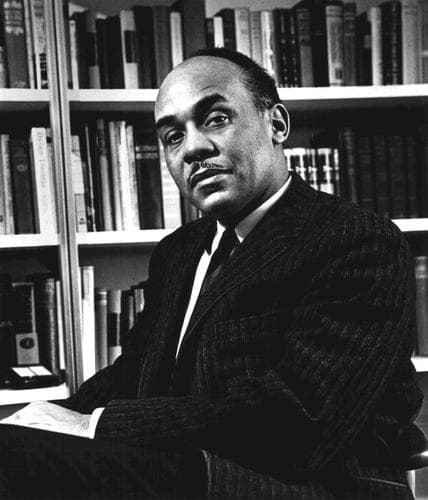
Biography coming soon.







