“Miyax, the name you have chosen, is a good one. It means the little one of the wolf, and you have made yourself one of them.”
— Kapugen, Julie's father, acknowledges her new identity.

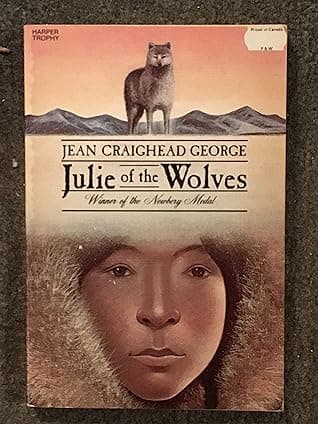
Jean Craighead George (1972)
Genre
Children's / Historical Fiction / Young Adult
Reading Time
180 min
Key Themes
See below
Sign in to track this book
Stranded in the Alaskan wilderness, a young Eskimo girl named Miyax bonds with a wolf pack, learning to survive and reconnect with her heritage through their guidance.
Thirteen-year-old Miyax leaves her arranged marriage to Daniel and the difficult home of her father's friend, Martha, in Barrow, Alaska. She plans to reach San Francisco, California, to live with her pen pal, Amy. She heads into the Alaskan tundra with only a few supplies, including a knife and some dried meat. Having grown up with both traditional Eskimo customs and modern American culture, Miyax feels caught between two worlds. Her journey quickly becomes dangerous as she realizes how vast the wilderness is and how little food there is. She remembers her father, Kapugen, and his lessons about Arctic survival.
After days of wandering and near-starvation, Miyax finds a pack of Arctic wolves. Desperate for food, she decides to watch them, hoping to learn their hunting methods and perhaps share their kills. She remembers Kapugen's lessons about respecting animals and communicating with them. She identifies the alpha male, Amaroq, and begins to imitate wolf behaviors, like sitting patiently and making submissive gestures. At first, the wolves ignore her, but her persistence and quiet observation eventually lead to a subtle acknowledgment from Amaroq, giving her hope.
Miyax works to understand the wolf pack's social structure and hunting strategies. She observes Amaroq, the lead wolf, and learns how he communicates, hunts, and cares for his family. She also learns about the other wolves: Silver, the beta male; Nails, a young female; and the pups. By mimicking their calls and body language, she slowly gains their acceptance. Amaroq eventually brings her food, a piece of caribou liver, which is a key moment in her relationship with the pack. She begins to do well, learning to hunt lemmings and store food like the wolves.
As summer goes on, Miyax fully becomes part of the tundra's rhythms. She feels a strong bond with the wolf pack, especially Amaroq, who she sees as a father figure in the wilderness. She names the pups and watches them play. One day, a golden plover, a bird that migrates south, lands near her. Its presence reminds her of the world beyond the tundra and her original goal of reaching San Francisco. This encounter creates a conflict within her: her wish to stay with the wolves versus her lingering connection to the human world and her pen pal, Amy.
As autumn arrives, the tundra changes, and the caribou herds begin to migrate. Miyax realizes that the wolves' food source will become scarce. She also notices signs of human presence — airplane trails and the sound of distant shots. This fills her with fear, knowing that hunters threaten the wolf pack. She tries to warn the wolves of the danger, but their instincts differ from hers. The conflict between the wild and human worlds grows, forcing Miyax to face the harsh realities of both.
Miyax's worst fears come true when she hears gunshots and later finds that Amaroq has been killed by a hunter from an airplane. This loss devastates her, as Amaroq was her protector, teacher, and family in the wilderness. His death shatters her sense of belonging and safety. She sees the pack's grief and confusion, and the young wolves struggle to find leadership. This tragic event changes Miyax, increasing her disappointment with the human world and its destructive effect on nature.
After Amaroq's death, Miyax feels she cannot stay with the fragmented wolf pack. She says a sad farewell to the remaining wolves, especially to her favorite pup, Kapu. Her desire to find Amy and escape the pain of the tundra returns. She begins her journey south, carrying a deep sense of loss but also a new determination. As she travels, she encounters more signs of human civilization, including traplines and abandoned camps, which further show the modern world's growing presence in the wilderness.
During her southward journey, Miyax finds an injured golden plover, which she names Tornait, meaning 'spirit bird.' She cares for the bird, making a splint for its wing. This act of nurturing gives her purpose and comfort amidst her grief. Tornait becomes a symbol of hope and resilience, reminding her of life's connections and nature's beauty. Her bond with Tornait echoes her earlier connection with the wolves, showing her natural empathy and deep understanding of the natural world.
Miyax eventually finds a trapper's camp. She meets a solitary Eskimo man named Oki, who is friendly but speaks little English. Through broken words and gestures, Miyax learns that Oki knows her father, Kapugen. To her shock, Oki reveals that Kapugen is alive and has adopted a more modern, 'gussak' (white man's) way of life, living in a house in a village and having remarried. This news is a blow to Miyax, challenging her idealized image of her father as a traditional Eskimo hunter.
Guided by Oki, Miyax travels to the village where Kapugen lives. The reunion is bittersweet. While she is happy to see him alive, she finds him greatly changed. He is no longer the traditional hunter she remembers, but a man who has adopted modern comforts and values. He wears Western clothes, lives in a house, and seems to have moved away from the deep connection to the land he once taught her. This realization causes Miyax great sadness and confusion, as her image of her father, her symbol of traditional Eskimo life, is broken.
Miyax struggles to accept the Kapugen she knew versus the Kapugen she now sees. She realizes that her initial journey to San Francisco was an escape from a difficult present, but her time with the wolves taught her the value of her Eskimo heritage and self-reliance. Now, facing a father who has seemingly abandoned those traditions, she is at a crossroads. She understands that the wild she embraced is quickly disappearing, and the way forward is unclear. She must decide whether to fully embrace the modern world or find a way to honor her heritage within it.
Despite her disappointment, Miyax begins to understand the challenges of survival and adaptation in a changing world. She recognizes that Kapugen, like her, has adapted to survive. She chooses to stay with her father, accepting his new life while holding onto the lessons learned from the wolves and her traditional upbringing. She realizes that true Eskimo values—intelligence, fearlessness, and love—are not tied to a specific place or lifestyle, but are inner qualities. Her journey has changed her from a lost girl into a resilient young woman who can connect two worlds.
The Protagonist
Miyax transforms from a lost and desperate girl into a self-reliant and wise young woman who learns to bridge two cultures.
The Supporting
Kapugen is revealed to have adapted to modern society, challenging Miyax's idealized image of him but ultimately showing her a different path to survival.
The Supporting
Amaroq acts as Miyax's mentor and protector in the wilderness, his death forcing her to continue her journey alone.
The Supporting
Silver's initial wariness of Miyax slowly diminishes as she demonstrates her harmlessness and respect for the pack.
The Supporting
Kapu's playful nature helps Miyax feel accepted by the pack, and their bond deepens her connection to the wilderness.
The Supporting
Oki serves as a crucial guide, revealing Kapugen's fate and facilitating Miyax's reunion with her father.
The Mentioned
Amy's role is static, representing the modern world Miyax initially seeks but ultimately re-evaluates.
The Mentioned
Daniel acts as a catalyst for Miyax's escape, his character remaining static.
The novel explores survival, both physical and emotional. Miyax's journey shows human resilience as she adapts to the harsh Alaskan wilderness, learning from the wolves how to hunt, find shelter, and endure extreme conditions. Beyond physical survival, she adapts to the loss of her traditional world and the discovery of her father's changed life. This theme is clear when she mimics wolf behavior for acceptance (plot_summary #3) and when she later accepts Kapugen's modern lifestyle, finding a way to combine her heritage with new realities (plot_summary #12).
“She was an Eskimo, and Eskimos were not afraid of the wilderness. They were part of it.”
A main conflict in the story is the clash between traditional Eskimo culture and the growing modern 'gussak' (white man's) ways. Miyax herself embodies this conflict, having lived in both worlds. She first tries to escape traditional expectations (arranged marriage) but finds comfort and identity in the ancient wisdom of the land and animals. The killing of Amaroq by a modern hunter (plot_summary #6) clearly shows modernity's destructive impact on the wild. The biggest challenge comes when Miyax discovers her father, Kapugen, has embraced modern life, forcing her to reconcile her idealized past with a complex present (plot_summary #10 and #11).
“She had to find Kapugen and tell him the wolves were being killed. He would know what to do. He was Eskimo. He would understand.”
Miyax's journey is a search for identity and belonging. Initially, she feels lost, fleeing a home where she feels trapped. In the wilderness, she finds a strong sense of belonging with the wolf pack, becoming 'Julie of the Wolves.' This connection helps her define who she is, drawing on her Eskimo heritage. However, Amaroq's loss and the discovery of her father's changed identity force her to redefine her sense of belonging. She ultimately realizes that her true identity lies not in a place or a specific lifestyle, but in her inner strength and values (plot_summary #11 and #12).
“She was Miyax, daughter of Kapugen, and she was a member of the wolf pack.”
The novel explores the delicate relationship between humans and nature. Miyax shows a respectful, interdependent relationship with nature, learning its lessons and living in harmony with it. Her ability to communicate with and be accepted by the wolves highlights a forgotten connection between humans and animals (plot_summary #3). In contrast, the 'gussak' world often represents exploitation and destruction, as seen in Amaroq's killing by airplane hunters (plot_summary #6). The story suggests that a balanced relationship with nature, based on understanding and respect, is important for both human and ecological well-being.
“The wolf, who was to her a symbol of the Eskimo way of life, was being hunted from the sky.”
Hints and clues about future events, particularly the changing landscape and threats.
Foreshadowing is used to build suspense and prepare the reader for upcoming challenges. For instance, Miyax's observations of airplane contrails and distant gunshots (plot_summary #5) subtly warn of the dangers posed by human hunters, culminating in Amaroq's death. The golden plover's migratory flight south (plot_summary #4) serves as an early hint of Miyax's eventual return to the human world, even as she feels integrated with the wolves. These subtle cues create a sense of impending change and unavoidable conflict.
Objects and characters representing deeper meanings and themes.
Symbolism is central to the novel. The wolves, especially Amaroq, symbolize the purity, wisdom, and resilience of traditional Eskimo life and the natural world. Amaroq's death (plot_summary #6) symbolizes the tragic impact of modern civilization on indigenous cultures and nature. The golden plover (Tornait) symbolizes hope, migration, and the interconnectedness of life, guiding Miyax during her solitary journey (plot_summary #8). Miyax's knife, inherited from her father, symbolizes her Eskimo heritage and her capacity for survival and self-reliance.
Miyax's recollections of her father's teachings and past experiences.
The narrative frequently employs flashbacks or Miyax's internal memories of her father, Kapugen. These recollections are not just sentimental; they are crucial survival tools. Miyax draws on Kapugen's specific lessons about animal behavior, hunting, and respecting the land to navigate the wilderness (plot_summary #1 and #3). These memories serve as her internal guide, connecting her to her heritage and providing the knowledge she needs to survive, effectively making Kapugen a guiding presence even in his absence.
Attributing human qualities to animals and nature.
Personification is used extensively to deepen Miyax's connection to the natural world, particularly the wolves. She interprets their expressions, calls, and actions with human-like understanding, attributing feelings like patience, wisdom, and even grief to them. For example, she sees Amaroq as a 'gentle father' and observes the wolves' 'sadness' after his death. This device allows the reader to empathize with the animals and understand the profound bond Miyax forms with them, blurring the lines between human and animal consciousness.
“Miyax, the name you have chosen, is a good one. It means the little one of the wolf, and you have made yourself one of them.”
— Kapugen, Julie's father, acknowledges her new identity.
“The wind was a whetted knife, and Miyax was a naked girl.”
— Julie faces the harsh Alaskan wilderness alone for the first time.
“Wolves are brothers. They are to be respected, not feared.”
— Kapugen teaches Julie about the wolf pack.
“She was an Eskimo, a true child of the wilderness, and the wilderness was her home.”
— Julie embraces her heritage and connection to the land.
“To be a good hunter, you must think like the animal.”
— Kapugen instructs Julie on hunting techniques and understanding animals.
“The wolves were her family, her teachers, her companions.”
— Julie forms a deep bond with the wolf pack.
“She had to learn to live with the land, not against it.”
— Julie's realization about survival in the Arctic.
“Man is like the walrus, clumsy and slow, but he has a mind that can make him fly.”
— Kapugen's observation about human ingenuity and limitations.
“The sun was her clock, the wind her calendar, the stars her map.”
— Julie relies on natural elements for guidance in the wilderness.
“When you are lost, you are not really lost until you lose sight of yourself.”
— A philosophical thought about identity and direction.
“She was Miyax of the wolves, and she was home.”
— Julie feels a profound sense of belonging with the wolf pack.
“The old ways are not gone. They are just forgotten.”
— Julie reflects on the loss of traditional Eskimo knowledge.
“To survive, one must be strong, silent, and swift.”
— Julie's internal mantra for living in the wild.
“The world of the white man was not her world, not anymore.”
— Julie's growing detachment from modern civilization.
“There are no trails in the tundra, but the animals always know where they are going.”
— Julie observes the instinctive navigation of wildlife.
Ready to see how well you understood this book? Take our interactive quiz with 10 questions.
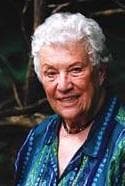
Biography coming soon.
Dan Gemeinhart
4.5

Kate O'Hearn
4.4

Jeanne Birdsall
4.4

Jen Wang
4.4

Wendelin Van Draanen
4.3

John Marsden
4.3

Chris Van Allsburg
4.3
Jennifer A. Nielsen
4.2