“Your parents are dead. Your brother is in jail. Your girlfriend has left you. You are unemployed. The world is ending. What do you do? You play video games.”
— Ethan's internal monologue about his life's circumstances.

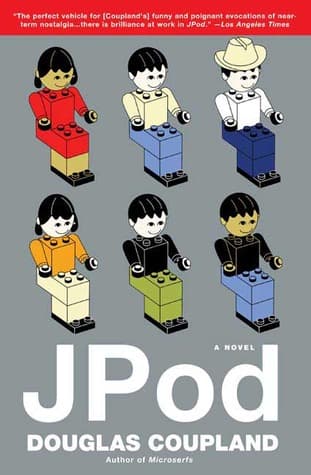
Douglas Coupland (2006)
Genre
Literary Fiction / Technology
Reading Time
520 min
Key Themes
See below
Sign in to track this book
Six 'J' co-workers at a Vancouver tech company navigate absurd game development, growing marijuana operations, and the chaos of 21st-century life, all while their personal worlds unravel with Coupland's signature wit and cultural commentary.
Ethan Jarlewski, a programmer at a large Vancouver video game company, introduces his five coworkers whose surnames also begin with 'J' and who are all grouped in 'jPod'. The team includes Ethan, John, Jim, Jenny, and Jammie. They must develop a skateboarding video game, but their creative efforts are constantly hindered by the marketing department's absurd demands, such as adding a turtle character named Cuddles. Ethan lives with his eccentric parents; his mother runs a marijuana grow-op in their basement, and his father is a perpetually unemployed, aspiring actor. The early chapters establish the repetitive, draining nature of their work and the surreal ordinariness of their personal lives, setting the stage for the coming absurdities.
The main conflict within the JPod team centers on the marketing department's demand to add 'Cuddles the turtle' to their extreme sports game, a request that shows corporate creative emptiness. Ethan and his colleagues find this idea ridiculous and a constant source of frustration. They spend hours brainstorming ways to include Cuddles, often using passive-aggressive compliance or outright sabotage of the concept. This ongoing battle highlights the disconnect between the creative developers and the business-focused marketing team, showing the often-irrational decision-making in large corporations and its demoralizing effect on employees.
Ethan's home life is as unconventional as his work. His mother runs a profitable marijuana grow-op in their basement, which Ethan accepts despite the legal risks. His father, a former actor, constantly tries to launch new, often strange, business ventures or revive his acting career, usually without success. Their house is a center of odd activities, including regular visits from a Chinese people-smuggler named Kam Fong, who uses their basement for temporary housing for his 'clients.' Ethan's detachment from these unusual circumstances shows his general indifference to the absurdities of his life.
In a meta-fictional twist, Douglas Coupland, the novel's author, puts himself into the story as a character. He becomes Ethan's father's agent, further complicating the already strange family dynamic. Coupland's presence blurs the lines between reality and fiction, commenting on the creative process and storytelling. He gives Ethan's father increasingly bizarre acting roles and offers Ethan advice on his own life, often with a detached, observant tone. This self-insertion is a significant plot device, constantly reminding the reader of the story's constructed nature.
Kam Fong, a seemingly harmless Chinese businessman, is revealed to be a people-smuggler who uses Ethan's parents' basement as a temporary holding area for his clients. Ethan, initially indifferent, becomes more directly involved when asked to drive some of Kam Fong's 'packages' (people) to various locations. This involvement grows when he helps Kam Fong dispose of a body, further blurring his moral compass. This subplot introduces a darker, more dangerous element to Ethan's already surreal life, highlighting the hidden, illegal economies thriving beneath everyday life.
Ethan begins a relationship with Kaitlin, a quirky and somewhat unstable woman he meets through work. Their relationship shows a shared sense of disillusionment and an attempt to find meaning or connection in a world that often feels meaningless. Kaitlin struggles with her own personal issues and an eating disorder, and their interactions are often tinged with a fragile vulnerability. Ethan's attempts to connect with Kaitlin are one of the few times he actively seeks something beyond passively accepting his circumstances, offering a glimpse into his desire for genuine human connection.
The JPod team's initial passive resistance to the marketing department's demands slowly escalates into more active and strange forms of rebellion. They begin putting subtle, subversive messages into their game code and even into their daily interactions. Their shared frustration creates a unique bond among them, turning their shared misery into a form of dark humor and solidarity. This rebellion ends in several outlandish acts, reflecting their desperate need to regain some control and meaning in their creatively stifled lives, pushing the boundaries of corporate satire.
Throughout the novel, China's growing influence is a recurring theme. Kam Fong's people-smuggling operation, the influx of Chinese immigrants, and constant references to China's economic power all highlight a shift in global dynamics. Ethan's conversations often touch on the perceived decline of Western culture and the rise of Eastern powers. This theme is not just a backdrop but actively shapes the plot, particularly through Kam Fong's activities and the broader anxieties about economic and cultural change that fill the characters' lives, reflecting real-world geopolitical shifts.
Ethan's father, in one of his many attempts to find purpose or fame, decides to enter a competitive ballroom dancing circuit. This subplot introduces a completely new, equally absurd world into Ethan's life. Ethan finds himself attending his father's competitions, which are full of their own eccentric characters and intense rivalries. This unexpected hobby sharply contrasts with the tech world and the criminal underworld, adding another layer of surrealism to the story. It also highlights his father's relentless, though often misguided, pursuit of self-fulfillment.
As the novel progresses, the various separate plotlines in Ethan's life begin to unravel and come together in increasingly chaotic ways. The grow-op faces threats, Kam Fong's activities become more dangerous, his father's acting career takes unexpected turns, and the corporate absurdity at JPod reaches new heights. Ethan's detachment is tested as he must face the results of his passive involvement in these events. The boundaries between his work, family, and criminal entanglements blur, pushing him to a point where he can no longer just observe.
Ethan must face the results of his involvement with Kam Fong when the people-smuggling operation turns violent. He finds himself directly involved in a crime, leading to increased paranoia and a desperate need to escape the situation. At the same time, the internal conflicts at JPod reach a breaking point, and his family life continues its descent into strange dysfunction. This section shows Ethan's previous indifference replaced by a growing sense of urgency and fear as the various absurdities of his life turn into real threats, forcing him to make active decisions.
Overwhelmed by the escalating chaos and danger, Ethan decides to make a radical change. He leaves his job at JPod, distances himself from his family's illegal activities, and tries to cut ties with Kam Fong. This involves a significant act of defiance and a conscious effort to break free from the passive existence he had embraced. The ending suggests a new, though uncertain, beginning for Ethan, as he seeks to build a life free from the pervasive absurdity and moral ambiguity that had defined his existence, hinting at a potential for self-discovery.
The Protagonist
Ethan slowly transitions from passive observer to active participant, ultimately choosing to break free from his suffocating environment.
The Supporting
Her character remains largely consistent, driven by her practical goals and unyielding nature.
The Supporting
His arc is a series of cyclical attempts at fame and reinvention, never quite succeeding but always trying.
The Antagonist/Supporting
His character's true nature is slowly revealed, escalating the danger and tension in Ethan's life.
The Supporting
She serves as a catalyst for Ethan's emotional development, her struggles reflecting his own unacknowledged anxieties.
The Mentioned/Supporting
Serves as a meta-fictional narrator, offering observations and pushing the plot's absurdity.
The Supporting
Remains consistent in his role as the voice of dissent within the JPod team.
The Supporting
His character reinforces the shared experience of the JPod team, without a significant individual arc.
The Supporting
Her character provides an important perspective within the JPod dynamic, remaining consistent in her role.
The novel sharply criticizes the illogical and draining nature of modern corporate culture, especially in the tech and gaming industries. The JPod team's constant battle against the marketing department's ridiculous demands, like adding 'Cuddles the turtle' to a skateboarding game, shows this theme. The characters are trapped in meaningless work, their creative energies stifled by bureaucratic incompetence and market-driven decisions. This leads to deep disillusionment among employees, who use passive-aggressive resistance and dark humor to cope with their lack of control, highlighting the dehumanizing effects of such environments.
“Our job was to take something beautiful and pure and make it grotesque and twisted, all for the sake of 'marketability.'”
Ethan Jarlewski's main trait is his widespread indifference and detachment from the increasingly strange events in his life. Whether it's his mother's marijuana grow-op, his father's outlandish acting pursuits, or his involvement in a people-smuggling operation, Ethan mostly observes rather than acts. This detachment reflects a broader societal malaise, where people are overwhelmed by information and absurdity, leading to a sense of powerlessness and emotional numbness. His indifference is a coping mechanism, a way to navigate a world that often feels too chaotic and meaningless to engage with truly, though it eventually becomes unsustainable.
“I was just a passenger in my own life, watching the scenery go by.”
The novel explores the deep impact of globalization, especially the rising economic and cultural influence of China. This is most clearly seen through Kam Fong, the Chinese people-smuggler, and the constant influx of Chinese immigrants. The story subtly suggests a shift in global power dynamics, with Western culture seen as stagnant or declining, while China represents a powerful, often mysterious, force. This theme creates a sense of unease and highlights the rapid, often unsettling, changes happening in the world, affecting everything from local economies to individual destinies.
“The future wasn't American or European anymore. It was Chinese, and we were just watching it happen.”
A central theme is the blurring of lines between reality and fiction, mainly through the self-insertion of Douglas Coupland, the author, as a character in the novel. This metafictional device constantly reminds the reader that they are engaging with a constructed story, challenging traditional storytelling boundaries. Coupland's presence allows for direct commentary on the characters and plot, raising questions about authorship, the nature of creativity, and the relationship between the creator and their creation. It adds a layer of postmodern irony and self-awareness to the story, making the reader question the 'truth' of the narrative.
“I'm the author. I can do whatever I want with you people.”
Beneath the satire and absurdity, many characters, especially Ethan, struggle to find meaning in a world that often feels empty. Ethan's indifference is a response to this perceived meaninglessness, while his father's endless pursuit of acting roles and strange hobbies represents a desperate, though misguided, attempt to find purpose. Even the JPod team's acts of rebellion are a way to regain some control and importance in their creatively stifled lives. The novel suggests that in a consumerist, technology-saturated society, the search for true meaning becomes increasingly complex and often leads to unconventional paths.
“Maybe that's all we were doing: trying to find something, anything, to make us feel like we weren't just wasting our time.”
The author inserts himself as a character, blurring reality and fiction.
Douglas Coupland, the author, appears as a character within the novel, interacting with Ethan's father and even offering commentary on the plot. This device breaks the fourth wall, constantly reminding the reader that they are engaging with a work of fiction. It allows Coupland to directly address themes of authorship, narrative control, and the relationship between creator and creation, adding layers of postmodern irony and self-awareness to the story. It challenges the reader to consider the nature of storytelling and the construction of reality within the text.
The narrative unfolds in a series of loosely connected, often absurd, vignettes.
The novel's plot does not follow a traditional linear arc but rather progresses through a series of distinct, often surreal, episodes and subplots. These include the corporate battles at JPod, Ethan's family's grow-op, his father's acting career, and the people-smuggling operation. While these threads eventually converge, their initial presentation as separate vignettes emphasizes the chaotic, fragmented nature of modern life. This structure mirrors the rapid-fire, attention-deficient quality of the digital age, reflecting how individuals experience a multitude of disparate events simultaneously.
Exaggeration and irony are used to critique contemporary society.
Coupland employs sharp satire and dark humor to critique various aspects of modern life, including corporate culture, consumerism, and the tech industry. The absurd demands of the marketing department (like Cuddles the turtle), the bizarre logic of the characters, and the general sense of meaninglessness are all targets of this comedic approach. The humor often arises from the characters' deadpan reactions to increasingly ridiculous situations, highlighting the inherent absurdity of their world and inviting the reader to laugh at the bleakness of their circumstances.
A seemingly trivial character representing corporate compromise and creative death.
Cuddles the turtle, a character the marketing department insists on adding to the extreme sports game, symbolizes the death of creativity and artistic integrity under corporate pressure. Cuddles is an utterly incongruous and nonsensical addition, representing the lowest common denominator and the triumph of marketability over artistic vision. The JPod team's struggle to integrate Cuddles becomes a metaphor for their own struggle against the dehumanizing forces of corporate bureaucracy, where genuine innovation is sacrificed for bland, focus-grouped mediocrity.
“Your parents are dead. Your brother is in jail. Your girlfriend has left you. You are unemployed. The world is ending. What do you do? You play video games.”
— Ethan's internal monologue about his life's circumstances.
“We were all just atoms in the cosmic soup, and sometimes those atoms bumped into each other and made something beautiful, or something terrible, or nothing at all.”
— A philosophical reflection on human connection and existence.
“The internet is not a place. It's a condition.”
— Ethan's observation about the pervasive nature of the internet.
“We're all just trying to make it to the next save point.”
— A meta-commentary on life, likening it to a video game.
“Sometimes I think the whole world is just one big, elaborate marketing campaign.”
— Ethan's cynical view of consumer culture.
“Happiness is a warm monitor.”
— A play on the classic 'Peanuts' quote, reflecting the characters' attachment to screens.
“The future is just the present, but with more bandwidth.”
— A comment on the perceived lack of true innovation, only increased speed.
“When you spend all your time in virtual worlds, the real world starts to feel like a glitch.”
— A reflection on the blurring lines between digital and physical reality.
“We were the children of the internet, and we knew things that our parents didn't.”
— A statement about the generational divide and digital native knowledge.
“Your job is to make people want things they don't need.”
— A summary of the consumer-driven nature of their work at JPod.
“It's not about what you create; it's about what you delete.”
— A dark humor take on the ephemeral nature of digital content and the creative process.
“Maybe the secret to life is just to keep typing.”
— Ethan's musing on the act of constant creation and communication in the digital age.
“We're all just trying to fill the void, one pixel at a time.”
— A reflection on the constant pursuit of distraction and meaning in a digital world.
“The only thing worse than being talked about is not being talked about.”
— A modern reinterpretation of Oscar Wilde's quote, applied to internet fame.
Ready to see how well you understood this book? Take our interactive quiz with 10 questions.
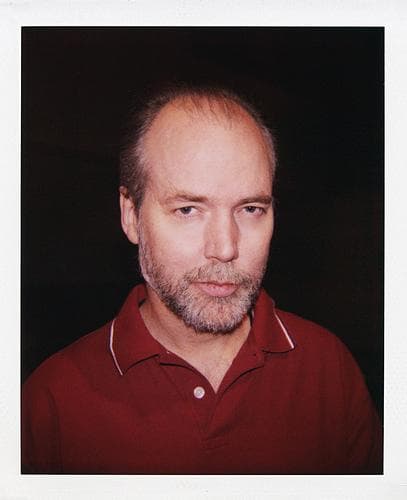
Douglas Coupland is a Canadian novelist and visual artist. He gained international recognition for his 1991 debut novel, "Generation X: Tales for an Accelerated Culture," and has since published numerous critically acclaimed works including "Microserfs," "JPod," and "The Gum Thief." Coupland is celebrated for his sharp, satirical observations on contemporary culture, technology, and consumerism.







