“When you're twenty-one, life is a roadmap. It's only when you get older that you realize you've been looking at the map upside down.”
— Devin Jones reflecting on youth and perspective.

Stephen King (2013)
Genre
Thriller / Mystery
Reading Time
280 min
Key Themes
See below
Sign in to track this book
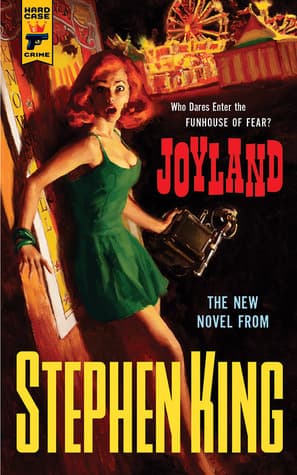
In the summer of '73, a college student working at a North Carolina amusement park uncovers a brutal murder, experiences a child's final days, and grows up in a way that changes his view of life and death.
In the summer of 1973, twenty-one-year-old college student Devin Jones, sad after his first serious girlfriend, Wendy Keegan, breaks up with him, takes a summer job at Joyland, a small, old-fashioned amusement park in the fictional town of Heaven's Bay, North Carolina. He plans to work as a 'carnie' operating rides, hoping the change of place and hard work will help him forget Wendy. Devin quickly learns his job, becoming friends with fellow college students Tom Kennedy and Erin Cook, who are also working there for the summer. He operates the Carolina Spin, the park's Ferris wheel, and starts to learn the unique culture and slang of the carnival workers, known as 'greenies'.
Soon after arriving, Devin hears the local story of Linda Gray, a young woman murdered in the Horror House ride four years earlier, in 1969. Her ghost is said to haunt the ride, and some park employees claim to have seen or felt her. The murder was never solved and remains a local mystery. Devin, at first doubtful, becomes interested in the story, especially when he hears that some carny workers believe they can 'get the sight' – a psychic ability to see or feel things beyond the ordinary – while working at Joyland. This story adds a strange feeling to his summer.
Devin fully embraces the carny life, living in the park's dorms and working long hours. He learns the specific language, the tricks of the job, and the park's unwritten rules. He becomes close friends with Tom and Erin, sharing their experiences of young adulthood, summer romance, and job challenges. He also grows fond of the park's unusual owner, Mr. Easterbrook, and the experienced, cynical park manager, Lane Hardy. Devin even has a brief, casual flirtation with Erin, though he still misses Wendy. He starts to feel like he belongs and has a purpose within the Joyland community.
Mid-summer, Devin gets a letter from Wendy, hinting they might get back together. Happy and hopeful, he arranges for her to visit Joyland. However, during her visit, Wendy says she has met someone new, a law student named Phil, and has moved on. This news deeply upsets Devin, making him feel lost and without direction; his reason for coming to Joyland – to forget Wendy – had failed. His friends, Tom and Erin, try to comfort him, but Devin withdraws, finding comfort only in his work and the park's routine. He even thinks about staying at Joyland permanently instead of returning to college.
Devin's interest in the Linda Gray murder grows, partly as a way to distract himself from his sadness. He spends time in the Horror House, the crime scene, trying to understand what happened. One night, while cleaning the ride, Devin has a chilling experience: a distinct coldness, the smell of gardenias (Linda's favorite flower), and the feeling of being watched. He also sees a shadowy figure, confirming for him that Linda's ghost does haunt the ride. This experience strengthens his belief in Joyland's supernatural aspects and increases his desire to understand the unsolved murder.
Towards the end of summer, Devin meets Annie Ross, a private and somewhat mysterious woman who lives near the park. He also meets her son, Mike, a bright and smart ten-year-old boy who has muscular dystrophy and uses a wheelchair. Mike has an extraordinary psychic ability, able to see and know things others cannot. Devin and Mike become instant, close friends. Devin often visits them, bringing Mike small gifts and sharing stories of Joyland. Annie, at first cautious, slowly warms to Devin, appreciating the happiness he brings to her son's difficult life.
Mike's psychic abilities become key to the mystery. During one of Devin's visits, Mike suddenly reveals details about Linda Gray's murder that no one outside the investigation could know. He describes the killer's distinct eyeglasses and a specific, disturbing detail about the murder weapon. Most shockingly, Mike identifies the killer as 'the carny with the dog,' a phrase that at first puzzles Devin. Mike's vision gives important, previously unknown clues that make Devin more determined to solve Linda Gray's murder before he leaves Joyland for good.
With Mike's vague but specific clues, Devin starts to look again at the park's staff and history. He realizes that 'the carny with the dog' must mean the park mascot, the friendly Golden Retriever named Toby, and its handler. This leads him to Lane Hardy, the park's seemingly friendly manager, who always has Toby with him. Devin remembers Hardy's distinct eyeglasses and his strange manner. He also remembers Hardy's odd reaction when the Linda Gray murder was mentioned. The facts come together, showing Hardy as Linda Gray's murderer, a fact that frightens Devin, as Hardy is a respected person in the park.
Devin arranges to meet Lane Hardy in the Horror House, pretending to discuss park operations. During their talk, Devin subtly brings up the Linda Gray case, watching Hardy's reactions. As Devin reveals the details he learned from Mike, Hardy's calm appearance breaks. He admits to Linda Gray's murder, saying his reason was anger after Linda rejected him. Hardy then tries to kill Devin to silence him. A struggle happens inside the dark Horror House, with Devin barely escaping Hardy's attack. Park security is called, and Hardy is caught and arrested for the murder.
With the murder solved, Devin gets ready to leave Joyland. He says goodbye to Tom and Erin, promising to stay in touch. His last visit is to Annie and Mike. He shares the news of Hardy's arrest, bringing a sense of completion to the Gray family's tragedy. Mike, despite his illness, expresses his thanks and a deep understanding of Devin's journey. Devin thinks about how his summer at Joyland, at first a escape from heartbreak, changed him. He leaves the park a changed man, having found purpose, friendship, and a deeper understanding of life, death, and the unseen world, carrying the memories of Linda Gray, Mike Ross, and the magic of Joyland with him.
The Protagonist
Devin transforms from a heartbroken and directionless young man into a more mature, empathetic, and purposeful individual who finds closure and a sense of belonging.
The Supporting
Mike's character remains consistent in his wisdom and psychic abilities, but his friendship with Devin brings him joy and purpose in his final months.
The Supporting
Annie gradually lets down her guard, allowing Devin into her and Mike's lives, finding a measure of comfort in his presence.
The Antagonist
Hardy's true, murderous nature is slowly revealed, culminating in his confrontation and arrest.
The Mentioned
Linda's story is static, but her legacy drives the plot, seeking justice through Devin.
The Supporting
Tom serves as a stable, supportive friend, experiencing the summer alongside Devin.
The Supporting
Erin supports Devin emotionally and intellectually throughout his summer, providing a grounded perspective.
The Mentioned
Wendy serves as a catalyst for Devin's journey, representing his past and the initial pain he must overcome.
The novel looks at different kinds of loss: Devin's initial heartbreak over Wendy, the lasting sadness of Linda Gray's unsolved murder, and most movingly, Annie and Mike's coming loss due to Mike's illness. Devin's time at Joyland is mostly about dealing with his own sadness, and in doing so, he learns to understand and help others going through great loss. The park itself, with its fading glory, also shows the passing of time and the loss of innocence.
“I was twenty-one, and Joyland was my first real job, and I was heartbroken, but there was a certain kind of joy in that, too.”
Joyland is a coming-of-age story for Devin Jones. He arrives at the park a heartbroken and somewhat innocent college student. Over the summer, through his experiences with work, friendship, love, and a murder mystery, he matures a lot. He learns about how complex people are, faces his own weaknesses, and finds a purpose beyond his initial heartbreak. His interactions with Mike Ross, especially, greatly shape his view of the world and lead to a deeper understanding of life and death.
“You could say I lost my heart at Joyland, and not just in the way people say they lost their heart to a place or a girl. I mean I literally lost it there. And then, in time, found it again.”
The novel includes supernatural elements through Linda Gray's ghost and Mike Ross's psychic abilities. The belief in 'the sight' among some carny workers and Devin's own experience in the Horror House give the park a strange, mystical quality. Mike's ability to 'see' the past and future, particularly about Linda Gray's murder, is a main plot device. This theme suggests there are forces and perceptions beyond normal human understanding, adding depth and mystery to the story.
“Some places are like that, Devin. Some places have a kind of memory. And some people have a kind of sight.”
A main force in the plot is the search for justice for Linda Gray. Her unsolved murder hangs over Joyland, and Devin, helped by Mike's insights, takes on the role of investigator. Solving the murder brings a sense of closure, not just for the victim's memory but also for the park. While not directly stated as redemption for Devin, his actions in bringing the killer to justice, and his deep connection with Mike, offer him a kind of personal recovery from his earlier despair.
“Sometimes the bad guys don't get caught. That's what I used to think. But sometimes they do.”
The story is told by an older Devin looking back on his youth.
The entire novel is narrated by an older, wiser Devin Jones reflecting on the pivotal summer of 1973. This narrative choice allows for foreshadowing, reflective commentary, and a sense of nostalgia that colors the events. The adult Devin often provides insights and emotional context that his younger self lacked, enriching the reader's understanding of his growth and the significance of his experiences at Joyland. It also builds suspense, as the narrator knows the outcome of the mystery from the start, but gradually reveals it.
The setting of the murder and the park's supernatural core.
The Horror House ride serves as the central haunted location in the story. It is the scene of Linda Gray's murder and is believed to be where her ghost resides. This device grounds the supernatural elements of the narrative, providing a specific, tangible place for paranormal occurrences. It acts as a physical representation of the park's dark past and a focal point for Devin's investigation, intensifying the mystery and the sense of danger as he gets closer to the truth.
Mike Ross's psychic gift, crucial for solving the murder.
The 'sight' refers to the psychic ability possessed by Mike Ross, and to a lesser extent, felt by some carny workers. Mike's visions and intuitive knowledge provide Devin with the crucial, otherwise unattainable clues needed to identify Linda Gray's killer. This device introduces a supernatural element that is not just atmospheric but directly propels the plot forward, making Mike an indispensable character despite his physical limitations. It underscores the theme of the unseen and the extraordinary within the ordinary.
The unique language and social structure of the carnival workers.
The novel immerses the reader in the specific culture and jargon of the carnival workers, or 'greenies.' Terms like 'talk the talk,' 'ride jock,' and descriptions of carny life create an authentic and distinct world for the story. This device helps establish the setting and atmosphere of Joyland, making it feel like a real, self-contained community. It also highlights Devin's transformation as he assimilates into this unique subculture, demonstrating his personal growth and adaptation.
“When you're twenty-one, life is a roadmap. It's only when you get older that you realize you've been looking at the map upside down.”
— Devin Jones reflecting on youth and perspective.
“We never know which moments we'll remember until they're memories.”
— Devin musing on memory and life's unpredictability.
“Joyland is a place where you can forget your troubles for a little while.”
— Describing the amusement park's purpose.
“Sometimes the dead are more alive than the living.”
— Hinting at the supernatural elements in the story.
“You can't go back, but you can look back. And sometimes, looking back is the only way to move forward.”
— Devin contemplating the past and progress.
“Fear is a ghost that haunts the living, not the dead.”
— Discussing fear and its psychological impact.
“In Joyland, the screams are part of the fun, but some screams are real.”
— Contrasting amusement park thrills with genuine danger.
“Love doesn't die, even when people do.”
— Reflecting on enduring emotions after loss.
“The carousel goes round and round, but it never really goes anywhere.”
— Metaphor for life's cyclical nature.
“A mystery is only a mystery until you solve it, and then it's just a story.”
— Devin on solving the park's murder mystery.
“Summer jobs are where you learn that work can be a kind of play, and play can be a kind of work.”
— Devin's experience working at Joyland.
“Ghosts are just memories with a heartbeat.”
— A poetic take on the supernatural elements.
“Sometimes the bravest thing you can do is to keep living.”
— Encouragement in the face of tragedy.
Ready to see how well you understood this book? Take our interactive quiz with 10 questions.
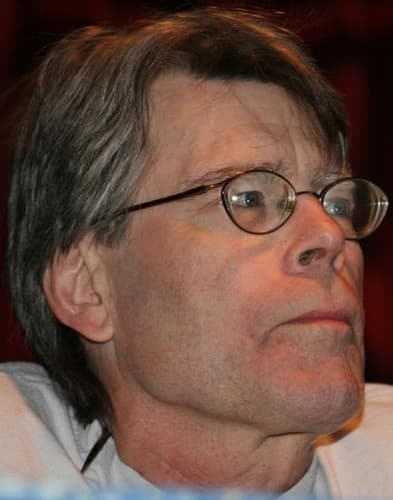
Stephen Edwin King is an American author of horror, supernatural fiction, suspense, crime, science-fiction, and fantasy novels. Described as the "King of Horror", his books have sold more than 350 million copies as of 2006, and many have been adapted into films, television series, miniseries, and comic books. King has published over 65 novels/novellas, including seven under the pen name Richard Bachman, and five non-fiction books. He has also written approximately 200 short stories, most of which have been published in book collections.







