“Deep is the well of the past. Should one not call it bottomless?”
— Opening line of the first volume, setting the philosophical tone for the epic.


Thomas Mann (2005)
Genre
Historical Fiction / Spirituality
Reading Time
1500 min (approx. 25 hours)
Key Themes
See below
Sign in to track this book
Thomas Mann's retelling of the biblical Joseph story explores divine favor, family betrayal, and the enduring power of human love across ancient Egypt and Canaan.
Jacob, the patriarch, openly favors his youngest son, Joseph, giving him a colorful coat. This, along with Joseph's dreams of his brothers and parents bowing to him, sparks intense jealousy among his ten older brothers. One day, when Jacob sends Joseph to check on his brothers tending flocks near Dothan, they plan to kill him. Reuben, the eldest, suggests throwing him into a dry pit instead, secretly planning to rescue him. While Reuben is away, the other brothers sell Joseph to Midianite merchants for twenty pieces of silver. They then dip Joseph's coat in goat's blood and show it to Jacob, leading him to believe a wild beast devoured Joseph. Jacob falls into deep mourning.
The Midianite merchants bring Joseph to Egypt and sell him to Potiphar, a high-ranking officer in Pharaoh's court and captain of the guard. Joseph shows diligence and integrity, quickly earning Potiphar's trust. He becomes overseer of Potiphar's entire household. Everything Joseph manages prospers, showing God's favor. However, Potiphar's wife, a beautiful and clever woman, becomes attracted to Joseph and repeatedly tries to seduce him. Joseph remains loyal to Potiphar and his God, rejecting her advances. Enraged by his refusal, she invents a story, claiming Joseph tried to rape her, using his cloak as 'evidence.' Potiphar, despite some doubt, believes his wife and has Joseph thrown into the royal prison.
Even in prison, Joseph's character stands out. The warden recognizes his integrity and puts him in charge of the other prisoners. Among them are Pharaoh's chief cupbearer and chief baker, both awaiting judgment for offending Pharaoh. One night, both men have disturbing dreams. Joseph, seeing their distress, offers to interpret their dreams, saying his ability comes from God. The cupbearer dreams of a vine with three branches that blossom and produce grapes, which he presses into Pharaoh's cup. Joseph interprets this to mean that in three days, the cupbearer will return to his position. The baker dreams of three baskets of bread on his head, with birds eating from the top basket. Joseph interprets this to mean that in three days, the baker will be hanged, and birds will eat his flesh. Both interpretations come true, as Joseph predicted.
Two years after the cupbearer's release, Pharaoh himself has two troubling dreams. In the first, he sees seven fat cows emerge from the Nile, followed by seven thin, sickly cows that devour the fat ones. In the second, he sees seven healthy ears of grain appear, followed by seven thin, scorched ears that swallow the good ones. Pharaoh's wise men and magicians cannot interpret them. The chief cupbearer, remembering Joseph, tells Pharaoh about his dream interpretation ability. Joseph is immediately brought from prison before Pharaoh. Joseph explains that both dreams mean the same thing: seven years of abundant harvest in Egypt, followed by seven years of severe famine. He advises Pharaoh to appoint a wise man to oversee the collection and storage of grain during the years of plenty, to prepare for the coming famine.
Impressed by Joseph's wisdom and the clear presence of God's spirit in him, Pharaoh immediately appoints Joseph as his vizier, the second most powerful man in Egypt. Pharaoh gives Joseph a signet ring, fine linen garments, and a gold chain. He also gives him an Egyptian name, Zaphnath-Paaneah, and an Egyptian wife, Asenath, daughter of Potiphera, priest of On. Joseph, now thirty years old, travels throughout Egypt, implementing a plan to store grain during the seven years of abundant harvest. He gathers so much surplus that he stops keeping records, as it becomes immeasurable, ensuring Egypt's survival through the coming scarcity. During this time, Joseph and Asenath have two sons: Manasseh and Ephraim.
As Joseph predicted, seven years of plenty are followed by seven years of severe famine. This famine affects Egypt and surrounding lands, including Canaan, where Jacob and his family live. When Jacob hears there is grain in Egypt, he sends his ten older sons to buy food, keeping his youngest son, Benjamin (Joseph's full brother), with him out of fear. Upon their arrival in Egypt, the brothers come before Joseph, who, as governor, manages grain distribution. They do not recognize him, but Joseph immediately recognizes them. He remembers his youthful dreams and, hiding his identity, speaks harshly, accusing them of being spies. He demands they bring their youngest brother to prove their honesty, holding Simeon captive until they return.
The brothers return to Canaan, troubled by Joseph's demands and the discovery of their money returned in their sacks. Jacob initially resists sending Benjamin, fearing for his safety, but the severe famine and Judah's plea and guarantee for Benjamin's safety finally persuade him. The brothers, with Benjamin and double the money, return to Egypt. Joseph sees Benjamin and is deeply moved. He orders a feast for them. During the meal, he seats them by age, astonishing them. He also gives Benjamin five times as much food as the others. Joseph, still hiding his identity, arranges another test: he orders his silver cup secretly placed in Benjamin's sack before they leave, planning to accuse him of theft.
As the brothers leave Egypt, Joseph sends his steward to pursue them and accuse them of stealing his silver cup, which is 'discovered' in Benjamin's sack. The brothers are horrified and offer to become Joseph's slaves if Benjamin is found guilty. Joseph insists that only Benjamin will remain his slave. At this point, Judah steps forward and delivers a powerful, emotional plea. He recounts Jacob's deep love for Benjamin, Jacob's sorrow over Joseph's supposed loss, and offers himself as a slave in Benjamin's place, rather than allowing their father to suffer more grief. This act of self-sacrifice and changed heart deeply moves Joseph. He sees that his brothers are no longer the cruel, jealous men who sold him into slavery years ago.
Overwhelmed by Judah's plea and his brothers' remorse, Joseph can no longer control himself. He sends all his Egyptian servants out of the room and, weeping aloud, reveals his true identity, asking, 'I am Joseph! Is my father still alive?' His brothers are terrified and speechless. Joseph reassures them, telling them not to be distressed or angry with themselves for selling him, for God sent him ahead of them to preserve life. He explains that God arranged these events to save many people from the famine. He then embraces Benjamin, weeping, and embraces all his brothers, after which they are finally able to speak with him. An emotional reconciliation takes place.
News of Joseph's brothers arriving and his true identity reaches Pharaoh. Pharaoh is pleased and tells Joseph to bring his father and entire family to Egypt, promising them the best of the land. Joseph sends wagons, provisions, and gifts to his family in Canaan, instructing them to make the journey. When the brothers return to Jacob and tell him that Joseph is alive and governor of Egypt, Jacob is initially stunned and disbelieving. But when he sees the wagons and gifts Joseph has sent, his spirit revives, and he declares, 'It is enough! Joseph my son is still alive. I will go and see him before I die.' Jacob and his entire household, seventy people, journey to Egypt, settling in the fertile land of Goshen, where Joseph warmly reunites with his father after decades apart.
Jacob and his family settle in Goshen, a rich pastureland suitable for their flocks, and they prosper under Joseph's protection. Joseph provides for all their needs throughout the remaining years of the famine. Before his death, Jacob, now old and frail, calls Joseph and makes him promise to bury him with his ancestors in Canaan. He then blesses Joseph's two sons, Manasseh and Ephraim, placing his right hand (the greater blessing) on the younger Ephraim, to Joseph's surprise. Jacob explains that Ephraim's descendants will become many nations. Finally, Jacob gathers all his twelve sons and delivers blessings and pronouncements over each, foretelling their future and the destiny of their tribes, emphasizing Judah's central role.
After blessing his sons, Jacob dies in Egypt at 147. Joseph mourns his father deeply, and Jacob's body is embalmed according to Egyptian custom. Joseph, with Pharaoh's permission, leads a grand procession, including many Egyptian officials, to Canaan, where Jacob is buried in the cave of Machpelah, alongside Abraham, Isaac, Sarah, Rebekah, and Leah. After their father's burial, Joseph's brothers fear Joseph will now take revenge for their past cruelty. They send a message to Joseph, claiming it was Jacob's dying wish that Joseph forgive them. Joseph weeps upon hearing this and reassures them, stating, 'Do not be afraid, for am I in the place of God? You meant evil against me, but God meant it for good, to bring it about that many people should be kept alive, as they are today.' He comforts them and speaks kindly, solidifying their reconciliation.
Joseph lives for many more years, seeing his great-grandchildren, the children of Ephraim and Manasseh. He lives to be 110 years old. Before his death, Joseph gathers his brothers and their descendants. He reaffirms his belief in God's covenant with Abraham, Isaac, and Jacob, and prophesies that God will surely bring them out of Egypt and into the promised land. He makes them swear an oath that when they eventually leave Egypt, they will carry his bones with them to be buried in the Promised Land. Joseph dies, and his body is embalmed and placed in a coffin in Egypt, awaiting the fulfillment of his prophecy and the eventual Exodus of the Israelites from Egypt.
The Protagonist
From a pampered, perhaps arrogant youth, Joseph transforms into a humble, wise, and forgiving leader who understands God's overarching plan for his life and family.
The Supporting
Jacob's arc involves enduring immense personal sorrow and the challenges of leading a large, fractious family, ultimately finding peace and fulfillment in seeing his beloved son Joseph alive and his family's survival.
The Supporting
Judah transforms from a participant in a cruel betrayal to a responsible, compassionate leader willing to sacrifice himself for his family, becoming the chosen ancestor of the royal line.
The Antagonist
Her character remains static, serving primarily as a catalyst for Joseph's suffering and subsequent elevation.
The Supporting
Pharaoh's arc shows his wisdom in recognizing and utilizing Joseph's divine gifts, securing the future of his kingdom.
The Supporting
Reuben consistently attempts to mitigate the harm caused by his brothers, demonstrating a sense of responsibility, albeit sometimes ineffective.
The Supporting
Benjamin's arc is less about personal development and more about serving as a catalyst for the emotional climax of the story and a symbol of Jacob's enduring love.
The Supporting
The Cupbearer's arc is brief but pivotal, moving from imprisonment to restoration, and eventually remembering Joseph to help Pharaoh.
A central theme is the idea that God arranges events, even difficult ones, for a greater good. Joseph repeatedly says that his suffering and rise to power were part of God's plan to save his family and many others from famine. This is clear when Joseph tells his brothers, 'You meant evil against me, but God meant it for good' (Genesis 50:20). His ability to interpret dreams also shows divine intervention, guiding Pharaoh and securing Joseph's position. The entire narrative, from the colorful coat to the famine, is presented as God's work.
“But as for you, you meant evil against me; but God meant it for good, in order to bring it about as it is this day, to save many people alive.”
The story ends with a strong act of forgiveness and reconciliation. Joseph, having suffered greatly from his brothers, chooses not to seek revenge but to offer grace and understanding. His repeated tests of his brothers are not for cruelty but to see their transformation and remorse. Judah's self-sacrificial plea for Benjamin is a key moment that confirms their change of heart, allowing Joseph to reveal himself and offer full forgiveness. This theme highlights forgiveness's power to heal deep family wounds and restore relationships.
“Do not be grieved or angry with yourselves, because you sold me here, for God sent me before you to preserve life.”
The story begins with intense jealousy among Joseph's brothers, fueled by Jacob's favoritism and Joseph's prophetic dreams. This jealousy grows into hatred, leading them to conspire against him and sell him into slavery. This betrayal causes decades of separation, grief for Jacob, and suffering for Joseph. The long-term consequences of their jealousy are significant, showing how such negative emotions can tear families apart and lead to morally wrong actions. The brothers' eventual remorse and transformation come directly from facing the consequences of their past envy.
“Now when his brothers saw that their father loved him more than all his brothers, they hated him and could not speak peaceably to him.”
Both Joseph and his brothers change significantly. Joseph matures from a somewhat arrogant youth into a wise, humble, and forgiving leader through his trials. His suffering refines his character and deepens his faith. The brothers, especially Judah, experience deep moral growth. They change from cruel, jealous individuals who would betray their own family to men who show remorse, responsibility, and self-sacrifice for their family. Their willingness to protect Benjamin, even at their own expense, shows their changed hearts and capacity for redemption.
“Please let your servant remain instead of the boy as a slave to my lord, and let the boy go up with his brothers.”
Dreams are a central plot device and theme, acting as a main way for divine communication and prophecy. Joseph's initial dreams foreshadow his future rise and his family bowing to him, which first fuels his brothers' hatred but eventually comes true. Later, his ability to interpret the dreams of the cupbearer, baker, and especially Pharaoh, directly leads to his release from prison and his rise to power. These dreams are not random but specific messages from God, revealing future events and guiding human actions, showing God's active involvement in the world.
“Do not interpretations belong to God? Please tell them to me.”
Dreams that reveal future events and God's plan.
Prophetic dreams are central to the narrative, driving both conflict and resolution. Joseph's initial dreams of his family bowing to him spark his brothers' jealousy and lead to his sale into slavery. Later, his God-given ability to interpret the dreams of the cupbearer, baker, and Pharaoh himself directly leads to his release from prison and his elevation to governor of Egypt. These dreams not only foreshadow future events but also serve as a constant reminder of divine providence and God's active hand in guiding Joseph's life and the destiny of his family.
The moment of discovery when Joseph reveals his identity to his brothers.
The recognition scene is the emotional climax of the story. While Joseph recognizes his brothers immediately upon their arrival in Egypt, he deliberately conceals his identity for an extended period, orchestrating a series of tests. The true 'anagnorisis' occurs when Joseph, overwhelmed by Judah's plea for Benjamin, can no longer hold back and reveals himself. This moment of mutual recognition is profoundly dramatic, shifting the narrative from suspense and testing to forgiveness and reconciliation, allowing for the healing of decades of pain and misunderstanding between Joseph and his brothers.
Joseph's final test of his brothers' transformed character.
The silver cup test is a crucial plot device designed by Joseph to ascertain if his brothers have truly changed. By secretly placing his personal divining cup in Benjamin's sack and then accusing him of theft, Joseph creates a scenario where Benjamin's life and freedom are at stake. This forces the brothers, particularly Judah, to make a moral choice: abandon Benjamin to slavery or stand by him. Their unified plea and Judah's offer of self-sacrifice demonstrate their profound transformation and loyalty, paving the way for Joseph's revelation and the subsequent reconciliation.
A symbol of Jacob's favoritism and the initial catalyst for the brothers' jealousy.
The coat of many colors is more than just a garment; it is a potent symbol of Jacob's blatant favoritism towards Joseph. This gift, intended as a mark of special affection, inadvertently ignites the intense jealousy and hatred of Joseph's older brothers. Its later desecration with goat's blood and presentation to Jacob serves as a cruel deception, convincing Jacob of Joseph's death and plunging him into deep mourning. The coat thus acts as the initial spark for the entire chain of events that leads to Joseph's suffering and eventual elevation.
“Deep is the well of the past. Should one not call it bottomless?”
— Opening line of the first volume, setting the philosophical tone for the epic.
“For the Lord is a spirit, and where the spirit of the Lord is, there is freedom.”
— Joseph reflecting on the nature of God, contrasting it with pagan deities.
“Man's life is but a dream, and God's life is but a dream, and the dream of God is man's life.”
— A recurring theme, emphasizing the intertwined nature of human and divine existence.
“It is not the land that makes the man, but the man that makes the land.”
— Jacob's thoughts on his journey and the significance of his presence in Canaan.
“The story is always the same, but it is always new.”
— A commentary on the cyclical nature of human experience and divine narrative.
“For God is not a God of the dead, but of the living.”
— Joseph pondering the continuity of life and divine purpose.
“And the dream is the truth, and the truth is the dream.”
— Joseph's understanding of his prophetic dreams and their fulfillment.
“For what is truth but the knowledge of God, and what is knowledge of God but truth?”
— A philosophical musing on the nature of truth and divine understanding.
“To be human is to be a story.”
— A deep reflection on the essence of human existence as a narrative unfolding.
“The greatest freedom is to choose one's own necessity.”
— Joseph's realization about his role in divine providence, embracing his fate.
“God is in the details, and the details are God.”
— Joseph's meticulous attention to detail in his administrative role, seeing divine order.
“For love is not a feeling, but a will.”
— Jacob's understanding of his enduring love for Rachel and his sons.
“The past is not dead, it is not even past.”
— A profound statement on the enduring influence and presence of history.
“And the Lord loved Joseph, because he was a dreamer and a doer.”
— Narrator's observation on Joseph's character and his favor with God.
Ready to see how well you understood this book? Take our interactive quiz with 10 questions.
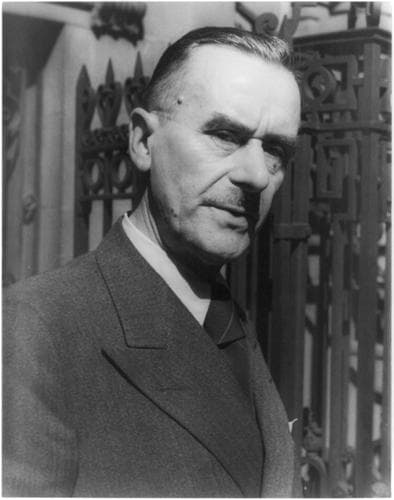
Paul Thomas Mann was a German novelist, short story writer, social critic, philanthropist, essayist, and the 1929 Nobel Prize in Literature laureate. His highly symbolic and ironic epic novels and novellas are noted for their insight into the psychology of the artist and the intellectual. His analysis and critique of the European and German soul used modernized versions of German and Biblical stories, as well as the ideas of Johann Wolfgang von Goethe, Friedrich Nietzsche, and Arthur Schopenhauer.







