“I’m not a boy, I’m not a girl, I’m just a body that can be opened and closed.”
— Jonny reflecting on his gender identity and experiences.

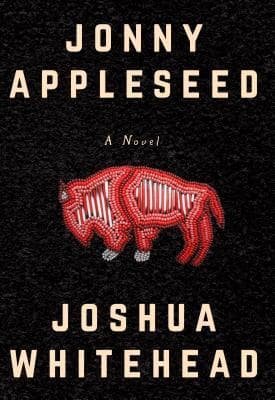
Joshua Whitehead (2018)
Genre
Literary Fiction
Reading Time
240 min
Key Themes
See below
Sign in to track this book
Jonny Appleseed, a Two-Spirit cybersex worker, navigates his identity in the city, dealing with past love, trauma, and family before returning to the reserve for a funeral that will change him.
The novel starts with Jonny Appleseed, a young Two-Spirit man, in the city. He is a week away from returning to the reserve for his stepfather's funeral. He works as a cybersex worker, using an 'NDN glitter princess' persona for money. During this time, Jonny thinks about his identity, his client interactions, and his complex relationship with his body and sexuality. He lives in a small apartment, often feeling distant from the city and people around him. His days include online interactions, casual hookups, and a strong sense of worry about going home. He often remembers his childhood on the reserve, especially his grandmother (Kokum) and his first love, Tias.
Throughout the week, Jonny often thinks of his Kokum, the most important person in his childhood. Her lessons, stories, and love gave him a foundation of Indigenous knowledge and strength. He remembers her practical skills, spiritual advice, and strong protection. These flashbacks contrast with his city life, showing the cultural and emotional gap he feels. He also remembers specific details of life on the reserve: the close community, the challenges of poverty and systemic issues, and how his Two-Spirit identity began to form there, often feeling both supported and misunderstood.
Much of Jonny's thoughts focus on Tias, his childhood sweetheart and first serious love. Their relationship on the reserve was a time of discovery, closeness, and shared vulnerability. Jonny tells of their secret meetings, their sexual exploration, and their deep emotional bond. However, their love was complicated by outside pressures, including Tias's family and social expectations on the reserve. The memory of their breakup and Tias's later departure from the reserve is a recurring source of pain and longing for Jonny. It shapes how he understands love and loss. He thinks about what might have been and the lasting effect of this important relationship.
Jonny describes his work as a cybersex worker. He talks about the technical parts, client demands, and the emotional toll. He creates a persona, the 'NDN glitter princess,' which allows him to both participate in and separate himself from the act. He explores the power dynamics in the work, the fetishization of his Indigenous identity, and his attempts to control these interactions. This work is not just a way to make money; it is also a complex space where he performs and questions his identity, sexuality, and the commercial use of his body and heritage. He wonders if this path empowers him or marginalizes him further.
As the week continues, Jonny's city routine goes on, marked by various encounters. He spends time with friends, though these interactions often feel superficial or temporary. He has casual sexual encounters, some satisfying, others leaving him feeling empty. Solitary moments are filled with deep thought as he processes his past and present. The upcoming return to the reserve greatly affects all his experiences. He feels a growing tension between his urban, independent life and the pull of his family and community back home. He tries to find comfort in small routines, like applying glitter or listening to music, to steady himself amidst his thoughts.
Finally, the day comes for Jonny to travel back to the reserve for his stepfather's funeral. The journey itself is an important moment, marking a change from his city persona back to his roots. As he nears the reserve, the landscape becomes familiar, bringing back many memories and emotions. He expects to reunite with his mother, sister, and other family members, but also fears the inevitable questions, judgments, and the raw grief of the funeral. The return is not just a physical act but a deep emotional and spiritual homecoming, making him confront parts of himself he left behind.
Upon arriving, Jonny immediately experiences the somber mood of the funeral preparations. He talks with his mother, who expresses worry and frustration about his life choices, especially his absence and perceived instability. His sister, a more grounding presence, offers different support. The funeral is a traditional Indigenous ceremony, bringing the community together and showing collective grief. Jonny observes the rituals, feeling both connected and somewhat separate. He thinks about his feelings toward his stepfather, a man who was present but never fully accepted him, and the complex dynamics within his family.
During his time on the reserve, Jonny has an unexpected and intense reunion with Tias. The meeting is full of years of unspoken emotions, regret, and lasting affection. They share a moment of true vulnerability, acknowledging their shared past and the different paths their lives have taken since they separated. This reunion forces Jonny to compare the idealized version of their past love with the reality of their current situation. It is a bittersweet moment that brings both healing and renewed pain, making him question the choices they made and the possibility of any future for them, however unlikely.
Amidst the grief and family drama, Jonny consistently finds strength and understanding from his Kokum's spiritual legacy. Her presence is felt through his memories, stories shared by others, and the land itself. He revisits places important to them, feeling her guidance and love. Her teachings about strength, identity, and the importance of Indigenous culture become even more vital as he deals with the complexities of his return. He understands that his Two-Spirit identity, while sometimes a struggle, is also a deep gift, supported by her acceptance and wisdom. This connection helps him process his grief and find a sense of belonging.
Toward the end of his stay on the reserve, Jonny finds a fragile moment of peace and acceptance. He acknowledges the pain and beauty of his past, the complexities of his family, and the unique path he has created for himself. The funeral offers closure, not just for his stepfather, but for a part of his own life. While the future is uncertain — whether he will return to the city, stay on the reserve, or find a new way to integrate his identities — he leaves with a renewed sense of self and a deeper understanding of his roots. He carries the 'rock and medicine' his Kokum taught him, ready for what comes next.
The Protagonist
Jonny moves from a state of fragmented self-perception and longing to a more integrated understanding of his identity, accepting his past and finding a fragile peace.
The Supporting
Though deceased, her enduring spiritual influence helps Jonny to understand himself and his place in the world, serving as a posthumous guide.
The Supporting
Tias's character arc, experienced through Jonny's memories and their brief reunion, highlights the impact of past relationships on present identity and the difficulty of letting go.
The Supporting
Her character remains largely consistent, representing the enduring, sometimes challenging, bond of family and the hopes and fears mothers hold for their children.
The Supporting
Her arc is subtle, serving primarily to provide a steady, supportive presence for Jonny as he navigates his return home.
The Mentioned
As a deceased character, his 'arc' is represented by the closure his funeral brings to Jonny and his family, allowing for a re-evaluation of past relationships.
The Supporting
Their role is static, serving as catalysts for Jonny's reflections on his work and identity.
The Supporting
Its 'arc' is a constant, enduring presence that offers healing and grounding to Jonny throughout his journey.
The novel explores Jonny's identity as a Two-Spirit person. He deals with how his Indigenous heritage, sexuality, and gender expression connect to who he is. His work as a cybersex worker and his 'NDN glitter princess' persona are acts of both survival and self-definition. They allow him to regain control in a world that often tries to define him. The tension between his city life and his reserve background further complicates his sense of self. He tries to bring these different parts together, constantly asking 'Who am I?' and 'Where do I belong?'
“You're gonna need a rock and a whole lotta medicine.”
The book addresses intergenerational trauma within Indigenous communities, including the effects of colonization, poverty, and discrimination. Jonny's personal experiences with heartbreak, loss, and the commercial use of his body are linked to these larger historical wounds. However, the novel also shows strength, especially through Kokum, whose teachings and spirit give Jonny 'medicine' to heal and endure. Storytelling itself becomes a way to be strong, allowing Jonny to process his experiences and find power in his heritage.
“I carry my kokum's medicine, her rock, her stories.”
Jonny's sexuality is central to the story. It is shown through his experiences as a cybersex worker, his casual encounters, and his deep, shaping love for Tias. The novel portrays queer Indigenous sexuality honestly, challenging traditional expectations. It examines desire, intimacy, and the search for real connection amidst transactional relationships. Love, especially his Kokum's unconditional love and his passionate love for Tias, is both a source of deep joy and lasting pain, shaping Jonny's emotional life.
“Our bodies were maps, charting out territories only we could claim.”
Kinship goes beyond immediate family to include the wider Indigenous community and ancestors. Kokum's role as a spiritual guide highlights the importance of family connections across generations and traditional knowledge. Jonny's return to the reserve for his stepfather's funeral makes him reconnect with his family and community, facing both the comfort and difficulties of these relationships. The novel emphasizes the lasting strength of these ties, even when strained, and the sense of belonging they offer, contrasting with Jonny's often solitary city life.
“The rez is a place of deep roots, even when those roots get tangled.”
The story structure relies heavily on Jonny's memories, which are often fragmented, non-linear, and vivid. Storytelling, both personal and communal, is an important act of preservation, healing, and identity formation. Jonny's recollections of his Kokum's tales, his own thoughts, and his detailed descriptions of past events show how memory shapes his current reality. Telling his experiences, both painful and joyful, helps him understand his life and the journey he has taken.
“My kokum always said stories are medicine, that they heal what's broken inside.”
The story jumps between Jonny's present in the city and his past on the reserve, creating a mosaic of memories.
The novel employs a non-linear narrative structure, constantly shifting between Jonny's present-day experiences as a cybersex worker in the city and his vivid recollections of childhood on the reserve, particularly with his Kokum and Tias. This technique mirrors the way memory functions, often fragmented and cyclical, allowing the reader to piece together Jonny's history and understand how his past informs his present. It creates a sense of intimacy and immediacy, immersing the reader directly into Jonny's stream of consciousness and emotional landscape, rather than a straightforward chronological plot progression.
The narrative is told from Jonny's deeply introspective and unfiltered perspective.
The entire novel is narrated in the first person, providing direct access to Jonny's thoughts, feelings, and sensory experiences. This stream of consciousness style allows for a raw, unfiltered exploration of his inner world, his struggles, desires, and reflections. It's highly poetic and metaphorical, reflecting Jonny's unique voice and perspective. This device fosters deep empathy with the protagonist, as readers witness his internal battles, his processing of trauma, and his journey of self-discovery through his own eyes and distinctive linguistic expressions.
Jonny's constructed cybersex identity, serving as both a shield and a form of empowerment.
The 'NDN glitter princess' is a significant persona Jonny adopts for his cybersex work. This device is multi-layered: it functions as a means of survival, allowing him to earn money; it's a form of artistic self-expression, reclaiming his identity with 'glitter'; and it acts as a protective shield, creating a boundary between his true self and the transactional nature of his work. It also highlights the fetishization of Indigenous identity and Jonny's attempt to subvert and re-appropriate it, transforming a potentially demeaning situation into a space of agency and performance, albeit with its own complexities and emotional toll.
A recurring mantra and symbol representing resilience, healing, and Indigenous wisdom.
The phrase 'You're gonna need a rock and a whole lotta medicine' functions as a powerful, recurring mantra and symbol throughout the novel. The 'rock' symbolizes resilience, grounding, and the enduring strength of Indigenous people and culture, passed down through generations. 'Medicine' represents healing, spiritual guidance, traditional knowledge, and the tools needed to navigate life's challenges, often associated with Kokum's teachings. This symbolism underscores the themes of trauma and resilience, providing Jonny with a mental framework to cope with his struggles and connect to his ancestral wisdom, whether in the city or on the reserve.
“I’m not a boy, I’m not a girl, I’m just a body that can be opened and closed.”
— Jonny reflecting on his gender identity and experiences.
“Sometimes the only way to heal is to go back to where the wound was made.”
— Jonny contemplating returning to his reserve.
“We’re all just trying to make it home, in one piece or another.”
— A general observation about life's struggles and aspirations.
“Grief is a tricky thing. It makes you want to dance and scream and hide all at once.”
— Jonny dealing with loss and complex emotions.
“You can’t outrun your past, no matter how fast you think you’re going.”
— A reflection on the inescapable nature of personal history.
“My kokum always said, ‘The land remembers.’ And I think she was right.”
— Jonny connecting with his ancestral roots and the land.
“Love isn’t a straight line, it’s a whole damn constellation.”
— Jonny's perspective on the complexities and varied forms of love.
“We are all storytellers, even when we don’t know it.”
— A broader comment on the human tendency to narrate experiences.
“Sometimes the most radical act is just existing, loud and proud, in a world that wants you quiet.”
— Jonny embracing his identity in the face of societal pressures.
“There's a different kind of hunger out here, not for food, but for something to hold onto.”
— Jonny describing a spiritual or emotional longing.
“You gotta learn to swim in your own skin, even if it feels like a stranger sometimes.”
— Advice on self-acceptance and coming to terms with one's body and identity.
“Our bodies are maps, and every scar, every stretch mark, tells a story.”
— Jonny reflecting on the physical manifestations of life experiences.
“The past ain't dead. It's not even past. It's just waiting for you to look at it.”
— Jonny acknowledging the enduring presence of historical and personal pasts.
“Being seen is a powerful thing. Sometimes it's all you need.”
— Jonny experiencing validation and recognition.
Ready to see how well you understood this book? Take our interactive quiz with 10 questions.

Biography coming soon.







