“A man can stand up.”
— Rab's simple yet profound encouragement to Johnny, who feels crippled by his hand injury and social standing.

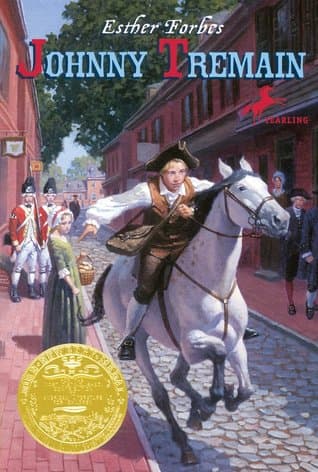
Esther Forbes (1943)
Genre
Children's / Historical Fiction / Young Adult
Reading Time
450 min
Key Themes
See below
Sign in to track this book
A silversmith apprentice, crippled by an accident, finds his purpose and courage in pre-Revolutionary War Boston's rebellion, forging his own identity as America fights for independence.
Fourteen-year-old Johnny Tremain is a skilled but arrogant apprentice silversmith in colonial Boston, working for Master Lapham. He secretly owns a valuable silver cup, part of a set made by Paul Revere, given to him by his deceased mother as proof of his link to the wealthy Lyte family. While making a sugar basin for John Hancock, Johnny ignores Sabbath rules and his master's warnings, working late. His fellow apprentice, Dove, maliciously gives him a cracked crucible, causing molten silver to spill and severely burn Johnny's hand, fusing his thumb and palm. This injury makes him unable to continue his trade and shatters his dreams of becoming a master silversmith.
With his hand crippled, Johnny is no longer useful to the Lapham shop. Mrs. Lapham, though sympathetic, tells him to find other work. Johnny tries to find employment elsewhere, but his injured hand and proud nature make it hard. Desperate, he seeks out the wealthy merchant Jonathan Lyte, showing the silver cup as proof of their kinship and hoping for help. Lyte, known for being dishonest, dismisses Johnny's claim and accuses him of stealing the cup, having him arrested. This public humiliation further isolates Johnny and increases his anger towards the established order.
Johnny is put on trial for theft, facing Jonathan Lyte and his lawyer. He is defended by the young, idealistic lawyer Josiah Quincy, who takes an interest in his case. During the trial, Cilla Lapham, who has always liked Johnny despite his difficult personality, bravely testifies for him. She explains that Johnny's mother gave him the cup and that he has had it since childhood, providing key evidence that discredits Lyte's accusation. With Quincy's defense and Cilla's testimony, Johnny is acquitted, but the experience leaves him deeply distrustful of authority and the upper class.
After his trial, Johnny is homeless and jobless. He wanders Boston, eventually meeting Rab Silsbee, a quiet, principled printer's apprentice at the *Boston Observer*. Rab, seeing Johnny's situation and potential, offers him a job delivering newspapers and riding for the secret Sons of Liberty. Johnny, at first unsure, accepts. He moves in with Rab and his uncle, Mr. Lorne, at the print shop. This new environment gives Johnny a sense of belonging and purpose, and he quickly forms a strong friendship and admiration for the calm, brave Rab, who becomes an important mentor.
Working for the *Boston Observer* puts Johnny in the political atmosphere of pre-Revolutionary Boston. He delivers papers with Whig ideas and becomes an important messenger for the Sons of Liberty, led by figures like Samuel Adams, John Hancock, and Paul Revere. Johnny attends secret meetings, hears important discussions, and sees the growing tension between the colonists and the British soldiers, called 'lobsterbacks.' His duties show him how the resistance movement works, and he begins to understand the ideas of liberty and independence that Rab and the other patriots support, changing his earlier self-centeredness into a new political awareness.
As the Sons of Liberty plan their protest against the British Tea Act, Johnny is deeply involved. He helps Rab and other patriots gather disguises and prepare for the secret operation. On the night of December 16, 1773, Johnny, dressed as an Indian with hundreds of other colonists, participates in the Boston Tea Party. He helps smash and dump 342 chests of tea into Boston Harbor. This act of defiance, a direct response to British taxation without representation, is a turning point in the conflict and strengthens Johnny's commitment to the cause, making him an active participant.
After the Boston Tea Party, British troops occupy Boston, and tensions grow. Johnny observes the daily lives of British soldiers, sometimes befriending a few, such as Lieutenant Stranger, a young, polite officer. He continues to deliver messages for the Sons of Liberty, often seeing Cilla Lapham and her younger sister, Isannah, who now work for the wealthy Lyte family. Johnny struggles with his feelings for Cilla, who remains loyal to him, and his dislike for Isannah, who is increasingly spoiled by the Lytes. His connection to the Lytes through Cilla allows him to gather information, as he overhears conversations and observes their Loyalist activities.
Johnny learns that Jonathan Lyte and his daughter, Lavinia, plan to flee Boston for England, taking their wealth. He also discovers that the Lytes are giving information to the British. In a key moment, Lavinia Lyte tells Johnny the truth about his heritage: he is related to the Lytes, and his mother was a Lyte who ran off with a French prisoner of war, leading to her disinheritance. Lavinia gives Johnny documents proving his lineage, including his birth record. This revelation gives Johnny a sense of identity and belonging he lacked, even as it confirms the Lytes' manipulative nature.
As April 1775 nears, Boston feels ready for war. Johnny is crucial in gathering information for the Sons of Liberty, observing British troop movements and relaying messages. He sees Paul Revere's preparations for his famous ride and helps the patriots get ready for the coming conflict. Rab, wanting to fight, gets a rifle but cannot get a bayonet. Johnny struggles with the coming separation from his best friend and mentor, understanding that the war will demand sacrifices from everyone. The camaraderie among the patriots strengthens as they face the unknown.
On April 19, 1775, Johnny sees the British troops march out of Boston. He follows them, eager to see the conflict. The skirmishes at Lexington and Concord mark the start of the Revolutionary War. Johnny finds Rab, who has joined the minutemen. Tragically, Rab is mortally wounded during the fighting. Johnny rushes to his side, heartbroken. In his final moments, Rab gives Johnny his rifle, telling him to use it to fight for the cause. This loss deeply affects Johnny, strengthening his commitment to the ideals Rab represented and making him a true patriot.
After Rab's death, Johnny returns to a besieged Boston, carrying Rab's rifle and a deep sense of loss. He meets Dr. Joseph Warren, a patriot leader and skilled physician. Dr. Warren examines Johnny's crippled hand and says he can perform surgery to separate his thumb and palm, possibly restoring much of its function. Warren explains that the surgery will be painful but necessary if Johnny is to effectively use a rifle and fight for liberty. Johnny, now mature and dedicated, accepts the offer, ready to face the pain and embrace his role in the American Revolution. He has found his purpose beyond silversmithing.
The Protagonist
Johnny transforms from a proud, self-centered boy into a mature, selfless patriot, finding purpose in the fight for liberty after losing his initial dream.
The Supporting
Rab remains steadfast in his principles from beginning to end, serving as a constant moral compass and ultimately sacrificing his life for the cause of liberty.
The Supporting
Cilla remains a constant, loyal presence, her unshakeable affection for Johnny highlighting his personal growth.
The Antagonist
Lyte remains a symbol of corrupt authority and self-interest, eventually fleeing Boston to preserve his wealth as the revolution ignites.
The Supporting
Adams consistently serves as a driving force for the revolutionary movement, his leadership unwavering throughout the narrative.
The Supporting
Revere's role as a patriot and messenger is consistent, culminating in his iconic ride that signals the war's beginning.
The Supporting
Warren acts as a compassionate leader and ultimately offers Johnny a path to physical and metaphorical healing, enabling his full commitment to the revolution.
The Supporting
Lavinia's character reveals a hidden layer of complexity when she discloses Johnny's true heritage, then exits the narrative as the Lytes flee Boston.
The Supporting
Dove remains a static character, representing carelessness and minor malice, eventually becoming an opportunistic camp follower.
The novel shows Johnny's journey from an arrogant, self-centered boy to a mature, selfless patriot. His injury is the turning point, forcing him to face his pride and find a new purpose. His friendship with Rab and involvement with the Sons of Liberty teach him humility, loyalty, and the importance of a cause greater than himself. For example, his initial despair after the accident turns into courage as he embraces the revolutionary cause, ending with his willingness to fight for liberty, even if it means painful surgery to fix his hand, not for silversmithing, but for holding a rifle.
“And Johnny knew Rab was right. He wanted to be a part of the future, not merely a spectator.”
The novel's main theme is the fight for liberty and the sacrifices needed to get it. Through Johnny's experiences, the reader sees a nation's growing desire for freedom and the personal costs. The Sons of Liberty, especially Rab, represent the ideals of self-governance and human rights. The Boston Tea Party and the battles of Lexington and Concord show the colonists' determination. Rab's sacrifice for the cause highlights the personal cost of liberty, making it a deeply felt reality for Johnny and the new nation.
“There would be no more going to England for Rab. Only fighting for America. And for Johnny too.”
Johnny's search for identity is central to the story. At first, his identity is linked to his skill as a silversmith and his secret Lyte lineage. Losing his craft causes an identity crisis. His friendship with Rab and his involvement with the Sons of Liberty give him a new sense of belonging and purpose, as he becomes part of a collective struggle. The revelation of his Lyte heritage gives him a sense of personal history, but he ultimately chooses to create his own identity as an American patriot, showing that true belonging comes from shared ideals and action, not just birthright.
“He was not just a Tremain, nor just a Lyte. He was a man of Boston, a Son of Liberty.”
The power of friendship and mentorship is an important theme. Rab Silsbee is Johnny's main mentor, teaching him about integrity, courage, and the revolutionary cause. Rab's calm manner and steady principles temper Johnny's hotheadedness and guide him towards maturity. Their bond gives Johnny a sense of family and purpose he lacked after his injury. Cilla Lapham's loyalty also offers Johnny emotional support and a feeling of being cared for, showing how positive relationships can shape a person's character and provide strength during hard times.
“Rab was not just his friend, but the conscience of his soul.”
A physical injury that acts as a catalyst for Johnny's personal transformation.
Johnny's burned and fused hand serves as the primary inciting incident and a powerful symbol. It immediately ends his cherished career as a silversmith, forcing him to confront his pride and seek a new path. It symbolizes his initial brokenness and vulnerability. Throughout the story, the hand is a constant reminder of his past and a physical manifestation of his limitations, yet it also pushes him towards growth. Dr. Warren's offer to fix it at the end signifies Johnny's acceptance of a new identity and purpose, not as a craftsman, but as a fighter for liberty.
A tangible link to Johnny's past and a symbol of his identity crisis.
The silver cup, one of a set made by Paul Revere, is Johnny's only tangible link to his aristocratic Lyte family and his deceased mother. It represents his initial, shallow desire for wealth and status. It becomes a source of conflict when Jonathan Lyte falsely accuses him of theft. Later, its authenticity, confirmed by Paul Revere, helps clear Johnny's name. The cup symbolizes Johnny's search for his identity and heritage, but ultimately, he understands that true belonging comes from his actions and principles rather than inherited status or objects.
A hub for revolutionary ideas and a surrogate family for Johnny.
The *Boston Observer* print shop, run by Mr. Lorne and Rab, functions as more than just a workplace; it becomes a sanctuary and a surrogate family for Johnny after his accident. It is a central hub for the Sons of Liberty, where revolutionary ideas are printed and disseminated, and where secret meetings are held. This setting immerses Johnny in the political ferment of Boston, exposing him to the ideals of liberty and giving him a sense of purpose and belonging. It is where he truly begins his transformation from a self-absorbed apprentice to a committed patriot.
Real historical figures interact directly with the fictional protagonist.
The novel seamlessly integrates real historical figures like Samuel Adams, John Hancock, Paul Revere, and Dr. Joseph Warren into the narrative, allowing them to interact directly with the fictional Johnny Tremain. This device grounds the story in historical reality and makes the revolutionary period feel immediate and personal. It provides Johnny with mentors and direct exposure to the key players and events of the American Revolution, enhancing the educational aspect of the historical fiction genre and giving the reader a tangible connection to the past.
“A man can stand up.”
— Rab's simple yet profound encouragement to Johnny, who feels crippled by his hand injury and social standing.
“It is by the grace of God that we are free and can speak our minds.”
— A reflection on the importance of liberty and free speech, core themes of the American Revolution.
“There shall be no more of this taxation without representation. There shall be no more oppression.”
— A rallying cry reflecting the colonists' grievances against British rule, often heard at political gatherings.
“For the first time Johnny understood that poverty was not necessarily a disgrace.”
— Johnny's realization as he observes the proud, self-sufficient artisans and patriots, regardless of their wealth.
“You can do anything, Johnny, if you only try.”
— A recurring theme of encouragement, often from Rab or other mentors, pushing Johnny beyond his perceived limitations.
“He was not Rab's boy. He was Rab's friend, and as such, an equal.”
— Johnny's growing understanding of his relationship with Rab, moving from a position of dependence to one of mutual respect.
“A boy can do more than just carry messages. A boy can be a spy.”
— Johnny's evolving role in the revolutionary movement, demonstrating that even young people can contribute significantly.
“It was not a question of courage but of something deeper, a willingness to die for what you believed in.”
— Johnny's contemplation on the true nature of patriotism and sacrifice as the revolution intensifies.
“He knew he was no longer a boy, but a man, with a man's responsibilities, and a man's heart.”
— Johnny's internal reflection on his maturity and acceptance of his role amidst the revolutionary fervor.
“This was the spark that would set the world on fire.”
— A metaphorical description of the burgeoning revolutionary spirit in Boston, leading to widespread rebellion.
“God grant that I may never live to see the day when I shall be ashamed of my country.”
— A patriotic sentiment reflecting the deep loyalty and hope for the future of the nascent American nation.
“The British were not monsters. They were just men, doing their duty.”
— Johnny's nuanced perspective on the opposing side, recognizing their humanity despite the conflict.
“It was a time of great fear and great hope, and no man knew which would prevail.”
— A description of the uncertain and tumultuous atmosphere in Boston on the eve of the American Revolution.
“We fight for more than just independence. We fight for the right to be free men, in a free land.”
— A declaration of the broader ideals driving the American Revolution beyond mere political separation.
Ready to see how well you understood this book? Take our interactive quiz with 10 questions.
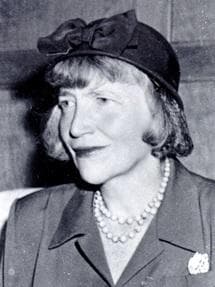
Biography coming soon.

Dan Gemeinhart
4.5

Kate O'Hearn
4.4

Jeanne Birdsall
4.4

Jen Wang
4.4

Wendelin Van Draanen
4.3

John Marsden
4.3

Chris Van Allsburg
4.3

Jennifer A. Nielsen
4.2