“There are no children here. We are all soldiers.”
— A chilling statement reflecting the lost innocence of the child soldiers.

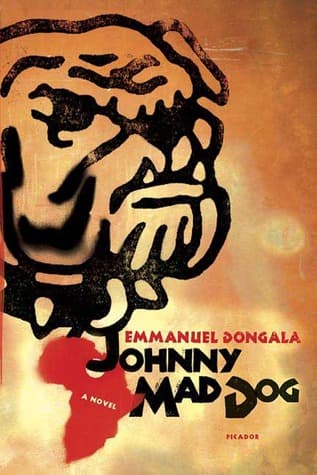
Emmanuel Dongala (2006)
Genre
Historical Fiction / Young Adult
Reading Time
400 min
Key Themes
See below
Sign in to track this book
In the crucible of a Congolese civil war, a sixteen-year-old rebel, Johnny Mad Dog, collides with Laokolé, a girl his age desperate for an education, in a journey that explodes with the brutal realities of their intertwined coming-of-age.
The story opens with Johnny Mad Dog, a sixteen-year-old child soldier, leading his group of younger, heavily armed rebels, including the even younger Small Devil, No-Smile, and Young Major, on a mission through the war-torn Congolese landscape. Their objective is to reach the city of Gombe, which they believe is ripe for looting and plunder. Johnny, despite his youth, exhibits a chilling authority, often relying on his 'mad dog' persona and a mix of superstition and brutal pragmatism to control his unit. They encounter the ravaged remains of villages and the constant threat of rival factions. Their journey is marked by random acts of violence, drug use, and a complete disregard for civilian life. Johnny's primary focus is survival and the acquisition of wealth, viewing the conflict through the lens of a brutal game.
Simultaneously, Laokolé, a sixteen-year-old girl, narrates her harrowing escape from her burning city, which is being overrun by rebel forces. She is with her mother, her younger brother, and her disabled father, who is in a wheelchair. Their once-normal lives have been shattered, and they are forced to abandon their home and all their possessions. Laokolé's immediate concern is the safety of her family and finding a way to survive the relentless violence. She is a bright student, her mind still clinging to the idea of education and a future, even as the present offers only terror and uncertainty. They join a desperate stream of refugees, witnessing unspeakable atrocities and struggling with hunger, thirst, and the constant fear of encountering soldiers.
Johnny Mad Dog's unit reaches a government-controlled checkpoint, where they are initially mistaken for a different faction. The situation quickly escalates into a brutal firefight. Johnny demonstrates his tactical cunning and ruthlessness, leading his boys in a swift and devastating attack. The encounter highlights the chaotic and indiscriminate nature of the war, where loyalties are fluid and violence is the primary form of communication. After overcoming the checkpoint, they loot the fallen soldiers and civilians, reinforcing their reputation as a feared and unpredictable force. This victory further emboldens Johnny and his young soldiers, solidifying their belief in their own invincibility and the efficacy of their brutal methods.
Laokolé's family manages to find temporary refuge in a partially abandoned village. They try to maintain a semblance of normalcy, but the constant threat of roving militias and the struggle for food weigh heavily on them. Laokolé's father, despite his disability, tries to offer words of comfort and wisdom, drawing on his past as a teacher. However, their brief peace is shattered when other refugees arrive, bringing news of further atrocities and the escalating conflict. The family is forced to make difficult decisions about their next move, torn between staying put and risking discovery, or continuing their perilous journey deeper into the unknown.
Johnny Mad Dog and his boys continue their advance, their path marked by destruction and fear. They stumble upon a seemingly deserted village, but quickly discover a small group of civilians hiding. Johnny, ever the opportunist, decides to 'recruit' some of the younger boys for his unit, forcing them to join his ranks under threat of violence. This scene vividly illustrates the forced conscription of child soldiers, a tragic reality of the conflict. The unit's journey is a grim procession, fueled by drugs and the thrill of power, as they move closer to the river, a potential escape route or a new battleground.
The narrative threads of Johnny and Laokolé finally converge at a chaotic river crossing. Laokolé's family, desperate to escape the fighting, arrives at the riverbank hoping to find a boat. Simultaneously, Johnny Mad Dog's unit arrives, their presence immediately instilling terror among the civilians. The river, a symbol of hope and escape for some, becomes a choke point of danger. The tension is palpable as the two groups, representing the innocent victims and the brutal perpetrators of the war, are forced into close proximity. This is the first direct, though still indirect, encounter between the two main characters, setting the stage for the book's central confrontation.
Johnny Mad Dog, noticing Laokolé's family with their boat, approaches them with his menacing presence and demands passage across the river. Laokolé, initially trying to protect her family, bravely attempts to reason with him, but Johnny's authority is absolute and backed by his armed child soldiers. Her father, despite his disability, tries to interject, but his words are powerless against the barrel of a gun. This confrontation is a stark portrayal of the power imbalance between the armed rebels and defenseless civilians, and the arbitrary nature of their survival. Johnny's gaze lingers on Laokolé, a moment of unsettling attention amidst the chaos.
Under duress, Laokolé's family is forced to ferry Johnny Mad Dog and his child soldiers across the river. The crossing is fraught with tension, as Laokolé and her family are acutely aware of the danger they are in. Johnny, seemingly intrigued by Laokolé's intelligence and resilience, engages her in fragmented, unsettling conversations. He makes veiled threats and boasts, revealing glimpses of his warped worldview and the psychological impact of the war on his young mind. The river journey becomes a microcosm of their differing realities: for Laokolé, a desperate attempt at survival; for Johnny, another conquest and a display of power.
After successfully crossing the river, Johnny Mad Dog and his unit disembark, leaving Laokolé's family to face the aftermath. They are physically safe for the moment, but deeply traumatized by the encounter. Laokolé's family debates their options: whether to continue fleeing or try to find a place to hide. The encounter with Johnny has shaken them to their core, highlighting the pervasive threat that follows them. Laokolé, despite her fear, remains resolute in her desire to protect her family and find a path to a better future, clinging to the hope of returning to school and a normal life, a stark contrast to Johnny's nihilistic existence.
Following the river crossing, Johnny Mad Dog and his boys continue their journey, but a subtle shift occurs within Johnny. The encounter with Laokolé, particularly her intelligence and defiance, seems to have resonated with him, albeit in a twisted way. He reflects on his life as a child soldier, the violence he has committed, and the bleak future that awaits him. He questions the purpose of the war and the endless cycle of destruction, though these thoughts are fleeting and often overshadowed by his ingrained brutality. This internal monologue provides a rare glimpse into the complex psychology of a child soldier, caught between the innocence of youth and the horrors of war.
Laokolé and her family press on, their journey becoming increasingly desperate. They encounter other refugees, some offering help, others posing new threats. The family's resources dwindle, and their spirits are tested by constant hunger, sickness, and the ever-present danger of violence. Laokolé's resilience is remarkable, as she takes on more responsibility, caring for her younger brother and supporting her parents. She continues to dream of a future beyond the war, holding onto the fragments of her education and the hope of peace, even as the world around her seems determined to crush it. They search for any sign of an organized refugee camp or international aid.
The novel concludes without a definitive resolution for either Johnny or Laokolé, highlighting the ongoing nature of the conflict and its enduring impact. Johnny Mad Dog and his unit continue their existence as child soldiers, their future uncertain, forever marked by the war. However, the brief encounter with Laokolé seems to have planted a seed of doubt or introspection in Johnny, suggesting a faint possibility of change, though his path remains steeped in violence. Laokolé and her family, though still in peril, have survived thus far, their resilience is a testament to the human spirit. They continue their arduous journey, clinging to the hope of finding a safe place and rebuilding their lives, representing the enduring hope for peace and normalcy amidst the devastation.
The Protagonist/Antagonist
Johnny's arc is less about transformation and more about a brief, unsettling moment of introspection, hinting at the possibility of a conscience stirring beneath his hardened exterior.
The Protagonist
Laokolé's arc is one of survival and maintaining hope and humanity in the face of overwhelming adversity, showcasing her resilience and strength.
The Supporting
He maintains his role as a wise and comforting figure, his strength lying in his enduring spirit despite physical limitations.
The Supporting
Her arc is one of enduring resilience and unwavering maternal protection throughout the flight.
The Supporting
Small Devil remains a product of his environment, his arc showing the deep indoctrination of child soldiers.
The Supporting
No-Smile's character remains static, serving as a chilling representation of the dehumanizing effects of war.
The Supporting
Young Major continues to seek status and approval within the unit, his arc highlighting the internal dynamics of the child soldier group.
The Mentioned
The narrative voice remains consistent, serving as a lens through which the reader experiences the divergent paths of the protagonists.
This theme is central to the novel, starkly contrasted between Johnny Mad Dog and Laokolé. Johnny, barely a teenager, has been utterly stripped of his innocence, transformed into a brutal killer. His childhood has been replaced by violence, drug use, and a complete disregard for human life, as seen in his casual execution of captives or his unit's looting of villages. Laokolé, though still innocent in her heart, is forced to witness and endure unimaginable horrors. Her dreams of education and a normal life are shattered by the war. Her journey is a constant battle to retain her humanity and hope against the encroaching darkness. The stark difference in their experiences highlights the devastating impact of war on the youth of a nation, forcing them to grow up too fast and often in the most brutal ways.
““We, the children, were the ones who had to take up arms, because the adults were too afraid.””
The novel vividly portrays how war strips individuals of their humanity, both perpetrators and victims. Johnny Mad Dog and his child soldiers are dehumanized by their actions, reduced to instruments of violence, their faces often masked by drugs and a 'mad dog' persona. Their victims are also dehumanized, reduced to targets, resources, or obstacles. The constant exposure to violence, death, and desperation numbs characters to suffering, blurring the lines between right and wrong. The routine nature of atrocities, such as forced conscription or random killings, shows how war can warp moral compasses and make the unthinkable commonplace. Laokolé's struggle is to resist this dehumanization, clinging to her family and her aspirations as a way to maintain her identity.
““In war, you are either a wolf or a sheep. And the sheep always get eaten.””
Despite the overwhelming brutality, the novel also explores the enduring human capacity for resilience and hope. Laokolé and her family, though facing constant danger, starvation, and loss, continue their arduous journey, driven by the hope of finding safety and rebuilding their lives. Laokolé's intellectual curiosity and her desire to return to school represent a deep hope for a future beyond the conflict. Her father's wisdom and her mother's unwavering protectiveness are anchors of humanity. Even in Johnny Mad Dog, there are fleeting, unsettling moments of introspection, suggesting that the human spirit, however buried, can still stir. This theme highlights the power of the human will to survive and to dream of a better tomorrow, even in the darkest of times.
““Even in the deepest darkness, there is always a small light, if you only know how to look for it.””
The novel implicitly and explicitly addresses the perpetual cycle of violence that fuels civil wars. Johnny Mad Dog's actions are often framed as a response to past grievances or as a means of survival within a system that rewards brutality. The conflict is shown to be self-perpetuating, with each act of violence leading to further retaliation and an escalation of suffering. The lack of clear heroes or villains, and the portrayal of child soldiers as both victims and perpetrators, emphasizes the complex and tragic nature of this cycle. The novel suggests that breaking this cycle requires more than just military victory; it demands a fundamental shift in the societal conditions that breed such conflict.
““They kill our people, so we kill theirs. It’s the way of the world.””
The story is told through the alternating viewpoints of Johnny Mad Dog and Laokolé.
This device is crucial to the novel's impact. By shifting between Johnny's brutal, desensitized perspective and Laokolé's intelligent, terrified, yet hopeful viewpoint, the author provides a multifaceted understanding of the war. Johnny's sections immerse the reader in the chilling reality of a child soldier's life, while Laokolé's narrative offers the civilian experience of flight and survival. This contrast highlights the immense human cost of conflict and prevents the reader from becoming numb to the horrors, as each perspective offers a unique emotional and moral lens through which to view the same war-torn landscape.
The river represents both an escape route and a choke point of danger.
The river serves as a powerful symbol in the novel. For Laokolé and her family, it initially represents hope, a potential escape route from the immediate fighting, a boundary to cross towards safety. However, when their paths converge with Johnny Mad Dog's unit at the river crossing, it transforms into a choke point of extreme danger and vulnerability. It symbolizes the precariousness of life during wartime, where potential salvation can quickly turn into a trap. The act of crossing itself becomes a metaphor for navigating the treacherous landscape of conflict, where every step is fraught with peril and uncertainty.
Johnny's adopted identity as a ruthless, unpredictable killer.
Johnny's 'Mad Dog' persona is a significant plot device. It is both a self-defense mechanism and a tool of control. By adopting this identity, Johnny projects an image of utter ruthlessness and unpredictability, which instills fear in both his enemies and his own subordinates. This persona allows him to commit atrocities without (apparent) emotional cost and to maintain his authority. It also serves as a tragic mask, hiding the lost boy underneath. The gradual, subtle cracks in this persona, particularly after his encounter with Laokolé, hint at the possibility of his suppressed humanity, making his character more complex than a simple villain.
The constant, pervasive threat of unnamed or shifting rebel/government factions.
Throughout the novel, both Johnny's unit and Laokolé's family face the constant threat of an 'unseen enemy.' This refers to the myriad of rival rebel factions and government forces whose identities are often fluid, their loyalties shifting, and their presence always looming. This device effectively creates an atmosphere of pervasive fear and unpredictability. It emphasizes the chaotic nature of civil war, where danger can come from any direction and alliances are constantly in flux. The lack of a single, clearly defined antagonist (beyond the general 'war' itself) underscores the senselessness and widespread devastation of the conflict.
“There are no children here. We are all soldiers.”
— A chilling statement reflecting the lost innocence of the child soldiers.
“The AK-47 was our father, our mother, our brother, our sister.”
— Illustrates the complete dependence and identity forged with their weapons.
“We killed to live, we lived to kill.”
— A stark summary of the brutal cycle of survival and violence they endured.
“Sometimes I dream I am a child again, but the dream always ends with the smell of gunpowder.”
— A soldier's fleeting hope for a past life, always interrupted by the reality of war.
“God had left us. Or maybe He had never been here.”
— A reflection on the abandonment and lack of divine presence amidst the atrocities.
“Blood was just another color in the landscape.”
— Shows the dehumanization and desensitization to violence.
“The adults had started the war, but we were the ones who had to finish it.”
— Highlights the burden placed on children to fight wars initiated by their elders.
“Our names were no longer our own. We were Johnny Mad Dog, General Never Die, Small Killer.”
— Emphasizes the loss of individual identity, replaced by war-given monikers.
“A bullet knows no age.”
— A grim truth about the indiscriminate nature of violence in war.
“We were ghosts haunting the living, and the living were ghosts haunting themselves.”
— A poetic description of the psychological toll of war on both perpetrators and victims.
“The jungle was our home, our hiding place, our executioner.”
— The dual nature of their environment as both refuge and source of danger.
“Laughter was a forgotten sound, replaced by screams and the rattle of gunfire.”
— Illustrates the complete eradication of joy and normal human expression.
“To surrender was to die, but to fight was to die slowly, piece by piece.”
— A poignant dilemma faced by the child soldiers, trapped between two forms of death.
“The only thing that mattered was the next breath, the next kill, the next moment of not being dead.”
— Reflects the hyper-focused, immediate survival mentality of the soldiers.
Ready to see how well you understood this book? Take our interactive quiz with 10 questions.

Biography coming soon.







