“The trees were silent witnesses, the air still and heavy, smelling of pine needles and damp earth.”
— Describing the atmosphere of the Mississippi woods, a recurring setting.

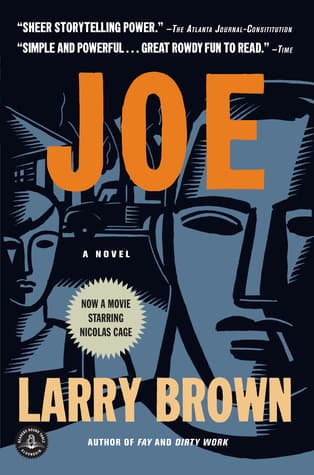
Sign in to track this book
In rural Mississippi, an ex-con and a homeless teenager form an unlikely bond, navigating a violent path toward possible redemption or ruin.
Joe Ransom, a gruff, ex-con foreman of an illegal tree-poisoning crew in rural Mississippi, meets Gary Jones, a homeless, malnourished fifteen-year-old seeking work. Gary's family, led by his abusive alcoholic father, Wade, is destitute and constantly moving. Impressed by Gary's determination, Joe offers him a job poisoning trees on land he is clearing for a developer. Gary quickly proves capable, earning money for his family, though much of it is squandered by Wade. This initial meeting establishes the unlikely bond forming between the hardened older man and the desperate teenager.
Wade Jones's alcoholism and meanness continue to plague his family. He often drinks away Gary's earnings, leaving them without food or shelter. His abuse extends to Gary's mother and younger sister, often resulting in brutal beatings. Gary, despite his youth, tries to protect his family, but Wade's unpredictable violence makes their lives a constant struggle. These incidents highlight Gary's desperate need for a stable figure and a way out of his oppressive home environment, further cementing his reliance on the opportunity Joe has provided him.
Joe Ransom's life is complicated. He frequently visits his ex-wife, Sue, with whom he shares a complex, often volatile, relationship. Despite their separation, there is lingering affection and concern between them, often expressed through arguments. Joe also has a contentious relationship with local law enforcement, especially Sheriff Hayes, who watches Joe closely due to his past criminal record and his current illegal tree-poisoning operation. Joe's interactions with Sue and the authorities reveal his deep-seated issues with control, loyalty, and his own moral code.
As Gary continues to work for Joe, their relationship deepens. Joe, seeing much of his own past struggles and potential in Gary, takes the boy under his wing. He offers Gary advice, protection from Wade, and even practical assistance like food and a place to stay when Wade's violence escalates. Joe's gruff exterior hides a growing paternal affection for Gary, who, in turn, looks up to Joe as the only stable, positive male influence in his life. This bond becomes a central part of the story, contrasting sharply with Gary's relationship with his biological father.
The escalating violence from Wade Jones eventually draws Joe's direct intervention. After Gary's sister is severely beaten, Gary seeks Joe's help. Joe confronts Wade, physically assaulting him to protect the family. This act solidifies Joe's role as Gary's protector but also marks a dangerous escalation in the conflict between Joe and Wade. The confrontation highlights Joe's moral compass, despite his criminal past, and his willingness to risk his own freedom for those he cares about. This event sets the stage for the tragic climax.
In a horrific turn of events, Wade Jones, fueled by alcohol and resentment, murders Gary's mother and sister. This brutal act shatters Gary's already fragile world, leaving him an orphan and intensifying his feelings of helplessness and rage. The murders underscore the devastating consequences of Wade's unchecked cruelty and the systemic failures that allowed his abuse to escalate. This profound loss further isolates Gary and strengthens his reliance on Joe as his last remaining hope and surrogate family.
Following the murders, Gary is consumed by grief and a burning desire for revenge against Wade. He is taken in by Joe, who offers him solace and a temporary home, further cementing their bond. Gary struggles to reconcile his anger with his sense of powerlessness, constantly seeking a way to avenge his family. Joe tries to guide Gary, understanding the dangerous path revenge can lead to, but also empathizes with the boy's suffering. This period shows Gary's emotional devastation and Joe's deepening responsibility for him.
Knowing that Gary is consumed by the need for revenge, Joe takes matters into his own hands. He tracks down Wade Jones, leading to a final, violent confrontation. Joe, acting to protect Gary from becoming a murderer himself and to exact justice for the atrocities Wade committed, kills Wade. This act is a culmination of Joe's protective instincts and his own sense of justice, even if it means sacrificing his own freedom and future. The scene is brutal and definitive, closing the chapter on Wade's reign of terror.
Joe's decision to kill Wade has immediate and severe consequences. He is arrested, and his life, already on the fringes of legality, is now irrevocably altered. The act, while bringing a form of justice, forces Joe to confront the ultimate price of his protective instincts and his own violent nature. This section explores the aftermath of the climax, showing the ripple effects of Joe's actions on himself and those around him, particularly Gary, who is now left without either his biological father or his surrogate father figure.
With Joe imprisoned, Gary is left to forge his own path. Despite the trauma and loss, he is not broken. He carries the lessons and strength Joe imparted. Gary finds work, demonstrating the work ethic and resilience Joe helped cultivate. He starts building a life for himself, free from the shadow of Wade's abuse and Joe's dangerous world, yet forever marked by their influence. The ending suggests a hopeful, if bittersweet, future for Gary, symbolizing a broken cycle and a chance for redemption through hard work and self-reliance, a testament to Joe's impact.
The Protagonist
Joe transitions from a cynical, self-serving survivor to a paternal protector, ultimately sacrificing his freedom for Gary's future.
The Protagonist
Gary evolves from a helpless victim to a survivor, gaining strength and direction through Joe's mentorship and enduring immense personal tragedy.
The Antagonist
Wade remains static in his depravity, eventually meeting a violent end due to his own actions.
The Supporting
Sue's character remains relatively stable, serving as a consistent emotional anchor for Joe.
The Supporting
Sheriff Hayes remains a consistent figure of authority, eventually arresting Joe for his final act.
The Supporting
Her arc is one of sustained suffering culminating in a tragic death, serving as a catalyst for Joe's final actions.
The Supporting
Her brief arc is one of innocence and brutal victimization, ending in her tragic death.
The Supporting
Willis remains a consistent, loyal subordinate to Joe throughout the story.
The novel explores the possibility of redemption for flawed individuals and the impact of offering second chances. Joe, an ex-con, finds a form of redemption not through conventional means, but by becoming a protector and mentor to Gary. His decision to help Gary, and ultimately to sacrifice his own freedom, shows his evolving moral compass. Gary, in turn, is given a second chance at life, pulled from the brink of destitution and abuse by Joe's intervention. Their relationship highlights how acts of kindness and mentorship can lead to personal salvation, even in the bleakest circumstances, as when Joe offers Gary a job and later protection, changing the trajectory of Gary's life.
““Some things you just can't walk away from, no matter how hard you try.””
The pervasive cycle of violence, poverty, and addiction is a central theme, especially evident in the life of the Jones family. Wade Jones embodies this destructive cycle, perpetuating abuse and neglect on his family, who are trapped in a seemingly inescapable spiral of homelessness and despair. The novel unflinchingly portrays the devastating effects of this cycle, showing how it strips away dignity, hope, and even life. Gary's struggle to break free from his father's destructive influence, and Joe's efforts to intervene, underscore the immense difficulty of escaping such deeply entrenched patterns. The murders of Gary's mother and sister are a stark representation of the ultimate cost of this unchecked violence.
““They lived like animals, not even knowing it was possible to live any other way.””
The dynamic between Joe and Gary forms the emotional core of the novel, showing the impact of a surrogate paternal figure. Joe, despite his own troubled past and violent tendencies, steps into a role of mentor and protector for Gary, offering guidance, work, and ultimately, a safer future. This contrasts sharply with Gary's biological father, Wade, who is the opposite of a paternal figure. Joe teaches Gary resilience, work ethic, and a sense of self-worth, filling a void left by Wade's abuse. The strength of this bond highlights the human need for positive guidance and the transformative power of a caring relationship, particularly evident in how Gary looks up to Joe and follows his advice.
““You got good hands, boy. You learn fast.””
The novel explores the tension between legal justice and a more personal, often violent, form of justice. Joe Ransom operates outside the law, engaging in illegal tree-poisoning and ultimately taking the law into his own hands to protect Gary and avenge his family. While Sheriff Hayes represents official law enforcement, the narrative often suggests that the official system is inadequate to address the deep-seated injustices and brutal realities faced by characters like the Jones family. Joe's final act of killing Wade, though criminal, is presented as an act of moral justice from his perspective, raising questions about what constitutes 'right' when the legal system fails to provide adequate protection or retribution for extreme wrongs.
““Sometimes a man just gotta do what he gotta do.””
Joe and Wade serve as direct contrasts.
Joe Ransom and Wade Jones act as direct foil characters, highlighting each other's traits through stark contrast. Joe, despite his criminal past, possesses a moral code and ultimately acts as a protector, embodying a flawed but ultimately good paternal figure. Wade, in contrast, is utterly devoid of morality, a purely destructive force who represents unchecked evil and abuse. This device effectively underscores the themes of good vs. evil, redemption vs. depravity, and the two very different paths a man can take in difficult circumstances, particularly in their interactions with Gary.
The natural environment reflects the characters' struggles and the harshness of life.
The rural, often harsh natural environment—the woods being cleared, the isolated roads, the dilapidated shacks—serves as a powerful symbol throughout the novel. It reflects the characters' raw, often brutal existence, their struggle for survival, and the unforgiving nature of their lives. The act of clearing the land itself can be seen as a metaphor for Joe's attempt to clear a path for Gary, or for the characters' efforts to escape the wilderness of their circumstances. The natural world is both a source of livelihood (for Joe's crew) and a backdrop for violence and despair, emphasizing the primal struggle for existence.
Hints of impending violence and tragedy build tension.
The novel employs significant foreshadowing, particularly regarding Wade's escalating violence and the inevitable confrontation between Joe and Wade. Early descriptions of Wade's brutality towards his family, Gary's fear, and Joe's simmering anger all hint at the tragic events to come. This device builds intense dramatic tension, making the reader anticipate the climax and understand its inevitability. For example, every time Wade squanders Gary's money or abuses his family, it implicitly warns of a greater catastrophe on the horizon, preparing the reader for the murders and Joe's subsequent revenge.
“The trees were silent witnesses, the air still and heavy, smelling of pine needles and damp earth.”
— Describing the atmosphere of the Mississippi woods, a recurring setting.
“There was a lot of pain in the world. He knew that. He saw it every day.”
— Joe reflecting on the harsh realities faced by people in his community.
“Sometimes you just had to do what you had to do, even if you didn't want to.”
— Joe contemplating difficult choices and the burdens of responsibility.
“The kind of thirst that could only be quenched by cheap beer and bad decisions.”
— Description of the desperation and escapism sought by some characters.
“He knew what it was to be hungry, really hungry, the kind that ate at your insides.”
— Gary, the young protagonist, experiencing profound poverty.
“The world was a hard place, and it didn't care much about you.”
— A general observation on the indifference of life to individual struggles.
“There was a certain kind of freedom in having nothing left to lose.”
— A character's grim realization after hitting rock bottom.
“He could feel the weight of all the dead things in the world, pressing down on him.”
— Joe's internal struggle with the violence and decay around him.
“Some men were just meant to fight, and some were meant to run.”
— A reflection on the different responses to conflict and threat.
“The silence in the woods was never truly silent; it was full of tiny, hidden noises.”
— Further detailing the immersive and alive nature of the forest setting.
“He had seen enough bad things in his life to know what real evil looked like.”
— Joe's experience and wisdom in recognizing genuine malice.
“The smell of cheap whiskey and regret hung heavy in the air.”
— Evoking the atmosphere of the rural, often troubled, social gatherings.
“A man could only take so much before he broke, and some men broke harder than others.”
— Exploring the limits of human endurance and resilience.
“He learned early on that nobody was coming to save you. You had to save yourself.”
— Gary's harsh lesson in self-reliance and the absence of external help.
“The sun was a hot, indifferent eye in the sky, watching everything unfold.”
— Describing the oppressive heat and the detached observation of nature.
Ready to see how well you understood this book? Take our interactive quiz with 10 questions.

Biography coming soon.







