
Cecelia Holland is a critically acclaimed historical fiction author, renowned for her meticulously researched novels that delve into the lives of ordinary people during pivotal historical periods. Her notable works include 'Jerusalem,' which explores the Crusades, and 'The Belt of Gold,' a poignant tale set in Anglo-Saxon England. Holland's writing is celebrated for its depth of character and vivid historical detail.
Archivist's Choice
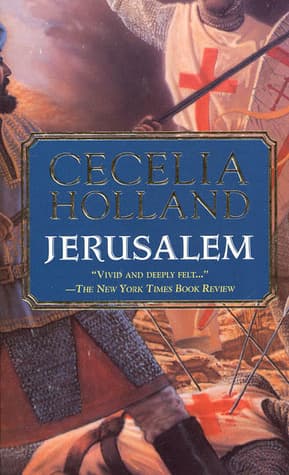
Jerusalem
Cecelia Holland (1996)
Genre
Historical Fiction / Spirituality
Reading Time
12 Minutes
Key Themes
See below
Track Your Reading
Sign in to track this book
In the Holy Land of 1187 A.D., amidst clashing empires and religious fervor, a woman's passionate journey unfolds against the backdrop of Jerusalem's fate.
Synopsis
In 1187 A.D., the Holy Land is a crucible of religious fervor and political intrigue, on the brink of war. Bertran de Mordant, a disillusioned knight, finds himself entangled in the complex web of alliances and betrayals that define the Crusader states. As Saladin's forces gather, threatening the very existence of Jerusalem, Bertran is torn between his duty, his personal loyalties, and a growing spiritual questioning. He navigates the treacherous landscape of the Crusader court, witnessing the folly and heroism of those around him, as the fate of the holy city hangs in the balance.
Difficulty
Medium
Pacing
Moderate
Mood
Epic, historical, contemplative, war-torn, dramatic
Plot Summary
The Fall of Acre
The novel opens with Acre's dramatic fall to Saladin's Saracen army. Christian defenders, including Sir Guy de Lusignan, the King of Jerusalem, are overwhelmed by the disciplined Muslim forces. The capture of this port city sends shockwaves through the remaining Crusader states and Jerusalem. We see Saladin's effective siege tactics and the despair of the defeated Christians, many taken captive or killed. This event immediately establishes the Latin Kingdom's weak position and introduces Saladin's formidable threat, marking Christian rule's end in the Holy Land.
King Guy's Imprisonment and Release
After the disastrous Battle of Hattin, King Guy de Lusignan is among the Christian nobles captured by Saladin. His imprisonment is a humiliation for the Latin Kingdom. Saladin, however, strategically releases Guy under the condition that he renounce his claim to Jerusalem and never again fight the Saracens. Guy's release is full of internal conflict; he is torn between his oath and his duty as the King of Jerusalem, a vow he feels compelled to break, further complicating his weak leadership.
The Desperate State of Jerusalem
As Saladin's forces advance towards Jerusalem, the city's inhabitants face a grim reality. Resources are scarce, and defenses are in disrepair, neglected for years. The walls are crumbling, and few able-bodied defenders remain, mostly priests, merchants, and a handful of old or sick knights. Morale is low, with fear and despair gripping the people. Patriarch Heraclius and Balian of Ibelin try to maintain order and inspire hope, but the overwhelming odds against them are clear, setting a scene of impending doom.
Balian of Ibelin Assumes Command
With King Guy imprisoned and the city near collapse, Jerusalem's defense falls largely to Balian of Ibelin. Initially, Balian hesitates, having been granted safe passage by Saladin to retrieve his family, but he feels an undeniable duty to the Holy City. He is an experienced knight, respected by Christians and some Saracens. He rallies the remaining men, including untrained citizens, and organizes defenses as best he can. His leadership becomes the last hope in a city facing an inevitable siege, showing his commitment despite personal cost.
The Arrival of Saladin's Army
The moment of truth arrives as Saladin's large army, fresh from victories, encircles Jerusalem. The sight of Saracen banners stretching across the horizon fills the city with dread. Saladin, a figure of military genius and surprising generosity, is portrayed as a formidable but not entirely merciless adversary. His goal is clear: to reclaim the holy city for Islam. The siege begins, with Saladin's engineers and siege engines immediately testing the city's weak points. The contrast between the organized Saracen forces and the desperate Christian defenders is stark.
The Siege Intensifies
The siege of Jerusalem is depicted with realism. Saladin's army uses catapults, sappers, and direct assaults on the walls. The Christian defenders, led by Balian, fight bravely but are constantly pushed to their limits. Casualties mount, and the city's meager resources are depleted. Lack of water and food becomes a pressing issue, adding to the people's suffering. The narrative highlights the courage of individuals trying to hold the line against overwhelming odds, as well as the growing desperation and conflicts among the besieged.
Attempts at Negotiation
As the situation within Jerusalem worsens, Balian of Ibelin realizes that continued resistance will only lead to a massacre. He seeks to negotiate surrender terms with Saladin, hoping to secure the Christian inhabitants' lives. Saladin, initially determined to take the city by force and avenge the First Crusade's atrocities, is reluctant to offer favorable terms. However, Balian's resolute stance and his threat to destroy Jerusalem's holy sites if no quarter is given, force Saladin to reconsider. These tense negotiations show the clash of cultures and the difficult choices faced by both leaders.
The Threat of Destruction
In a desperate move to save Jerusalem's Christian population, Balian of Ibelin makes a bold threat to Saladin. He declares that if the Saracens do not offer honorable surrender terms, the defenders will destroy the Dome of the Rock, the Al-Aqsa Mosque, and other holy sites within the city before they are overwhelmed. This horrific threat is a strategic move, as destroying such revered places would be a catastrophic blow to Islam and a stain on Saladin's victory. It shows Balian's commitment to his people and his willingness to take extreme measures.
Saladin's Clemency
Faced with Balian's credible threat and perhaps recognizing the futility of more bloodshed, Saladin shows remarkable clemency. He agrees to surrender terms that allow the Christian inhabitants to leave Jerusalem in exchange for a ransom. This decision, while strategically sound, also shows Saladin's character as a leader capable of compassion and foresight, contrasting sharply with the brutality often associated with medieval warfare. His choice to spare the city and its people, even at a cost, solidifies his historical image as a noble adversary.
The Exodus from Jerusalem
Following the agreement, Jerusalem's Christians begin their exodus. The scene is one of sadness and relief, as thousands of men, women, and children, many poor, walk out of the city they once called home. Saladin's soldiers oversee the departure, ensuring order and, in many cases, offering assistance or waiving the ransom for the poorest. This departure marks the end of Christian rule in Jerusalem after nearly a century. The narrative emphasizes war's human cost and the bittersweet nature of survival, as former inhabitants leave behind their homes and a significant chapter of their history.
The Reclaiming of Jerusalem
With the Christian population gone, Saladin's victorious army enters Jerusalem. The city is cleansed, and Christian symbols are removed or converted back to Islamic use. The Dome of the Rock and Al-Aqsa Mosque are restored as places of Muslim worship. This moment represents a victory for Saladin and the Islamic world, reclaiming a city sacred to all three Abrahamic faiths. The narrative portrays a sense of triumphant restoration and religious fervor among the Saracens, contrasting with the Christians' earlier despair. It marks a shift in the Holy Land's power dynamics.
Balian's Departure
Balian of Ibelin, having done his duty, departs Jerusalem with his family and the other refugees. His departure is tinged with loss and melancholy, but also a quiet dignity. He reflects on the events that led to the city's fall, the Crusader leadership's failures, and Saladin's formidable nature. Balian's journey out of Jerusalem symbolizes the end of an era for the Latin Kingdom, but also the enduring spirit of those who fought to protect it. He looks towards an uncertain future, carrying the weight of his experiences.
Principal Figures
Balian of Ibelin
The Protagonist
Balian transforms from a knight focused on his personal duties to the reluctant but resolute leader who saves thousands of lives through his courage and negotiation skills, becoming a symbol of honorable defeat.
Saladin (Salah ad-Din Yusuf ibn Ayyub)
The Antagonist
Saladin's arc emphasizes his strategic brilliance and his capacity for clemency, culminating in his decision to offer terms of surrender that allow the Christian inhabitants of Jerusalem to leave safely, cementing his reputation as a just conqueror.
King Guy de Lusignan
The Supporting
Guy's arc is one of consistent failure and poor judgment, demonstrating the fatal flaws in the Crusader leadership that ultimately led to the loss of Jerusalem.
Patriarch Heraclius
The Supporting
Heraclius remains steadfast in his religious convictions but is ultimately forced to accept pragmatic solutions for the survival of his flock, showcasing the clash between spiritual ideals and harsh reality.
Sibylla
The Supporting
Sibylla's arc highlights the powerlessness of even royalty in the face of overwhelming military defeat and poor leadership, as she loses her kingdom.
Ibelin's Family
The Supporting
Balian's family serves as the primary motivation for his actions, their safety being the ultimate goal of his heroic efforts, and their survival represents a personal triumph despite the city's fall.
The People of Jerusalem
The Supporting
The people of Jerusalem collectively endure the siege and are ultimately saved from massacre by Balian's negotiations, experiencing a journey from desperation to bittersweet survival.
Imad ad-Din al-Isfahani
The Supporting
Imad ad-Din observes and records the events, his presence reinforcing the historical context and offering the Islamic perspective on the fall of Jerusalem.
Themes & Insights
The Nature of Leadership
The novel contrasts effective and ineffective leadership. Balian of Ibelin embodies pragmatic, selfless leadership, prioritizing his people's lives over personal glory or rigid adherence to lost causes. King Guy de Lusignan represents weak, self-serving leadership; his poor decisions contribute to the Latin Kingdom's downfall. Saladin is also presented as a strong leader, capable of strategic ruthlessness and generosity. The theme explores how true leadership requires not just courage but also wisdom, adaptability, and a deep sense of responsibility for one's subjects.
“'A king must be a shepherd, not a wolf,' Balian thought, looking at Guy.”
The Human Cost of War
Cecelia Holland portrays war's devastating impact on ordinary people. The narrative focuses on the fear, suffering, and despair of Jerusalem's inhabitants during the siege, highlighting the loss of homes, lives, and livelihoods. The Christian population's exodus, stripped of possessions and forced to leave their city, is a poignant example of the personal tragedies in conflict. The novel avoids glorifying battle, instead emphasizing the lasting scars left on individuals and communities, regardless of who wins.
“'The walls did not weep, but the people inside them did,' a woman muttered as the catapult stones struck.”
Religious Zealotry vs. Pragmatism
This theme explores the tension between unwavering religious conviction and the need for practical action. Patriarch Heraclius represents the fervent, unyielding religious spirit of the Crusades, often clashing with Balian's more pragmatic approach to survival. While faith provides strength, the novel suggests that blind zealotry can be detrimental when facing overwhelming odds. Balian's decision to negotiate a surrender, even if it means losing the Holy City, shows the importance of pragmatic choices to preserve life; survival sometimes takes precedence over spiritual ideals.
“'God helps those who help themselves, but he also helps those who know when to yield,' Balian told the Patriarch.”
Honor and Chivalry
Honor is central, particularly in the interactions between Balian and Saladin. Balian upholds a code of chivalry, even in defeat, showing integrity and courage. Saladin also possesses a strong sense of honor, respecting Balian's resolve and offering clemency, which was not always common in medieval warfare. The novel examines how honor can appear differently across cultures and religions, but also how shared values of respect and integrity can bridge divides, even between sworn enemies. It challenges simplistic notions of 'good' and 'evil' in conflict.
“'A man's word, once given, is a fortress,' Saladin mused, considering Balian's threat.”
The End of an Era
The fall of Jerusalem in 1187 ends nearly a century of Christian rule in the Holy Land. The novel captures the profound sense of loss and the irreversible shift in power. It portrays the crumbling of the Crusader states, not just militarily but culturally and politically. The Christian population's departure symbolizes the close of a significant chapter in medieval history, leaving behind a legacy of conflict and cultural exchange. The narrative evokes a melancholic sense of finality, showing the impermanence of empires and history's relentless march.
“'The age of the Franks in Jerusalem was over, not with a bang, but with a mournful sigh,' the chronicler wrote.”
Plot Devices & Literary Techniques
Historical Perspective
Immersive portrayal of 12th-century Holy Land.
The novel grounds itself deeply in historical events and figures, offering a vivid and detailed portrayal of the 1187 siege of Jerusalem. Cecelia Holland meticulously recreates the political climate, military tactics, and cultural nuances of the period. This device lends authenticity and weight to the narrative, making the events feel immediate and real. By focusing on well-researched historical figures like Balian of Ibelin and Saladin, the author provides a window into the past, allowing readers to experience a pivotal moment in the Crusades through a fictionalized yet historically informed lens.
Dual Perspective (Subtle)
Brief glimpses into the Saracen camp and Saladin's thoughts.
While primarily told from the Christian perspective, the novel occasionally offers subtle glimpses into the Saracen camp and, more importantly, into Saladin's strategic thinking and character. This brief dual perspective prevents Saladin from becoming a one-dimensional antagonist, instead portraying him as a complex and honorable leader. It allows for a more nuanced understanding of the conflict, suggesting that both sides are driven by conviction and that there are honorable men on both sides. This device enriches the narrative by avoiding simple hero-villain tropes.
Foreshadowing of Doom
Early events and descriptions hint at Jerusalem's inevitable fall.
From the opening scenes depicting the fall of Acre and the ineffective leadership of King Guy, the novel employs subtle foreshadowing to create a palpable sense of impending doom for Jerusalem. Descriptions of crumbling walls, dwindling resources, and low morale among the defenders constantly hint at the city's precarious position. This device builds tension and suspense, making the eventual siege and surrender feel inevitable rather than sudden, reinforcing the tragic nature of the events and the desperate struggle of those attempting to avert the foreseen disaster.
Moral Dilemmas
Characters face difficult choices between duty, faith, and survival.
The narrative is rich with moral dilemmas, particularly for Balian of Ibelin. He is constantly forced to choose between his oath to Saladin, his duty to his family, his loyalty to the crown, and his responsibility to the people of Jerusalem. The ultimate dilemma of whether to fight to the last man or negotiate a surrender, even if it means losing the Holy City, is central. These dilemmas highlight the complexities of human nature in extreme circumstances and force characters, and by extension the reader, to grapple with profound ethical questions about war, faith, and survival.
Critical analysis
Notable Quotes
Quiz
Test Your Knowledge
Ready to see how well you understood this book? Take our interactive quiz with 10 questions.
10
Questions
~5
Minutes
?
Best Score
Key Questions (FAQ)
Cecelia Holland's novel 'Jerusalem' is set in the Holy Land in the year 1187 A.D. This period is significant as it marks a time of intense conflict and political upheaval in the region.







