“Ah, what a thing love is, to be sure, when it is new and fresh and strong! How it can make the heart beat and the pulse thrill, and the brain reel with delight!”
— Jennie's early feelings for Lester Kane.

Theodore Dreiser (1911)
Genre
Literary Fiction / Historical Fiction / Romance
Reading Time
12-15 hours
Key Themes
See below
Sign in to track this book
In a society quick to judge, Jennie Gerhardt finds love and motherhood outside of marriage, her compassion clashing with the era's strict moral code.
The novel opens by introducing the Gerhardt family in Columbus, Ohio, struggling with extreme poverty. Jennie Gerhardt, a kind and selfless young woman, works as a chambermaid to help support her sick mother, Mrs. Gerhardt, and her younger siblings. Her father, William Gerhardt, is a devout and strict German immigrant whose small wages as a glass-blower are not enough for the family's needs. The family is constantly close to destitution, a situation made worse by Mrs. Gerhardt's chronic illness. Jennie's compassionate nature is clear as she tirelessly cares for her family, often sacrificing her own well-being. Their landlord frequently threatens eviction, creating constant anxiety and despair in their small, crowded home.
While working at the hotel, Jennie meets Senator George Brander, a distinguished and wealthy politician. He is immediately struck by Jennie's innocence, beauty, and quiet dignity. Seeing her family's desperate situation, Brander, a benevolent man, offers to help them financially. Jennie, at first hesitant to accept charity, is eventually persuaded by her family's dire need. A tender relationship develops between them, based on mutual respect and Brander's genuine affection for Jennie. Despite the large age and social class difference, Jennie finds comfort and security in his presence. He becomes a source of hope for her family's survival.
Senator Brander's sudden death from illness leaves Jennie devastated and in a difficult position. Unknown to most, Jennie is pregnant with Brander's child. Her father, William, a man of strict moral principles, discovers her condition. He reacts with fury and shame, disowning her and casting her out of the family home. Jennie is left alone, heartbroken, and facing society's harsh judgment as an unmarried mother. Her quiet strength is tested as she deals with grief, social condemnation, and the prospect of raising a child without support. This period marks a major shift in Jennie's life, forcing her into an independent and often solitary existence.
With nowhere else to turn, Jennie, helped by her mother and some sympathetic friends, moves to Cleveland to escape the scandal in Columbus. She finds work and, in secret, gives birth to her daughter, Vesta. Jennie dedicates herself entirely to her child, pouring all her love and energy into providing for Vesta. The shame of her past, however, continues to bother her, and she lives a life of quiet isolation, always watchful of potential judgment. Vesta becomes the center of Jennie's world, a symbol of both her past sorrow and her lasting capacity for love and sacrifice.
Some years later, Jennie and Vesta are living in Cleveland when Jennie meets Lester Kane, a wealthy and charismatic businessman from a prominent Chicago family. Lester, like Brander, is captivated by Jennie's gentle nature, her unassuming beauty, and her quiet dignity. He knows about her past and Vesta but is not bothered by social conventions. A strong mutual attraction develops between them. Lester, despite his family's high social standing, is determined to pursue a relationship with Jennie, seeing her inherent goodness beyond her circumstances.
Lester Kane, deeply in love with Jennie, convinces her to live with him, becoming his common-law wife. They establish a comfortable and loving home, first in Cleveland and later in Chicago, where Jennie raises Vesta. Despite their happiness, their relationship is an open secret within Lester's social circle, causing considerable concern for his powerful and conservative family, especially his father, Archibald Kane, and his brother, Robert. Lester, a free spirit, resists the pressure to marry within his class, choosing Jennie over societal expectations and family disapproval, for a time.
The Kane family, especially Lester's father and brother, strongly oppose his relationship with Jennie. They see her as unsuitable due to her social standing and her past, believing she harms the family name and jeopardizes Lester's future. They use various tactics, including financial threats and social exclusion, to force Lester to leave Jennie and marry a woman of his own class. This relentless pressure creates constant strain on Jennie and Lester's relationship, highlighting the strict social conventions of the era and the immense power of wealth and family influence.
A tragedy strikes Jennie when her beloved daughter, Vesta, gets sick and dies. This loss devastates Jennie, plunging her into deep and long-lasting grief. Vesta was a constant source of joy and purpose for Jennie, a living connection to her past with Senator Brander, and her reason for enduring many hardships. Her child's death leaves Jennie feeling utterly alone and without direction, further emphasizing her vulnerability and the precariousness of her happiness. This event is a turning point, intensifying her melancholic nature and making her more susceptible to outside pressures.
Years of family pressure eventually lead to an ultimatum for Lester. His father, Archibald, and brother, Robert, threaten to disinherit him and ruin his business if he does not leave Jennie and marry someone socially acceptable. Lester, though he still loves Jennie deeply, is ultimately unable to defy his family's financial power and social standing. Jennie, always selfless, recognizes Lester's impossible position and, in a profound act of sacrifice, encourages him to leave her for his own good. Their painful separation marks the end of their unconventional union and leaves Jennie heartbroken but resolute in her love for him.
After her separation from Lester, Jennie lives a solitary and unassuming life. She continues to care for her aging parents, who eventually reconcile with her, and finds quiet contentment in her charitable acts and simple existence. Despite the hardships and heartbreaks she has endured, Jennie retains her inherent goodness and compassionate spirit. She never stops loving Lester and holds his memory dear, finding solace in the affection they shared. Her life becomes a testament to her lasting strength and her capacity for selfless love, even in the face of profound loss and social judgment.
Years later, Lester, now terminally ill, seeks out Jennie. His marriage to a woman of his own class, Letty Pace, has been unhappy and unfulfilling. As death approaches, he realizes that Jennie was the only woman who truly loved and understood him. He returns to her, seeking comfort and solace in his final days. Jennie, despite all the pain he caused her, welcomes him with open arms, nursing him devotedly until his death. Their reunion, though brief and shadowed by illness, confirms the profound and lasting bond they shared, transcending social norms and past heartbreaks.
After Lester's death, Jennie continues her quiet life, now completely alone after her parents' passing. She manages Lester's estate wisely, fulfilling his last wishes. Despite her loneliness, Jennie maintains her gentle and compassionate nature, finding purpose in helping others. She remains a figure of quiet dignity and strength. Her life shows enduring love, sacrifice, and an unwavering belief in human goodness, even in a world that often judged and mistreated her. Her story concludes with her looking towards the future, carrying the weight of her past but also the profound lessons learned from a life lived with an open heart.
The Protagonist
Jennie evolves from an innocent, naive girl into a woman hardened by sorrow but never embittered, ultimately finding solace in her capacity for love and self-sacrifice.
The Supporting/Love Interest
Lester struggles with the conflict between personal happiness and societal obligation, ultimately choosing the latter but regretting it in his final years.
The Supporting
Initially unforgiving and condemning, William slowly softens with age and the passage of time, eventually reconciling with Jennie and accepting her choices.
The Supporting
Brander's brief but impactful appearance serves as a catalyst for Jennie's journey, his death forcing her into independence and shaping her future.
The Supporting
Vesta's life and death serve as a major turning point, intensifying Jennie's suffering and leading to her eventual separation from Lester.
The Antagonist
Robert remains consistently opposed to Jennie, serving as the primary antagonist representing societal pressure and class snobbery.
The Supporting
Archibald Kane remains a static character, representing the unyielding force of societal and familial expectations.
The Supporting
Mrs. Gerhardt remains a constant source of quiet comfort and understanding for Jennie, her health gradually declining.
The novel contrasts the rigid social classes of the late 19th and early 20th centuries with the inherent goodness of individuals. Jennie's struggles come directly from her poor background and her inability to fit into the strict moral codes of higher society. The Kane family's opposition to Lester's relationship with Jennie shows the hypocrisy of a system that values wealth and status over genuine affection and character. Jennie is judged not for who she is, but for her lack of social standing and her past mistakes, which are seen as unforgivable by the 'respectable' class.
“''Life was a dark, almost mystic thing, and she was an atom in it, being blown about by forces she could not understand.''”
Jennie Gerhardt embodies unconditional love and self-sacrifice. From her tireless care for her poor family to her devotion to Senator Brander and later Lester Kane, Jennie consistently puts the well-being and happiness of others before her own. Her decision to encourage Lester to leave her for his own financial and social benefit is the ultimate act of self-sacrifice, showing a love that goes beyond personal desire. Even after much pain and loss, Jennie's capacity for love and compassion remains strong, defining her character and her life's purpose.
“''She was a woman who could not be anything but generous, even to her own hurt.''”
Dreiser often explores the idea that individuals are largely shaped by forces beyond their control. Jennie's life, from her birth into poverty to the tragic death of Senator Brander and later Vesta, seems to be a series of unfortunate events dictated by fate. Despite her goodness and efforts, she is repeatedly affected by circumstances and social judgments that limit her choices. While characters like Lester try to use free will in choosing love over convention, the overwhelming power of social and economic forces often proves too great, suggesting a deterministic view of human existence.
“''She knew that she was the creature of some great whim, that her life was being played with as a child plays with a doll.''”
The novel examines differing moral codes and the harshness of societal judgment. Jennie's 'immorality' in having an illegitimate child and living unmarried is contrasted with her inner goodness and purity of spirit. Her father's strict religious morality condemns her, while the wealthy Kane family's 'morality' is revealed as a superficial concern for appearances and social status. Dreiser challenges conventional ideas of morality, suggesting that true virtue is in compassion, selflessness, and love, rather than strict, unforgiving social rules. The novel implicitly asks who truly has moral authority.
“''She was not a bad woman, but a good one, who had been compelled by circumstances to do things which the world calls bad.''”
Jennie's pursuit and experience of happiness are central to the story. Her moments of joy are often brief and mixed with sorrow, as she finds happiness in love and family, only to have it taken away by tragedy or social pressure. The novel suggests that true happiness, for Jennie, is not found in material wealth or social acceptance, but in the deep connections she forms and her capacity to give love. Even in solitude and grief, she finds a quiet contentment through her lasting spirit and acts of kindness, redefining what it means to live a fulfilling life.
“''Happiness was not a thing to be achieved, but a thing to be endured.''”
Depiction of life as it is, without romantic idealization.
Dreiser employs social realism to vividly portray the harsh realities of poverty, the struggles of the working class, and the rigid social stratification of the era. He documents the Gerhardt family's destitution, the limited opportunities for women, and the pervasive societal judgment faced by those who deviate from conventional norms. This device grounds the narrative in a believable and often grim reality, highlighting the external forces that shape Jennie's life and the inherent unfairness of the social system. It prevents the story from becoming a mere sentimental romance, instead presenting a blunt and carefully documented account of social conditions.
Hints or warnings about future events.
The narrative subtly foreshadows future misfortunes and tragedies in Jennie's life. Early descriptions of her family's precarious financial state and William Gerhardt's rigid morality hint at the struggles Jennie will face. The inherent differences in social class between Jennie and both Senator Brander and Lester Kane immediately suggest the obstacles their relationships will encounter. These subtle hints build a sense of impending doom and inevitability, reinforcing the deterministic undertones of the novel and preparing the reader for the heartbreaks Jennie will endure.
Juxtaposition of opposing elements to highlight differences.
Dreiser extensively uses contrast to highlight the novel's central themes. The poverty of the Gerhardt family is starkly contrasted with the immense wealth of the Kane family. Jennie's innate goodness, compassion, and natural morality are contrasted with the superficiality, hypocrisy, and rigid social codes of the upper class. This device underscores the injustice of a society that values status over character and condemns individuals based on circumstances rather than their true worth. It emphasizes the gap between outward appearances and inner virtue, challenging the reader's own moral assumptions.
Use of natural elements to reflect emotional states or thematic shifts.
While not as overt as some other devices, Dreiser occasionally uses descriptions of nature and changing seasons to mirror Jennie's emotional state or signal shifts in her life. For instance, cold, bleak winter scenes might accompany periods of great sorrow or isolation, while moments of fleeting happiness or hope might be associated with spring or warmer weather. This subtle symbolism adds an atmospheric layer to the narrative, enhancing the reader's emotional connection to Jennie's experiences and reflecting her own 'romantic mysticism' – her deep, intuitive connection to the larger forces of life and nature.
“Ah, what a thing love is, to be sure, when it is new and fresh and strong! How it can make the heart beat and the pulse thrill, and the brain reel with delight!”
— Jennie's early feelings for Lester Kane.
“For the world is always the same, and men and women are always the same, and love is always the same, and sorrow is always the same. And so it will be to the end of time.”
— A reflection on the cyclical nature of human experience.
“She was one of those women in whom the maternal instinct is strong, and who, having no children of their own, lavish their affection upon others.”
— Describing Jennie's nurturing character.
“The world makes its own laws, and for those who break them, there is little mercy.”
— Jennie facing societal judgment for her past.
“Life, after all, is a matter of compromise, and the best of us learn to make terms with it.”
— A pragmatic view on accepting life's realities.
“It is a strange thing how the heart will cling to a hope, even when reason tells us it is vain.”
— Jennie's persistent hope for Lester's return.
“There are some natures so finely attuned that they cannot but suffer when they see others suffer.”
— Highlighting Jennie's empathy.
“Poverty is a great teacher, but it is a harsh one.”
— Reflecting on the hardships faced by the Gerhardt family.
“For in this world, if you would get on, you must be strong, and if you would be strong, you must be selfish.”
— A cynical observation on ambition and success.
“The past is never dead. It is not even past.”
— The lingering effects of Jennie's past on her present.
“What a strange thing is this human heart, that it can hold so much sorrow and still beat on.”
— Jennie's resilience in the face of repeated loss.
“Love, after all, is not a thing to be trifled with. It is a sacred fire, and it consumes all who touch it.”
— A profound statement on the power and danger of love.
“She had learned that life, however cruel it might seem, always held some small comfort for those who sought it.”
— Jennie finding solace amidst her struggles.
“The great tragedy of life is not that men perish, but that they cease to love.”
— A somber reflection on the loss of affection.
Ready to see how well you understood this book? Take our interactive quiz with 10 questions.
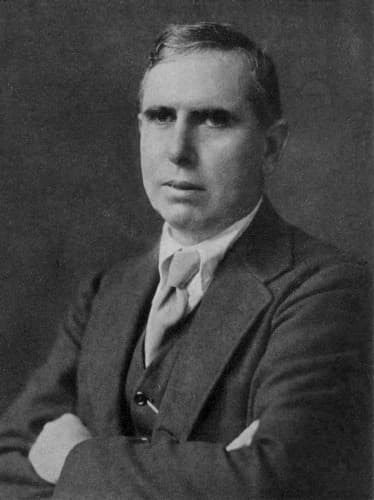
Theodore Herman Albert Dreiser was an American novelist and journalist of the naturalist school. His novels often featured main characters who succeeded at their objectives despite a lack of a firm moral code, and literary situations that more closely resemble studies of nature than tales of choice and agency. Dreiser's best known novels include Sister Carrie (1900) and An American Tragedy (1925).







