“The mind is a part of the body. The body is a part of the world. The world is a part of God. And so it is, by being in this world, that we are in God.”
— Jayber reflecting on his understanding of existence and faith.

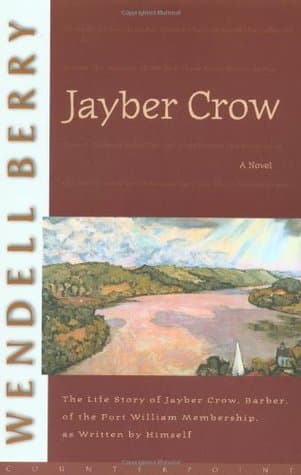
Wendell Berry (2000)
Genre
Literary Fiction / Historical Fiction
Reading Time
720 min
Key Themes
See below
Sign in to track this book
This novel follows Jayber Crow, Port William's barber, as he navigates faith, love, and life's mysteries in a changing rural community.
Jayber Crow, after being orphaned and attending Pigeonville College as a pre-ministerial student, feels lost after leaving seminary. In 1932, he returns to Port William, Kentucky, his childhood home, a place he always felt connected to despite his early displacement. He becomes the town barber, a job that puts him at the center of daily life and lets him observe its people closely. This return is a turning point, as he tries to understand his place in the world and the meaning of community, guided by questions from his seminary professor, 'Old Grit,' about living with unanswerable questions.
As the town barber, Jayber quickly learns about the lives, secrets, and daily routines of Port William's residents. His barber shop is a place for gossip, news, and quiet talks, allowing him to deeply understand the 'Membership'—the connected group of families and individuals in the community. He sees their struggles, joys, and the deep traditions that bind them. Through his work, Jayber develops a strong sense of empathy and a unique view of human nature, making him not just a barber, but a chronicler of the town's spirit. He begins to see the beauty and pain in their shared lives.
Jayber's life in Port William changes with Mattie Chatham's arrival. She is a beautiful and strong woman who moves to Port William with her husband, Troy. From the moment Jayber sees her, he is captivated, falling deeply and permanently in love. This love, however, is unrequited and unspoken, a silent devotion that shapes the rest of his life. Mattie becomes the central figure in his inner world, a symbol of beauty and grace he observes from afar, knowing their paths are not meant to cross as he wishes. Her presence brings a bittersweet ache to his life.
Through his barber shop and his place in Port William, Jayber sees the constant cycles of life and death that define the community. He watches children grow, lovers marry, and the elderly pass away. He attends funerals, shares in celebrations, and offers comfort in times of sadness. These experiences deepen his understanding of human life's fragility and resilience, and the deep connections within the 'Membership.' He learns that grief and joy are two sides of the same coin, and that life continues in Port William through shared experience and mutual support, even as individuals come and go.
Jayber comes to understand that the lives of the Port William people are tied to the land itself. He sees how farming rhythms, changing seasons, and soil health directly affect the community's well-being and identity. This connection is not just economic but spiritual, shaping their values, resilience, and sense of belonging. He learns about the careful land stewardship practiced by many farmers, and the damaging results when it is neglected. This deep relationship between humans and nature becomes a central theme in his ongoing thoughts about life's meaning.
Jayber's love for Mattie Chatham remains a quiet, constant presence throughout his life. He never acts on his feelings, respecting her marriage to Troy and understanding their relationship's boundaries. This unrequited love becomes both a source of deep personal sorrow and a profound source of beauty and inspiration for him. He finds comfort in observing her, cherishing her presence, and thinking about such a pure, selfless devotion. This internal struggle shapes his character, making him more empathetic and thoughtful, and fueling his poetic side as he continues to live with life's 'unanswerable questions.'
Through his years as barber, Jayber becomes a central figure in what he calls the 'Port William Membership'—the complex web of relationships, shared history, and mutual support that defines the community. He sees the unspoken loyalties, quiet acts of kindness, and lasting strength that bind these people through good times and bad. He understands that this 'Membership' is not just a group of individuals, but a living entity with its own memory and spirit. His observations solidify his belief in community and belonging, giving him a sense of purpose and connection he had long sought.
As decades pass, Jayber observes the subtle and significant changes in Port William. He sees modern ideas creep in, some traditional farming practices decline, and beloved 'Membership' members pass away. He experiences personal losses, including Mattie Chatham's eventual death, which brings a deep, yet expected, grief. Despite these changes and sorrows, Jayber remains a steady presence, a living keeper of the town's history and memory. He learns that endurance and loyalty to one's place and people are important, even with progress and loss.
Throughout his story, Jayber constantly grapples with his seminary professor's questions, especially about heaven and hell as lived experiences. He sees moments of grace and beauty in the community—acts of love, loyalty, and connection—which he views as glimpses of heaven. Conversely, he witnesses the pain of betrayal, loss, and land destruction, which he identifies as earthly hell. His life in Port William becomes a continuous theological inquiry, where the sacred is found not in abstract beliefs, but in the real human relationships and natural world, blurring the lines between the divine and the everyday.
Ultimately, Jayber Crow's journey is about finding deep meaning in loyalty—to a place, a community, and an unrequited love. Despite his early travels and intellectual struggles, he discovers that his true calling is to be present in Port William, serve its people, and witness their lives. His role as barber, observer, and chronicler allows him to live a life of quiet purpose and deep connection. He realizes that life's 'unanswerable questions' are not meant to be solved intellectually, but to be lived faithfully within a beloved community, finding his own form of salvation in belonging.
The Protagonist
Jayber evolves from a searching, intellectual wanderer to a man deeply rooted in his community, finding meaning not in answers, but in faithful living and observation.
The Supporting
Mattie's character remains largely static from Jayber's perspective, serving as a constant ideal in his life rather than undergoing significant personal change within the narrative.
The Supporting/Mentor
Old Grit primarily serves as an intellectual catalyst for Jayber, his character arc is not central to the narrative.
The Supporting
Troy's character serves more as a foil to Jayber's internal world than a character with a significant personal arc.
The Supporting
Dauphin represents a stable ideal within the community, his character arc is less about personal change and more about embodying Port William's enduring values.
The Supporting
Nathan's arc is largely implied, representing growth and the future of the community as seen through Jayber's eyes.
The Mentioned
Jonas's character is static, serving as a foundational memory and influence for Jayber.
The novel explores loyalty, especially to one's place and community. Jayber Crow, after wandering, finds his purpose in committing to Port William. His barber job is more than work; it's a sacred trust, allowing him to be present and serve the 'Membership.' This loyalty is echoed in farmers' commitment to their land, enduring hardships, as seen with characters like Dauphin Barner. The book suggests that true belonging and a rich life come from a deep, steady commitment to a specific place and its people, building roots instead of seeking endless new experiences.
“You have been given questions to which you cannot be given answers. You will have to live them out—perhaps a little at a time. And how long is that going to take? I don’t know. As long as you live, perhaps. That could be a long time. I will tell you a further mystery, he said. It may take longer.”
Jayber Crow's lifelong, unrequited love for Mattie Chatham is a central emotional thread. This theme examines the complexities of a love that is pure, selfless, and never acted upon, yet deeply shapes a person's life. Jayber's devotion to Mattie is not bitter but a source of beauty, empathy, and a heightened sense of the sacred. It teaches him patience, observation, and the heart's deep capacity to cherish another without expectation. This unfulfilled love becomes a spiritual practice, refining his character and deepening his understanding of grace, beauty, and loss, as he experiences both the 'heaven' and 'hell' of such a deep attachment.
“I had gone from loving her with the hope that she would love me, to loving her with no hope of it, to loving her with no hope of it and no desire for it.”
Wendell Berry, through Jayber's narration, gives profound spiritual meaning to everyday life in Port William. Seemingly ordinary acts—barbering, farming, community gatherings, observing nature—are filled with sacred meaning. Jayber's view shows that heaven and hell are not distant ideas, but are lived out in daily choices, relationships, and land care. Simple acts of kindness, nature's beauty, shared grief and joy within the 'Membership'—all become signs of a deeper, divine presence. This theme encourages readers to find transcendence in the immediate, tangible world around them.
“This is a book about Heaven, but I must say too that . . . I have wondered sometimes if it would not finally turn out to be a book about Hell.”
Jayber Crow's role as town barber gives him a unique position to observe and collect Port William's stories. His narration shows the power of careful observation and the importance of oral tradition and storytelling in preserving a community's identity and wisdom. By listening to clients, witnessing their lives, and reflecting on their experiences, Jayber becomes Port William's living memory. The novel itself acts as a long, reflective storytelling, showing how individual lives, when carefully observed and told, can reveal universal truths about humanity, community, and time. His narrative voice is one of quiet authority, born from years of attentive listening and thoughtful reflection.
“I was a barber, and a barber is a man who knows what is going on. He hears everything.”
The novel explores stewardship, especially concerning the land and the community it supports. Port William farmers, like Dauphin Barner, show deep respect and care for the soil, understanding their well-being is tied to the environment's health. Jayber observes the results of good and bad stewardship, not only of the land but also of relationships and traditions. This theme goes beyond farming to include responsible care of one's own life, talents, and place within the larger web of creation. It highlights the interconnectedness of all living things and the moral need to live responsibly.
“The earth is the Lord's, and the fullness thereof; the world, and they that dwell therein.”
Jayber Crow recounts his life story and observations from a later point in time.
The entire novel is told through Jayber Crow's first-person perspective, looking back on his life in Port William. This allows for deep introspection, philosophical digressions, and a rich, contemplative tone. Jayber's voice is thoughtful and wise, having had time to process the events and relationships he describes. This device enables him to weave together personal anecdotes, community history, and theological reflections, creating a tapestry of lived experience filtered through a seasoned consciousness. It also allows him to foreshadow future events or hint at the significance of seemingly small moments, enriching the narrative with layers of meaning.
Jayber's barber shop serves as a central hub for community interaction and observation.
The barber shop is not merely Jayber's workplace; it functions as a critical plot device and symbolic space. It is a neutral ground where men from all walks of life in Port William gather, share news, gossip, and confidences. This setting allows Jayber to become an intimate observer of the 'Membership,' granting him access to their stories, struggles, and joys without actively participating in all of them. It provides a natural, organic way for the narrative to introduce various characters and their lives, making the shop a microcosm of the larger Port William community and a rich source for Jayber's philosophical reflections.
Old Grit's philosophical challenge to Jayber to 'live out' profound questions without seeking immediate answers.
The advice given to Jayber by his seminary professor, 'Old Grit,' serves as a foundational philosophical framework for the entire novel. The idea that certain questions (about God, love, purpose, heaven, and hell) cannot be answered intellectually but must be 'lived out' becomes Jayber's guiding principle. This device allows the narrative to explore complex theological and existential themes through the lens of ordinary life in Port William. It frees the story from needing definitive resolutions, instead emphasizing the ongoing process of understanding, faith, and meaning-making through experience and fidelity to one's place and people.
A recurring concept and interconnected community that provides the novel's social and moral landscape.
The 'Port William Membership' is more than just a collection of characters; it's a living, breathing entity that functions as a collective character and a central plot device. It represents the intricate web of relationships, shared history, mutual obligations, and intergenerational continuity that defines the community. This concept provides the social and moral landscape against which Jayber's personal journey unfolds. It highlights the importance of belonging, the strength derived from interdependence, and the enduring power of place-based community in the face of modern individualism. The 'Membership' is a repository of wisdom, tradition, and shared experience, shaping every individual within it.
“The mind is a part of the body. The body is a part of the world. The world is a part of God. And so it is, by being in this world, that we are in God.”
— Jayber reflecting on his understanding of existence and faith.
“To be a human being is to be a story-telling animal.”
— Jayber considering the fundamental nature of humanity and narrative.
“It is not the world that is the impediment, but our blindness to it.”
— Jayber's observation on human perception and limitations.
“The world is given to us, and we must give it back.”
— A reflection on stewardship and the cyclical nature of life.
“Love is not a feeling; it is a way of being.”
— Jayber's mature understanding of love, beyond mere emotion.
“You can't be a community if you don't have a place.”
— Highlighting the essential link between place and community.
“What we know we are, we are; what we know we are not, we are not.”
— A statement on self-knowledge and identity.
“The only way to get a good haircut is to get a lot of bad ones.”
— Jayber's practical wisdom about learning through experience, related to his barber trade.
“The meaning of our lives is not to be found in what we get, but in what we give.”
— A reflection on purpose and altruism.
“The past is not dead. It is not even past.”
— Jayber's realization about the enduring influence of history and memory.
“There are no unsacred places; there are only sacred places and desecrated places.”
— Jayber's profound view on the inherent sanctity of all places.
“A man's life is his work. What he does is what he is.”
— Jayber reflecting on the connection between one's labor and identity.
“The world is always larger than we know.”
— A humbling thought about the vastness and mystery of existence.
“Grief is a form of praise, for it shows what we have loved.”
— Jayber's poignant understanding of grief and its connection to love.
Ready to see how well you understood this book? Take our interactive quiz with 10 questions.

Biography coming soon.







