“It was a beautiful day, the kind of day that makes you glad to be alive.”
— Opening description of the beach and ocean before the first attack.

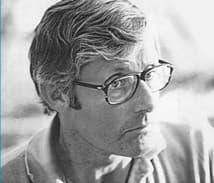
Peter Benchley (1973)
Genre
Thriller / Mystery
Reading Time
320 min
Key Themes
See below
Sign in to track this book
A summer of sun-drenched beaches turns into a blood-soaked nightmare when a monstrous great white shark begins to systematically devour swimmers, forcing a small island community to confront the terrifying, insatiable predator.
The novel begins on Amity Island, a popular summer resort. Chrissie Watkins, a college student, goes for a late-night swim after a party. A powerful, unseen force attacks her, dragging her under and tearing her apart. Deputy Hendricks finds her remains the next morning. Police Chief Martin Brody, new to Amity, is called to the scene. He suspects a shark attack. Mayor Larry Vaughan, fearing damage to tourist revenue, pressures Brody to keep the beach open and call the incident a boating accident.
Despite Brody's suspicions, Mayor Vaughan keeps the beaches open. Days later, a young boy, Alex Kintner, is killed by the shark while swimming on the crowded main beach. Many people, including Brody and his family, witness this attack, making it impossible to deny a large predator is present. The town panics. Brody wants to close the beaches, but Vaughan and other influential town figures strongly oppose this, putting the town's financial stability before public safety. They argue that closing the beaches would ruin Amity's summer economy.
News of the shark attacks reaches the mainland. Matt Hooper, a young, wealthy oceanographer from Woods Hole Oceanographic Institution, arrives. Hooper is a shark expert eager to study the creature. He immediately clashes with Mayor Vaughan and local authorities, who care more about public relations than science. Hooper examines Chrissie Watkins's remains and confirms her injuries match a very large great white shark. He urges Brody to take the threat seriously and advocates for immediate and extensive measures to hunt the shark.
To reassure the public and avoid closing beaches, Mayor Vaughan offers a bounty for the shark. This attracts many local fishermen seeking the reward. A group of fishermen eventually catches a large tiger shark, and the town celebrates, believing the threat is over. However, Matt Hooper examines the tiger shark and is convinced it is not the shark responsible for the attacks. He points out differences in size and bite patterns. Brody, initially relieved, is swayed by Hooper's expertise and begins to share his growing concern that the real killer is still out there.
Still doubtful but increasingly worried, Brody and Hooper decide to investigate underwater at night. They dive near the fishing grounds where the tiger shark was caught. During their dive, they find a half-eaten fishing boat, which Hooper identifies as belonging to a missing local fisherman, Ben Gardner. Inside the wrecked boat, they find a huge great white shark tooth in the hull. This clear evidence confirms Hooper's suspicions: the original shark is still alive and hunting, much larger and more dangerous than any shark previously caught.
With clear evidence and growing tourist panic, Mayor Vaughan finally agrees that the beaches must close and a professional shark hunter is needed. He and Brody approach Quint, a legendary, independent local fisherman known for hunting sharks. Quint, cynical and mercenary, initially demands a very high fee. After negotiation, he agrees to hunt the great white. Brody feels both relief and apprehension, recognizing Quint's skill but also his dangerous, obsessive nature.
Quint prepares his sturdy fishing boat, the 'Orca,' for the hunt. Brody and Hooper join him, forming an uneasy trio. Brody is seasick and afraid of the open ocean. Hooper, despite his science background, is eager for the hunt. Quint remains gruff and commanding, constantly testing his companions. The first days of the hunt are unsuccessful, marked by long waits, tension, and Quint's increasingly odd behavior and dislike for modern technology.
The great white finally appears, showing its huge size and power. It circles the 'Orca,' testing the boat and its crew. Quint tries to harpoon it with barrels, a traditional method, but the shark is incredibly strong, pulling the barrels under easily. The shark repeatedly attacks the boat, causing much damage. The constant presence of the beast, along with the isolation of the open sea, increases the fear and paranoia among the three men, especially Brody, who is overwhelmed by the sheer size of the threat.
As the hunt continues, Quint's desire to kill the shark becomes all-consuming, almost mad. He tells of his terrible experience surviving the USS Indianapolis sinking, revealing the deep trauma that fuels his hatred for sharks. Hooper, frustrated by their surface attack limits, proposes a risky plan: he will go down in a shark cage to inject the shark with poison from close range. Despite Brody's protests and Quint's doubt, Hooper proceeds with the plan, hoping to end the ordeal quickly.
Hooper's attempt in the shark cage fails. The great white, too powerful and clever, smashes the cage, and Hooper is presumed dead, dragged under by the shark. The 'Orca' is badly damaged and taking on water. Quint, in a last, desperate act, tries to harpoon the shark again but is pulled overboard and eaten by the beast. Brody is left alone on the sinking boat, facing the monstrous shark. In a moment of terror and adrenaline, he stabs a pressurized air tank into the shark's mouth, then shoots it with Quint's rifle, causing the tank to explode and kill the shark. Brody then paddles back to shore, traumatized but alive.
The Protagonist
Brody transforms from a hesitant, somewhat naive chief into a determined, courageous survivor, directly confronting his greatest fears to protect his community.
The Supporting/Anti-hero
Quint's arc is one of escalating obsession and ultimately self-destruction, as his personal vendetta against the shark consumes him.
The Supporting
Hooper's initial academic curiosity evolves into a desperate struggle for survival, showcasing the limits of scientific understanding against primal nature.
The Antagonist
Vaughan's denial and self-serving political maneuvering are ultimately overcome by the undeniable reality of the shark's threat, forcing him to confront his poor judgment.
The Supporting
Ellen's role primarily serves to ground Brody, showcasing the personal stakes of the shark attacks and the impact on family life.
The Supporting/Mentioned
Meadows' arc reflects the town's slow, reluctant acceptance of the truth, moving from complicity in denial to reporting the harsh reality.
The Mentioned
Chrissie's role is purely catalytic; her death sets the story in motion.
The Mentioned
Alex's death serves as a critical plot point, escalating the conflict and forcing action.
This theme explores humanity's fight against nature's wild, primal forces, represented by the great white shark. The shark is not evil, but an instinctive force, uncaring of human life. The novel shows how vulnerable humans are despite technology, as the shark repeatedly outsmarts and overpowers the hunters. Quint, Brody, and Hooper, each representing a part of humanity (hunter, protector, scientist), are all humbled by the shark's power, showing that nature cannot be fully controlled or understood.
“You got a twenty-five-foot fish. You got a six-ton fish. And you got a fish that's going to eat you.”
This theme is clear through Mayor Larry Vaughan and the Amity town council, who put money (tourism revenue) before public safety. Their initial denial and cover-up of the shark attacks directly cause more deaths, showing how greed and political power abuse can have terrible consequences. The pressure from local businesses to keep beaches open, even when there is danger, highlights the moral compromise made for money. This corruption creates a direct conflict with Brody's sense of duty and honesty.
“Amity is a summer town. We need summer dollars.”
Fear is everywhere, from Brody's personal fear of the ocean to the widespread terror in Amity. The shark uses this fear, not just physically but mentally. Quint shows obsession, driven by his past trauma from the USS Indianapolis. His single-minded pursuit of the shark is almost mad, showing how unchecked fear can consume and destroy a person. Brody, too, must face and overcome his fears to confront the monster, showing that courage is not the absence of fear, but acting despite it.
“He knew that the shark was more than a match for him, more than a match for any man. But he also knew that he would have to try.”
The novel subtly examines the darker parts of human nature, especially during crises. The initial panic leads to irrational behavior, opportunistic bounty hunting, and a disregard for life. Quint's character, while skilled, also shows a brutal, almost savage side, driven by revenge. The flirting between Ellen Brody and Hooper suggests hidden desires and weaknesses even during life-threatening situations. The story suggests that humans, despite their civilization, can still act on basic instincts and moral failings when pushed to their limits.
“There was a certain madness in his eyes, a wildness that Brody had never seen before.”
Building suspense by initially keeping the shark hidden.
For much of the early novel, the shark is an unseen force, its presence only inferred by the horrific aftermath of its attacks. This technique generates immense suspense and dread, as the characters (and reader) project their worst fears onto the unknown. The initial lack of visual confirmation allows for political denial and creates a sense of helplessness, making the eventual reveal of the shark's true size and power even more impactful and terrifying. It emphasizes the primal fear of what lurks beneath the surface.
Quint's traumatic past experience hinting at the shark's true danger.
Quint's chilling monologue about his survival from the USS Indianapolis sinking, where hundreds of sailors were devoured by sharks, serves as powerful foreshadowing. It not only explains Quint's deep-seated hatred and obsession but also subtly warns Brody and Hooper (and the reader) about the true, unimaginable horror and scale of the threat they face. It grounds the fictional terror in a real-world tragedy, lending gravitas and a sense of inevitable doom to their hunt, suggesting that this shark might be as relentless and deadly as those in his past.
Contrasting characters to highlight different perspectives and conflicts.
The novel effectively uses foil characters to explore various themes and create conflict. Quint (primal, experienced hunter) and Hooper (scientific, modern intellectual) represent opposing approaches to understanding and confronting nature, clashing in their methods and worldviews. Brody, the everyman, mediates between them. Mayor Vaughan (political greed) and Brody (moral duty) represent the conflict between civic responsibility and personal integrity. These contrasts highlight the multifaceted human response to a crisis and the different forms of courage and folly.
Increasing the danger and personal cost with each shark attack.
The plot uses rising stakes effectively. The first attack (Chrissie Watkins) is isolated, allowing for denial. The second (Alex Kintner) is public and undeniable. Each subsequent encounter with the shark reveals its greater size, intelligence, and destructive capability, progressively damaging the boat and endangering the protagonists. This escalation, culminating in the deaths of Hooper and Quint, ensures that the tension steadily mounts, making Brody's final confrontation with the shark a desperate, high-stakes battle for survival where everything is on the line.
“It was a beautiful day, the kind of day that makes you glad to be alive.”
— Opening description of the beach and ocean before the first attack.
“You're going to need a bigger boat.”
— Brody's reaction upon seeing the size of the shark for the first time.
“That's some bad hat, Harry.”
— Brody's dry comment about Harry Meadows' hat.
“I can do anything; I'm the mayor.”
— Vaughn's declaration of his authority, often used to justify keeping the beaches open.
“This is not a boat accident! And it wasn't any propeller; and it wasn't any coral reef; and it wasn't any Jack the Ripper! It was a shark!”
— Hooper's frustrated explanation to Brody about the nature of the first victim's injuries.
“Smile, you son of a bitch!”
— Brody's line just before shooting the shark.
“I'm not going to waste my time arguing with a man who's lining his pockets with blood money.”
— Hooper's accusation directed at Mayor Vaughn.
“Sharks are like tigers. They're solitary predators. They don't hunt in packs.”
— Hooper explaining shark behavior to Brody.
“Nobody's gonna go in the water.”
— Brody's initial, hopeful, but ultimately naive thought after the first attack.
“He's not gonna do it. He's not gonna do it. He's not gonna do it.”
— Brody's internal monologue as he watches the shark approach the pond.
“The great fish moved silently through the night water, propelled by short sweeps of its crescent tail.”
— Description of the shark's predatory movement.
“That's a twenty-footer. Twenty-five. Three tons of him.”
— Quint's initial estimation of the shark's size.
“It was a question of time, and time was running out.”
— Brody's realization of the urgency of the situation.
“He felt a wave of nausea, a dizzying sense of unreality.”
— Brody's physical reaction to the horror of the shark attacks.
Ready to see how well you understood this book? Take our interactive quiz with 10 questions.
Biography coming soon.







