“See, the thing about a story is that you have to tell it, or it doesn't exist.”
— Charlie reflecting on the importance of narratives and truth.

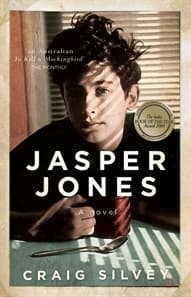
Craig Silvey (2011)
Genre
Historical Fiction / Mystery / Young Adult
Reading Time
480 min
Key Themes
See below
Sign in to track this book
In the oppressive 1965 Australian summer, a bookish teenager helps a troubled outcast unravel a horrific secret, forcing him to confront the town's racial prejudices, his family's unraveling, and the crushing weight of a truth too dangerous to reveal.
On a sweltering summer night in 1965 in the rural Western Australian town of Corrigan, thirteen-year-old Charlie Bucktin is awakened by Jasper Jones, a local mixed-race outcast. Jasper, known for his rebellious nature and often blamed for the town's misfortunes, leads a terrified but intrigued Charlie deep into the bush to a secluded glade. There, Charlie sees the horrifying sight of Laura Wishart, the Shire President's daughter, hanging dead from a tree. Jasper, convinced he will be wrongly accused due to his reputation and race, asks Charlie for help in concealing the body and finding the real killer. Overwhelmed and afraid, Charlie reluctantly agrees. This marks the beginning of a summer that will change his life.
The discovery of Laura Wishart's body remains a secret between Jasper and Charlie. Soon after, Laura is reported missing, and Corrigan falls into grief and suspicion. Search efforts are extensive, with residents forming search parties, but no trace of Laura is found. The disappearance makes the town's existing prejudices worse. Jasper Jones quickly becomes the primary suspect for many, including the local police sergeant, even without any evidence. Charlie observes the town's descent into fear and its eagerness to find a scapegoat, all while carrying the heavy burden of the truth he knows.
Haunted by the secret and wanting to help Jasper, Charlie begins to investigate potential suspects. Their initial suspicion falls on Mad Jack Lionel, an elderly recluse who lives on the outskirts of town and is rumored to have committed a crime in the past. Jasper believes Jack Lionel killed his own daughter, and that he might have been involved with Laura. During their investigation, Charlie and Jasper sneak onto Jack Lionel's property. Charlie, in a moment of fear, accidentally breaks Jack's window. This encounter, however, does not give any solid evidence linking Jack Lionel to Laura's death, but it deepens the mystery around him and his past.
While dealing with the murder mystery, Charlie's home life becomes tense. His mother, Ruth, is unhappy with her life in Corrigan and begins an affair with the Shire President, Laura's father. This strains her relationship with Charlie's gentle, intellectual father, Wesley. At the same time, Charlie finds himself drawn to Eliza Wishart, Laura's younger sister. Their shared grief and the mystery surrounding Laura create a unique bond between them, leading to a hesitant, tender romance. Eliza, deeply affected by her sister's disappearance, offers Charlie a different perspective on the town and its secrets.
Throughout the summer, Charlie's best friend, Jeffrey Lu, a Vietnamese boy, deals with constant racial prejudice and bullying from the town's white residents, especially the local toughs. Despite this, Jeffrey maintains optimism and a passion for cricket, often surprising everyone with his skill. His family also faces discrimination, especially as the Vietnam War escalates. Jeffrey's resilience and good humor offer a contrast to the darkness Charlie is experiencing, reminding him of loyalty and the joys of friendship amidst the town's growing tensions and his own moral dilemmas.
As the search for Laura continues without success, the town's animosity towards Jasper Jones grows. This is fueled by racist assumptions and his outsider status. He is openly harassed and beaten by the police. Charlie learns more about Jasper's tragic past: his Aboriginal mother died when he was young, and his white father abandoned him, leaving him to fend for himself. This history makes Jasper an even easier scapegoat in Corrigan. Charlie sees firsthand the injustice Jasper faces, deepening his resolve to uncover the truth and clear his friend's name, despite the personal risk.
Driven by his guilt and the desire for answers, Charlie decides to confront Mad Jack Lionel directly. During their conversation, Jack reveals the truth behind his reclusive life and the town's rumors: he accidentally killed his own son, Jasper's father, in a car accident years ago. His son was having an affair with an Aboriginal woman (Jasper's mother), and Jack, in a fit of rage, crashed their car, killing his son and leaving Jasper's mother to die later. Jack has lived with guilt and self-imposed isolation ever since, believing the town knew his secret. This revelation humanizes Jack Lionel and removes him as a suspect in Laura's death, but adds another layer of tragedy to Jasper's already difficult life.
Eliza Wishart, unable to cope with the silence and her family's secrets, confides in Charlie. She reveals that she had been secretly meeting Laura in the glade and that Laura had given her a letter to keep safe. This letter, written by Laura before her death, reveals the truth: Laura had been systematically abused by her father, the Shire President. On the night she died, she had confronted him, and in her despair, she took her own life in the glade. She had left the letter for Eliza, hoping it would expose her father and bring justice.
With Laura's letter, the full, tragic truth comes to light. Laura had not been murdered, but had committed suicide due to the abuse she endured from her father. Jasper, upon learning this, is devastated. His initial anger and frustration at the injustice of the world give way to sadness for Laura and the futility of their secret-keeping. He and Charlie realize the depth of the town's hypocrisy and the way it protected powerful men while persecuting the vulnerable. The revelation of Laura's father's crimes also involves Charlie's mother, who was having an affair with him.
Charlie and Eliza decide to expose Laura's father. Eliza, in an act of defiance, burns down her family home, symbolizing the destruction of the lies and abuse that had grown within it. This act brings the truth to light for the town. Jasper, having been cleared but still an outcast, decides to leave Corrigan for good, seeking a future free from prejudice. Charlie, though heartbroken by Jasper's departure, has matured significantly. He has learned about courage, injustice, and the complexities of truth. He resolves to write his own story, finding his voice and beginning to heal from the traumatic summer, forever changed by his friendship with Jasper and the secrets of Corrigan.
The Protagonist
Charlie transforms from an innocent, sheltered boy into a more mature and discerning young man, learning to navigate the complexities of morality and the dark underbelly of his seemingly idyllic town.
The Supporting
Jasper endures relentless injustice and grief, ultimately choosing to leave Corrigan to escape the prejudice and find a new beginning.
The Supporting
Jeffrey remains steadfastly optimistic and resilient in the face of prejudice, finding strength in his family and his passion for cricket.
The Supporting
Eliza moves from passive suffering to active defiance, taking drastic measures to expose her family's dark secrets and honor her sister's memory.
The Supporting
Ruth's suppressed dissatisfaction and infidelity culminate in her leaving Corrigan, seeking a life beyond the confines of her marriage and the town.
The Supporting
Wesley maintains his quiet integrity and love for his son despite personal heartbreak, serving as a moral compass for Charlie.
The Mentioned/Catalyst
Laura's tragic story is gradually uncovered, revealing her immense suffering and the true circumstances of her death, posthumously bringing her father's crimes to light.
The Supporting
Mad Jack Lionel is transformed from a menacing recluse to a tragic figure, his past revealed as a source of profound grief and guilt, not malice.
The Antagonist
Pete Wishart's hidden crimes are eventually exposed, leading to the destruction of his family and reputation.
The novel portrays the injustice and prejudice in 1960s rural Australia, especially against Aboriginal people and Vietnamese immigrants. Jasper Jones is immediately and unfairly targeted as a suspect in Laura Wishart's disappearance solely because of his race and outsider status, despite a lack of evidence. Jeffrey Lu and his family also endure constant racist taunts and violence. The town's readiness to make Jasper a scapegoat shows how deep-seated prejudices can blind a community to the truth and allow real culprits to hide. This theme shows the impact of racial bias and the failures of justice.
“"Jasper Jones has been in trouble since he was a child. He's been in and out of the lock-up for years. Everyone knows he's a menace. He's a half-caste. He's wild."”
Charlie Bucktin's journey is about the loss of his childhood innocence and a moral awakening. Before the summer's events, Charlie lives a sheltered and naive life. Witnessing Laura's dead body, participating in its concealment, and uncovering the town's dark secrets force him to confront the harsh realities of human cruelty, hypocrisy, and suffering. He deals with complex moral dilemmas, the weight of secrets, and the pain of injustice. This transforms him from a boy into a more mature and morally aware young man who can tell truth from falsehood.
“"That night, I felt a shift. Like a gear slipping. And I knew it was the start of something terrible. Something I couldn't unsee or unhear."”
A central theme is the contrast between outward appearances and the hidden, often ugly, truths beneath. Corrigan appears as a quiet, respectable town, but it hides dark secrets: Laura Wishart's abuse, her father's depravity, Ruth Bucktin's affair, and Mad Jack Lionel's tragic past. The plot is about Charlie and Jasper's quest to uncover the truth of Laura's death, which is obscured by the town's prejudices and the powerful secrets kept by its most 'respectable' citizens. The novel explores how secrets can corrupt, protect the guilty, and burden the innocent, while the truth, though painful, ultimately brings liberation.
“"The truth of a thing is a hard thing to know. It's like a big, solid brick in your belly. But it's even harder to hold in your heart."”
The book shows different forms of courage and resilience. Jasper Jones, despite constant persecution, bravely takes responsibility for protecting Laura's secret and seeking justice. Jeffrey Lu shows resilience in the face of racial bullying, keeping his optimism and passion for cricket. Charlie, initially timid, finds the courage to help Jasper, confront Mad Jack Lionel, and support Eliza in exposing her father. Eliza herself shows courage by sharing Laura's letter and burning down her family home. This symbolizes defiance against the abuse and lies that defined her childhood.
“"Courage is not the absence of fear, but rather the judgment that something else is more important than fear."”
The novel explores family dynamics and the desire for belonging. Charlie deals with his own family breaking apart due to his mother's unhappiness and affair, contrasting it with the support he finds in his father. Jasper Jones, an orphan, seeks a sense of belonging, which the prejudiced community of Corrigan denies him. Jeffrey Lu finds strength and belonging within his close-knit Vietnamese family, which stands together against discrimination. The theme shows how family can be a source of both pain and support, and how a lack of belonging can lead to isolation and vulnerability.
“"I think family is the most important thing. Even when it's broken, it's still yours."”
Provides an intimate, reflective, and often naive perspective on the unfolding mystery.
The story is told entirely through the eyes of thirteen-year-old Charlie Bucktin. This narrative choice allows the reader to experience the events and emotions directly through Charlie's developing understanding. His internal monologues, filled with literary references and philosophical musings, offer insight into his grappling with moral dilemmas, fear, and the complexities of the adult world. The naive yet intelligent perspective highlights the shock of his loss of innocence and makes the revelations about Corrigan's dark underbelly more impactful.
Chronicles Charlie's psychological and moral growth over a pivotal summer.
The novel is a classic Bildungsroman, focusing on Charlie Bucktin's transition from childhood innocence to a more mature understanding of the world. The traumatic events of the summer, his involvement in the murder mystery, his first love, and the exposure to injustice and prejudice, all contribute to his profound personal growth. He learns about courage, loyalty, the harsh realities of life, and the complexities of truth and morality, marking a significant developmental arc for the protagonist.
Utilizes a small-town setting, hidden depravity, and grotesque characters to create a dark, atmospheric tone.
The novel employs elements of Southern Gothic literature, despite its Australian setting. Corrigan, a seemingly idyllic rural town, harbors deep-seated prejudice, hidden secrets, and moral decay. Characters like the ostracized Jasper Jones, the reclusive Mad Jack Lionel, and the outwardly respectable but abusive Shire President fit the archetype of damaged or morally corrupt individuals. The oppressive summer heat and isolated setting contribute to a sense of unease and foreboding, underscoring the dark undercurrents beneath the town's surface.
Represents hope, resilience, and a temporary escape from harsh realities for Jeffrey Lu.
Cricket serves as a powerful symbol, particularly for Jeffrey Lu. Despite facing relentless racial abuse, Jeffrey's unwavering passion and surprising skill for the sport represent his resilience, optimism, and refusal to be defeated by prejudice. On the cricket field, he transcends the town's bigotry, finding a space where his talent speaks louder than his race. It symbolizes a form of escapism and a testament to the human spirit's ability to find joy and purpose even in the most challenging circumstances, offering a stark contrast to the darkness surrounding Charlie and Jasper.
A recurring setting that symbolizes both sanctuary and a place of hidden trauma.
The secret glade in the bush is a significant symbolic location. Initially, it is Jasper's private sanctuary, a place of refuge from the judgmental town. However, it becomes the site of Laura Wishart's death, transforming it into a place of profound trauma, secrets, and moral reckoning for Charlie. It represents the hidden spaces where the town's darkest secrets are kept and where innocence is irrevocably lost, yet it also serves as a place where truths are eventually revealed and where characters confront their fears and moral obligations.
“See, the thing about a story is that you have to tell it, or it doesn't exist.”
— Charlie reflecting on the importance of narratives and truth.
“Sorry means you feel the pulse of another person's pain, your own heart beating in their body.”
— Charlie's internal monologue about true empathy.
“Courage is resistance to fear, mastery of fear, not absence of fear.”
— Charlie contemplating the nature of bravery.
“The more you read, the more things you will know. The more that you learn, the more places you'll go.”
— Charlie's love for books and their transformative power.
“This is a town that's been waiting for something to happen for a long time. And now it has.”
— Charlie observing the town's reaction to the crime.
“Because when you're a kid, you don't really understand death. You just understand that someone's gone.”
— Charlie grappling with the concept of death at a young age.
“Jasper Jones has a terrible reputation in Corrigan. He's a half-caste, an orphan, a runaway, a thief.”
— Introducing Jasper and the town's prejudices against him.
“The truth is a kind of story, and stories are things we tell ourselves to make sense of the world.”
— Charlie's philosophical musings on truth and narrative.
“Sometimes you have to be a little bit naughty to get what you want.”
— Jasper's pragmatic approach to problem-solving.
“It's funny, the things you remember. The things that stick.”
— Charlie reflecting on the lasting impact of certain memories.
“Life's not fair, Charlie. It just ain't. Never has been, never will be.”
— Jasper's cynical but realistic view on life's injustices.
“There are some questions that don't have answers. And some answers that you don't want to hear.”
— Charlie contemplating the difficult nature of truth and closure.
“Silence can be a kind of violence.”
— Charlie realizing the destructive power of unspoken truths and secrets.
“Sometimes the safest place to hide is in plain sight.”
— A strategic thought about evading detection.
Ready to see how well you understood this book? Take our interactive quiz with 10 questions.

Craig Silvey is an Australian author celebrated for his critically acclaimed novel "Jasper Jones," which has been adapted into a film and stage play. He is also known for "Honeybee," a poignant story exploring themes of friendship and mental health. Silvey's work often delves into the complexities of adolescence and societal issues with a distinctive voice.







