“I will not be the bride of a man who does not know how to dance.”
— Jane's early determination regarding her future husband.

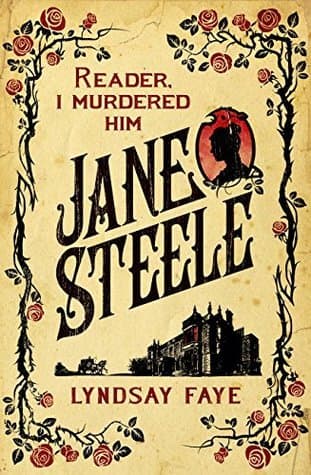
Lyndsay Faye (2016)
Genre
Historical Fiction / Mystery / Romance
Reading Time
9-10 hours
Key Themes
See below
Sign in to track this book
Haunted by the murders of her tormentors, a fugitive Jane Steele takes a governess position at a mysterious estate, only to fall for its master and uncover dark secrets that threaten to expose her own bloody past.
Jane Steele, an orphan with her cruel Aunt Reed and horrid cousins at Gateshead, endures constant abuse. Her only comfort is reading, especially 'Jane Eyre'. When Aunt Reed threatens to send her to Lowood School, Jane pushes her aunt down the stairs, killing her. Believing herself a murderer, Jane is sent to Lowood, a harsh institution run by the hypocritical Mr. Brocklehurst. There, she befriends Helen Burns, who dies from consumption. Later, during a cholera outbreak at Lowood, Jane poisons Mr. Brocklehurst's tea, seeing it as justice for his cruelty. With two deaths on her conscience, Jane flees Lowood for London.
In London, Jane finds work as a seamstress and quickly gets involved in the city's criminal world. She uses her intelligence and skill to help the less fortunate, often using violence to punish exploiters. She becomes known as 'The London Tigress' among some, a shadowy figure who rights wrongs. Despite her dangerous life, Jane keeps a strong moral sense, believing her actions, though criminal, are right. She carefully records her 'interventions' in a hidden journal, a constant reminder of her past and her self-appointed role as an avenging angel for the oppressed.
Years later, in London, Jane sees a newspaper ad for a governess at Highgate House. The address is her childhood home, the place she inherited from her parents and from which Aunt Reed disinherited her. Her aunt has since died, and the current master is Mr. Charles Thornfield. Wanting to reclaim her inheritance and learn the truth about her parents' deaths and her disinheritance, Jane applies for the job. She uses a false name, 'Miss Scatcherd,' to hide her past and her true goals, determined to enter Highgate House and investigate its secrets.
Jane arrives at Highgate House and meets the household. She meets Mr. Charles Thornfield, the quiet master, and his young ward, a spirited Sikh girl named Miss Adèle Varma. The house has unusual servants: Mrs. Fairfax, the stern housekeeper; Grace Poole, a seemingly simple woman who often acts strangely; and Mr. Eshton, a stable master. Jane quickly notices the odd events and hushed secrets, especially strange sounds from the attic and the staff's secretive behavior. She starts her governess duties, bonding with Adèle, while also looking for clues about her past and Highgate House's true nature.
Highgate House is a place of unsettling mysteries. Jane often hears strange laughter and noises from the locked attic, often blamed on Grace Poole. One night, she finds Mr. Thornfield's bed curtains on fire, putting them out and saving him. He blames the incident on Grace's alcoholism, but Jane suspects something worse. Later, a guest, Mr. Mason, is attacked and stabbed, again with Grace Poole as the supposed culprit. These events strengthen Jane's belief that Mr. Thornfield is hiding a major secret, and she increases her investigation into the house's history and its residents, especially the locked attic and its unseen occupant.
Despite the unsettling atmosphere and Mr. Thornfield's clear reluctance, Jane finds herself drawn to him. She likes his intelligence, his wit, and the deep sadness she sees beneath his rough exterior. Their talks become more personal, showing a shared understanding and a deep connection. Mr. Thornfield, in turn, is clearly taken with Jane, admiring her sharp mind and independent spirit. Their relationship grows with passionate intensity, yet Jane remains aware of the secrets he keeps and the possible danger of his past, making their growing romance both exciting and risky. She struggles with her feelings, torn between her investigation and her growing love.
After several intense interactions and a near-fatal accident involving Mr. Thornfield, he finally tells the truth about the attic. He reveals that his first wife, Bertha, is alive but insane, suffering from a hereditary madness that makes her violent. He explains that he brought her from India and keeps her confined in the attic with Grace Poole, hoping to protect her and prevent her from harming others. He tells of their forced marriage and the tragic decline of her mental state. This revelation explains the strange events and constant tension at Highgate House, but it also creates a significant moral problem for Jane.
Overwhelmed by Mr. Thornfield's confession and her deep feelings, Jane decides to reveal her own dark secret. She confesses her past as a murderer, detailing the deaths of Aunt Reed and Mr. Brocklehurst, and her later vigilante actions in London. To her surprise, Mr. Thornfield does not react with horror. Instead, he accepts her past, understanding her reasons and seeing the justice in her actions. He then proposes marriage, asking her to be his wife despite both their complicated histories and the legal problem of his first marriage. This moment strengthens their unique bond, built on shared secrets and a deep, unconventional love.
On the eve of their planned wedding, a catastrophic fire engulfs Highgate House. Bertha, in a fit of madness, escapes and sets the house ablaze. The fire spreads quickly, trapping residents and threatening to destroy everything. Jane bravely tries to rescue Adèle and the servants. Mr. Thornfield, in a heroic but tragic effort, tries to save Bertha, but she dies in the flames. He is severely injured, losing an eye and a hand, and is left scarred and partly blind. The fire consumes Highgate House, leaving only ruins and a devastating aftermath for all involved, showing the destructive power of hidden truths and passions.
After the fire, Jane first leaves Mr. Thornfield, believing he needs time to heal and that she might be a burden. She lives a quiet life, but her heart longs for him. Eventually, she returns. Mr. Thornfield, now living in a more modest home and recovering from his injuries, is overjoyed to see her. They reconcile, their love deepened by their shared experiences. Jane helps him heal, both physically and emotionally. They decide to marry, no longer prevented by Bertha's death. Their future together is uncertain but hopeful, built on honesty, acceptance, and an unconventional love that has survived immense hardship. Jane, finally, finds her true home and purpose with Charles.
The Protagonist
Jane transforms from a victim of abuse into a self-appointed vigilante, eventually finding love and acceptance by embracing her authentic, complex self.
The Love Interest / Master of Highgate House
Thornfield moves from a secretive, guilt-ridden existence to finding redemption and genuine love by embracing honesty and accepting Jane's own dark past.
The Supporting
Adèle grows under Jane's care, developing a strong bond and witnessing the tumultuous events at Highgate House.
The Antagonist / Mentioned
Bertha's madness escalates, leading to the destruction of Highgate House and her own tragic demise.
The Antagonist / Mentioned
Aunt Reed's cruelty instigates Jane's first act of murder, setting her on a path of self-defined justice.
The Antagonist / Mentioned
Mr. Brocklehurst's hypocrisy and cruelty lead to his deserved death at Jane's hands.
The Supporting
Grace Poole remains a constant, if enigmatic, presence, faithfully guarding Bertha's secret until the fire.
The Supporting / Mentioned
Helen's life and death profoundly influence Jane's developing moral compass, though Jane ultimately chooses a different path.
The novel explores the tension between legal justice and a personal, often violent, form of justice. Jane Steele believes some people are so wicked they deserve punishment outside the law. Her murders of Aunt Reed and Mr. Brocklehurst, and her vigilante actions in London, come from this belief. The story presents these acts not as pure evil, but as a morally complex response to unchecked cruelty. This theme asks the reader to consider if 'justice' can exist outside 'law,' especially when the law is seen as insufficient or corrupt, as shown by Jane's suffering at Lowood.
“Reader, I murdered him.”
Jane's journey is about forming and accepting her true identity, even the parts society would condemn. She struggles with being called 'wicked' and 'murderer.' Her use of an alias, 'Miss Scatcherd,' at Highgate House shows her difficulty reconciling her past with her desire for a new life. The turning point comes when Charles Thornfield accepts her murderous history, allowing her to finally be seen and loved for her whole self. This theme suggests that true love and happiness come only when one embraces their authentic, complex identity, rather than hiding their past or conforming to social expectations.
“I was not a good woman. I was not a wicked woman. I was simply a woman, and that, I found, was enough.”
The novel uses Gothic literature tropes (mysterious mansions, hidden secrets, madwomen in attics, brooding heroes) while changing them to tell a story about a modern, empowered woman. Highgate House, with its dark secrets and unsettling mood, is a classic Gothic setting. However, Jane, unlike many passive Gothic heroines, actively investigates, takes charge, and even uses violence. She is not just a victim but an agent of change. This theme shows how traditional literary ideas can be reimagined to explore female agency and challenge old norms, creating a heroine who is both familiar and revolutionary in her defiance.
“I understood the house, for it was a house of secrets, as was I.”
At its heart, the novel explores if love can offer healing, even for those with dark pasts. Both Jane and Charles Thornfield carry heavy burdens of guilt and secrets. Their love story is not one of innocent romance but of two damaged souls finding deep connection and acceptance in each other. Charles's willingness to overlook Jane's murders, and Jane's acceptance of his hidden wife, show a love that goes beyond conventional morality. Their relationship suggests that true healing comes not from erasing the past, but from finding someone who understands and accepts it, allowing for a future built on honesty and shared vulnerability.
“He saw me, truly, not as a governess, nor as a murderess, but as Jane.”
The novel criticizes the strict social hierarchy and the hypocrisy found within it. Jane's early life at Gateshead and Lowood reveals the abuses committed by those in power (Aunt Reed, Mr. Brocklehurst) who hide behind respectability or piety while being cruel to the vulnerable. In London, Jane's vigilante work targets those who exploit the poor and powerless. This theme suggests that wealth and social standing do not mean moral superiority, and often hide deep injustice. Jane's actions directly challenge a system that lets the powerful avoid accountability.
“The rich had their laws, and the poor had their justice, and sometimes, they were one and the same.”
Jane recounts her story, filtered through her own subjective moral code.
Jane Steele narrates her own story, presenting her past actions, including murder, from her unique perspective. While she is honest about her deeds, her justification for them (e.g., 'they deserved it') makes her an unreliable narrator in the traditional sense, forcing the reader to constantly question her morality and the validity of her 'justice.' This device deepens the moral complexity of the novel, preventing a simple good-vs-evil narrative and encouraging readers to engage critically with Jane's choices and motivations.
The novel is a direct and conscious re-imagining of 'Jane Eyre'.
Lyndsay Faye's 'Jane Steele' is explicitly framed as a retelling of Charlotte Brontë's 'Jane Eyre'. Jane Steele herself is an avid reader of 'Jane Eyre' and frequently references it, comparing her own experiences to those of Brontë's heroine. This device allows for a rich dialogue with the original text, highlighting both the parallels and the crucial divergences. It sets reader expectations only to subvert them, particularly regarding the heroine's agency and moral boundaries, and encourages a deeper analysis of the themes present in both novels.
A classic Gothic trope, re-contextualized for Jane Steele's story.
The 'madwoman in the attic' (Bertha Thornfield) is a direct homage to 'Jane Eyre' but serves a distinct purpose in 'Jane Steele'. While still a source of mystery and danger, Bertha's presence in Faye's novel is less about a symbolic representation of female rage and more about the specific secrets and burdens Charles Thornfield carries. It functions as a catalyst for the climax (the fire) and a literal obstacle to Jane and Charles's union, forcing them to confront harsh truths and ultimately leading to their unconventional path to happiness.
Jane's written record of her 'interventions' and her true identity.
Jane keeps a hidden journal where she meticulously documents her murders and vigilante acts, along with her thoughts and justifications. This journal serves as a tangible representation of her hidden past and her true identity. It is a constant reminder of her secrets and the 'wickedness' she carries. The journal also functions as a literary device to reveal past events to the reader in a structured way, and its potential discovery creates immense tension, threatening to expose Jane and unravel her carefully constructed new life at Highgate House.
Subtle hints and ominous events predict future dangers and revelations.
The novel employs foreshadowing through various means, such as the strange noises from the attic, the peculiar behavior of Grace Poole, and Mr. Thornfield's brooding silences. These elements create a sense of unease and anticipation, hinting at the dark secrets within Highgate House and the impending dangers. For instance, the earlier incident of Mr. Thornfield's bed being set on fire foreshadows the larger, more destructive fire later in the narrative, maintaining reader engagement and building suspense towards the eventual revelations.
“I will not be the bride of a man who does not know how to dance.”
— Jane's early determination regarding her future husband.
“I had learned that some secrets, like some poisons, could only be cured by more of the same.”
— Jane reflecting on the nature of secrets and the lengths she goes to protect them.
“A woman's life is not her own, not truly, until she has a home of her own.”
— Jane's internal thoughts on the importance of autonomy and a place to belong.
“The truth was a weapon, and I had learned to wield it, albeit clumsily, in my own defense.”
— Jane realizing the power of truth, even when it's difficult to speak.
“There are some things that cannot be forgiven, only endured.”
— Jane's somber reflection on past traumas and the inability to truly move past certain events.
“Love, I had come to believe, was not a gentle whisper but a demanding roar.”
— Jane's evolving understanding of love, moving beyond naive notions.
“I was not a lady, not by birth or breeding, but I was a woman, and I would not be broken.”
— Jane's defiant stance against societal expectations and personal adversity.
“One must always be prepared for the unexpected, especially when one is trying to escape one's past.”
— Jane's constant vigilance as she tries to outrun her history.
“There is a great difference between a man who cares for you and a man who *sees* you.”
— Jane's discerning observation about the depth of relationships.
“My heart, which had been a stone for so long, began to beat with a fearful, fragile hope.”
— Jane experiencing renewed hope and vulnerability after a period of hardship.
“A good disguise, like a good lie, was only as good as the conviction behind it.”
— Jane's practical wisdom regarding deception and self-presentation.
“Justice, I had learned, was a slippery fish, often caught by those with the strongest nets.”
— Jane's cynical view of justice, shaped by her own experiences.
“To be truly free, one must first be free of fear.”
— Jane's realization about the ultimate form of liberation.
“The past is a stubborn beast; it will always find a way to claw its way back.”
— Jane's ongoing struggle with her past catching up to her.
Ready to see how well you understood this book? Take our interactive quiz with 10 questions.

Biography coming soon.







