“The wind was a whetting-stone, sharpening the air to a fine, cold point.”
— Describing the harsh weather on the journey to Jamaica Inn.

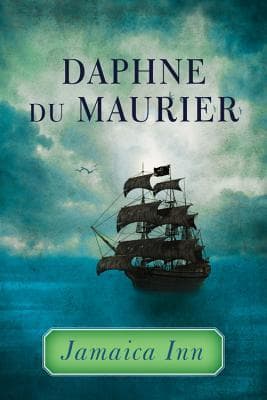
Daphne du Maurier (1936)
Genre
Thriller / Historical Fiction / Mystery / Romance
Reading Time
420 min
Key Themes
See below
Sign in to track this book
Orphaned Mary Yellan uncovers a terrifying smuggling ring and forbidden love within the desolate, storm-battered walls of her uncle's foreboding Cornwall inn.
Following her mother's death, 23-year-old Mary Yellan travels from Helford to Bodmin Moor, Cornwall, to live with her Aunt Patience and Uncle Joss Merlyn at Jamaica Inn. Despite the coachman's warnings about the inn's ill repute, Mary is determined. Upon arrival, she finds the inn desolate and unwelcoming. Her Aunt Patience, once lively, is now a timid, frightened woman, clearly under the oppressive influence of her brutish, heavy-drinking husband, Joss. The inn itself is dilapidated, with no visible guests, yet strange activities occur at night. Mary quickly realizes that Jamaica Inn is not a legitimate coaching inn, and a sense of fear and danger pervades the isolated establishment.
Mary's suspicions grow as she observes her Uncle Joss's erratic behavior, his frequent absences at night, and the mysterious parcels brought into the inn. She overhears hushed conversations and finds a hidden stash of goods. One night, she secretly follows Joss and his men to the coast, witnessing them actively engaged in a wrecking operation – luring ships onto the rocks and plundering their cargo, often murdering the survivors to silence them. This horrifying discovery confirms her uncle's true, heinous profession. Mary is disgusted and terrified, realizing she is trapped in a den of thieves and murderers, with her aunt too broken to offer any resistance or escape.
Amidst the darkness of Jamaica Inn, Mary meets Jem Merlyn, Joss's younger brother. Jem is a handsome but rough horse thief, known for his wild ways and nicknamed the 'White Devil.' Despite his criminal lifestyle, Mary finds herself strangely attracted to his honesty and directness, a stark contrast to the deceit and violence of Joss. Jem, in turn, is captivated by Mary's spirit and intelligence. Their relationship is tense; Mary is repulsed by his thieving but drawn to his passion, while Jem struggles with his own wild nature and his desire to protect Mary from his brother's darker crimes. He offers her a way out, but his own criminal background makes Mary hesitant to trust him fully.
Mary observes a secret meeting at Jamaica Inn, where several men gather with Joss. She realizes this is a council of smugglers, planning their next wrecking venture. She overhears details about their operations, their ruthlessness, and their network. The atmosphere is menacing, and Mary feels increasingly isolated and endangered. Her presence as an outsider, privy to their secrets, makes her a potential liability. She understands that these men are not just petty thieves but a dangerous, organized group capable of extreme violence. This meeting solidifies her resolve to escape, but also highlights the immense power and reach of the criminal enterprise she is now entangled in.
One night, Mary is awakened by a commotion and discovers Joss Merlyn brutally murdered in his bed. Shortly after, she finds her Aunt Patience dead beside him, likely from shock or a broken heart after witnessing her husband's violent end. The murders leave Mary alone and terrified at the inn, now a crime scene. She is plunged into the immediate aftermath, facing the grim reality of death and the terrifying realization that one of the smugglers, or an unknown party, is responsible. The event marks a turning point, as Mary is no longer just an observer but a direct participant in the unfolding tragedy, with her own life now potentially at risk.
Desperate and with no one else to turn to, Mary rides to the nearby village to seek help from the local vicar, Francis Davey. She believes a man of God would be her best hope for justice and protection. She confides in him about the smuggling, the murders, and her fears. Davey listens intently, offering her comfort and seemingly agreeing to help. However, Mary finds his demeanor unsettling; he has an unnatural paleness and an intense gaze. Despite her unease, she feels she has no other option but to trust him, hoping he will use his influence to expose the criminals and ensure her safety.
Mary's unease about Francis Davey proves accurate. She discovers a hidden room at the inn where Joss used to meet with the true leader of the wreckers. Inside, she finds evidence that points to the vicar as the mastermind. He is not merely involved but is the ruthless, calculating brain behind the entire operation, using his clerical guise to deflect suspicion. Davey is a disturbed individual, driven by a perverse religious fanaticism and a desire for power. This revelation is a shock to Mary, as the man she sought comfort from is revealed to be the most dangerous criminal of all, a 'white devil' in sheep's clothing.
After her discovery, Mary is confronted and abducted by Francis Davey. He takes her to his isolated home, where he reveals his full, horrifying philosophy. Davey is a self-proclaimed 'priest' to his own dark religion, believing himself exempt from conventional morality and driven by a desire for control and destruction. He confesses to orchestrating the wrecking, the murders, and even Joss's death, seeing them as acts of divine retribution or necessary evils. Mary is held captive, fearing for her life, as Davey details his twisted plans, which include either converting her to his worldview or silencing her permanently to protect his secrets. She realizes she is in extreme peril.
Just as Mary's situation seems most dire, Jem Merlyn appears, having tracked her to Davey's isolated cottage. He heroically rescues her, overpowering Davey and carrying Mary away to safety. Their escape, however, is not without peril, as Davey and his remaining henchmen pursue them across the desolate Bodmin Moor. The chase is tense and dangerous, with Mary and Jem relying on his knowledge of the treacherous terrain and his quick thinking to evade their pursuers. Jem's loyalty and courage solidify Mary's trust and affection for him, despite his own past as a horse thief, as he risks his life to save hers.
The pursuit ends with Francis Davey cornered and eventually killed, either falling to his death or being shot during the confrontation. With the mastermind of the Jamaica Inn crimes eliminated, the reign of terror on the moor comes to an end. Jem Merlyn, though still a horse thief, is recognized for his role in saving Mary and exposing Davey. Mary, having endured trauma, finally finds peace. She decides to reject her former, more conventional life and embrace a future with Jem. They leave the haunted Jamaica Inn behind, choosing to build a new life together, accepting each other's flaws and finding solace in their shared experiences and mutual affection, away from the darkness of Cornwall.
The Protagonist
Mary transforms from a naive, duty-bound orphan into a courageous woman who confronts evil and ultimately chooses a life of unconventional love.
The Antagonist
Joss remains a consistently villainous character, eventually meeting a violent end due to his criminal activities.
The Supporting
Patience's character arc is a tragic descent into fear and despair, ending with her death shortly after her husband's.
The Supporting
Jem's arc sees him move from a lone, wild horse thief to a protector and partner for Mary, finding purpose beyond his solitary criminal life.
The Antagonist
Davey's true, villainous nature is gradually revealed, culminating in his capture and death.
The Mentioned
The coachman's role is static, serving as an initial harbinger of danger.
The novel starkly contrasts overt evil (Joss's brutality, Davey's fanaticism) with Mary's unwavering moral compass. It also explores moral ambiguity through Jem Merlyn, a 'good' man who is also a thief. Mary herself faces choices that blur lines, such as her attraction to Jem despite his criminal life, suggesting that goodness can exist outside conventional morality. The desolate landscape of Bodmin Moor reflects this struggle, a place where light and darkness constantly battle, both literally and figuratively within the characters.
“''I was caught in a trap, and there was no way out, no way at all, not for me, nor for Patience.''”
Jamaica Inn itself is a symbol of isolation, situated on the remote, desolate Bodmin Moor. This physical isolation directly contributes to Mary's vulnerability, as she is far from any help or authority. Her aunt Patience's broken spirit shows the psychological toll of this isolation and fear. The remote setting allows the illicit activities to thrive, unchecked by law or society. Mary's struggle to escape is compounded by this sense of being cut off from the civilized world, making her ordeal all the more terrifying.
“''It was a god-forsaken spot, that much was certain, and the inn itself had a sinister look about it.''”
Fear is a pervasive force in 'Jamaica Inn.' Aunt Patience is utterly broken by fear of her husband, Joss, showing the destructive power of domestic oppression. Mary herself experiences fear, but unlike her aunt, she refuses to succumb to it, instead using it as a catalyst for action. The novel explores how fear can paralyze some while galvanizing others, and how it can be wielded as a tool of control by characters like Joss and Davey. The oppressive atmosphere of the inn is a constant manifestation of this theme.
“''Fear was a living thing, lurking in every shadow, whispering in every gust of wind.''”
Mary's journey at Jamaica Inn forces her to confront not only external dangers but also her own identity and desires. She begins as a conventional young woman, but her experiences challenge her preconceived notions of right and wrong, and of the kind of life she wants. Her attraction to Jem, a horse thief, forces her to question societal norms and embrace a more unconventional path. By surviving the horrors of the inn, Mary discovers her inner strength, resilience, and a deeper understanding of love and loyalty, forging a new identity for herself.
“''I was no longer the girl who had left Helford, gentle and innocent. I was harder now, and wiser, and unafraid.''”
The novel explores how power, especially unchecked power, can corrupt individuals. Joss Merlyn wields physical power over his wife and the inn, leading to his brutality. More subtly, Francis Davey's intellectual and spiritual power allows him to manipulate and control his gang, twisting religious doctrine to justify his heinous crimes. His corruption is arguably more disturbing than Joss's, demonstrating how even positions of moral authority can be perverted for evil ends, leading to widespread death and destruction.
“''He was like a priest, but a priest of darkness, with a creed of blood.''”
The bleak, remote landscape amplifies the sense of danger and entrapment.
The desolate, fog-shrouded Bodmin Moor and the remote Jamaica Inn serve as more than just a backdrop; they are integral to the plot. The isolation enables the wrecking gang to operate unchecked, and it heightens Mary's sense of vulnerability and entrapment. The harsh weather and treacherous terrain reflect the moral bleakness of the inn and the characters within it, creating an oppressive atmosphere that mirrors Mary's internal struggle and the external dangers she faces. The moor itself becomes a character, contributing to the novel's gothic tone.
Use of atmosphere, mystery, and psychological suspense to create dread.
Du Maurier employs classic gothic elements throughout 'Jamaica Inn.' The dilapidated, isolated inn, the stormy weather, hidden passages, and the constant sense of dread and mystery contribute to a chilling atmosphere. The psychological torment of Patience, the unsettling nature of Francis Davey, and the violent crimes create a strong sense of suspense and horror. These elements amplify the emotional impact of Mary's ordeal and immerse the reader in the dark, foreboding world of the Cornish coast, often blurring the lines between the natural and the supernatural in its unsettling mood.
Characters and places are not what they seem, creating suspense and shocking revelations.
This device is central to the mystery. Jamaica Inn appears to be a legitimate coaching inn but is actually a den of criminals. Aunt Patience seems a simple, frightened woman, but her past reveals a different person. Most strikingly, Francis Davey, the vicar, presents as a man of God but is revealed to be the ruthless, fanatical mastermind of the wrecking gang. This constant subversion of expectations keeps Mary (and the reader) off balance, building suspense and leading to shocking revelations that drive the plot forward and reveal the novel's deeper themes about deception and appearances.
Contrasting characters highlight specific traits and themes.
The novel utilizes several foil characters to deepen its exploration of themes. Aunt Patience serves as a foil to Mary, demonstrating the devastating effects of succumbing to fear and oppression, highlighting Mary's resilience. Jem Merlyn, a 'good' criminal, acts as a foil to the purely evil Joss Merlyn and Francis Davey, showcasing different facets of lawlessness and challenging Mary's moral judgments. These contrasts emphasize Mary's journey of self-discovery and the complex nature of good and evil within the harsh world of the moor.
“The wind was a whetting-stone, sharpening the air to a fine, cold point.”
— Describing the harsh weather on the journey to Jamaica Inn.
“I will not be afraid. I will not be afraid. I will not be afraid.”
— Mary Yellan's internal mantra as she faces frightening situations at the inn.
“There was a quality about him, a stillness, that was more menacing than any bluster.”
— Mary's initial impression of Joss Merlyn, her intimidating uncle.
“The sea, once it casts its spell, holds one in its net of wonder forever.”
— A reflection on the enduring allure of the sea, a constant presence in the story.
“It was as though the very stones of the Inn sweated evil.”
— Mary's growing sense of dread and the pervasive wickedness within Jamaica Inn.
“To be alone was to be free, and freedom was a luxury she had not known for too long.”
— Mary Yellan's desire for independence and escape from her oppressive circumstances.
“There are some things that are better left undisturbed, some secrets that should remain buried.”
— A warning about the dangers of prying into the dark affairs of the inn.
“He had the eyes of a hawk, and the smile of a man who knew too much.”
— Describing Jem Merlyn, Joss's brother, and his enigmatic nature.
“The wildness of the place was in her blood now, a fever she could not shake.”
— Mary's growing connection to the untamed landscape and the lawless environment.
“Love was a strange thing, a powerful current that could sweep one away, willing or unwilling.”
— Mary's internal thoughts on her complicated feelings for Jem Merlyn.
“The truth, like a persistent tide, will always find its way to shore.”
— A thematic reflection on the eventual revelation of hidden wrongdoings.
“There was no turning back. The path was chosen, for good or ill.”
— Mary's realization of her irreversible involvement in the events at Jamaica Inn.
“The darkness of the human heart was deeper than any night.”
— A profound observation on the inherent evil present in some characters.
“She was an outsider, always, but the wild beauty of the land had begun to claim her.”
— Mary's evolving relationship with the Cornish landscape despite her initial displacement.
Ready to see how well you understood this book? Take our interactive quiz with 10 questions.
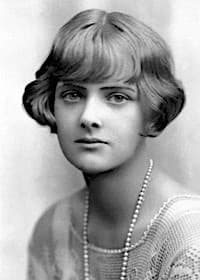
Daphne du Maurier was a celebrated English author renowned for her gothic suspense novels. Her most famous work, "Rebecca," is a classic of psychological suspense and mystery. Other notable works include "Jamaica Inn" and "The House on the Strand," solidifying her legacy as a master storyteller in the realm of atmospheric fiction.







