“Perhaps the only way to endure such times is to make up your own.”
— Jakob's internal reflection on creating hope.

Genre
Historical Fiction
Reading Time
360 min
Key Themes
See below
Sign in to track this book
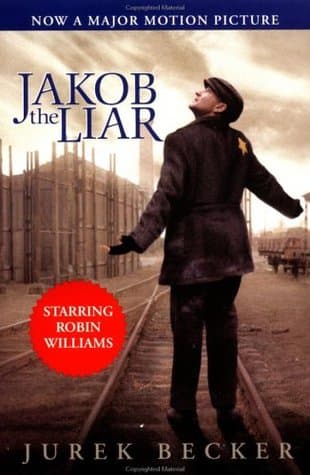
In a WWII ghetto, a man overhears a whisper of Russian advancement. He becomes a reluctant hero, inventing hopeful lies to keep the condemned alive.
Jakob Heym, a Jewish man in a German-occupied ghetto, is called to Gestapo headquarters after breaking curfew. While waiting, he accidentally overhears a German radio broadcast saying Soviet forces are three hundred miles from Bezanika. This news, a spark of hope in the bleak ghetto, is a secret, as radios are forbidden. Jakob is released but now has this extraordinary information. He first struggles with what to do, knowing sharing it could mean death, but also seeing its power to lift spirits.
Jakob tells his friend, Mischa, who is losing hope. When Mischa asks how Jakob knows the Russians are advancing, Jakob, fearing the consequences of saying he heard it from a German radio, quickly invents a lie: he claims to own a hidden radio. This fabricated radio becomes the source of all 'news' Jakob shares. The news about the Russian advance quickly spreads, boosting community morale. People begin to look at Jakob with new interest and hope, unaware of his secret's shaky nature.
Jakob meets Lina, a young orphan girl whose parents were taken away. He takes her in, giving her food and a makeshift home. Lina is initially quiet and traumatized, but soon forms a strong bond with Jakob. Her presence adds another layer to Jakob's life, as he feels responsible for protecting her and maintaining her fragile hope. He often invents small, comforting lies for her, similar to the larger deception he maintains for the ghetto.
As the first excitement about the Russian advance fades, ghetto residents rely more on Jakob for new information. They press him for daily updates, eager for any sign of liberation. Jakob finds himself in a difficult spot, having to constantly invent new details about the war's progress, army movements, and the outside world. He struggles to keep his stories consistent and believable, often spending sleepless nights creating plausible scenarios to meet the growing demand for hope.
The responsibility of being the only one to provide good news weighs heavily on Jakob. He sees the change his 'radio' brings to the ghetto – people work with new energy, share food, and even laugh. This positive effect makes it impossible for him to confess the truth. He understands that the hope he provides is the only thing keeping many alive. However, the constant need to invent news, along with the fear of being discovered by the Germans, causes him great stress and loneliness. He feels isolated by his secret, unable to share the burden.
Dr. Kirschbaum asks Jakob for help. His friend, Professor Frankfurter, was recently deported, and Kirschbaum asks Jakob to use his 'radio' to find out where Frankfurter was sent and if he is still alive. This request puts Jakob in an impossible situation. He cannot provide this specific information, but he also does not want to crush Dr. Kirschbaum's hope or expose his lie. He delays, fabricating vague details about the difficulty of tuning into specific locations, further entangling himself in his deception.
Roman, a cynical resident of the ghetto, starts to question Jakob's stories. He notices inconsistencies and finds it unlikely that Jakob could keep a hidden radio without being caught. Roman's skepticism threatens Jakob's illusion. Jakob tries to deflect Roman's questions and stay calm, but Roman's probing makes him increasingly nervous. Roman represents the constant danger of someone exposing the truth, which would lead to Jakob's death and crush the ghetto's collective hope.
A German watchtower on the ghetto's edge is mysteriously destroyed, leading to increased German patrols and fear. People immediately ask Jakob for an explanation, assuming his 'radio' would have news of a battle. Jakob, having no real information, is forced to invent a detailed story about a daring Russian commando raid that specifically targeted the watchtower. This elaborate lie, though entirely made up, temporarily calms fears and reinforces their belief in Jakob's connection to the outside world.
Lina becomes gravely ill with a fever, causing Jakob great distress. To distract her and keep her spirits up, he invents stories about a beautiful world outside the ghetto, fueled by his 'radio.' He describes a train full of wonderful things, like chocolate and toys, coming to take them to freedom. Tragically, a real train arrives, but it is not one of liberation. The Germans use it to deport the ghetto's inhabitants, including Jakob and Lina, to an extermination camp. The narrator describes Jakob trying to reassure Lina with his stories until the very end.
Throughout the story, the anonymous narrator often interrupts, offering reflections, musings, and even alternative, more hopeful, endings. These interventions highlight the artificiality of storytelling and narrative's power to shape perception. The narrator's presence emphasizes that the truth of Jakob's story is less important than its impact on the lives of those in the ghetto. He struggles with recounting such a tragic history, often wishing he could provide a happier outcome, but ultimately sticks to the stark reality.
The Germans begin the final liquidation of the ghetto. Despite Jakob's efforts and the hope he fostered, the inevitable happens. Jakob, Lina, and the other residents are rounded up and forced onto trains. In the chaotic moments of deportation, Jakob continues to whisper comforting lies to Lina, telling her about their beautiful destination. The scene shows the powerlessness of individuals against the systematic brutality of the Holocaust, even with extraordinary personal courage. The narrator presents two versions of Jakob's death, emphasizing the ambiguity and loss in the historical record.
Even after the deportation, the memory of Jakob's 'radio' and the hope it provided remains. The lie, though fabricated, served a purpose: it gave people a reason to endure, to believe liberation was possible, and to maintain their humanity. The narrator reflects on the impact of Jakob's actions, suggesting that even a lie, born of compassion and aimed at preserving hope, can be a form of truth. Jakob's story shows the human spirit's resilience and storytelling's power, even in the darkest times.
The Protagonist
Jakob transforms from a quiet, solitary individual into a reluctant beacon of hope for his entire ghetto, shouldering the immense burden of sustaining their will to live through his fabricated news.
The Supporting
Lina, initially traumatized and silent, slowly begins to trust and find comfort in Jakob, her hope and imagination rekindled by his stories.
The Supporting
Mischa moves from near despair to renewed hope and determination, fueled by Jakob's 'news'.
The Supporting
Roman remains consistently skeptical, serving as a foil to the widespread belief in Jakob's radio.
The Supporting
Dr. Kirschbaum's hope is briefly rekindled by Jakob's 'radio', highlighting the deep yearning for connection and information.
The Mentioned
Herschel's arc is complete before the main narrative, serving as a tragic example of despair.
The Supporting
The Narrator struggles with the responsibility of telling a tragic story, ultimately choosing to honor the truth of its impact over a fabricated happy ending.
The main theme is how hope, even if based on a lie, can sustain life in overwhelming despair. Jakob's fabricated radio news brings new life to the ghetto, allowing people to endure suffering. This is clear in how community morale improves, people share food, and laughter returns after Jakob begins spreading his 'news.' The illusion acts as a vital psychological defense, proving that belief in a better future can be as important as food and water for survival. The narrator often questions if such a lie is right, ultimately concluding that its positive impact validates Jakob's actions.
“And there was the radio. And there was hope. And there was Jakob.”
This theme explores the moral question of whether a comforting lie or a harsh truth is better. Jakob's initial lie about the radio quickly grows, forcing him to continually invent news. He knows that revealing the truth would crush the ghetto's fragile hope, possibly leading to despair and suicide, as shown by Herschel Schtamm. His lies are acts of compassion, but they isolate him and burden him with immense pressure. The story suggests that in extreme circumstances, a lie can be an act of love and a necessary survival tool, even if it cannot change the tragic outcome.
“What would be the point of the truth if it merely meant death?”
The novel highlights kindness, courage, and resilience that persist amid the Holocaust's systematic dehumanization. Jakob's selfless act of providing hope, his care for Lina, and the community's willingness to share scarce resources all show the enduring human spirit. Even under constant threat, characters like Dr. Kirschbaum maintain their intellectual curiosity and concern for others. These moments of humanity contrast with the brutal regime, emphasizing that the spirit can remain unbroken even when the body is imprisoned. Jakob's efforts to keep Lina's spirits up with stories of a beautiful world are a poignant example.
“They had learned to live with hunger, with dirt, with lice, but not with despair.”
The narrative itself often comments on storytelling's nature and purpose. The narrator's interventions, his admitted inventions, and his struggles to find a 'better' ending for Jakob's story show narrative's power to shape understanding and provide meaning. Jakob's lies are, in essence, stories he tells to his community. The book suggests that stories, whether true or made up, are essential for human existence, offering comfort, meaning, and a way to process reality. It explores the storyteller's responsibility, both Jakob within the ghetto and the narrator recounting the history.
“A good story, you see, has to have a beginning, a middle, and an end. Even if the end is sad.”
A generic setting that universalizes the experience of the Holocaust.
By keeping the ghetto unnamed and the specific year ambiguous, the novel universalizes the experience of persecution and suffering during the Holocaust. It allows the story to resonate beyond a specific historical event, making it applicable to any situation where people are oppressed and dehumanized. This lack of specific detail emphasizes the psychological and emotional impact of the events rather than focusing on historical accuracy, making Jakob's story a timeless fable about hope and resilience in the face of tyranny.
Breaks in the narrative where the storyteller comments on the plot and offers alternative scenarios.
The frequent interruptions by the anonymous narrator serve as a meta-fictional device. They highlight the artificiality of storytelling and the choices made by an author in crafting a narrative. By openly discussing his own struggles with the tragic ending, and even offering alternative, happier versions of events, the narrator emphasizes the human desire for hope and the ethical responsibility of telling such a story. This device makes the reader aware of the story's construction and its deeper philosophical implications about truth and fiction.
A fabricated object that symbolizes hope and provides a mechanism for Jakob's lies.
Jakob's invented radio is the central plot device. It is a tangible symbol of hope for the ghetto residents, representing their connection to the outside world and the possibility of liberation. For Jakob, it is the mechanism through which he dispenses his life-sustaining lies. The radio's non-existence underscores the theme of illusion, while its function highlights the power of belief. It is a source of both immense power and immense burden for Jakob, making him the sole conduit for information and hope.
The use of absurd, ironic, and darkly humorous elements within a tragic setting.
The novel employs elements of Kafkaesque comedy, characterized by absurd situations, dark humor, and a sense of alienation, even within its tragic context. Examples include Jakob's initial accidental overhearing of the news while waiting for punishment, or the elaborate, almost farcical, nature of his invented stories. This comedic layer doesn't diminish the horror but rather highlights the absurdity of the ghetto's existence and the characters' resilience. It allows for moments of levity that make the ultimate tragedy even more poignant, creating a unique tone that balances despair with human ingenuity.
“Perhaps the only way to endure such times is to make up your own.”
— Jakob's internal reflection on creating hope.
“A man without hope is like a tree without roots.”
— Jakob explaining the importance of hope to Mischa.
“Lies are only good for those who tell them. For those who believe them, they are poison.”
— Jakob's initial reluctance to lie, before understanding its potential good.
“It's not good to think too much. Thinking makes you sad.”
— An observation about the coping mechanism of avoiding deep thought.
“Even a small lie can be bigger than the truth, if it gives hope.”
— Jakob's justification for his fabricated news reports.
“People need stories, especially when the real story is too hard to bear.”
— A reflection on the human need for narrative during suffering.
“The truth is a luxury we cannot always afford.”
— Jakob's pragmatic view on the necessity of lies in dire circumstances.
“A secret is not a secret if everyone knows it.”
— Jakob's understanding of how his 'secret' news spreads.
“Hope is a dangerous thing. It can make you do foolish things.”
— Mischa's cynical view on hope, contrasted with Jakob's.
“Sometimes it's better not to know everything.”
— A common sentiment among the ghetto inhabitants, seeking solace in ignorance.
“To invent a future is a dangerous occupation.”
— Jakob's internal monologue about the burden of his fabricated news.
“The greatest freedom is the freedom to imagine.”
— A subtle theme throughout the book, as imagination provides escape.
“Even in the darkest times, a small spark can light the way.”
— Jakob's belief in the power of small acts of hope.
“A lie that brings comfort is sometimes better than a truth that brings despair.”
— A core moral dilemma explored by Jakob's actions.
Ready to see how well you understood this book? Take our interactive quiz with 10 questions.
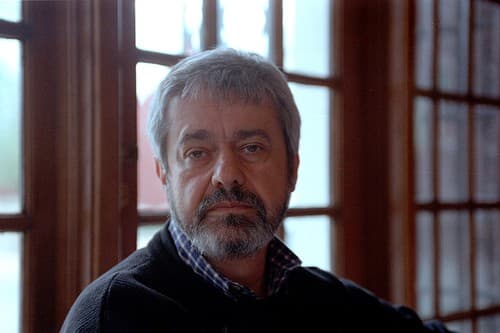
Jurek Becker was a Polish-born German writer, screenwriter and East German dissident. His most famous novel is Jacob the Liar, which has been made into two films. He lived in Łódź during World War II for about two years and survived the Holocaust.