“I was born on an island, and I've lived on an island all my life. And I'll probably die on an island.”
— Sara Louise's opening narration, establishing her constrained world.

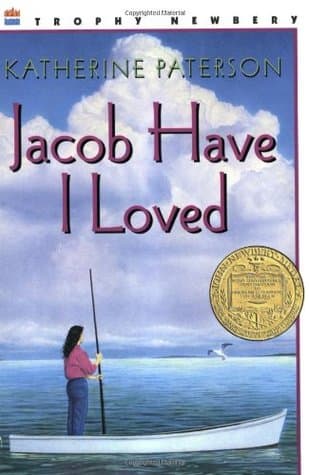
Katherine Paterson (1980)
Genre
Children's / Historical Fiction / Young Adult
Reading Time
240 min
Key Themes
See below
Sign in to track this book
On a remote Chesapeake Bay island, a girl deals with intense sibling rivalry and tries to find her own identity while living in the shadow of her 'perfect' twin.
Sara Louise Bradshaw, called Louise, tells about her birth on Rass Island, a small, isolated crab-fishing community in the Chesapeake Bay. She was born minutes before her twin sister, Caroline, but Caroline was always considered the weaker, more delicate twin, needing constant care from their mother. This early dynamic starts a pattern where Caroline gets more attention and perceived affection, while Louise, strong and capable, is often overlooked. Their grandmother, a stern and superstitious woman, reinforces this imbalance by openly favoring Caroline and often quoting the biblical verse, 'Jacob have I loved, but Esau have I hated,' implying that Caroline is Jacob and Louise is Esau.
As the twins grow, Caroline develops a beautiful singing voice and a natural talent for music, which their parents eagerly support. Caroline gets piano lessons and chances to perform, becoming the island's favorite. Louise, in contrast, feels clumsy and untalented, her efforts often overshadowed or ignored. She resents the constant praise given to Caroline and how her sister easily gets attention and affection. Louise finds comfort helping her father with his crabbing boat, a physically demanding job her mother disapproves of for a girl, further separating her from the home and her sister's world.
Two important people arrive on Rass Island: Call, a boy Louise's age whose family has moved to the island, and Mr. James, an elderly, reclusive man who was once a concert musician but now lives like a hermit. Call becomes Louise's closest friend and confidant, sharing her love for the water and her feeling of being an outsider. Mr. James, with his mysterious past, becomes a source of fascination and fear for the islanders. Caroline, however, is drawn to Mr. James's musical knowledge, seeking his help to improve her singing, which further highlights her unique talents.
At school, Caroline is popular, charming, and succeeds easily, while Louise is quieter, often feeling invisible or known only as 'Caroline's sister.' Louise's friendship with Call deepens, and she secretly has romantic feelings for him. However, she also notices Call's growing admiration for Caroline's beauty and talent. This creates an inner conflict for Louise, torn between her loyalty to Call and her simmering jealousy of Caroline. The constant comparison and the feeling of being second-best continue to fuel Louise's resentment, making her question her own worth and place in the world.
Mr. James, seeing Caroline's extraordinary talent, offers to train her further and help her pursue a musical career off the island. This excites Caroline and their parents, as it represents a chance for her to escape the limited life on Rass Island. For Louise, this news is a mix of good and bad. While part of her wants Caroline to leave so she can finally emerge from her shadow, another part fears the emptiness her sister's departure would create and the possibility of being left behind on an island she feels increasingly trapped by.
A hurricane hits Rass Island, causing widespread damage and fear. During the storm, Mr. James, who has been a recluse, comes out to help the community, showing unexpected strength and compassion. Afterward, his past as a brilliant, but troubled, concert pianist is slowly revealed, explaining why he exiled himself. This event humanizes Mr. James to the islanders and, more importantly, to Louise, as she begins to understand the complexities of human suffering and the burden of extraordinary talent.
After the storm, Call tells Louise that he is in love with Caroline. This revelation crushes Louise, confirming her deepest fears and reinforcing her belief that she is destined to be overlooked in favor of her sister. She feels completely rejected and betrayed, believing that even the one person who seemed to understand her has ultimately chosen Caroline. This heartbreak becomes a key moment for Louise, pushing her further into thought and a desperate search for her own identity and purpose, separate from her sister and the expectations of Rass Island.
Caroline, with Mr. James's help, decides to leave Rass Island to attend a music school on the mainland. Her departure is met with sadness and pride from her family and the community. For Louise, it is a complex moment of release and new uncertainty. While she no longer has to deal with Caroline's physical presence, the emotional shadow remains. She is left on Rass Island with her parents, feeling more alone than ever, but also with a new, though daunting, space to define herself.
After Caroline leaves, Louise feels a deep emptiness and a lack of direction. She continues to help her father with crabbing, but she wants something more. She meets Captain Wallace, an older, experienced waterman who recognizes her skill and love for the sea. He offers her a chance to work on his boat, teaching her the deeper parts of navigation and boat handling, skills traditionally for men. This mentorship becomes a turning point for Louise, offering her a clear path and a sense of belonging that is uniquely her own, separate from her family and her sister.
Inspired by Captain Wallace's guidance and her growing confidence, Louise decides to leave Rass Island herself. She moves to Crisfield on the mainland, a larger town, to attend nursing school. This move shows her final break from the comparisons and limits of her past. It is a bold step towards self-discovery and independence, where she can build a life based on her own strengths and hopes, rather than being defined by her twin sister. Her new life in Crisfield represents a fresh start and the beginning of her journey to becoming her own person.
After some time, Louise returns to Rass Island for a visit. She has matured and gained a new perspective. She sees her parents, the island, and even Caroline, who has also returned for a visit, with different eyes. She no longer feels the intense bitterness and jealousy that once consumed her. She has found her own identity and purpose, and this allows her to see Caroline not as a rival, but as a separate person with her own struggles and triumphs. This visit marks a significant emotional reconciliation within Louise, as she comes to terms with her past and accepts her unique place in the world.
In the end, Louise fully accepts who she is and the path she has chosen. She understands that her strength, resilience, and connection to the water are not lesser qualities than Caroline's artistic talents, but simply different. The biblical verse that haunted her childhood, 'Jacob have I loved, but Esau have I hated,' no longer holds power over her. She realizes that her worth is inherent and not dependent on comparison to anyone else. Louise finds peace in her own identity, having successfully stepped out of her sister's shadow to build a life that is authentically her own, fulfilling her journey of self-discovery.
The Protagonist
Louise transforms from a bitter, overshadowed twin into an independent, self-assured woman who defines her own worth. She learns to embrace her unique strengths and forge her own path.
The Supporting/Antagonist (from Louise's perspective)
Caroline grows from a somewhat passive recipient of praise to an individual who makes a difficult choice to pursue her dreams, leaving the comforts of home.
The Supporting
Call serves as a catalyst for Louise's romantic heartbreak, forcing her to confront the reality of her place in the emotional landscape of Rass Island.
The Supporting
Mr. James's past is gradually revealed, humanizing him and allowing him to serve as a wise, albeit unconventional, mentor for both twins.
The Supporting
The Grandmother remains a static character, representing the ingrained societal and familial biases that Louise must learn to transcend.
The Supporting
Captain Wallace serves as a crucial mentor, providing Louise with the skills and confidence to pursue her own independent life.
The Supporting
Her character remains largely static, representing the societal expectations and parental biases Louise must navigate.
The Supporting
His character provides a consistent source of validation and practical skills for Louise, aiding her development.
The novel explores the intense and often destructive nature of sibling rivalry, especially between identical twins. Louise's entire identity is shaped by her comparison to Caroline, leading to deep resentment and a struggle to define herself. She constantly feels like 'Esau' to Caroline's 'Jacob,' perpetually unloved and overlooked. This theme appears in Louise's thoughts, her jealousy over Call, and her attempts to find a talent or purpose not overshadowed by her sister, such as her work on the crabbing boat. Her journey is ultimately about separating her self-worth from her sister's achievements.
“It was as if there were a great hole in the universe and I was born on the side that was always dark, and Caroline on the side that was always light.”
Louise's main struggle is to find her own value and a place where she truly belongs, distinct from her family's expectations or her sister's shadow. She feels unloved by her grandmother, overlooked by her mother, and overshadowed by Caroline in every social interaction. Her deep connection to the Chesapeake Bay and her work on the crabbing boat give her a sense of competence and belonging, but she longs for deeper emotional validation. Her decision to leave Rass Island and pursue nursing school is a powerful act of self-determination, proving that she can create her own destiny and define her own worth.
“I had to find my own place, my own life, or I would die.”
Rass Island, while home, also feels like a trap for Louise. The limited opportunities, the strict gender roles, and the constant comparisons to Caroline create a strong desire for escape. Both twins, in their own ways, seek freedom from the island's limits: Caroline through her musical talent and Mr. James's mentorship, and Louise through her eventual pursuit of an education and a new career in Crisfield. The sea, which offers both food and a path to the wider world, symbolizes this longing for freedom and the possibility of a life beyond their birthplace.
“The sea was a freedom, a release from all the landlocked rules and expectations.”
The novel examines how love is given and seen, especially within a family. Louise feels a deep lack of love, believing her mother and grandmother favor Caroline, often citing the biblical 'Jacob have I loved, but Esau have I hated.' This perceived favoritism creates deep emotional wounds. The story explores whether love must be earned or if it is inherently unequal, and how that inequality shapes individuals. Ultimately, Louise learns that love can appear in different forms, and that her own self-love and self-acceptance are most important, regardless of outside approval.
“I knew what it meant to be hated. I knew what it meant to be Esau.”
The traditional gender roles on Rass Island greatly influence Louise's experiences. Her mother discourages her from working on the crabbing boat, wanting her to be more 'ladylike,' while her grandmother emphasizes domesticity and beauty. Louise defies these expectations, finding strength and identity in traditionally male activities like crabbing and boat handling. Her decision to pursue nursing, a profession that requires both skill and compassion, allows her to carve out a role that is both personally fulfilling and challenges the narrow definitions of womanhood on the island, asserting her right to choose her own path.
“They wanted me to be a girl, a lady, and all I wanted was to be strong.”
The constant comparison of the twins to the biblical brothers.
The central plot device is the repeated allusion to the biblical story of Jacob and Esau, specifically the verse 'Jacob have I loved, but Esau have I hated.' This quote, often spoken by the Grandmother, directly frames Louise's perception of her relationship with Caroline and her place in the family. It serves as a powerful metaphor for Louise's feelings of being unloved, overlooked, and destined for a lesser fate. The entire narrative is a journey for Louise to defy this perceived destiny and find her own worth, independent of this ancient comparison.
The story is told by an older Louise looking back on her youth.
The novel is narrated by Sara Louise as an adult, reflecting on her childhood and adolescence. This retrospective viewpoint allows for a deeper understanding of her past emotions and motivations, as the older Louise can analyze and contextualize her younger self's struggles with the wisdom gained from experience. It also hints at her eventual triumph over her insecurities, as she is able to tell her story from a place of resolution and self-acceptance, providing a sense of hope and closure for the reader.
The isolated island community shapes the lives and opportunities of its inhabitants.
Rass Island is more than just a backdrop; it is a character in itself, influencing the twins' lives, limiting their opportunities, and shaping their identities. Its isolation fosters a tight-knit community but also restricts personal growth and external influences. The harsh realities of crabbing and the close-knit, gossipy nature of the island amplify Louise's feelings of being trapped and scrutinized. The island represents both the comfort of home and the suffocating confines from which both sisters ultimately seek to escape, albeit in different ways.
The contrasting personalities and talents of the twins highlight each other's traits.
Louise and Caroline serve as classic foil characters. Caroline's delicate beauty, musical talent, and effortless popularity highlight Louise's perceived plainness, physical strength, and feelings of inadequacy. Conversely, Louise's resilience, independence, and connection to the practical world of the sea underscore Caroline's reliance on her artistic gifts and her more sheltered nature. This dynamic intensifies the central conflict of identity and comparison, making Louise's journey of self-discovery all the more poignant as she struggles against the stark contrast presented by her twin.
“I was born on an island, and I've lived on an island all my life. And I'll probably die on an island.”
— Sara Louise's opening narration, establishing her constrained world.
“It wasn't fair. Nothing was fair.”
— Sara Louise's frequent lament about her sister Caroline's advantages.
“The sea takes what it wants, and gives what it must.”
— A common saying on the island, reflecting the harsh realities of their life.
“Mama said that Caroline was like a flower, and I was like a weed.”
— Sara Louise internalizing her mother's perceived favoritism.
“Some people are born to shine, and some are born to stand in the shade.”
— Sara Louise's reflection on her and Caroline's differing destinies.
“I was Jacob and she was Esau, and I hated her.”
— Sara Louise's direct comparison of her situation to the biblical story.
“It was as though the island itself had put a spell on me, keeping me here.”
— Sara Louise's feeling trapped by her home and circumstances.
“You can't live your life comparing it to someone else's. You have to live your own.”
— Captain Wallace's advice to Sara Louise.
“Maybe I wasn't meant to be a great singer. Maybe I was meant to be something else.”
— Sara Louise beginning to re-evaluate her aspirations.
“Love isn't something you earn. It's something you give.”
— A profound realization Sara Louise comes to.
“I had always thought that if I could just get off the island, everything would be different. But it wasn't the island.”
— Sara Louise's epiphany about the source of her unhappiness.
“The greatest gift you can give another is your own happiness.”
— Captain Wallace's final wisdom to Sara Louise.
“For the first time in my life, I wasn't wishing I was someone else. I was just me.”
— Sara Louise's moment of self-acceptance and peace.
“And I knew, in that moment, that Jacob had not loved Esau. Jacob had loved Jacob.”
— Sara Louise's final understanding of the biblical parallel and her own family dynamics.
Ready to see how well you understood this book? Take our interactive quiz with 10 questions.
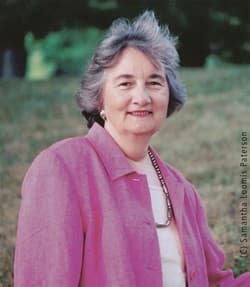
Katherine Womelsdorf Paterson is an American writer best known for children's novels, including Bridge to Terabithia. For four different books published 1975–1980, she won two Newbery Medals and two National Book Awards. She is one of four people to win the two major international awards; for "lasting contribution to children's literature" she won the biennial Hans Christian Andersen Award for Writing in 1998 and for her career contribution to "children's and young adult literature in the broadest sense" she won the Astrid Lindgren Memorial Award from the Swedish Arts Council in 2006, the biggest monetary prize in children's literature. Also for her body of work she was awarded the NSK Neustadt Prize for Children's Literature in 2007 and the Laura Ingalls Wilder Medal from the American Library Association in 2013. She was the second US National Ambassador for Young People's Literature, serving 2010 and 2011.
Dan Gemeinhart
4.5
Kate O'Hearn
4.4

Jeanne Birdsall
4.4

Jen Wang
4.4
Wendelin Van Draanen
4.3

John Marsden
4.3

Chris Van Allsburg
4.3
Jennifer A. Nielsen
4.2