“The world is a much more interesting place than you give it credit for, Miss Rook. And much more dangerous.”
— Jackaby to Abigail upon their first meeting, hinting at the supernatural.

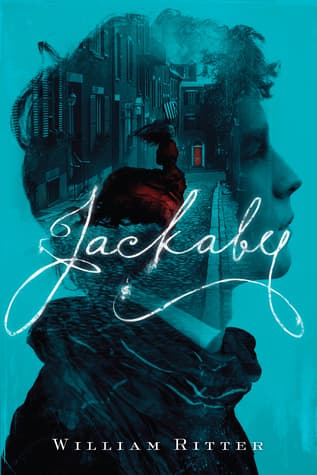
William Ritter (2014)
Genre
Fantasy / Historical Fiction / Mystery / Young Adult
Reading Time
300 min
Key Themes
See below
Sign in to track this book
In 1892 New England, a sharp-witted young woman becomes assistant to an eccentric supernatural detective, unraveling a string of bizarre murders that baffle the mundane police and hint at a monstrous killer unseen by ordinary eyes.
Abigail Rook, an Englishwoman who recently returned from a failed archaeological dig in eastern Europe, arrives in New Fiddleham, New England, in 1892. She is looking for a new path and a job. After an unsettling interview with Mrs. Henderson at the employment agency, she is sent to R.F. Jackaby, an investigator of the unexplained, who lives in a house full of strange objects. Jackaby, who sees supernatural things, immediately notices Abigail's sharp observational skills—her ability to see ordinary but important details—and offers her a job as his assistant. His previous assistant was turned into a duck. Abigail is curious and needs work, so she accepts, despite Jackaby's strange manner and the job's supernatural nature.
On Abigail's first day as Jackaby's assistant, they are called to a murder scene. A man named Mr. Henderson is dead, his throat ripped out and his body drained of blood. The police, led by Inspector Marlowe, quickly assume it was a regular human murderer. However, Jackaby, using his unique sight, immediately says the killer is not human and points out strange details, like the precise blood removal, that the police miss. Abigail, though initially doubtful, starts to see the subtle clues Jackaby points out, showing her value to his investigations. They also meet Detective Charlie Cane, a young officer who, unlike Marlowe, is open to Jackaby's unusual ideas.
Soon after, a second victim, Mr. Ruddle, is found in the same brutal way. This strengthens Jackaby's belief that they are dealing with a supernatural entity, not a human serial killer. The attack pattern—the specific injuries, the lack of blood, and the seemingly impossible entry and exit—all point to a mythical creature. Inspector Marlowe remains unconvinced, focusing on regular suspects and theories. Jackaby, with Abigail's help, starts researching historical cases and local stories, looking for a creature that matches the killer's method. Abigail's practical insights and ability to ground Jackaby's more unusual theories prove very helpful as they explore the growing mystery.
Jackaby and Abigail continue their investigation, visiting various places and talking to potential witnesses, many of whom are unseen or unheard by most people. They go to the local library, where Jackaby talks to a spectral librarian named Jenny, who gives cryptic advice. They also meet other supernatural beings in New Fiddleham, such as centaurs working as stable hands and various spirits. Abigail struggles to fit her scientific view with Jackaby's world of the unseen, but she starts to adjust, noticing the subtle changes in reality that show the supernatural's presence. Her observations of ordinary things, like mud on a shoe or a certain fabric, often provide important links that Jackaby's larger theories sometimes miss.
Through his research and observations, Jackaby thinks the killer is a banshee, a spectral entity linked to death and often heard wailing before a death. However, this banshee is not just foretelling death but actively causing it. This banshee seems to be draining life force, or perhaps the 'soul,' instead of just blood. To confirm this, they need to find someone who can hear the banshee's cries. Their search leads them to Mrs. Henderson, the employment agency owner, who, because of her sensitive nature, can perceive subtle supernatural disturbances. She accidentally gives them a key piece of information about a strange sound she heard before the murders.
The investigation becomes personal when Detective Charlie Cane becomes the banshee's next victim. He is found in a catatonic state, drained of his life force, but not dead. This shocking event changes Jackaby's understanding of the creature; it is not just a killer but a possessor, using its victims as hosts. Jackaby deduces that the banshee is not tied to a family line, as traditional banshees are, but to a specific location or object. The attacks are not random but targeted, and the victims are all connected in some subtle way. The case grows urgent as they realize the banshee is getting stronger with each possession.
Abigail, using her careful observation skills, helps Jackaby connect the seemingly unrelated lives of the victims. She notices a subtle commonality that Jackaby's supernatural focus might have missed: all the victims, including Charlie, had some link to the old, abandoned New Fiddleham Opera House. This realization is a breakthrough, suggesting the banshee's origin or current home is in the dilapidated building. They think the banshee is drawing power from the location or from specific people connected to its history. This insight shifts their investigation from tracking an elusive creature to understanding its specific ties to the city's past.
With this new knowledge, Jackaby and Abigail, along with a still-recovering Charlie Cane and a reluctant Inspector Marlowe (who is finally convinced by the evidence), go into the decaying New Fiddleham Opera House. Inside, they find that the banshee is not evil by nature, but a trapped spirit. It is the ghost of a young opera singer, Jenny Cavanaugh, who was tragically murdered backstage years ago, her voice and life stolen. Her spirit, unable to move on, has become vengeful, draining the life force of those connected to her past or the opera house in a desperate attempt to get back what she lost.
During the confrontation, Abigail's empathy and understanding of human emotion are very important. She connects with the banshee, Jenny Cavanaugh, seeing her pain and desire for justice, not just revenge. Jackaby, understanding the spirit's nature, realizes that Jenny needs to be heard and her story acknowledged to find peace. They deduce that Jenny was murdered by a jealous rival or a spurned lover, and her unfinished song and unfulfilled life keep her tied to the world. By acknowledging her suffering and promising to reveal the truth of her death, Abigail helps Jenny release her hold on the living world. Jenny's spectral form finally disappears, bringing a sense of peace.
With the banshee's spirit finally at rest, Charlie Cane fully recovers, his life force restored. Inspector Marlowe, though still somewhat confused, has seen enough to grudgingly accept Jackaby's unique abilities. New Fiddleham returns to normal, though for Abigail, nothing will ever be ordinary again. She has fully accepted her role as Jackaby's assistant, finding her unique talents essential in his strange world. The experience has made their partnership stronger, combining Jackaby's supernatural sight with Abigail's observations, setting the stage for future adventures in New Fiddleham.
The Protagonist
Abigail transforms from a skeptical, unemployed wanderer into a capable and essential assistant, learning to bridge her scientific perspective with the supernatural realities Jackaby perceives.
The Protagonist
Jackaby learns to value and rely on Abigail's practical observations and empathy, becoming a more effective and slightly less isolated investigator.
The Supporting
Charlie begins as an open-minded officer and becomes a direct victim of the supernatural, solidifying his belief in Jackaby's world and his trust in Abigail.
The Supporting
Marlowe's initial complete dismissal of the supernatural is challenged by the undeniable evidence, leading to a grudging acceptance of Jackaby's effectiveness.
The Antagonist/Supporting
Jenny transitions from a vengeful, life-draining banshee to a peaceful spirit after her story is heard and acknowledged, allowing her to finally move on.
The Supporting
Mrs. Henderson unknowingly acts as a witness and a conduit for information regarding the banshee's presence, becoming a minor catalyst in the investigation.
The Mentioned
Her role is primarily expository, providing historical and supernatural context to the ongoing investigation.
The Supporting
Douglas's arc is largely complete before the story begins, serving as a cautionary tale and a source of humor and minor assistance.
This theme is important to 'Jackaby,' exploring how different people see the world. Jackaby sees a hidden supernatural reality most people cannot, while Abigail initially sees only ordinary things. The police, especially Inspector Marlowe, represent a strict belief in conventional reality, dismissing anything they do not understand. The plot shows that what is 'real' often depends on perspective, and ignoring the unseen can lead to mistakes. Abigail's journey is about learning to see the supernatural, blurring the lines between what is believed and what exists.
““Miss Rook, I am not an occultist,” Jackaby said. “I have a gift that allows me to see truth where others see the illusion--and there are many illusions. All the world’s a stage, as they say, and I seem to have the only seat in the house with a view behind the curtain.””
The novel shows how important it is to combine different kinds of intelligence and observation. Jackaby has a brilliant mind that sees supernatural patterns and connections but often misses ordinary details. Abigail, on the other hand, is grounded, logical, and good at noticing the 'normal' specifics that Jackaby overlooks. Their partnership works because these different intelligences complement each other. The story argues that neither scientific logic nor intuitive perception is enough alone; true understanding and problem-solving happen when these distinct approaches are combined, creating a more complete view of the world.
““Your eyes are excellent, Miss Rook. You see the details others overlook. It is a rare and valuable skill.””
The mystery of the banshee centers on a strong feeling of unfairness and unfinished business. Jenny Cavanaugh, the banshee, is a spirit who cannot rest because she was murdered and her story was never told. Her violent actions come from her pain and her strong desire for the truth of her death to be known. The story's resolution is not about defeating a monster but about giving justice and peace to a wronged spirit. This theme explores how past wrongs can affect the present, and that real peace, even for the dead, often requires truth and acknowledgment.
““Some spirits cling to the living world because they have unfinished business. A wrong unrighted. A truth untold.””
Abigail's defining trait, empathy, plays a key role in solving the case. Jackaby can identify the supernatural creature, but Abigail connects with Jenny Cavanaugh's humanity and pain. She understands that the banshee is not just a monster but a suffering soul, allowing her to communicate and offer comfort that Jackaby's more detached, analytical approach cannot. This theme shows that empathy is not a weakness but a powerful tool for understanding, even when facing something monstrous, and can be key to resolving conflict and bringing peace.
““Perhaps she doesn’t want to hurt anyone,” I ventured, my voice soft. “Perhaps she just… wants someone to listen.””
A classic literary pairing for mystery and fantasy narratives.
This is a well-established trope, reminiscent of Sherlock Holmes and Dr. Watson, but given a supernatural twist. Jackaby is the brilliant, socially awkward, and intuitively gifted detective, while Abigail is the grounded, observant, and often skeptical narrator. This dynamic allows for exposition of the supernatural world through Abigail's eyes, making it accessible to the reader. It also provides a balance of logic and intuition, ensuring that both extraordinary and mundane clues are noticed and processed, highlighting the strength of their combined abilities.
Allows for an immersive, skeptical-to-believer perspective.
The story is told entirely from Abigail Rook's point of view. This narrative choice is crucial because it allows the reader to experience the unveiling of the supernatural world alongside a character who is initially as skeptical and bewildered as they might be. Abigail's logical, grounded observations provide a relatable entry point into Jackaby's bizarre reality, gradually building credibility for the fantastic elements. Her internal thoughts and reactions help to humanize the strange events, making the transition from a mundane world to one filled with the unseen more believable and engaging.
A magical ability that drives the central conflict and world-building.
Jackaby's unique ability to perceive supernatural beings and phenomena is the primary catalyst for the plot and the foundation of the novel's world-building. This 'sight' allows him to identify the non-human nature of the killer, setting him apart from the conventional police. It also introduces the reader to a hidden world of ghouls, banshees, and other creatures coexisting with humans. The device not only propels the mystery but also highlights the theme of perception vs. reality, as Jackaby sees a truth others cannot, forcing Abigail and, by extension, the reader to question what they believe is real.
A symbolic object representing the banshee's unresolved past.
The unfinished song of Jenny Cavanaugh, the banshee, serves as a powerful symbolic plot device. It represents her unfulfilled life, her stolen voice, and the injustice of her murder. Her spectral wails are not just a sign of her presence but a distorted echo of the music she was never able to complete. Resolving the mystery and bringing peace to Jenny involves acknowledging her lost talent and the truth of her death, effectively allowing her 'song' to finally find its conclusion. This device grounds the supernatural entity in a very human tragedy and desire for artistic expression.
“The world is a much more interesting place than you give it credit for, Miss Rook. And much more dangerous.”
— Jackaby to Abigail upon their first meeting, hinting at the supernatural.
“There are things in this world that defy explanation, Miss Rook, and it is my business to find them.”
— Jackaby explaining his profession to Abigail.
“It is not a question of whether or not you believe in the impossible, Miss Rook. It is a question of whether or not the impossible believes in you.”
— Jackaby challenging Abigail's initial skepticism.
“I may not understand the world as others do, but I understand the things that others do not.”
— Jackaby reflecting on his unique perception.
“One does not simply ignore a newly deceased person when there is a perfectly good mystery to be solved.”
— Jackaby's pragmatic approach to a murder scene.
“The truth is rarely simple, Miss Rook, and often much stranger than fiction.”
— Jackaby commenting on the complexities of their cases.
“Normal is a setting on a washing machine, Miss Rook. Not a state of being.”
— Jackaby dismissing the concept of normalcy.
“My dear Miss Rook, when you have eliminated the impossible, whatever remains, however improbable, must be the truth. Unless it's a goblin.”
— Jackaby adapting a famous detective quote, adding his own supernatural twist.
“A good assistant, Miss Rook, is not merely a note-taker, but a sounding board, a second pair of eyes, and occasionally, a human shield.”
— Jackaby defining the role of his assistant.
“Sometimes, Miss Rook, the most monstrous things are hidden in plain sight.”
— Jackaby hinting at the deceptive nature of evil.
“The world is full of things that go bump in the night, Miss Rook. And some of them are quite charming, in their own way.”
— Jackaby's unconventional view of supernatural creatures.
“It takes a certain kind of person to see what others cannot, Miss Rook. And an even rarer kind to embrace it.”
— Jackaby acknowledging Abigail's growing ability to perceive the supernatural.
“Fear, Miss Rook, is often merely a lack of information.”
— Jackaby's rational approach to confronting the unknown.
“I find that a well-placed question can often reveal more than a thousand pronouncements.”
— Jackaby's method of interrogation and investigation.
Ready to see how well you understood this book? Take our interactive quiz with 10 questions.

Biography coming soon.







