“There is no such thing as bad people. We’re all just people who sometimes do bad things.”
— Lily reflects on human nature and morality.

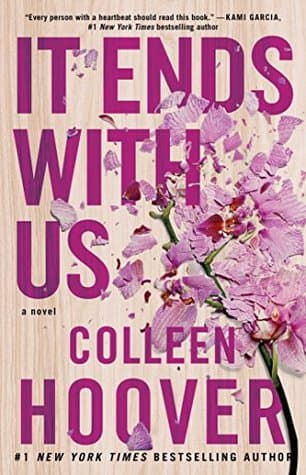
Colleen Hoover (2016)
Genre
Young Adult / Romance
Reading Time
7 hr
Key Themes
See below
Sign in to track this book
A young woman building her dream life in Boston finds her perfect romance with a charming neurosurgeon threatened by his hidden darkness and the unexpected reappearance of her protective first love.
After delivering an honest eulogy at her abusive father's funeral in Maine, 23-year-old Lily Bloom moves to Boston to open her own floral shop. While sitting on a rooftop thinking about her complicated feelings about her father, she meets Ryle Kincaid, a charming and ambitious neurosurgeon. Their first conversation is playful and provocative. Ryle makes it clear he is not interested in relationships, a stance Lily initially shares. Despite this, they have a clear attraction. Lily also starts reading her old journals, which tell about her first love with a homeless boy named Atlas Corrigan during her teenage years.
Lily and Ryle keep running into each other, often at her new flower shop or through her friend Allysa, who is Ryle's sister. Their interactions are full of witty talk and strong chemistry. Ryle's initial resistance to a relationship starts to fade as he becomes more drawn to Lily. One evening, after a night out, Ryle tells Lily he has strong feelings for her and they share a passionate kiss, confirming their intense connection. Lily, despite her early doubts about Ryle's relationship stance, finds herself falling for him.
Lily and Ryle quickly fall into a deep, passionate relationship. Their romance is fast and intense, with Ryle showing Lily much affection. Lily is happy, feeling like she has found everything she wanted. However, one night, Ryle gets angry and shoves Lily after she accidentally burns her hand while cooking and he blames her. He immediately apologizes much, showing deep regret and explaining it was an accident, a reaction to his childhood trauma involving his brother. Lily, upset but wanting to believe him, forgives him, thinking it is a one-time incident.
While out with Allysa, Lily unexpectedly sees Atlas Corrigan, her first love. Atlas is now a successful chef and a kind, confident man. The meeting is emotional for Lily, bringing back many memories from her past, including how Atlas protected her from her abusive father. Atlas expresses his continued feelings for her and gives her his number. Lily, now deeply involved with Ryle, feels conflicted and keeps the meeting a secret from Ryle, knowing his possessive nature and past dislike of relationships.
Ryle's temper comes back and gets worse. After Lily says she ran into Atlas, Ryle gets very jealous and physically assaults her, pushing her down a flight of stairs and injuring her head. He again shows extreme regret, begging for forgiveness and promising it will never happen again. Lily, traumatized and confused, struggles with the situation, remembering her mother's similar experiences with her father and the excuses she made. She wants to leave but finds herself caught in a cycle of love and fear, believing Ryle's apologies.
Despite Ryle's repeated violence, Ryle proposes marriage to Lily. He is genuinely loving and attentive between his outbursts, making Lily believe he can change and their love is strong enough to overcome his issues. Lily, wanting a stable, happy future and still deeply in love with the 'good' Ryle, accepts his proposal. They get married, and Lily tries to make their marriage work, hoping that commitment will stop Ryle's violent tendencies, even as she secretly fears.
The abuse continues, with Ryle's outbursts becoming more frequent and severe. One night, after finding Atlas's phone number in Lily's old journal, Ryle completely loses control, violently assaulting Lily and almost raping her. This attack is the most brutal yet, leaving Lily badly injured and terrified. The next morning, Lily finds out she is pregnant. This news forces her to face the truth: she cannot raise a child in an abusive home, and she cannot let her child see the same violence she endured.
Lily makes the hard decision to leave Ryle. She realizes that her love for him cannot justify staying in an abusive relationship, especially now that she is responsible for another life. She tells Ryle she wants a divorce, explaining that she cannot subject their child to the same fear and violence she experienced growing up. Ryle, at first devastated and resistant, eventually understands her reasoning, though painfully. Lily's mother supports her decision, having lived through a similar situation with Lily's father.
Lily gives birth to a healthy baby girl, whom she names Emerson, after her mother's favorite flower. Ryle is there at the birth and is deeply moved, showing genuine love for his daughter. Despite his pleas for reconciliation, Lily stays firm in her decision. She finalizes the divorce, ending her legal ties to Ryle. The emotional cost is huge, but Lily finds strength in her daughter and her resolve to provide a safe, loving home free from violence. She names her daughter Emerson, a symbol of new beginnings.
In a final, sad conversation with Ryle, Lily explains her decision. She tells him, 'It ends with us,' referring to the cycle of abuse that both their families experienced. She makes it clear that while she will co-parent with him, she cannot be with him romantically. Ryle, though heartbroken, accepts her decision, acknowledging the pain he has caused and expressing his love for their daughter. Lily, now a single mother, focuses on raising Emerson and running her flower shop, embracing her independence and the promise of a peaceful future, finally free from the shadow of abuse.
The Protagonist
Lily transforms from someone who justifies abuse, echoing her mother's past, into a strong, independent woman who breaks the cycle of violence for her daughter.
The Antagonist/Love Interest
Ryle's character remains largely static in terms of his abusive tendencies, but he experiences profound regret and ultimately accepts Lily's decision to leave for their child's safety.
The Supporting
Atlas grows from a vulnerable, protective teenager into a successful, emotionally mature man who remains a supportive presence in Lily's life.
The Supporting
Allysa remains a constant, supportive force, evolving from a friend to a crucial pillar of support for Lily during her divorce.
The Supporting
Jenny evolves from a seemingly passive victim of abuse to an empowered woman who supports her daughter in breaking the cycle.
The Supporting
Marshall's arc involves coming to terms with his best friend's abusive nature and supporting his wife and Lily through the aftermath.
The Mentioned
Emerson's existence is the catalyst for Lily's final decision, symbolizing the breaking of the abuse cycle.
The Mentioned
Though deceased, his legacy of abuse is a central theme Lily must overcome.
The main theme looks at how domestic abuse continues across generations and how hard it is to break free. Lily sees her mother's abuse by her father, then finds herself in a similar situation with Ryle. The book details the emotional manipulation, gaslighting, and the abuser's regret that traps victims, making it hard to leave. Lily's internal struggle shows the painful reality of loving someone who hurts you. This ends with her brave decision to stop the cycle for her daughter's sake, like her mother's delayed escape.
“Fifteen seconds. That's all it takes to completely change everything. Fifteen seconds that we'll never get back.”
This theme shows the conflict between Lily's deep love for Ryle and her need to protect herself and her future child from his violence. Lily's love for Ryle is real, and she wants to believe he can change, often making excuses for his behavior. However, the worsening abuse forces her to face the truth that love is not enough for a healthy relationship when safety is at risk. Her decision to leave, despite loving Ryle, is a strong act of self-preservation and shows her strength in putting a life free from fear first.
“Just because someone hurts you doesn’t mean you can stop loving them. It just means you have to choose to love yourself more.”
The book highlights the difficult choices people make when facing trauma and abuse, especially the choice to stay or leave. Lily's journey shows that forgiveness is complex; she forgives Ryle's regretful self but cannot forgive his violent actions. More importantly, she learns to forgive herself for her choices and for not leaving sooner. Her final choice to end her marriage is a powerful act of agency, breaking from a set path and choosing a new, healthier future for herself and her daughter. This shows that true forgiveness often starts with self-compassion and setting boundaries.
“It’s not my fault. It’s not my fault. It’s not my fault.”
Both Lily and Ryle are deeply affected by childhood trauma. Lily's experiences seeing her mother's abuse influence her initial tolerance for Ryle's behavior, and her journals show her teenage struggles with her father's violence. Ryle's severe anger issues come from his accidental shooting of his younger brother, Emerson, a tragedy he never fully dealt with. The story explores how unresolved trauma can appear in adulthood, affecting relationships and continuing cycles of harm, even when people have good intentions. Understanding this trauma adds layers of complexity to the characters' reasons.
“All humans are born with the ability to love. When we don't get it from the people we're supposed to get it from, we go searching for it in the most unlikely places.”
Lily's journey changes what family means to her, moving past the traditional nuclear family structure damaged by abuse. After her father's death, she finds chosen family in Allysa and Marshall. Her pregnancy and the birth of her daughter, Emerson, make her confront her own ideas of motherhood and the kind of environment she wants for her child. She consciously chooses to break the abusive pattern, creating a new, safe family unit with her daughter, even if it means raising her as a single mother. This theme shows the strength of a mother's love in protecting her child from harm.
“I will not let my daughter think that it's okay to be treated the way I've been treated. I will not let her think that someone who hurts you loves you.”
A dual-timeline narrative device revealing Lily's past relationship with Atlas.
Lily's old journals serve as a crucial plot device, offering a dual-timeline narrative. They provide flashbacks to her teenage years, detailing her first love with Atlas Corrigan and the emotional support he offered her during her father's abuse. These entries provide context for Lily's character, her resilience, and her understanding of healthy versus unhealthy love. They also serve as a stark contrast to her current relationship with Ryle, highlighting the differences between Atlas's protective nature and Ryle's abusive tendencies, and ultimately influencing Lily's decision-making in the present.
A symbolic phrase representing the breaking of the cycle of abuse.
The title itself, 'It Ends With Us,' functions as a powerful symbolic device. It refers to Lily's ultimate decision to break the generational cycle of domestic abuse that plagued her mother's life and threatened to consume her own. By declaring 'It ends with us' to Ryle, Lily signifies her unwavering commitment to ensuring her daughter, Emerson, never experiences the violence she and her mother endured. It represents a conscious, courageous choice to stop the pattern of harm and forge a new, healthier legacy for her family, making the title a direct reflection of the book's core message.
A unique narrative frame for Lily's teenage journal entries and Atlas's perspective.
Lily's teenage journal entries are framed as letters to Ellen DeGeneres, a narrative quirk that adds a touch of youthful innocence and a direct, confessional tone to her past experiences. This device allows the reader intimate access to Lily's thoughts and feelings during a vulnerable period of her life. Later, Atlas's own perspective is briefly shown through similar 'letters' to Ellen, giving insight into his motivations and continued feelings for Lily. This unique framing personalizes their past and reinforces their deep, almost destined connection.
A symbol of Lily's independence, growth, and hope for a new life.
Lily's flower shop, 'Lily Bloom's,' is more than just a business; it symbolizes her independence, resilience, and her dream of cultivating a beautiful life. Flowers themselves represent growth, fragility, and beauty, mirroring Lily's own journey. The shop is her sanctuary, a place where she can express herself and build something positive from the ground up. It represents her self-sufficiency and her ability to create beauty even amidst personal turmoil, serving as a tangible manifestation of her aspirations beyond her romantic relationships.
“There is no such thing as bad people. We’re all just people who sometimes do bad things.”
— Lily reflects on human nature and morality.
“All humans make mistakes. What determines a person's character aren't the mistakes we make. It's how we take those mistakes and turn them into lessons rather than excuses.”
— Lily contemplates personal growth and accountability.
“I feel like everyone fakes who they are, and when you find someone who doesn't, it's impossible not to fall in love with them.”
— Lily describes her attraction to Ryle's authenticity.
“Cycles exist because they are excruciating to break. It takes an astronomical amount of pain and courage to disrupt a familiar pattern. Sometimes it seems easier to just keep running in the same familiar circles.”
— Narration on breaking cycles of abuse.
“Just because someone hurts you doesn't mean you can simply stop loving them. It's not a person's actions that hurt the most. It's the love. If there was no love attached to the action, the pain would be a little easier to bear.”
— Lily grapples with her feelings for Ryle despite his actions.
“Naked truths aren't always pretty.”
— Lily acknowledges harsh realities in her life.
“Fifteen seconds. That’s all it takes to completely change everything about a person. Fifteen seconds that we’ll never get back.”
— Reflecting on a pivotal, traumatic moment with Ryle.
“In the future... if by some miracle you ever find yourself in the position to fall in love again... fall in love with me.”
— Atlas writes to Lily in her childhood journal.
“It stops here. With me and you. It ends with us.”
— Lily decides to break the cycle of abuse for her daughter.
“Sometimes the one who loves you is the one who hurts you the most.”
— Lily reflects on the complexity of her relationship with Ryle.
“I think about how sometimes, no matter how convinced you are that your life will turn out a certain way, all that certainty can be washed away with a simple change in tide.”
— Lily muses on life's unpredictability.
“You can stop swimming now, Lily. We finally reached the shore.”
— Atlas reassures Lily after her struggles.
“I am not a perfect person. I have made many mistakes in my life, but loving you was never one of them.”
— Lily expresses her feelings to Ryle.
“The human heart is a strange vessel. Love and hatred can exist side by side.”
— Narration on conflicting emotions in relationships.
Ready to see how well you understood this book? Take our interactive quiz with 10 questions.

Colleen Hoover is a prolific American author best known for her contemporary romance and young adult fiction. Her novels often explore complex emotional themes and relationships, resonating deeply with a large readership. Notable works include 'It Ends with Us', 'Verity', and 'Ugly Love', which have achieved widespread commercial success and bestseller status.