“The sea is the same as it has been since before men ever went on it in boats.”
— Thomas Hudson reflects on the timeless nature of the sea while painting in Bimini.


Ernest Hemingway (1752)
Genre
Literary Fiction / Historical Fiction
Reading Time
540 min
Key Themes
See below
Sign in to track this book
A solitary painter on Bimini finds joy in fatherhood, navigates Havana's chaos, and hunts U-boats in WWII, all while dealing with his past and a life lived on the edge.
Thomas Hudson, an American painter, lives a quiet life on Bimini in the Bahamas. He spends his days fishing, painting, and enjoying the company of local friends, including his houseman, Eddy, and a young native boy, Roger. His peace is greatly changed by the arrival of his three sons from two different marriages: Tom, the eldest; David, the middle; and Andrew, the youngest. Their summer visit is full of deep-sea fishing trips, including a memorable struggle with a giant marlin, swimming, and the simple joys of fatherhood. Thomas values these moments, aware of how quickly they pass and the love he feels for his boys, which shows his emotional depth under his calm exterior. The days are pleasant, marked by shared adventures and talks.
During their stay, Thomas takes his sons on a long fishing trip on his boat, the 'Queen.' They face various challenges, including a tough fight with a giant swordfish that David, the middle son, hooks. The fight is long and tiring, testing David's strength, with Thomas offering advice and encouragement. Despite their efforts, the fish is lost, a moment of shared disappointment and a lesson in how unpredictable nature is. The boys eventually leave Bimini to go back to their mothers, leaving Thomas to his solitary routine again. This departure affects him deeply, leaving a void that even his painting cannot entirely fill. He thinks about how precious their time together was and the unavoidable separation, a hint of future losses.
Years pass, and the happy memories of Bimini are broken by a series of devastating losses. Thomas Hudson receives news, one by one, that all three of his sons have died. First, the two younger boys, David and Andrew, die in a car accident with their mother. This tragedy makes Thomas deeply sad, leaving him emotionally broken. Later, his eldest son, Tom, who joined the Royal Air Force, is shot down and killed in combat during World War II. This last blow completely shatters Thomas, leaving him without hope. The loss of all his children takes away his desire to live a normal life, pushing him further into solitude and a desperate search for purpose.
After his sons' deaths, Thomas Hudson moves to Havana, Cuba. The war is happening, but his personal struggle is inside him. He often goes to Floridita, a well-known bar, seeking comfort in alcohol and the company of different people. Among them is Honest Lil, an aging prostitute with a kind heart and a difficult past, with whom Thomas has a complex, friendly relationship. He also spends time with other locals, including the bartender and regulars, having philosophical discussions, witty conversations, and deep thoughts about life, death, and human nature. These interactions offer a temporary break from his crushing grief, but his internal pain stays, showing in his quiet manner and thoughtful nature. He is a man lost, trying to numb his sorrow.
While in Havana, Thomas Hudson meets his first wife, a beautiful and famous movie star, who is passing through the city. Their reunion is full of unspoken history, lingering affection, and deep regret. They remember their time together, their shared love, and most painfully, their deceased son, Tom, who was their child. The conversation balances tenderness and pain, as they both acknowledge the love that once was and the irreversible losses they have faced. This meeting brings back many memories for Thomas, showing how much his past relationships affected him and the emptiness left by his sons' deaths. It shows his deep loneliness and his inability to fully move on from his grief.
With World War II escalating, Thomas Hudson finds a new, grim purpose. He dedicates his armed boat to anti-submarine patrols off the Cuban coast, hunting German U-boat survivors who have landed on remote islands after their submarines were sunk. He leads a crew of loyal men, including Eddy, his long-time houseman, and other local Cubans. This mission is dangerous and demanding, requiring good observation, tactical skill, and a willingness to confront the enemy directly. For Thomas, this physical and mental engagement distracts him from his personal pain, channeling his grief and anger into a clear objective. The patrols are tense, with the constant threat of the enemy and the moral difficulties of war.
Thomas and his crew learn that German U-boat survivors have landed on one of the remote islands and are trying to get to safety. Driven by duty and cold resolve, Thomas begins a relentless pursuit. He carefully plans their route, using his extensive knowledge of the local waters and islands. The hunt is difficult, navigating dangerous shallow waters, thick mangroves, and mosquito-infested islands. The crew is disciplined and focused, reflecting Thomas's leadership. This section shows the raw, real nature of the pursuit, the constant anticipation of a fight, and the ethical issues of war, as they track men who are themselves desperate survivors.
As Thomas and his crew get closer, they have a series of tense and violent fights with the German survivors. These encounters are not glorious battles but brutal, close-quarters skirmishes in the difficult environment of the islands. The Germans, desperate and trapped, fight fiercely. During these fights, members of Thomas's crew are wounded, and some Germans are killed. Thomas himself is strong, showing both tactical skill and a chilling determination. The fighting is shown with Hemingway's typical realism, showing the grim realities of war, the suddenness of violence, and the human cost. Each encounter further hardens Thomas, pushing him to the edge of his emotional and physical limits.
The pursuit narrows to the last few German survivors, who are determined to escape. Thomas, driven by a deep need to finish his mission, continues the chase with strong intensity. The final fight happens in a remote, marshy area. During the firefight, Thomas Hudson is badly wounded. He gets multiple gunshot wounds, but despite his injuries, he keeps directing his crew and stays determined. The scene is chaotic and desperate, with gunshots echoing through the islands. His crew manages to defeat the remaining Germans, but Thomas's injuries are critical, marking a turning point in his own fate.
After being mortally wounded, Thomas Hudson is cared for by his loyal crew. As they try to take him for medical help, his condition quickly worsens. In his last moments, Thomas has a deep internal monologue, thinking about his life, his lost sons, his loves, and the meaning he found in his art and his recent, brutal mission. He deals with his grief and the emptiness left by his children, acknowledging the sacrifices and choices he made. He wishes he had done things differently, especially regarding his sons. The story suggests he quietly accepts his fate. Thomas Hudson dies from his injuries aboard his boat, fulfilling a purpose he found in the war, but leaving behind a legacy of deep loss and a life lived on the edge.
The Protagonist
From a seemingly content, albeit solitary, artist and doting father, he transforms into a grief-stricken, hardened warrior, ultimately finding a grim purpose in war and succumbing to its violence.
The Supporting
He is introduced as a bright, loving son, whose potential is tragically cut short by war.
The Supporting
His character arc is brief but impactful, showcasing youthful determination before his untimely death.
The Supporting
Introduced as a symbol of youthful innocence, his death contributes to the tragic arc of Thomas's life.
The Supporting
Remains a consistent, loyal presence, evolving from houseman to a trusted comrade in arms.
The Supporting
He serves as a symbol of youth and learning in the Bimini section, a brief but impactful presence.
The Supporting
Remains a consistent, empathetic presence in Thomas's Havana life, offering a unique form of companionship.
The Supporting
Her brief reappearance serves to illuminate Thomas's past relationships and the depth of his grief.
The novel's main theme is Thomas Hudson's deep and increasing grief over the loss of his three sons. His reaction to these tragedies, first the car accident taking David and Andrew, then the war taking Tom, drives his emotional journey and his later actions. The book explores how loss changes a man, leading him to seek comfort in solitude, alcohol, and eventually, a dangerous purpose. The Havana section, in particular, looks at his attempts to cope with this sorrow through interactions with others, while the war section shows him directing his pain into a grim mission, a desperate escape from internal suffering.
“He knew that he was not going to be crazy. He was not going to be crazy because he had been through it all before. He had been through it all before and he knew that he could not afford to be crazy.”
Thomas Hudson is a classic Hemingway type of man: calm, quiet, and outwardly tough, but deeply sensitive inside. He rarely shows his emotions directly, preferring to put them into action, whether it is painting, fishing, or hunting U-boat survivors. His interactions with his sons, his crew, and even Honest Lil show moments of tenderness and vulnerability, but these are often quickly controlled. The novel explores the pressures and limits of this calm ideal, especially when faced with overwhelming personal tragedy, showing how a man tries to stay composed even as his world falls apart.
“He took a long drink of the cold daiquiri and felt the cold go all the way down and then warm him.”
After losing his sons, Thomas Hudson's life becomes a search for meaning and purpose. In Bimini, he finds purpose in fatherhood and art. After his sons' deaths, he drifts without direction in Havana, seeking distraction. His involvement in anti-submarine patrols during World War II gives him a new, though violent, goal. This mission gives him a reason to live and act, a way to channel his internal turmoil into external action. The theme explores how people find or create purpose when despairing, and the sometimes grim forms that purpose can take.
“He thought that the thing to do was to work and to keep on working and to try to keep from thinking.”
The sea and nature are always present in the novel, both a comfort and a setting for struggle. In Bimini, the sea means freedom, adventure, and the connection between father and sons, especially during the big fishing scenes. It is a place of peace and beauty. Later, off the coast of Cuba, the sea becomes a dangerous, unforgiving place for war, where life and death are decided by skill and chance. Thomas Hudson's deep understanding and respect for the ocean reflect his own character—strong, powerful, and ultimately, at the mercy of bigger forces.
“He loved the sea as a man loves a woman, and he loved the things that lived in it.”
Thomas Hudson is a painter, and his art is a big part of who he is and how he processes his experiences. In Bimini, painting helps him capture the beauty of his surroundings and the joy of his sons' presence. After his losses, his ability to paint is affected by his grief, showing the strong link between emotional state and creative work. Art, for Thomas, is not just a job but a way of seeing and understanding the world, a form of expression that can both heal and show his inner turmoil. The novel quietly explores art's role as a coping method and a legacy.
“He painted what he saw and what he felt, and he painted it as truly as he could.”
Divides the narrative into distinct phases of Thomas Hudson's life.
The novel is explicitly divided into three parts: 'Bimini,' 'Cuba,' and 'At Sea.' This structure allows the reader to experience Thomas Hudson's life in distinct phases, each marked by different geographical locations, emotional states, and overarching purposes. 'Bimini' establishes his life as a father and artist. 'Cuba' details his grief and search for solace. 'At Sea' chronicles his active participation in the war. This tripartite division mirrors the progression of his life and his descent into profound loss, providing a clear framework for his character's development and the thematic exploration of grief and purpose.
A character whose anonymity emphasizes her symbolic role in Thomas's past.
Thomas Hudson's first wife, a famous actress and mother of his eldest son, Tom, is never explicitly named. Her anonymity serves to make her a more symbolic figure, representing a happier, less complicated past for Thomas. Her brief reappearance in Havana functions primarily to highlight Thomas's profound and enduring grief over their shared son and to underscore the depth of his emotional history. Her lack of a name focuses attention on her role in Thomas's memories and sorrow, rather than on her individual identity as a character.
A recurring activity symbolizing struggle, connection, and the human relationship with nature.
Fishing is a prominent motif throughout the novel, particularly in the 'Bimini' section. The epic struggle with the giant marlin symbolizes the challenges and endurance required in life, mirroring Thomas's own later struggles. It also represents a deep connection to nature, the primal hunt, and a bonding activity between father and sons. Beyond its literal depiction, fishing often serves as a metaphor for the pursuit of elusive goals, the confrontation with powerful forces, and the acceptance of both victory and loss, reflecting the larger themes of the book.
Provides deep insight into Thomas Hudson's thoughts and emotional state.
While Hemingway is known for his sparse prose and objective narrative, 'Islands in the Stream' features significant use of internal monologue, especially in the latter parts of the novel. This device allows the reader direct access to Thomas Hudson's complex inner world, his profound grief, his philosophical reflections, and his attempts to make sense of his losses. It reveals the depth of his pain and his thought processes in coping with tragedy, offering a more intimate portrayal of his emotional landscape than is typical of some of Hemingway's earlier works, particularly as he nears his end.
“The sea is the same as it has been since before men ever went on it in boats.”
— Thomas Hudson reflects on the timeless nature of the sea while painting in Bimini.
“You can't get away from yourself by moving from one place to another.”
— Thomas Hudson contemplates his inner turmoil and the futility of escaping his past.
“The world breaks everyone and afterward many are strong at the broken places.”
— A famous line reflecting on resilience and suffering, echoing themes from Hemingway's other works.
“He had been in a war and he knew what it was like.”
— Thomas Hudson recalls his experiences in World War II, shaping his hardened perspective.
“It is good to have an end to journey toward; but it is the journey that matters, in the end.”
— Reflection on purpose and the process of life, often cited for its philosophical depth.
“The only thing that could spoil a day was people.”
— Thomas Hudson expresses his preference for solitude and nature over human interaction.
“You are stronger in the broken places because you have been broken.”
— A variation on the resilience theme, emphasizing growth through adversity.
“The painting was going well and he was happy with it.”
— A moment of contentment in Thomas Hudson's artistic process, highlighting his passion.
“He did not want to think about the war anymore.”
— Thomas Hudson struggles to move past his traumatic memories from the war.
“The island was a good place to be alone.”
— Description of Bimini as a refuge for Thomas Hudson from his troubled life.
“You have to learn to live with what you have done.”
— Advice given to Thomas Hudson about coping with past actions and regrets.
“The stream of life carries us all, and we are islands in it.”
— Metaphorical reflection on human existence and interconnectedness, tying to the book's title.
“He felt the old, cold emptiness inside him.”
— Thomas Hudson experiences a moment of deep loneliness and emotional void.
“Fishing was a way to forget, for a little while.”
— Thomas Hudson uses fishing as an escape from his thoughts and memories.
Ready to see how well you understood this book? Take our interactive quiz with 10 questions.
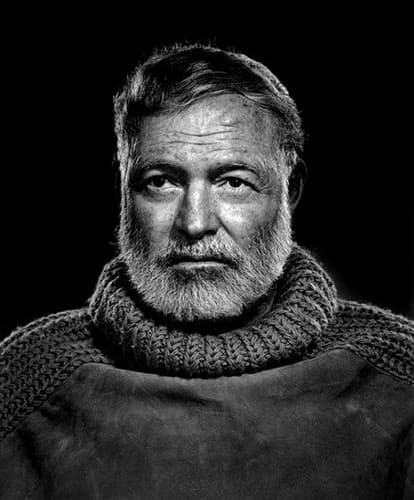
Ernest Miller Hemingway was an American novelist, short-story writer, and journalist. His economical and understated style—which included his iceberg theory—had a strong influence on 20th-century fiction, while his adventurous lifestyle and public image brought him admiration from later generations. Hemingway produced most of his work between the mid-1920s and the mid-1950s, and he was awarded the 1954 Nobel Prize in Literature. He published seven novels, six short-story collections, and two nonfiction works. Three of his novels, four short-story collections, and three nonfiction works were published posthumously. Many of his works are considered classics of American literature.







