“The sea is an animal and it has a voice.”
— Karie's early observations of the ocean's power and mystery.

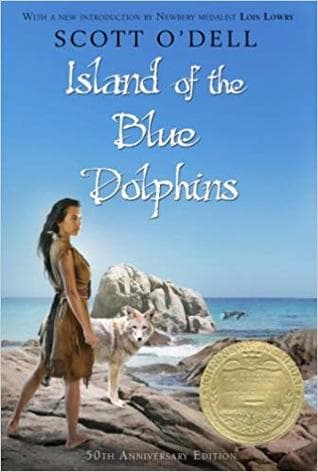
Scott O'Dell (1960)
Genre
Children's / Historical Fiction / Young Adult
Reading Time
240 min
Key Themes
See below
Sign in to track this book
Stranded on an island, a young Native American girl finds connection with nature and wildlife, turning solitude into a journey of survival and self-discovery.
Karana, a young girl of the Ghalas-at tribe, lives on the Island of the Blue Dolphins. Her peaceful life ends when a ship of Aleut hunters, led by Captain Orlov, arrives. They negotiate with Karana's father, Chief Chowig, for permission to hunt sea otters. An agreement is made, but the Aleuts soon overhunt, leading to a disagreement over payment. When the Aleuts prepare to leave without paying, a battle happens between the villagers and the hunters at Coral Cove. Many Ghalas-at men, including Chief Chowig, are killed, leaving the tribe weakened.
After the battle, a new chief, Kimki, is chosen. He sails east to find a new home for the tribe. Months later, a white ship arrives to take the remaining Ghalas-at people away. As the villagers board, Karana realizes her younger brother, Ramo, has forgotten his fishing spear and is still on the island. She jumps off the ship and swims back to shore, wanting to stay with him. The ship sails away, leaving Karana and Ramo alone on the island. They are the only humans there, facing an unknown future.
Karana and Ramo spend their first days alone, trying to manage. Ramo is excited to be chief and wants to get some canoes. One day, Ramo goes off by himself to get food from a hidden spot. Karana searches for him and finds him dead, attacked by wild dogs with red eyes. Karana is filled with sadness and anger. She carries Ramo's body back to the village and burns their houses. Then she moves to a rock by the sea, vowing to kill the wild dogs. Her isolation is now complete.
After a time of mourning and wandering, Karana realizes she cannot survive without weapons, even though tribal law says women cannot make them. She gathers materials and secretly makes a spear, a bow, and arrows. Her main goal is to get revenge on the wild dogs that killed Ramo. She tracks them to their den and, after a tense meeting, wounds the leader. She is impressed by the dog's bravery and sees it is lonely. She brings it back to her shelter and cares for it, naming it Rontu.
With Rontu, Karana feels safer and less alone. She starts to build a more lasting and secure home. She finds a cave with a spring and closes off the entrance with a fence of whalebones and kelp, making a safe place. Rontu becomes her loyal friend, following her everywhere and helping her hunt. Their bond grows, and Karana's fear of the wild dogs lessens. She begins to find a sense of belonging and purpose in her solitary life, with Rontu as her only family.
Karana keeps exploring her island, finding new food sources and natural things. She learns to catch abalones, fish, and gather roots. She also meets and befriends various animals. She tames a young otter, Mon-a-nee (later named Won-a-nee), and a group of gulls. She also tries to tame a baby bird, but it dies. Her interactions with these animals provide friendship and teach her more about the island's plants and animals. These relationships fill the emptiness from her lost tribe and Ramo, reducing her loneliness.
Years later, the Aleut ship returns to the island, bringing fear and caution to Karana. She hides in her cave, watching them from a distance. One day, an Aleut girl named Tutok finds Karana's tracks and eventually finds her. Despite being from different tribes, the two girls become cautious friends, exchanging gifts and spending time together, communicating with gestures and smiles. This brief connection shows the importance of human friendship, but it ends when the Aleut ship leaves, leaving Karana alone again, feeling lonely once more.
Life continues for Karana, but her greatest comfort, Rontu, grows old and dies. His death is a great loss for Karana, making her sad and lonely again. She buries him carefully. After a time of mourning, Karana finds a wild dog that looks like Rontu and is likely his son. She patiently tames this new dog, naming him Rontu-Aru, meaning 'Son of Rontu.' This new friend helps fill the emptiness left by her first dog and brings back a sense of security and purpose.
An earthquake shakes the island, followed by a tsunami. Karana and Rontu-Aru barely survive, holding onto a high rock as the waves cover much of the coastline. The tsunami changes the island's shape, destroying Karana's home and many of her built structures. Despite the damage, Karana rebuilds and adjusts. Some time later, she sees a white ship approaching the island. Her heart fills with hope and worry, wondering if this is finally her chance to leave.
The ship is a rescue vessel, sent by missionaries who heard stories of a lost girl on the island. Karana, along with Rontu-Aru, is found and prepares to leave. She tries to gather her animal companions — the gulls, the otter Won-a-nee — but they are wild and cannot be taken. As she boards the ship, she looks back at the island that has been her home for eighteen years. She wonders about her tribe and what awaits her in the world beyond. She leaves the Island of the Blue Dolphins, carrying her memories and the lessons of survival and companionship.
The Protagonist
Karana transforms from a grieving, revenge-driven girl into a self-sufficient woman who finds deep companionship with animals and peace with her solitude.
The Supporting
Ramo's brief arc serves as the emotional catalyst for Karana's isolation and her subsequent journey of survival.
The Supporting
Rontu transforms from an enemy into Karana's most trusted and beloved companion, embodying her capacity for compassion and connection.
The Supporting
His death early in the story serves as a catalyst for the tribe's departure and Karana's subsequent isolation.
The Supporting
Tutok's brief appearance offers Karana a temporary and poignant taste of human companionship, highlighting her deep loneliness.
The Antagonist
Captain Orlov serves as the initial antagonist whose actions set the entire plot in motion, leading to Karana's isolation.
The Supporting
Rontu-Aru provides Karana with renewed companionship and helps her heal from the loss of Rontu.
The Supporting
Won-a-nee represents Karana's growing capacity for compassion and her evolving relationship with the island's wildlife.
The main theme is Karana's ability to survive alone on a deserted island for eighteen years. This shows through her skill in building shelters, finding food, making weapons, and adapting to her environment. From breaking tribal law to make spears to building a safe home, Karana always shows cleverness and a strong will to live. Her strength is clear in how she overcomes sadness and loneliness, always finding new ways to support herself physically and emotionally.
“For always, in my thoughts, I remembered the big house and the good things, but the good things of the big house were not enough to make me wish to live there again.”
Karana's growing relationship with nature and its creatures is important to the story. At first, she sees animals as food or threats (like the wild dogs). But because she is alone, she forms bonds with them, especially with Rontu, then Rontu-Aru, and also with otters and birds. These animals become her family, giving her companionship, safety, and a sense of belonging. Her understanding of the island's ecosystem grows, and she learns to live with it, blending human and animal life.
“Animals are not like people. If you are friends with them, they will be your friends.”
Karana's deep loneliness after losing her family and tribe is a repeated emotional idea. Her initial sadness for Ramo and her complete isolation drive her actions. However, she actively looks for and finds companionship in the island's animals. Rontu, especially, becomes her most important friend, easing her loneliness. Even short human interactions, like her friendship with Tutok, show her strong desire for connection. The story explores how companionship, from people or animals, is needed for emotional well-being and survival.
“I was happy, and I was not happy. I was happy because I was on the island, and I was not happy because I was alone.”
Alone on the island, Karana goes through a journey of self-discovery. Without her tribal identity and social rules, she redefines herself. She breaks tribal laws (like making weapons) out of need, challenging traditional gender roles. Her experiences teach her self-reliance, courage, and kindness. She learns about her own strengths and weaknesses, and who she is outside of her community. Her identity becomes tied to her island home and her animal companions.
“I had not thought of this before, but it was true. My father, and his father, and his father, all had been chiefs. Now I was chief.”
Karana's first reaction to Ramo's death is a strong desire for revenge against the wild dogs. She focuses on hunting and killing the pack leader, Rontu. However, during their confrontation, she changes her mind, seeing Rontu's bravery and loneliness. Instead of killing him, she cares for him, turning an enemy into her most loyal friend. This change from revenge to kindness shows her moral growth and the power of forgiveness, for herself and others.
“I was very angry. I wanted to kill them all, every one of them.”
Allows intimate access to Karana's thoughts and feelings.
The story is told entirely from Karana's perspective. This narrative choice immerses the reader directly into her solitary experience, allowing for an intimate understanding of her struggles, triumphs, and emotional journey. We witness her observations of nature, her decision-making processes, and her evolving feelings of fear, grief, and eventual peace. This deepens the reader's empathy and connection to her as a character, making her survival all the more personal and impactful.
Represents isolation, self-sufficiency, and a spiritual connection to nature.
The Island of the Blue Dolphins itself functions as a powerful symbol. Initially, it represents Karana's prison and source of her profound loneliness. As she adapts, it transforms into a sanctuary, a provider, and ultimately, her home. It symbolizes her journey of self-discovery and her ability to thrive independently. The island's changing seasons and diverse wildlife mirror Karana's own internal changes and her growing connection to the natural world. It is both her challenge and her teacher.
Symbolizes companionship, the overcoming of hatred, and Karana's healing.
Rontu is more than just Karana's pet; he symbolizes her emotional transformation. Initially the object of her revenge, Rontu becomes her most loyal companion, representing her ability to find connection and overcome hatred. His presence alleviates her profound loneliness and provides security, allowing her to heal from her grief over Ramo. Rontu's journey from wild enemy to devoted friend mirrors Karana's own shift from vengeful isolation to compassionate co-existence with nature.
A turning point symbolizing Karana's independence and adaptation.
Karana's decision to break the tribal law forbidding women from making weapons is a critical plot device and symbolic moment. It marks her complete separation from her past societal constraints and her embrace of self-reliance. This act is born of necessity but signifies her agency and determination to survive on her own terms. It highlights her evolving identity, unconstrained by traditional gender roles, and her pragmatism in adapting to her unique circumstances.
“The sea is an animal and it has a voice.”
— Karie's early observations of the ocean's power and mystery.
“For a long time I sat on the rock and did nothing. I was too lonely to care what happened.”
— After the ship leaves, stranding Karana alone on the island.
“I had an idea that if I captured a wild dog and tamed it, I would not be lonely.”
— Karana's decision to seek companionship after being alone for a while.
“There are many things, Rontu, that I do not understand.”
— Karana often speaks to her dog, reflecting on life's mysteries.
“I was not afraid of the wild dogs. I was not afraid of the Aleuts. I was afraid of being alone.”
— Karana's deepest fear, revealed after confronting various dangers.
“The wind changed and blew out of the north, bringing with it the smell of the sea, which is never the same.”
— Karana's keen awareness of her surroundings and the nuances of nature.
“Happiness is a thing that is shy.”
— Karana's reflection on the fleeting nature of joy.
“I thought of the time when I had been a girl and had lived in the village, and of my sister, Ulape, and the others.”
— Karana reminiscing about her past life and lost family.
“I must make a weapon. My father, if he were here, would make a weapon.”
— Karana's resolve to protect herself, guided by her father's memory.
“For a long time I sat and watched the white marks the waves made on the shore.”
— Karana observing the rhythmic patterns of the ocean.
“The island was my home. I had no other.”
— Karana's acceptance of her fate and her strong connection to the island.
“I would eat of the roots that grew on the island and of the fish that swam in the ocean.”
— Karana's commitment to living off the land and sea.
“I was happy. All of the things I had made, and the animals, and the birds, were my friends.”
— Karana finding contentment and companionship in her crafted world and the island's creatures.
“It is not good for a woman to make weapons, my father had said. But I had no choice.”
— Karana breaking tribal traditions out of necessity for survival.
“I ran toward the ship, but it was too late. The ship was already far out to sea.”
— Karana's desperate, failed attempt to join her people, leading to her being stranded.
Ready to see how well you understood this book? Take our interactive quiz with 10 questions.

Dan Gemeinhart
4.5

Kate O'Hearn
4.4

Jeanne Birdsall
4.4

Jen Wang
4.4

Wendelin Van Draanen
4.3

John Marsden
4.3

Chris Van Allsburg
4.3
Jennifer A. Nielsen
4.2