“The past is a stubborn thing, and the future is a dream.”
— Spoken by a character reflecting on the nature of time and memory.

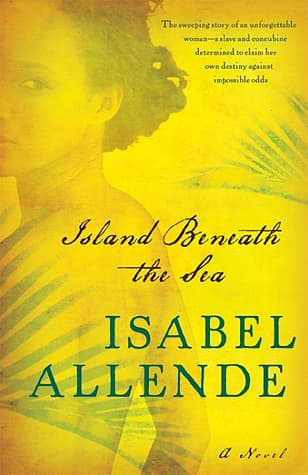
Isabel Allende (2010)
Genre
Historical Fiction / Romance
Reading Time
9-10 hours
Key Themes
See below
Sign in to track this book
Amidst the brutal beauty and revolutionary fervor of 18th-century Saint-Domingue, a slave named Zarité navigates a life of immense hardship and unexpected love, ultimately forging an unbreakable spirit against the backdrop of a world in constant flux.
Zarité, or Tété, is born into slavery on the Saint-Lazare plantation in Saint-Domingue, a French colony. Her mother is an enslaved woman, and her father a white sailor who promptly abandons them. Tété's early life is marked by the harsh realities of plantation slavery, including brutal overseers and relentless labor. She is raised by her grandmother, Ma Cica, who teaches her about their African heritage, the power of storytelling, and the spiritual world of the loas. Tété develops a close bond with other enslaved people on the plantation, including the wise healer Hortense and the rebellious Gambo. Her childhood is devoid of freedom, but she finds resilience and connection through her community and the burgeoning Voodoo practices.
In 1770, a twenty-year-old Frenchman named Toulouse Valmorain arrives in Saint-Domingue to manage his family's sugar plantation, Saint-Lazare. He is ambitious and initially determined to make the plantation profitable, despite his inexperience and the inherent difficulties of colonial life. Valmorain is a man of his time, viewing enslaved people as property and essential to his wealth. He quickly establishes himself as a stern, though not always cruel, master. He takes a particular interest in Zarité, who is still a young girl, and she is assigned to work in the main house, bringing her into closer proximity to him and his household staff. This move marks a significant shift in Zarité's life, placing her in a precarious position within the master's domain.
As Zarité matures into a young woman, Valmorain forces her into a sexual relationship, making her his concubine. This is a common practice on plantations, highlighting the power imbalance and lack of agency for enslaved women. Zarité becomes pregnant and gives birth to a son, Jean-Martin. Later, she bears him a daughter, Rosette. Despite being Valmorain's children, they are still considered enslaved. Zarité cares deeply for her children, navigating the complex and emotionally charged role of a mother whose children are also her master's property. She endures Valmorain's capricious nature and the constant threat of separation from her children, finding solace in her spiritual beliefs and the support of fellow enslaved people.
Eight years after his arrival, Valmorain travels to France and returns with his new wife, Eugénie. Eugénie is a delicate, refined woman from a good family, completely unprepared for the brutal realities of plantation life and the tropical climate of Saint-Domingue. She struggles with illness, loneliness, and the knowledge of her husband's relationship with Zarité. Eugénie attempts to exert her authority, but her health and mental state deteriorate. She becomes increasingly isolated and dependent on laudanum, further complicating the household dynamics. Her presence creates an even more tense environment for Zarité, who must navigate the mistress's unpredictable moods while continuing to care for Valmorain's children.
As the revolutionary fervor in France begins to echo in Saint-Domingue, the enslaved population grows increasingly restless, fueled by the injustices and brutal conditions. Gambo, a charismatic and rebellious enslaved man, becomes a leader in the nascent resistance movement. Zarité, though bound by her children, yearns for freedom. She forms a deep connection with Gambo, a man she truly loves, and together they plan an escape. Their attempt is thwarted, leading to harsh repercussions for Gambo, who is punished severely. This event further solidifies Zarité's desire for freedom, but also highlights the immense dangers and sacrifices involved in resisting the system of slavery.
The long-simmering tensions erupt into full-scale rebellion as the enslaved people of Saint-Domingue rise up against their French masters. Plantations are burned, and white colonists are massacred. The violence is widespread and brutal, as years of oppression are unleashed. Valmorain, seeing the imminent danger, decides to flee the island. He takes his ailing wife, Eugénie, his two children with Zarité (Jean-Martin and Rosette), and Zarité herself, believing her to be loyal and necessary for the children's care. They embark on a perilous journey, first to Cuba, then eventually to New Orleans, leaving behind the burning chaos of Saint-Domingue, which will soon become the free nation of Haiti.
The Valmorain household, including Zarité and her children, settles in New Orleans, a bustling city with a complex social hierarchy that includes a significant population of free people of color. Here, Zarité experiences a degree of freedom and opportunity she never knew in Saint-Domingue. She learns to read and write, begins to earn money through her skills as a seamstress and healer, and develops a network of friends and allies, including the kind-hearted midwife, Tante Rose. While still technically enslaved to Valmorain, the laws and customs of New Orleans offer her more leverage. She starts to envision a future where she and her children can truly be free, cultivating a sense of self-worth and agency.
In New Orleans, Valmorain struggles to rebuild his fortune and adapt to a new life without the vast wealth of his plantation. His temperament sours, and his health begins to fail. Eugénie, already fragile, succumbs completely to her opium addiction and mental instability. She eventually dies, a tragic figure consumed by her inability to cope with her circumstances and her husband's infidelities. Her death, while sad, removes a significant obstacle for Zarité, who is now the primary caregiver for the children and holds more influence in the household. Valmorain, increasingly dependent on Zarité, finds himself in a reversal of roles, though he still maintains his master's authority.
Through a combination of her own resourcefulness, the changing legal landscape, and Valmorain's weakened state, Zarité eventually secures her freedom and the freedom of her children. She establishes herself as a respected member of the free Black community in New Orleans. She finds love and companionship with Dr. Parmentier, a kind and intelligent French physician who values her intelligence and spirit. Their relationship is built on mutual respect and affection, offering Zarité the genuine love and partnership she always yearned for. She continues to practice her healing arts and raises her children, providing them with opportunities she never had.
Years later, Zarité is unexpectedly reunited with Gambo, who survived the revolution and found his own path to freedom, becoming a respected leader in the newly independent Haiti. Their reunion is emotional, a testament to their enduring bond and the profound impact they had on each other's lives. While Zarité's life with Dr. Parmentier is fulfilling, her connection to Gambo represents her past, her heritage, and the revolutionary spirit that shaped her. The novel concludes with Zarité having forged a life of dignity, love, and purpose, having navigated immense suffering to achieve true freedom and self-determination, always carrying the 'island beneath the sea' – the memory of her origins and her people – within her.
The Protagonist
From an enslaved girl enduring unimaginable hardship, Zarité transforms into a strong, independent woman who secures her own freedom and builds a life of purpose and love.
The Antagonist/Major Supporting
Valmorain transitions from a powerful, entitled plantation master to a diminished, struggling figure in New Orleans, losing much of his wealth and influence.
The Supporting
Gambo evolves from a rebellious enslaved man to a respected leader in the Haitian Revolution and beyond, symbolizing the fight for freedom.
The Supporting
Eugénie's character arc is one of decline, from a hopeful bride to a tragic figure consumed by illness and addiction.
The Supporting
Jean-Martin grows from a child of slavery to an educated and respected free man, embodying hope for the future.
The Supporting
Rosette develops from a spirited child into an artistic and independent woman who builds her own family and life.
The Supporting
Hortense remains a steadfast source of wisdom and spiritual guidance, embodying the enduring power of tradition and community.
The Supporting
Dr. Parmentier offers Zarité a path to a loving, respectful partnership, fulfilling her desire for true companionship.
The Supporting
Ma Cica serves as Zarité's initial guide to her heritage and spirituality, laying the groundwork for her strength and identity.
The novel's central theme revolves around the multifaceted concept of freedom – physical, emotional, and spiritual. Zarité's entire life is a struggle for emancipation, first from chattel slavery in Saint-Domingue, then from the lingering psychological chains of her past in New Orleans. The Haitian Revolution provides the backdrop for collective liberation, while Zarité's personal journey highlights the individual's quest for autonomy. Her eventual ability to choose her own path, love, and identity underscores that true freedom extends beyond legal status.
“She had survived, and that was a kind of freedom, a victory that no one could take from her.”
Zarité's journey is one of profound self-discovery. Born without a clear identity beyond 'slave,' she slowly forges who she is through her African heritage, Voodoo beliefs, motherhood, and experiences. She navigates the complex racial and social hierarchies of both Saint-Domingue and New Orleans, constantly redefining herself. Her ability to hold onto her cultural roots while adapting to new environments allows her to build a strong sense of self, culminating in her becoming a respected and independent woman, proud of her mixed heritage and her past.
“She was not just a slave, not just a concubine, not just a mother. She was Zarité, and she carried the island beneath her skin.”
Despite the brutality and suffering Zarité endures, love in various forms serves as a powerful force for her resilience. Her fierce love for her children, the deep affection for Gambo, the mentorship of Hortense and Ma Cica, and eventually the genuine partnership with Dr. Parmentier all provide her with strength, purpose, and solace. The novel demonstrates how love, even amidst the cruelest circumstances, can sustain the human spirit and drive one to survive and thrive. It highlights the enduring capacity for connection and compassion.
“Love was the only thing that made sense in a world gone mad.”
The novel unflinchingly portrays the horrors of slavery in Saint-Domingue – the physical violence, forced labor, sexual exploitation, and the dehumanization of enslaved people. It details the economic motivations behind the system and its devastating impact on both the enslaved and, in different ways, the enslavers. The legacy of slavery continues to influence characters even after emancipation, particularly through the trauma, racial prejudice, and social stratification they encounter in New Orleans, emphasizing that freedom is a gradual, complex process, not a singular event.
“Slavery was a disease that infected everything, even the air they breathed.”
Zarité's African heritage and her connection to Voodoo spirituality are fundamental to her identity and survival. The rhythms of the drums, the stories of the loas, and the practices of healing and spiritual protection provide her with a powerful inner world and a sense of belonging. Voodoo is depicted not as a dark, superstitious practice, but as a rich, vibrant belief system that offers agency, community, and a spiritual connection to ancestors and nature. It is a source of resistance and cultural preservation against the efforts to strip enslaved people of their identity.
“The loas whispered to her in her dreams, reminding her that she was never truly alone.”
Narrative structure focusing on Zarité and Valmorain's parallel yet dependent journeys.
The novel primarily follows Zarité's perspective, but it also delves into Valmorain's thoughts and experiences. This device highlights the profound and often disturbing interdependence between master and enslaved, revealing the complexities of their shared history. By intertwining their narratives, Allende underscores how their lives, though vastly different in power and privilege, are inextricably linked by the institution of slavery and the children they share, allowing for a more nuanced exploration of their individual and societal roles.
The use of a major historical event as a catalyst for plot and character development.
The Haitian Revolution is not merely a setting but a pivotal plot device that drives the narrative forward. It acts as a cataclysmic force, forcing characters to flee, adapt, and confront the brutal realities of their world. The revolution's impact directly shapes Zarité's path to freedom and Valmorain's decline in status. It provides a dramatic and historically accurate context for the individual struggles for freedom and justice, illustrating how macro-historical events profoundly alter personal destinies and reshape societies.
A recurring metaphor for Zarité's enduring heritage and inner world.
The 'island beneath the sea' is a powerful metaphor that refers to Zarité's memories of Saint-Domingue, her African heritage, and the Voodoo spirits (loas) that reside within her. Even after leaving the physical island, this 'island' remains a vital part of her identity, providing strength, guidance, and a connection to her roots. It symbolizes the resilience of cultural memory and the idea that one's origins and spiritual world are an intrinsic, unshakeable part of who they are, regardless of physical location or imposed circumstances.
A cultural and spiritual system as a source of strength and narrative insight.
Voodoo is more than just a cultural detail; it functions as a critical plot device. It provides Zarité with a moral compass, a source of comfort, and a means of understanding the world. Her connection to the loas and her practice of healing arts give her agency and power in a world where she has little. Voodoo rituals, dreams, and spiritual guidance often foreshadow events, offer solutions, or provide insight into characters' emotional states, weaving the spiritual realm directly into the fabric of the narrative and Zarité's personal journey.
“The past is a stubborn thing, and the future is a dream.”
— Spoken by a character reflecting on the nature of time and memory.
“Freedom, like love, is a gift that must be claimed, not waited for.”
— Reflecting on Zarité's journey to self-liberation.
“The heart has its own reasons, which reason knows nothing of.”
— A character grappling with an unexpected and powerful romantic attraction.
“There are wounds that time can never heal, only cover with a thin skin of forgetfulness.”
— Description of the lasting trauma of slavery and loss.
“Hope is a small, fragile plant, but it can grow in the harshest soil.”
— Zarité's enduring spirit despite her circumstances.
“To be truly free, one must first be free in one's mind.”
— A philosophical thought on the nature of freedom, beyond physical chains.
“Love is not a cage, but wings to fly.”
— A character's realization about the true nature of healthy love.
“The world is full of ghosts, and some of them are still alive.”
— A reflection on the living impact of past injustices and people.
“Every person carries a secret island within them, a place where their true self resides.”
— Metaphorical description of the inner self and personal identity.
“Revenge is a bitter meal, and it often poisons the one who eats it.”
— A character's warning against the destructive nature of vengeance.
“Beauty can be a blessing and a curse, depending on whose eyes perceive it.”
— Reflecting on the objectification and power dynamics associated with beauty.
“The greatest prison is not made of iron bars, but of fear.”
— A character overcoming their internal fears to pursue freedom.
“Life is a tapestry woven with threads of joy and sorrow, light and shadow.”
— A philosophical observation on the duality of human experience.
“Silence can be a weapon, a shield, or a scream.”
— Describing the multifaceted nature of silence in different situations.
Ready to see how well you understood this book? Take our interactive quiz with 10 questions.

Isabel Angélica Allende Llona is a Chilean writer. Allende, whose works sometimes contain aspects of the genre magical realism, is known for novels such as The House of the Spirits and City of the Beasts, which have been commercially successful. Allende has been called "the world's most widely read Spanish-language author." In 2004, Allende was inducted into the American Academy of Arts and Letters, and in 2010, she received Chile's National Literature Prize. President Barack Obama awarded her the 2014 Presidential Medal of Freedom.







