“The past is never dead. It's not even past.”
— Reflection on the town's history and secrets.

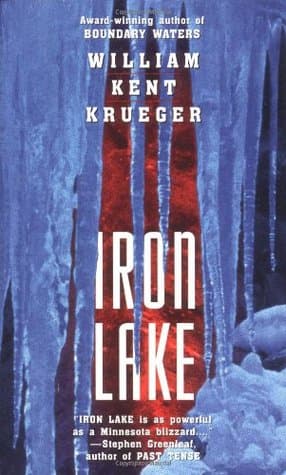
William Kent Krueger (2011)
Genre
Thriller / Mystery
Reading Time
520 min
Key Themes
See below
Sign in to track this book
Former sheriff Cork O'Connor battles a Minnesota blizzard and his own past to solve murders and disappearances, uncovering a conspiracy at the heart of his snowy hometown.
The novel begins in Aurora, Minnesota, with the murder of Judge Peder Pedersen. His decapitated body is found in his home, with a wolf's head nearby. This event disturbs the small community. Corcoran 'Cork' O'Connor, the former sheriff, now owns a diner and works as a private investigator. He struggles with his divorce from Jo and his relationship with his children. Cork is drawn into the investigation because of his experience and his ties to Aurora. The current sheriff, Wally Schanno, whom Cork does not trust, leads the case. Cork's intuition suggests the murder has more to it than what is apparent, especially given its unusual details.
Adding to the town's tension, a young Eagle Scout, Paul LeBeau, is reported missing shortly after Judge Pedersen's murder. Paul worked for Judge Pedersen, which connects him to the crime. Cork begins his own investigation, feeling responsible to his community and believing official channels are missing leads. He questions locals, including members of the Anishinaabe community, to whom he has ties. He starts to uncover secrets and old grudges. Town figures, like Mayor Robert Dunwoody and businessman Gerald Davis, seem to hinder the investigation, making Cork suspicious.
As Cork investigates, he finds that the brutal details of Pedersen's murder, the decapitation and wolf's head, match ancient Anishinaabe legends of the Wendigo, a spirit linked to greed. This cultural element adds a chilling layer to the mystery. Cork talks with his Anishinaabe relatives and elders, including his grandmother. They share stories and insights into their spiritual beliefs and historical grievances. These conversations lead Cork to consider that the murder might be rooted in deeper, perhaps generational, conflict and injustice, possibly involving land disputes or historical wrongs against the Anishinaabe people.
Cork's investigation increasingly points to a plan involving valuable land, possibly for a casino, and a group of corrupt individuals in Aurora. Judge Pedersen was involved in these land deals. Cork discovers that Mayor Dunwoody, Gerald Davis, and even Sheriff Schanno might be part of a conspiracy to acquire Anishinaabe land illegally. He finds documents and hears rumors suggesting Pedersen was a key player or was about to expose the illegal activities. The missing Paul LeBeau might have found evidence, making him a dangerous witness who needed to be silenced, linking his disappearance to the judge's murder.
Paul LeBeau's body is found, confirming his murder. This discovery makes Cork's search for the killers more urgent. Cork himself becomes a target, facing threats from those trying to hide the truth. He narrowly escapes an attempt on his life, which strengthens his resolve. These events confirm Cork's belief that he is against a powerful and ruthless conspiracy, and his life, and possibly his family's, are in danger as he gets closer to exposing the truth behind Judge Pedersen's murder and Paul LeBeau's disappearance.
As Cork investigates, he confronts the town's corruption and his own past, including his strained relationship with his ex-wife, Jo, and his children. He also deals with his identity as both Irish and Anishinaabe, trying to connect the two cultures. Threats against him increase, with his diner vandalized and direct warnings to stop. He realizes the conspiracy is extensive and involves people he has known for years, making the betrayal more intense. Cork wants justice for Pedersen and LeBeau, a personal quest tied to protecting his family and community from the pervasive evil.
Cork learns that Father Tom, the local priest, has information about the land deals and corruption. Father Tom is conflicted between his moral duty to tell the truth and his vow of confessional secrecy. Cork presses him, understanding the priest's dilemma but knowing lives are at stake. Father Tom eventually gives cryptic clues and indirect guidance, hinting at the involvement of prominent figures and their greed. His reluctance to break the seal of confession shows the moral complexities of the situation and the deep secrets protected by the church in the community.
Through investigation, piecing together clues from Father Tom, Anishinaabe elders, and his police instincts, Cork unmasks the person behind Judge Pedersen's murder and Paul LeBeau's death. Gerald Davis, a respected but ruthless businessman, orchestrated the murders to protect his illegal land acquisition schemes, especially concerning the proposed casino. Davis manipulated events and people, including Sheriff Schanno, for his financial gain, silencing anyone who threatened to expose his activities. The extent of his power and influence in Aurora becomes clear to Cork.
The novel's climax happens at Iron Lake, where Cork confronts Gerald Davis and his accomplices, including Sheriff Schanno, who is deeply involved. A tense and violent standoff occurs in the winter landscape. Cork, helped by his Anishinaabe friend and tracker, Henry Meloux, and eventually his ex-wife Jo, fights for his life and for justice. The confrontation is brutal, with Cork facing physical threats and the emotional weight of betrayal from people he once considered part of his community. The truth about the judge's murder and LeBeau's death comes out during this intense showdown.
In the chaotic confrontation, Gerald Davis and his henchmen are defeated. Sheriff Schanno is exposed and arrested, along with other corrupt officials. Justice is served for Judge Pedersen and Paul LeBeau, though the cost is high. Cork, though scarred, emerges as a hero, having risked everything to uncover the truth and protect his community. The events affect Aurora, breaking its image of small-town innocence. For Cork, the experience, while traumatic, starts a path toward reconciliation with his family and a new sense of purpose, solidifying his role as a protector of his community, even without official law enforcement.
The Protagonist
Cork begins as a cynical, alienated man but reclaims his purpose and identity by fighting for justice, ultimately beginning to mend his family relationships and embrace his dual heritage.
The Supporting
Jo starts as a distant figure but actively supports Cork in his investigation, hinting at a potential reconciliation for their family.
The Supporting
Henry remains a steadfast source of wisdom and support, his role as a spiritual and practical guide solidifying Cork's connection to his heritage.
The Antagonist
Davis begins as an influential figure and is revealed to be the true villain, ultimately facing justice for his crimes.
The Antagonist
Schanno is initially presented as an obstructionist sheriff but is eventually exposed as a corrupt accomplice to Davis, leading to his downfall.
The Mentioned
His death is the inciting incident, and the unraveling of his past reveals the town's corruption.
The Mentioned
His disappearance and subsequent murder escalate the mystery and confirm the ruthlessness of the antagonists.
The Supporting
Father Tom struggles with his vows but ultimately aids Cork indirectly, highlighting the moral dilemmas within the community.
The Supporting
Dunwoody's initial obstructionism is revealed as complicity in the corruption, leading to his exposure.
Cork O'Connor's mixed heritage (Irish and Anishinaabe) is a central idea. He deals with his place in both cultures. He feels alienated from the white community after losing his sheriff position and sometimes struggles to fully embrace his Anishinaabe roots, despite his respect for them. The murder investigation forces him to connect these two worlds, using his police instincts and the wisdom of his Anishinaabe elders. He works to reconcile these parts of himself to find his identity and belonging in his community.
“He was a man caught between two worlds, the white and the Anishinaabe, and sometimes it felt like he belonged to neither.”
The novel explores corruption in the small town of Aurora. From the mayor to the sheriff and businessmen, greed for land and money drives a conspiracy that leads to murder and silenced witnesses. The desire for a casino development shows how economic opportunity can turn destructive, eroding moral values and trust. Cork's fight against this corruption is a central conflict, exposing the dark side of seemingly peaceful small-town life.
“Greed, Cork knew, was a sickness that infected the soul, turning good men into monsters.”
The search for justice for Judge Pedersen and Paul LeBeau drives the plot. The novel also touches on the line between justice and personal vengeance, especially given Cork's personal involvement and past grievances. Anishinaabe legends of the Wendigo, a spirit of greed and vengeance, suggest that unchecked desires can lead to monstrous acts. Cork seeks true justice, not just revenge, aiming to uncover the truth and restore balance to his community, even if it means confronting those he once knew.
“Justice wasn't always about the law, sometimes it was about balance, about setting things right.”
Despite his marital problems, Cork's love and loyalty to his family—his estranged wife Jo and his children Stephen, Anne, and Jenny—are important. His investigation is driven by a desire to protect them and keep Aurora safe. The novel also shows the dynamics of a small community, where everyone knows everyone, leading to strong bonds and hidden resentments. The corruption in town is a betrayal of this community, and Cork tries to heal these wounds and restore faith in a cohesive, trustworthy society.
“Family was the anchor, the one thing that held a man steady when the rest of the world spun out of control.”
Anishinaabe myth reflecting the themes of greed and destruction.
The ancient Anishinaabe legend of the Wendigo, a cannibalistic spirit brought forth by extreme greed or starvation, serves as a powerful symbolic plot device. The brutal nature of Judge Pedersen's murder, particularly the symbolic wolf's head, evokes this myth, suggesting that the crimes are not just random acts but manifestations of a deeper, spiritual sickness rooted in insatiable human desire. It adds a layer of cultural depth and foreboding, connecting the modern-day corruption to ancient warnings about the destructive power of greed and the imbalance it creates in the world.
Setting reflecting the cold, isolating nature of the crimes.
The severe winter conditions of northern Minnesota, with its heavy snows, frozen lakes, and biting cold, act as more than just a backdrop. The harsh landscape mirrors the cold-blooded nature of the crimes and the isolation Cork feels in his pursuit of justice. The blizzard conditions hinder the official investigation but also force Cork to rely on his wilderness skills and Anishinaabe knowledge, emphasizing his connection to the land. It creates a sense of claustrophobia and heightened danger, making escape difficult for both the hunter and the hunted.
A character's background as a source of conflict and strength.
Cork O'Connor's mixed Irish and Anishinaabe heritage is a crucial plot device, providing him with unique perspectives and skills. His Anishinaabe roots connect him to the natural world and the wisdom of his elders, offering spiritual guidance and practical tracking abilities. His Irish background and experience as a Chicago cop give him a grounding in modern investigative techniques. This dual heritage allows him to navigate both the official and unofficial aspects of the investigation, providing a richer, more nuanced understanding of the crimes and the community's dynamics, while also being a source of internal conflict.
A seemingly idyllic setting masking deep-seated secrets and corruption.
Aurora, Minnesota, a seemingly peaceful small town, functions as a classic mystery setting where appearances are deceiving. The close-knit nature of the community means that everyone knows everyone, which can be both a blessing and a curse. It allows for hidden secrets and long-held grudges to fester beneath the surface, making the betrayal by trusted figures even more shocking. The small-town setting intensifies the feeling of being trapped with the criminals, highlighting how corruption can infiltrate every level of a community.
“The past is never dead. It's not even past.”
— Reflection on the town's history and secrets.
“In a small town, everyone knows your business, but no one knows your heart.”
— Observation about community life in Aurora.
“Sometimes the only way to find the truth is to lose yourself in the search.”
— Cork O'Connor's approach to solving the mystery.
“The lake holds its secrets like a clenched fist.”
— Description of Iron Lake's ominous nature.
“Justice isn't always found in a courtroom; sometimes it's in the quiet of the woods.”
— Comment on the Ojibwe perspective of justice.
“Fear is a poison that seeps into the soul, and once it's there, it's hard to purge.”
— Reflection on the town's reaction to the crimes.
“A man's character is tested not by his successes, but by how he faces his failures.”
— Cork O'Connor contemplating his own life.
“The snow doesn't just cover the ground; it buries the truth.”
— Winter setting obscuring clues in the investigation.
“Trust is a fragile thing, easily broken and hard to mend.”
— Observation about relationships in the story.
“In the wilderness, you learn that survival depends on listening to more than just words.”
— Cork's experience as a former sheriff and outdoorsman.
“Grief is a private storm that rages long after the world has moved on.”
— Reflection on personal loss among characters.
“The line between good and evil isn't always clear; sometimes it's blurred by necessity.”
— Moral ambiguity in the characters' actions.
“Silence can be louder than any accusation.”
— The power of unspoken truths in the community.
“Home isn't just a place; it's the memories that haunt its corners.”
— Cork's connection to Aurora and his past.
Ready to see how well you understood this book? Take our interactive quiz with 10 questions.

Biography coming soon.







