BookBrief
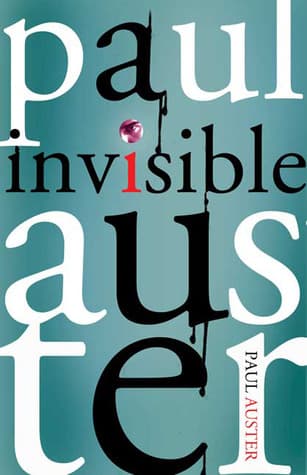
Invisible cover
Archivist's Choice

Invisible

Paul Auster (2009)

Genre

Young Adult / Romance

Reading Time

300 min

Key Themes

See below

Track Your Reading

Sign in to track this book

A young poet's coming-of-age takes a dark turn when a twisted love triangle with a mysterious Frenchman and his seductive girlfriend explodes in a shocking act of violence that will haunt him for decades across continents.

Synopsis

In 1967 New York, twenty-year-old poet Adam Walker meets Rudolf Born, a Frenchman, and his girlfriend, Margot. Adam quickly becomes involved with them, starting an affair with Margot and a dangerous relationship with Born. Born's control and Adam's jealousy lead to a violent fight where Adam, thinking he has killed Born, flees to Paris. Years later, Adam, now a successful poet in Paris, receives a manuscript that forces him to revisit 1967 and question Born's fate. The story unfolds through several viewpoints, including Adam's, a confession from his friend Jim, and revelations from Gwyn, Born's sister, who uncovers Born's survival and ongoing manipulation. The story ends with Adam's search for Born and a final confrontation to resolve years of deceit and violence.
Reading time
300 min
Difficulty
Hard
Pacing
Variable
Mood
Dark, Introspective, Suspenseful, Mysterious
✓ Read this if...
You enjoy complex narratives with multiple perspectives, psychological thrillers, and stories exploring memory, identity, and moral ambiguity.
✗ Skip this if...
You prefer straightforward plots, clear-cut heroes and villains, or lighthearted romance.

Plot Summary

The Encounter with Born and Margot

In the spring of 1967, twenty-year-old Adam Walker, a Columbia University student and aspiring poet, works at a Greenwich Village bookstore. He meets Rudolf Born, a charismatic French political science professor, and his beautiful, mysterious girlfriend, Margot. Born, older and more experienced, shows immediate interest in Adam, inviting him to dinner and offering to help publish his poetry. Adam enters their sophisticated world, fascinated and slightly intimidated by Born's intellect and Margot's quiet charm. Their early conversations include intellectual debates and a subtle tension, as Adam becomes increasingly captivated by the couple, especially Margot.

The Seduction and Jealousy

Born, perhaps as a test, encourages Adam to seduce Margot. This suggestion quickly becomes real as Adam and Margot begin a secret affair. Adam is deeply in love with Margot, and their encounters are passionate and intense, often happening in the apartment Born provides for Adam. The affair is dangerous, with the constant threat of Born discovering it. Adam is torn between his desire for Margot and his uneasy relationship with Born, who seems to control their lives. The emotional stakes rise, leading to more paranoia and a feeling of impending crisis for Adam.

The Violent Confrontation

The tension among the three characters ends in a violent confrontation. Born discovers Adam and Margot's affair, but instead of anger, he proposes a twisted revenge: he will rape Adam's sister, Gwyn, who is visiting. Adam, horrified, tries to protect Gwyn. During a struggle, Born attacks Adam, beating him severely. In self-defense, Adam stabs Born with a letter opener, believing he has killed him. This traumatic event shatters Adam's world, forcing him to flee New York and assume a new identity, forever marked by the violence and betrayal.

Life in Paris

After the confrontation, Adam flees to Paris, taking the name 'Antoine'. He lives a meager life, working odd jobs, constantly looking over his shoulder, and haunted by the events of 1967. He believes Born is dead and that he is a murderer. His time in Paris is marked by isolation and a struggle for identity. He tries to bury his past, but the trauma of his encounter with Born and Margot continues to shape his decisions and perceptions. He starts a relationship with a young woman named Cécile, but even this connection is overshadowed by his secrets and lingering guilt.

The Confession and the Manuscript

Years later, Adam, now living in the Caribbean under another assumed identity, becomes ill. He contacts his old friend, Jim, a writer, and asks him to visit. Adam, feeling his life ending, decides to confess, recounting the entire story of his involvement with Born and Margot, the violence, and his flight. He entrusts Jim with his unfinished manuscript, a raw account of his experiences, hoping Jim will piece together the truth and share his story. This act is Adam's desperate attempt to find some redemption or understanding before his death.

Jim's Narrative and Investigations

Jim, taking on the role of editor and narrator, begins to work on Adam's manuscript. He finds it incomplete and disjointed, full of gaps. Jim decides to add to Adam's account with his own research and interviews, trying to verify details and fill in missing information. He travels to various locations, including Paris, to speak with people who knew Adam there, such as Cécile. Jim's narrative offers a more objective, though still subjective, perspective on Adam's life, showing how memory is unreliable and truth is hard to find. He grapples with the ethics of telling Adam's story.

The Revelation of Gwyn's Account

As Jim continues his work, he receives an unexpected package containing a manuscript written by Adam's sister, Gwyn. Gwyn's account reveals a different version of the 1967 events, especially regarding the confrontation with Born. Her narrative challenges Adam's memory and self-perception, uncovering a darker truth about Born's actions and Adam's involvement. Gwyn's perspective suggests Adam was not just a victim but also an unwitting participant in Born's perverse games, and that the violence went beyond what Adam recalled or admitted. This forces Jim to re-evaluate everything he thought he knew.

Born's Survival and Continued Manipulation

Gwyn's narrative, combined with Jim's further investigations, gradually reveals the truth: Rudolf Born did not die that night in 1967. He survived Adam's stabbing and orchestrated his disappearance, letting Adam believe he was a murderer. Born continued his life of manipulation and cruelty, becoming a successful and influential figure, even marrying Gwyn for a time. This revelation adds another layer of horror and betrayal to Adam's story, showing Born's power and his insidious ability to control the lives of those around him, even from a distance. Born's 'invisible' hand extends through decades.

The Search for Born

Upon learning Born is alive, Adam's guilt turns into a burning desire for justice and revenge. He dedicates his remaining years to finding Born, driven by a need to confront his tormentor and expose his crimes. This quest takes him across continents and through various aliases, changing him from a haunted fugitive into a determined pursuer. His pursuit is not just about personal vengeance, but also about correcting the past and understanding the true nature of the evil that shaped his life. He becomes an avenging spirit, seeking to make the 'invisible' visible.

The Final Confrontation

Adam eventually tracks Born to a remote island in the Caribbean, where Born lives a seemingly idyllic life under a new identity. The final confrontation between Adam and Born is intense, charged with decades of suppressed anger and unresolved trauma. The details of this encounter are somewhat ambiguous, told through Adam's final, fragmented writings and Jim's interpretations. The outcome suggests a form of justice, but not a clean or satisfying one, highlighting the lasting damage of their past. The 'invisible' nature of Born's crimes and his ability to evade justice are finally challenged, but the cost to Adam is immense.

Principal Figures

Adam Walker

The Protagonist

From an impressionable young man, Adam evolves into a tormented, self-exiled figure, and finally into a determined, avenging seeker of justice.

Rudolf Born

The Antagonist

Born remains consistently cruel and manipulative throughout the narrative, his character revealing only deeper layers of depravity.

Margot

The Supporting

Margot's arc is largely perceived through others, her true nature and fate remaining elusive and a source of fascination.

Gwyn Walker

The Supporting

Gwyn transforms from an innocent bystander to a victim of Born, and finally to a key truth-teller who challenges the established narrative.

Jim

The Supporting

Jim evolves from a passive recipient of Adam's story to an active investigator and the ultimate arbiter of the narrative's truth.

Cécile

The Supporting

Cécile's arc is limited to her relationship with Adam, providing a window into his life in Paris.

Themes & Insights

The Elusiveness of Truth and Memory

The novel constantly questions what is real and what is remembered, particularly through its multi-layered narration. Adam's initial account of the 1967 events is challenged by Gwyn's later testimony, revealing significant differences. Jim, as the editor, struggles to reconcile these differing versions, showing how personal biases, trauma, and time distort memory. The novel's structure, with its multiple narrators and fragmented manuscripts, shows that a single, objective truth about the past is unattainable, existing instead as a collection of subjective experiences. The reader must piece together their own understanding, much like Jim.

“Memory is a fiction, a way of telling yourself a story about your life, and the story changes every time you tell it.”

Narrator (Jim)

Identity and Reinvention

Adam Walker's journey is a relentless exploration of identity. After the violent encounter with Born, he sheds his name and past, becoming 'Antoine' in Paris and later taking other aliases in the Caribbean. Each new identity tries to escape guilt and trauma, but also to reinvent himself after a shattered past. Born also reinvents himself, disappearing and reappearing under new guises, making him 'invisible' to authorities. The novel suggests that identity is fluid and performed, often shaped by external circumstances and the stories we tell ourselves and others.

“Who are you? The question is always there, lurking in the shadows, waiting to pounce.”

Narrator (Adam)

Manipulation and Power

Rudolf Born embodies manipulation and power, controlling the lives of those around him. He manipulates Adam's desires, encourages his affair with Margot, and orchestrates the attack on Gwyn, all to assert his dominance and find perverse pleasure. His ability to survive and thrive under new identities further emphasizes his unchecked power. The novel explores how easily individuals can be caught in another's web of control, and the devastating psychological impact of such manipulation, especially on Adam, who spends decades trying to break free from Born's influence.

“He had a way of making you feel that he knew more about you than you knew about yourself.”

Adam Walker

Justice and Revenge

Initially, Adam believes he committed murder and spends years in self-imposed exile, a form of self-punishment. However, upon discovering Born is alive, his focus shifts from guilt to a burning desire for justice and revenge. This quest drives the final section of his life, turning him into an avenging figure. The novel grapples with the complexities of these concepts: Is personal vengeance true justice? Can the scales ever truly be balanced? The ambiguous ending suggests that while some retribution may be achieved, the deep wounds of the past are never fully healed, and the quest for justice can consume a life.

“Justice, in the end, is a lonely business.”

Narrator (Jim)

Plot Devices & Literary Techniques

Multiple Narrators

The story is told through the perspectives of Adam Walker, Jim, and Gwyn Walker.

The novel employs a complex narrative structure with three distinct narrators. Adam Walker's fragmented manuscript forms the core, followed by Jim's editorial commentary and investigative additions, and finally, Gwyn Walker's revelatory testimony. This device creates a multi-faceted and often contradictory account of events, highlighting the subjective nature of truth and memory. It forces the reader to actively participate in piecing together the narrative, constantly questioning the reliability of each voice and the gaps between their stories. The shifting perspectives deepen the mystery and psychological complexity of the plot.

Unreliable Narration

Each narrator's account is influenced by their biases, trauma, and limited knowledge.

Central to the novel's thematic exploration of truth, unreliable narration is prevalent throughout. Adam's initial account is a blend of memory, trauma, and perhaps self-deception, particularly concerning the exact details of his confrontation with Born. Gwyn's narrative, while appearing more objective, is also shaped by her own traumatic experiences. Even Jim, as the 'editor,' acknowledges his own interpretive role and the inherent limitations in reconstructing a definitive truth from fragmented evidence. This device immerses the reader in the characters' psychological states and the challenge of knowing what 'really' happened.

Manuscript within a Manuscript

The story unfolds through the discovery and editing of various written documents.

The novel is presented as a collection of texts: Adam's unfinished manuscript, Jim's editorial notes and research, and Gwyn's later submission. This 'found manuscript' device blurs the lines between author and character, fiction and reality. It allows for different voices and styles to coexist, reflecting the fragmented nature of memory and identity. The act of reading becomes an act of interpretation, mirroring Jim's struggle to make sense of Adam's life. This structure emphasizes the constructed nature of narrative and the ongoing process of meaning-making.

The Invisible Man Motif

Characters, particularly Born, evade detection and consequences, becoming 'invisible'.

The title 'Invisible' directly references a key motif. Rudolf Born's ability to disappear, assume new identities, and evade justice makes him metaphorically 'invisible' to the authorities and to those he has wronged. Adam, too, lives an 'invisible' existence as a fugitive, hiding his true identity. This motif underscores themes of power, impunity, and the difficulty of holding individuals accountable for their actions when they can simply vanish. It also speaks to the hidden traumas and unspoken truths that haunt the characters, remaining 'invisible' until brought to light.

Critical analysis

Notable Quotes

There are books and there are books, and then there are the books that will make you feel as if you have been living in a coma up until the moment you've read them.

Adam Walker reflecting on the power of literature and his own experiences with it.

I didn't want to just live my life; I wanted to understand it.

Adam expressing his desire for deeper meaning and self-awareness.

Love is not a feeling, it's a decision. It's a choice you make every single day.

A character offering a mature perspective on the nature of love.

We are all made of stories. Some we tell, some we keep hidden, some we don't even know we possess.

A reflection on personal narratives and the hidden depths of individuals.

Sometimes the most important things are the ones you can't see.

A thematic statement about the unseen forces and connections in life.

The past is never dead. It's not even past.

A character grappling with the lingering influence of past events on the present.

Every secret comes with a price, and the longer you keep it, the higher the cost.

A warning about the burden and consequences of holding onto secrets.

To be truly alive is to be vulnerable, to expose yourself to the possibility of pain as well as joy.

A philosophical musing on the essence of living and emotional openness.

The world is a vast and complicated place, and sometimes the only way to make sense of it is to focus on the small, human connections.

A character finding solace and clarity in interpersonal relationships amidst chaos.

Words have a way of changing things, of making them real, even when you wish they weren't.

An acknowledgment of the power of language and its impact on reality.

You can't outrun yourself, no matter how far you go.

A character realizing the inevitability of confronting one's own identity and issues.

There's a kind of beauty in broken things, a story in every crack and flaw.

A sentiment appreciating imperfection and the narratives it holds.

Sometimes you have to lose yourself completely to find out who you really are.

Adam's journey of self-discovery often involves periods of disorientation and loss.

The future is always uncertain, but that's what makes it exciting, isn't it?

A character embracing the unknown and the potential for new experiences.

Every ending is just a new beginning, if you're brave enough to see it that way.

A hopeful perspective on change and the cyclical nature of life's events.

Quiz

Test Your Knowledge

Ready to see how well you understood this book? Take our interactive quiz with 10 questions.

10
Questions
~5
Minutes
?
Best Score

Key Questions (FAQ)

'Invisible' centers on twenty-year-old Adam Walker, an aspiring poet, in New York City in the spring of 1967. His life takes a drastic turn after he encounters the mysterious Frenchman Rudolf Born and his girlfriend Margot, becoming entangled in a perverse triangle that leads to a violent act.

About the author

Paul Auster

Paul Benjamin Auster is an American writer and film director. His notable works include The New York Trilogy (1987), Moon Palace (1989), The Music of Chance (1990), The Book of Illusions (2002), The Brooklyn Follies (2005), Invisible (2009), Sunset Park (2010), Winter Journal (2012), and 4 3 2 1 (2017). His books have been translated into more than forty languages.