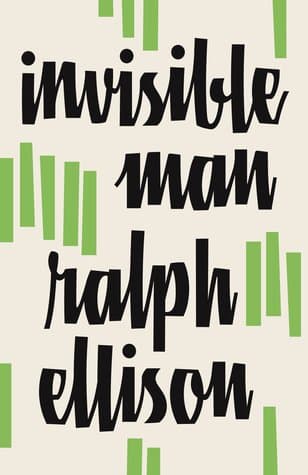
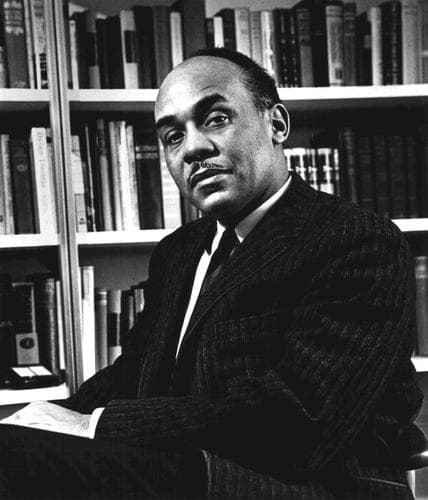
The Battle Royal and the Scholarship
The unnamed narrator, a bright young Black man from the South, tells of a traumatic experience as a teenager. He is invited to a 'smoker' hosted by the town's white citizens, where he is forced to participate in a 'battle royal' with other Black youths. Blindfolded, the boys fight each other for entertainment, then scramble for fake gold coins on an electrified rug. After this humiliating event, the narrator gives his graduation speech on humility and progress, earning him a scholarship to a Black college. He does not understand the true nature of his exploitation, seeing it as a step towards success.
College and Dr. Bledsoe's Betrayal
At college, the narrator excels, wanting to be like the president, Dr. Bledsoe. During a drive, the narrator accidentally shows Mr. Norton, a rich white trustee and founder of the college, the less pleasant parts of the surrounding Black community. He takes Norton to see Jim Trueblood, a sharecropper who impregnated his own daughter, and then to a juke joint called the Golden Day, full of shell-shocked Black veterans. Bledsoe, angry that the narrator showed the 'true' South to Norton, expels him. He gives the narrator letters of recommendation to supposed benefactors in New York, which are secretly letters of denunciation.
Arrival in Harlem and Initial Disillusionment
In Harlem, the narrator first feels free and hopeful. He tries to deliver Dr. Bledsoe's letters, but after weeks of being dismissed and meeting condescending white philanthropists, he learns the truth: the letters are condemnations, making sure he will not be hired. He confronts one recipient, Mr. Emerson, who, out of pity, reveals Bledsoe's betrayal. This revelation destroys the narrator's faith in Bledsoe and his earlier understanding of the world, leaving him lost in the big, indifferent city.
The Liberty Paints Factory
Desperate for work, the narrator finds a job at the Liberty Paints factory, which makes 'Optic White' paint, claiming it can cover anything. He is assigned to the mixing room, where he adds a black drop to each bucket of white paint, showing the hidden Black contribution to a seemingly 'pure' white product. He meets Lucius Brockway, an older Black man who dislikes him, and later works with a white union man named Kimbro. An explosion in the factory's basement, caused by sabotage or accident, leaves the narrator concussed and confused, leading to a surreal hospital experience where he gets experimental electric shock therapy.
The Speech and the Brotherhood
After he recovers, the narrator walks through Harlem, seeing an elderly Black couple evicted. Angry at the injustice, he gives an unplanned speech to the crowd, expressing their frustrations and suffering. His speech gets the attention of Brother Jack, a white leader of the 'Brotherhood,' a political organization. Jack invites the narrator to join, promising him a platform to speak for his people and make social change. Interested and hopeful for a new purpose, the narrator accepts, seeing it as a chance to make a difference.
Training and Rise within the Brotherhood
The Brotherhood assigns the narrator to their Harlem branch, where he trains in rhetoric and ideology. He gets a new identity, a new apartment, and is told to forget his past, including his Southern accent. With Brother Hambro's help, he improves his public speaking and becomes a speaker, drawing crowds and inspiring the Harlem community. He quickly rises in the Brotherhood's efforts to organize and empower the Black community, believing he is contributing to a cause and finding his voice.
Internal Conflicts and the Tod Clifton Incident
As the narrator gains influence, he notices problems and manipulation within the Brotherhood. He argues with Brother Clifton, a fellow Black leader, about the organization's policies, especially their changing focus away from Harlem's immediate needs. The narrator is temporarily moved from Harlem, a move he suspects is to control his growing independent influence. When he returns, he finds Clifton selling Sambo dolls on the street, having left the Brotherhood. Clifton is then shot and killed by a white police officer, an event that affects the narrator and increases his disappointment.
The Funeral and the Riot
The narrator organizes a large, emotional funeral for Tod Clifton, using the event to energize the community and challenge the Brotherhood's detached approach. The funeral becomes a protest, but the Brotherhood later criticizes him for acting alone and for his 'emotional' leadership. As tensions grow in Harlem, caused by poverty and racial injustice, a riot happens. The narrator sees the chaos, looting, and destruction, realizing how the Brotherhood manipulated the community's anger for their own goals, rather than for genuine improvement.
Running from the Brotherhood and Ras the Exhorter
During the riot, the narrator is hunted by both the Brotherhood, who see him as a problem, and Ras the Exhorter, an anti-white nationalist leader who sees the Brotherhood as a tool of white oppression. Ras, now calling himself 'the Destroyer,' leads a violent group, urging a race war. The narrator, trying to escape, wears dark glasses and a wide-brimmed hat, finding that people mistake him for someone else, further showing his invisibility. He narrowly avoids capture and injury, seeing the violence and destruction.
The Sewer and the Underground Lair
Fleeing the riot, the narrator falls into a manhole, escaping the chaos above ground. He finds refuge in an abandoned basement, connecting it to the city's power grid to light his new sanctuary. Surrounded by 1,369 light bulbs, he thinks about his life, recognizing how he has been used, manipulated, and made 'invisible' by various groups and individuals—from the white benefactors and Dr. Bledsoe to the Brotherhood. He concludes that his invisibility is not a curse but a condition of his existence, a metaphor for how society does not see him as a complex individual, only as a stereotype.
Epilogue: Living in the Hole
In the epilogue, the narrator, still in his underground hole, details his intellectual and psychological journey. He admits his past naivety and how he allowed himself to be defined by others. He realizes that true vision comes from within and that his invisibility has given him a unique view of American society and race relations. He considers coming out of his hibernation, not to fight society's blindness directly, but to use his understanding of invisibility as a weapon and a tool for self-definition. He believes that despite his invisibility, he still has a role to play in shaping the world, even from the periphery.